
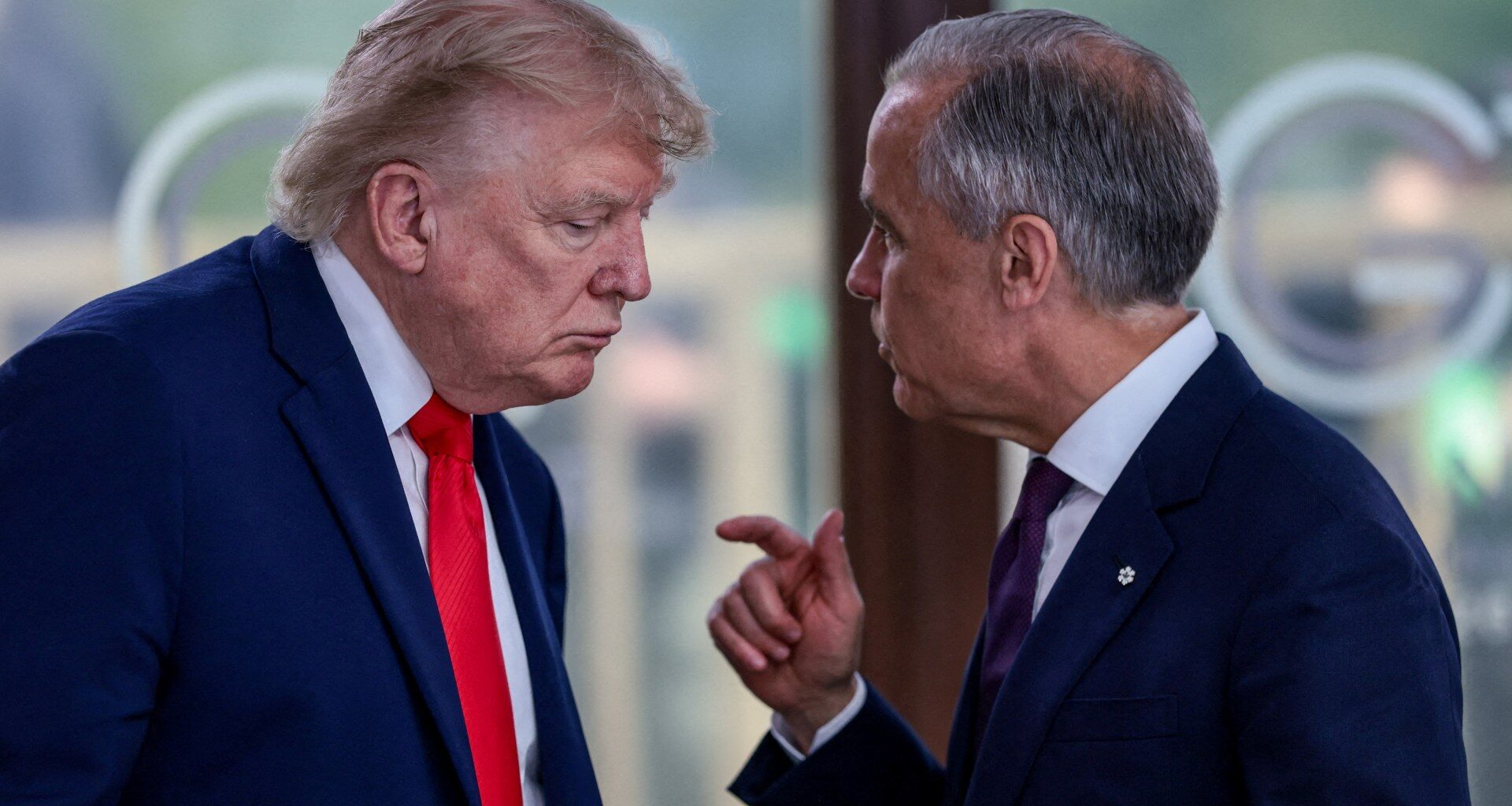
Trade tensions soar as Canada matches US tariffs ‘dollar-for-dollar’, impacting 700 products and multiple industries.
Canada’s retaliatory tariffs on imports from the United States have taken effect, as a trade dispute between the two countries continues to escalate.
Tariffs ranging from 15 percent to 50 percent will apply to nearly $20bn worth of US imports from 12:01am ET (04:01 GMT) on Tuesday, matching US-imposed levies on Canadian goods including machinery, textiles and consumer products.
The new retaliatory tariffs apply to products including steel, household appliances, agricultural equipment and dairy.
“We have everything we need to pivot and prosper,” Canadian Prime Minister Mark Carney said in a video shared on social media on Tuesday after the tariffs came into effect. “That pivot will come at a cost. There’s always a cost to action. But it doesn’t come close to the cost of standing still.”
![Canada’s Prime Minister Mark Carney speaks with the news media after he suspended trade negotiations with the United States, in Ottawa, Ontario, Canada August 22, 2026. [Chris Tanouye/Reuters]](https://www.newsbeep.com/wp-content/uploads/2026/09/reuters_6a9f8004-1788837892.jpg) Canada’s Prime Minister Mark Carney speaks with the media after suspending trade negotiations with Washington, in Ottawa, Ontario, Canada, on August 22, 2026 [Chris Tanouye/Reuters]
Canada’s Prime Minister Mark Carney speaks with the media after suspending trade negotiations with Washington, in Ottawa, Ontario, Canada, on August 22, 2026 [Chris Tanouye/Reuters]
US President Donald Trump announced 50 percent tariffs against Canada in July, citing “discriminatory treatment” of US products. The announcement prompted the countries to enter trade talks in August, but a final deal failed to materialise before a deadline imposed by Trump as Ottawa walked away from what it said was a bad deal. US tariffs on Canadian goods came into place on August 22.
“Canada wants the benefits of being a State, without being one!!!” Trump posted on Truth Social in response to Canada’s announcement in August.
On Tuesday, Trump, in a post on Truth Social, directed the General Services Administration, a US government body responsible for providing services for the federal government, to coordinate with the US Trade Representative and “REMOVE Canadian-origin products from GSA’s Multiple Award Schedules unless Canada restores full and fair reciprocity for American Farmers and Companies.”
Also on Tuesday, US Treasury Secretary Scott Bessent said that Carney “needs to stop campaigning and start governing,” adding the US was unsure why Canada pulled out of negotiations.
The Canadian government has said that the counter-tariffs will affect more than 700 products, adding that it would launch a $5.42bn support package for affected small and medium-sized businesses and workers.
On the eve of Ottawa imposing its tariffs, Trump threatened to block Canada-based aircraft manufacturer Bombardier from selling its planes in the US unless it began manufacturing them in the country. Bombardier has said it employs thousands of workers in the US.
Flavio Volpe, president of APMA Canada, a manufacturing trade group, responded on X that Bombardier uses US-made GE and Honeywell jet engines.
Widening dispute
The dispute between the once close allies has also extended beyond tariffs. On Sunday, Trump posted an illustration of himself towering over Carney as they played ice hockey, with Trump saying “Get up, governor” — a reference to Trump’s determination to turn Canada into another US state.
Last month, Trump signed an order renaming Lake Ontario “Lake America” for US federal use.
The retaliatory tariffs could place a financial burden on US automakers as Canada is the largest buyer of US-manufactured cars.
Americans could soon see increased prices on 550 consumer goods from Canada. According to a report from the Kiel Institute for the World Economy, US importers and consumers absorb 96 percent of the tariff burden.
Analysts have also expressed concern about the impact of greater instability in trade relations between the US, Canada, and Mexico, previously defined by a high level of integration.
“What we are worried about is an escalatory spiral,” Michael Harvey, executive director of the Canadian Agri-Food Trade Alliance and a member of Carney’s advisory committee on bilateral US economic relations, told the news service Reuters.
“But at the same time, we totally understand that the prime minister needs to find areas of leverage,” he added.