
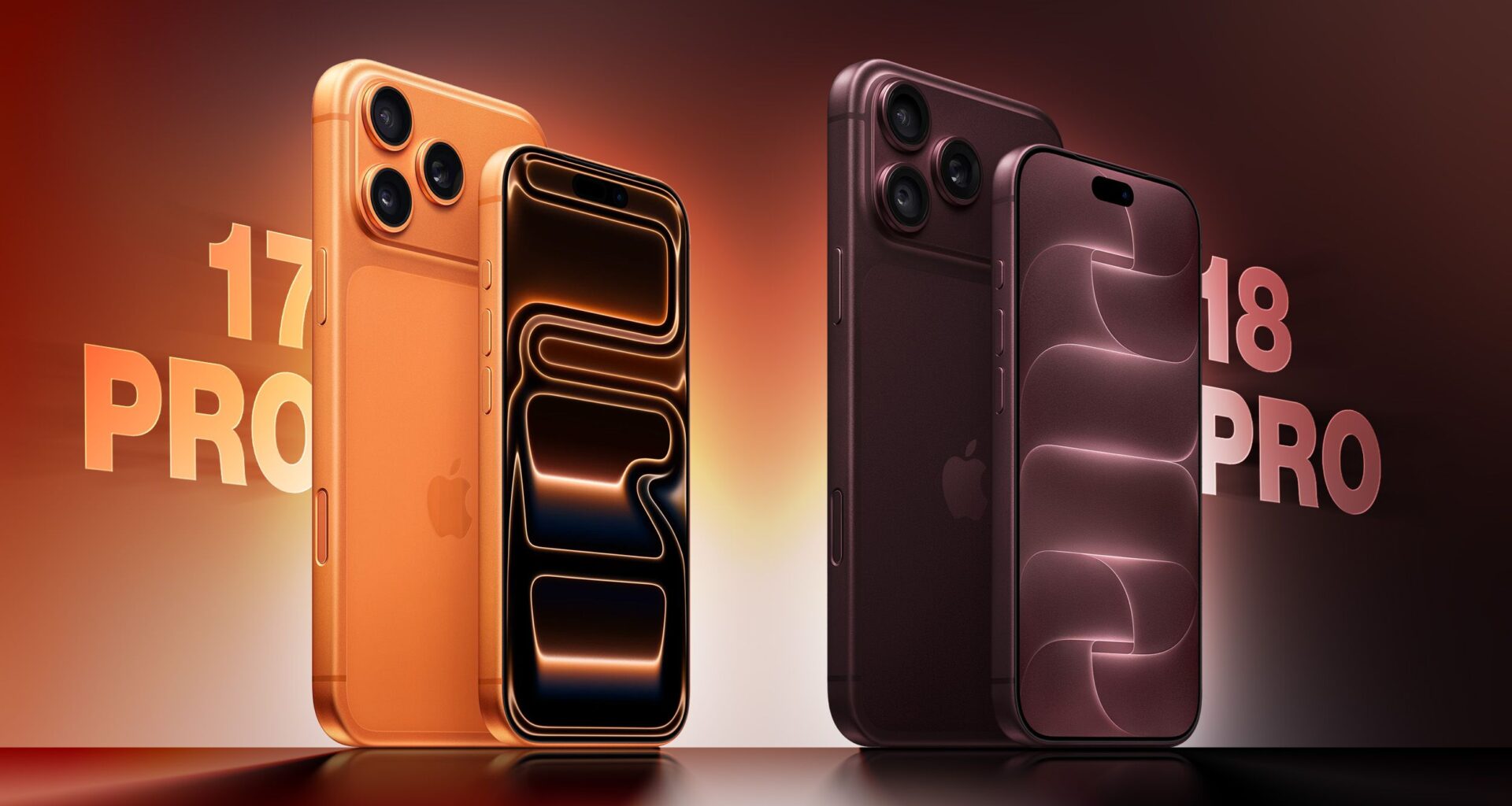
Apple yesterday announced the iPhone 18 Pro and iPhone 18 Pro Max, succeeding the iPhone 17 Pro that launched last September. The new models are built around the A20 Pro chip, a 48-megapixel Fusion Main camera with variable aperture, a redesigned vapor chamber, and a smaller Dynamic Island.
Last year’s iPhone 17 Pro brought one of the biggest design changes to the lineup in years, switching from a titanium frame and glass back to an aluminum unibody with Ceramic Shield 2. With that overhaul out of the way, this year’s update is more about what’s inside the phone than a new look, focused on the chip, camera, and battery rather than another redesign. The iPhone 18 Pro Max, which shares nearly all of these changes, also gets a battery capacity increase of its own, delivering the largest jump in battery life in the iPhone’s history.
The iPhone 18 Pro starts at $1,199 for 256GB, up from the iPhone 17 Pro’s $1,099 starting price. Our guide breaks down every difference between the two generations to help you decide whether the upgrade is worth it. Here’s everything that differs between the iPhone 17 Pro and iPhone 18 Pro:
Chip, Performance, and Connectivity
iPhone 17 Pro (2025)
iPhone 18 Pro (2026)
A19 Pro chip
A20 Pro chip
Built with TSMC’s N3P process (3nm)
Built with TSMC’s N2 process (2nm), Apple’s first 2nm smartphone chip
6-core CPU with 2 performance cores and 4 efficiency cores
6-core CPU with 2 super cores and 4 efficiency cores
50% more memory bandwidth than A19 Pro
6-core GPU with Neural Accelerators
7-core GPU with Neural Accelerators, up to 40% faster than A19 Pro
16-core Neural Engine
Dual 16-core Neural Engine (32 total cores)
Vapor chamber cooling
Next-generation vapor chamber with 3x more surface area than iPhone 17 Pro’s, up to 40% higher sustained performance
New chip packaging that places silicon die beside memory, allowing it to attach directly to the vapor chamber
Qualcomm X80 modem
Apple C2 modem
Rear Camera
iPhone 17 Pro (2025)
iPhone 18 Pro (2026)
Fixed ƒ/1.78 aperture on the 48-megapixel Fusion Main camera
Variable-aperture 48-megapixel Fusion Main camera with four stops: ƒ/1.48, ƒ/1.8, ƒ/2.8, and ƒ/4.0, using six laser-cut blades
API available for developers to control the aperture range within their own apps
Faster Night mode, tied to the new variable-aperture lens
Pro controls in the Camera app: manual lens aperture, shutter speed, white balance, and histogram
New sensor and computational imaging pipeline on the Fusion Main camera, delivering around 50% better low-light performance and more detail in the back of group photos
Photographic Styles 2, adjusting tone and color
Photographic Styles 3, adding texture and grain controls alongside tone and color
Smart focus tracking
Cinematic mode recording up to 4K Dolby Vision at 30 fps
Cinematic mode recording up to 4K Dolby Vision at 60 fps
Cinematic mode effects can be applied after capture, on video shot at up to 60 fps
Improved low-light video
Time-lapse video recording with stabilization, up to 4K Dolby Vision
Apple Reference Image (Fusion Main only), an opt-in feature that signs sensor data so a photo’s authenticity can later be verified
Audio Mix
Audio Mix with new algorithms for higher-quality voices, and the ability to isolate music
Front Camera
iPhone 17 Pro (2025)
iPhone 18 Pro (2026)
Photographic Styles 2, adjusting tone and color
Photographic Styles 3, adding texture and grain controls alongside tone and color
Smart focus tracking
Cinematic mode effects can be applied after capture
Improved low-light video
Time-lapse video recording with stabilization, up to 4K Dolby Vision
Weight and Design
iPhone 17 Pro (2025)
iPhone 18 Pro (2026)
iPhone 17 Pro: Weighs 7.27 ounces (206 grams)
iPhone 17 Pro Max: Weighs 8.22 ounces (233 grams)
iPhone 18 Pro: Weighs 7.44 ounces (211 grams)
iPhone 18 Pro Max: Weighs 8.78 ounces (249 grams)
Dynamic Island supports up to two simultaneous Live Activities
Smaller Dynamic Island, supports up to three simultaneous Live Activities
Available in Silver, Deep Blue, and Cosmic Orange
Available in Silver, Black, Glacier, and Burgundy
Battery and Charging
iPhone 17 Pro (2025)
iPhone 18 Pro (2026)
iPhone 17 Pro: Up to 33 hours of video playback, up to 30 hours streamed
iPhone 17 Pro Max: Up to 39 hours of video playback, up to 35 hours streamed
iPhone 18 Pro: Up to 36 hours of video playback, up to 33 hours streamed
iPhone 18 Pro Max: Up to 45 hours of video playback, up to 40 hours streamed
Up to 50% charge in 20 minutes with a 40W adapter or higher
Up to 50% charge in around 15 minutes with a 60W-capable adapter with Adjustable Voltage Supply
Up to 50% charge in 30 minutes with a 30W adapter or higher, paired with a MagSafe Charger
Up to 50% charge in 30 minutes with a 35W adapter or higher, paired with a MagSafe Charger
Storage and Pricing
iPhone 17 Pro (2025)
iPhone 18 Pro (2026)
iPhone 17 Pro: Available with 256GB, 512GB, or 1TB storage
iPhone 17 Pro Max: Available with 256GB, 512GB, 1TB, or 2TB storage
Available with 256GB, 512GB, 1TB, or 2TB storage
iPhone 17 Pro: Launched at $1,099 (256GB)
iPhone 17 Pro Max: Launched at $1,199 (256GB)
iPhone 18 Pro: $1,199 (256GB), $1,399 (512GB), $1,799 (1TB), $2,399 (2TB)
iPhone 18 Pro Max: $1,299 (256GB), $1,499 (512GB), $1,899 (1TB), $2,499 (2TB)
Discontinued and no longer sold directly by Apple, now only available via third-parties
iPhone 18 Pro: Sold directly by Apple, from $49.95 a month for 24 months via Apple Upgrade
iPhone 18 Pro Max: Sold directly by Apple, from $54.12 a month for 24 months via Apple Upgrade
Apple’s redesigned vapor chamber and the A20 Pro’s move to TSMC’s 2nm process are among the most important updates under the hood this year, and together they raise sustained performance and unlock longer battery life. Battery life rises from 33 hours on the iPhone 17 Pro to 36 hours, and from 39 to 45 hours on the Pro Max, which is the largest battery gain Apple has delivered on an iPhone. Charging is faster too, reaching 50% in around 15 minutes with a 60W-capable adapter, down from 20 minutes last year.
The Dynamic Island sees the most visible external change, shrinking in size while expanding from two simultaneous Live Activities to three, letting users track a flight, a Maps route, and a timer at once without switching apps.
The most significant leap is the Main camera. It trades its fixed ƒ/1.78 aperture on the iPhone 17 Pro for a four-stop variable aperture ranging from ƒ/1.48 to ƒ/4.0, delivering around 50% better low-light performance and giving photographers optical control over depth of field that the iPhone has never offered before. Paired with new Pro controls for manual aperture, shutter speed, and white balance, Photographic Styles 3’s added texture and grain sliders, and Apple Reference Image for verifying a photo’s authenticity, the camera system does more to justify the Pro name than anything else in this update.
The iPhone 18 Pro is clearly aimed at photographers and creators, but the longer battery life, faster charging, and more capable Dynamic Island give casual users real reasons to notice the difference too. Compared with last year’s aluminum unibody overhaul, this is a more targeted upgrade rather than a wholesale reinvention, but between the chip, the camera, and the battery gains.
For existing iPhone 17 Pro or iPhone 17 Pro Max owners, there is no general-purpose reason to upgrade to either new model. The core design, display sizes, and everyday camera experience carry over largely unchanged, and both new models cost $100 more than their iPhone 17 Pro equivalent. The upgrade is worth it if you specifically want variable aperture and manual Pro controls for photography, or if you rely on sustained performance for gaming or on-device AI tasks where the A20 Pro’s cooling and Neural Engine gains will be most noticeable, but realistically this will only encompass a minority of users.
For new buyers coming from an iPhone 16 Pro or older, the iPhone 18 Pro is the better long-term purchase given the newer chip and camera system. That being said, if you can get an iPhone 17 Pro at a substantially lower price, it is probably worth buying last year’s model instead.
Pre-orders for the iPhone 18 Pro and iPhone 18 Pro Max open Saturday, September 12, with availability beginning Friday, September 18.