
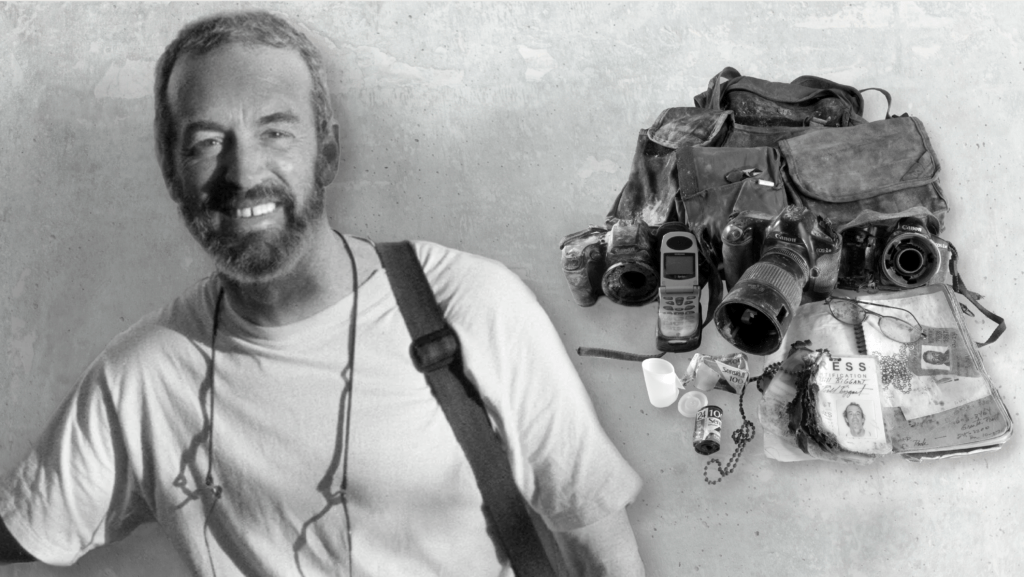
In the wake of Sept. 11, 2001, a grim fact emerged: A total of 2,977 people had died, not including the hijackers. Among them was one photojournalist who was covering the terrorist attacks in New York City.
His name was Bill Biggart. The photographer’s still images show close-up scenes in lower Manhattan before the second tower collapsed, killing him.
What Biggart’s cameras captured remains frozen in time 25 years later.
‘Running Toward Danger’
On the morning of 9/11, Biggart and his wife, Wendy Doremus, were walking their dogs near their home in downtown Manhattan. Around 8:45 a.m., they saw an unusual cloud in the sky. A nearby taxi driver yelled that a plane had just hit the World Trade Center. Biggart ran home for his cameras.
Doremus recalled the moment in video footage for a display about Biggart within an exhibit on 9/11 featured at the Newseum in Washington, D.C.
“I said, ‘Are you going to go down there?’ And he said, ‘Yes.’”
Running back toward the World Trade Center, Biggart began taking photos of what was then just one tower on fire. He looked through his viewfinder and snapped photos as another plane hit the second tower, and he ran closer.
Doremus called Biggart on his cell phone after the first tower collapsed.
I’m safe. I’m with the firemen,” he said. “I’ll meet you in 20 minutes.”
He never made it.
Four days later, Doremus learned Biggart’s body had been found in the rubble near the collapsed north tower. He was 54.
What Biggart’s cameras saw
Rescue workers found Biggart’s cameras, gear, press credentials and wedding ring. The cameras had nearly 300 images from that morning. Much of the film was damaged, but digital images from his Canon EOS D30 survived.