
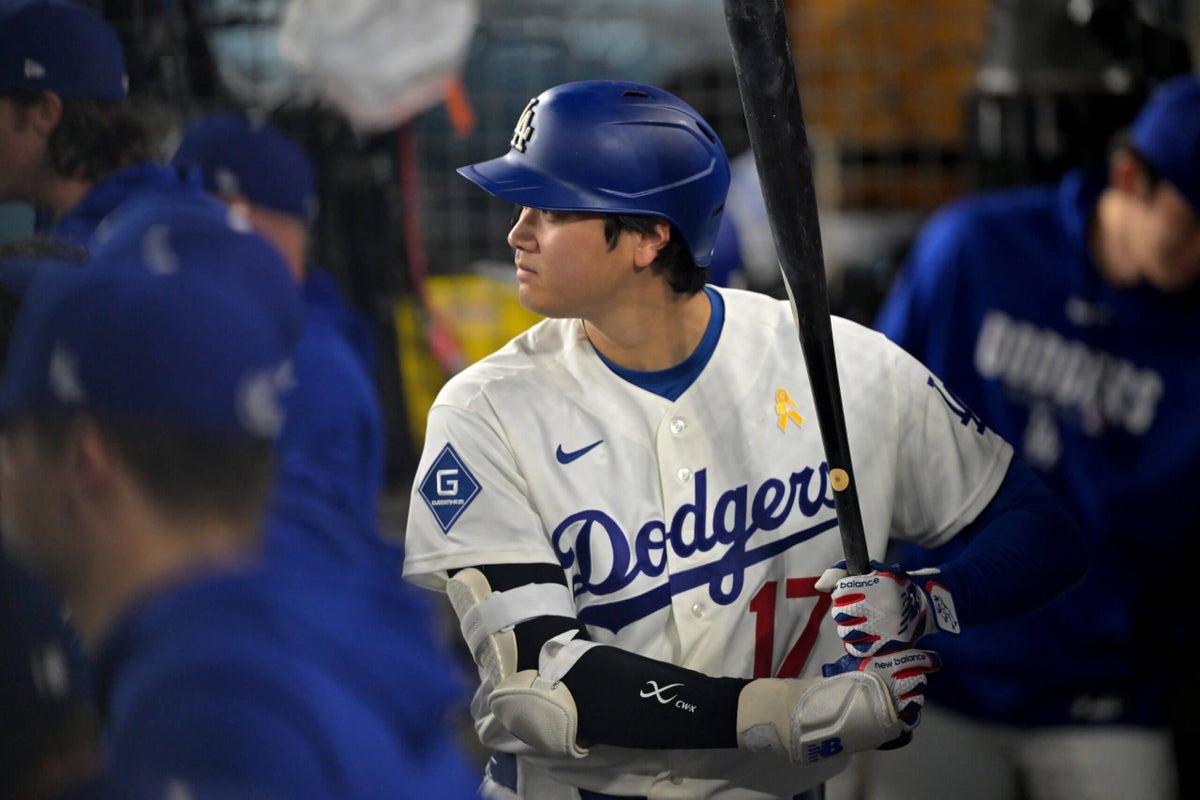
MIAMI — Nobody is blameless in the Shohei Ohtani injury saga. Not the Los Angeles Dodgers’ front office, which should have been more proactive in protecting the team’s biggest star. Not Ohtani, who downplayed the severity of his symptoms. And while hindsight is always 20-20, there were warning signs throughout the last few weeks that suggested a stint on the injured list was the safest course of action if the organization wanted to give its prized star the best possible chance at healing in time to begin the Dodgers’ quest to win three straight World Series.
As the Dodgers prepare to be without Ohtani until Sept. 23 at the earliest, their biggest concern has become a reality. When Ohtani — who is expected to be placed on the injured list on Friday — does return, there is no guarantee he’ll be in optimal condition for the postseason.
After missing six of the Dodgers’ last seven games, Ohtani will now be on the 15-day injured list — the necessary designation per his status as a two-way player — until the final week of the regular season. He has battled through multiple physical limitations throughout the year, including left knee inflammation and right biceps soreness that limited him to 14 starts and 85 2/3 innings as a pitcher and has now sidelined him completely. It is all but official he won’t pitch again this season. It is unknown what he’ll be able to provide as a hitter.
It is the exact situation the Dodgers had sought to avoid all year long. Now, when it comes to the overall health of baseball’s best player, they’ll resort to rolling the dice.
“I think that if it were a postseason game tomorrow, (Ohtani) would be in the lineup,” manager Dave Roberts said Wednesday afternoon, hours before announcing Ohtani would be placed on the IL. “I think that now you’re talking about two weeks, 14 days. I feel that that’s substantial. He’ll be in a much better place than he was today. Is it going to be to 100 percent? Probably not. But I do think that with this time that we’re taking now he’ll be in an adequate spot to finish the season.”
Adequate is a far cry from healthy. It is fair to question how Ohtani was handled in the second half. Should he have attempted a pitching comeback, knowing his physical health was limited? Should the Dodgers have stopped that push sooner, or placed him on the injured list earlier? In their first season of managing Ohtani as a full-season two-way player, there was always going to be some trial and error. That was acknowledged from the start of the season by both Roberts and president of baseball operations Andrew Friedman. And in fairness, there was a cognizant effort to keep Ohtani as rested as possible, including a season-long six-man rotation and an attempt to maneuver Ohtani’s starts to line up on games prior to a team off day, when possible.
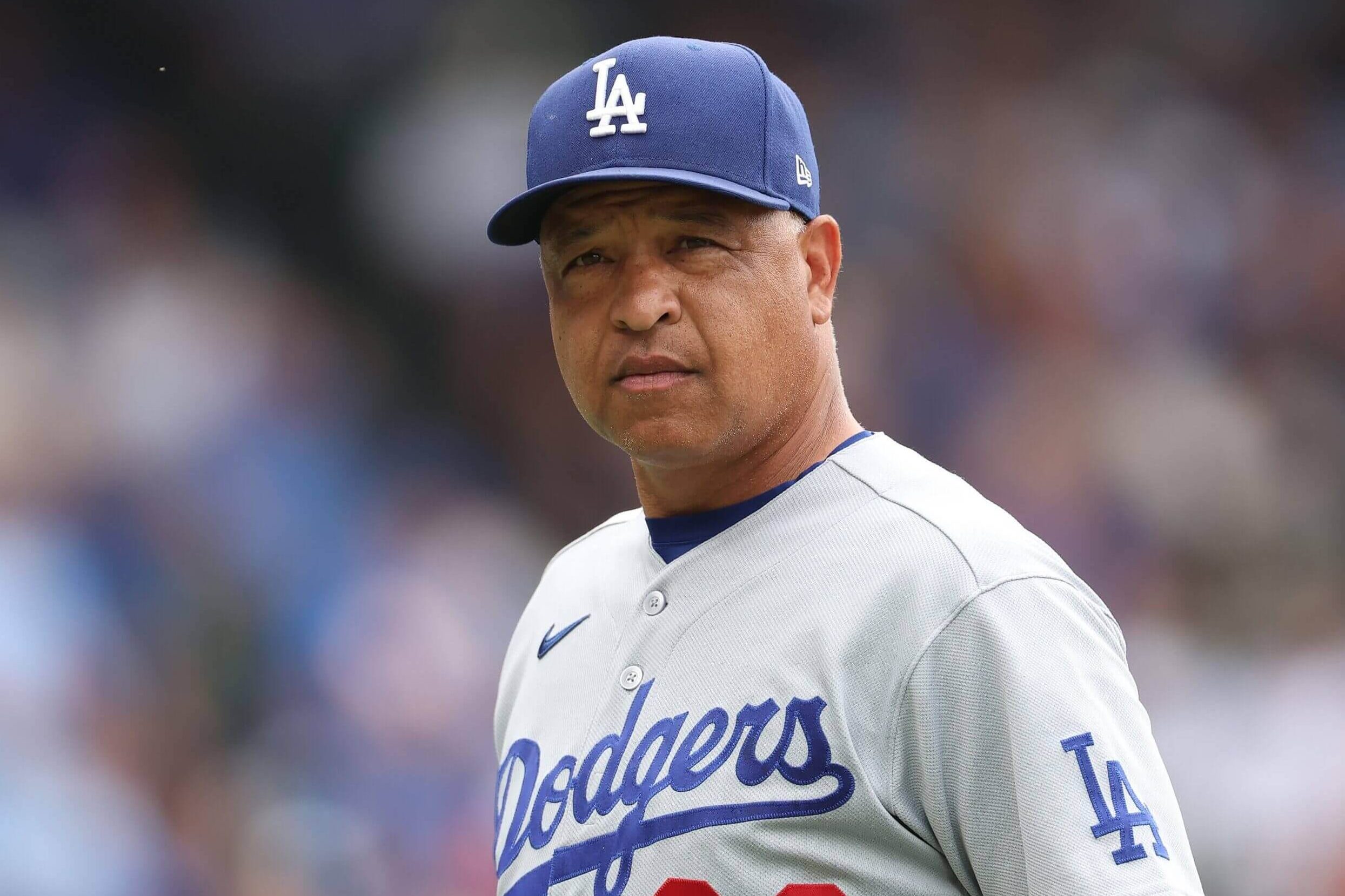
Manager Dave Roberts announced that Shohei Ohtani would be headed to the IL on Wednesday night. (Michael Reaves / Getty Images)
In a perfect world, the Dodgers would have Ohtani as a pitcher and hitter for the postseason. But that plan hit a snag in July, when lingering left knee and right biceps pain sidelined Ohtani from pitching. That Ohtani won’t be able to pitch is disappointing, though the Dodgers’ projected playoff rotation is built to absorb such a hit. Yoshinobu Yamamoto, Blake Snell, Tarik Skubal and Tyler Glasnow make up a staff of opponents’ nightmares. But in an aging lineup that has lacked slug for the majority of the second half, an absence such this is not nearly as easy to cover.
It’s why both the Dodgers and Ohtani stressed that a pitching comeback should only be considered this season if it did not compromise his overall health. As Ohtani started building up, though, his hitting regressed. He officially started a new throwing program on Aug. 8, nearly five weeks since his last major-league start on July 3. Almost immediately, his offensive performance suffered. Ohtani hit .207 with a .699 OPS and a strikeout rate over 25 percent over the next three weeks through Aug. 30, one of the potential dates reserved for him to return to a major-league mound. Instead, he cut his final pre-start bullpen short, raising red flags. The Dodgers scratched Ohtani from their upcoming probables list one day later. They did not disclose a timeframe in which Ohtani could pitch again, but Friedman stressed it was still a possibility.
“It’s the competitor in him,” Friedman said of Ohtani on Sept. 1. “He wants to be out there, you know, starting every turn and going deep into games and helping us in the box, which is great,” Friedman said. “But we have to make sure we do it in the most thoughtful way.
“We will get him in a game at some point. When? I don’t know exactly yet.”
One night later later, Ohtani racked up a four-strikeout night against the St. Louis Cardinals. It was a glaring enough performance for Roberts to concede Ohtani no longer looked healthy. The manager went on to sit Ohtani for four straight games. During that time, general manager Brandon Gomes fielded questions about Ohtani’s status. He indicated the organization did not believe Ohtani’s health to be seriously impacted. He also backed up Friedman’s optimistic comments that he could pitch again.
“It is still trying to strike the balance of, any Shohei innings are really valuable. But if it comes at a cost then you make that decision,” Gomes said on Sept 3. “We still have some time. We can continue to see how he bounces back and throws. If that is something that doesn’t make sense and we want to make a decision one way or the other, we will. Just today is not a day or indicative of anything to make a decision on that.”
“We’ve got to kind of see how he continues to feel,” Gomes added. “At some point if it’s a, ‘Hey, the upside outweighs the downside,’ then we shut it down. Doc has said this, we’ll continue to say it. We’re not going to put his offensive performance and compromise that. But right now, not feeling that that’s necessarily a thing. We just don’t have enough information to feel strongly on that.”
A dramatic three-week decline should have been telling enough. Gomes chalked it up to the ebbs and flows of the season.
“Sometimes guys struggle. It’s hard. Baseball’s hard. So as he’s trying to balance things and work through it, like I said — there’s nothing overly concerning about his performance and what we expect moving forward.”
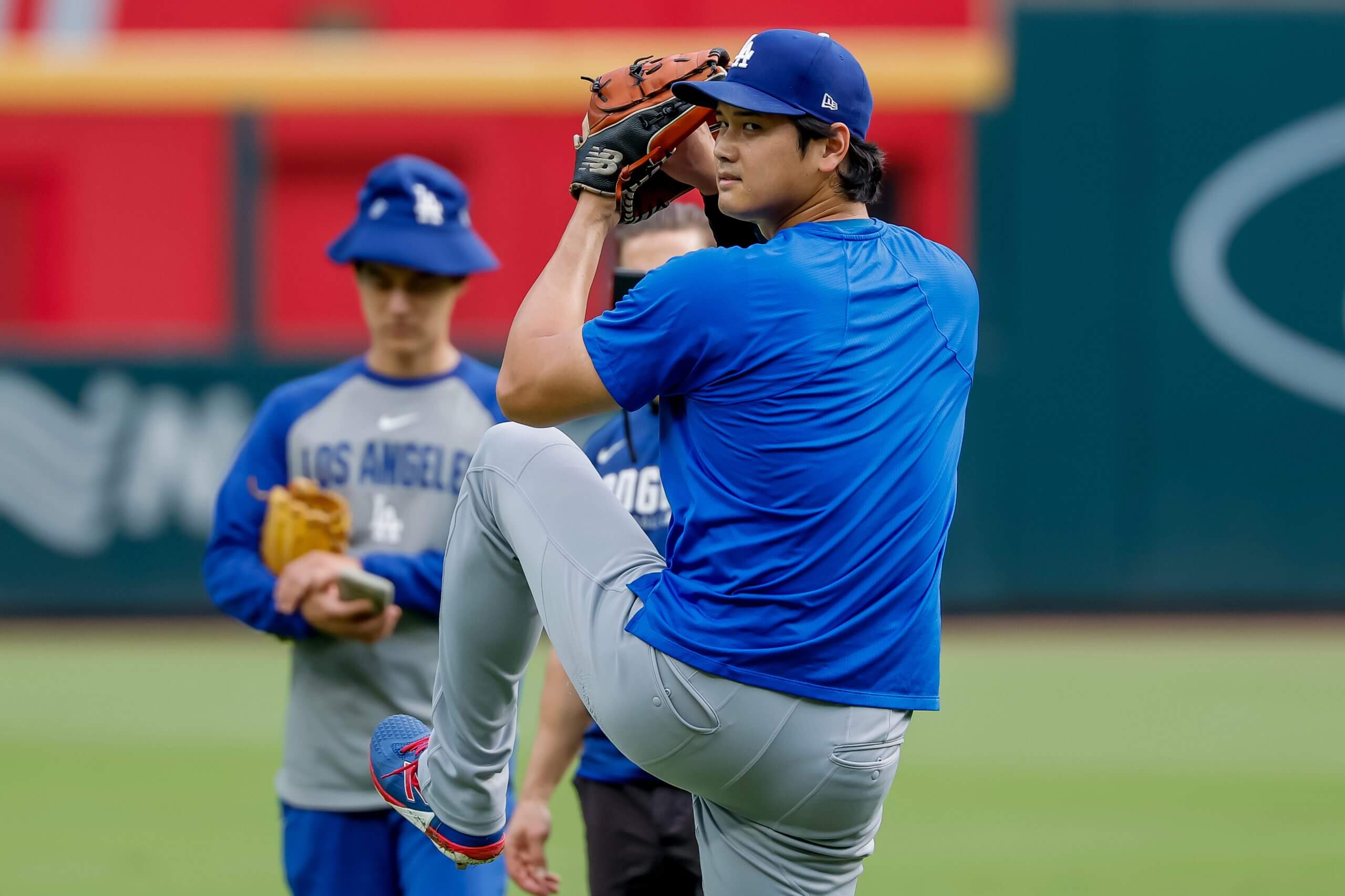
The Dodgers and Shohei Ohtani had both stressed that a pitching comeback should only be considered this season if it did not compromise his health. (Erik S. Lesser / Associated Press)
Until there was. The Dodgers’ front office didn’t realize the severity of Ohtani’s discomfort. Then came Monday — when Ohtani returned to the lineup, went 0-for-3 with two strikeouts, tweaked something in his arm during a swing and did not immediately say something about it. He missed two more games until the team decided to shut him down.
Looking back, it is something Roberts wish happened a week ago.
“I think if we look right now, here today, I would love to go back and put him on the IL,” the manager said. “But I did feel at that moment in time, we all felt that giving him four days was sufficient. He was agreeable. Getting him out there on Monday with the hope that he would be able to play tonight. But where we’re at right now, sure.”
All year long, the Dodgers have stated that having Ohtani healthy was the utmost priority. Throughout the second half, it became clear the physical demands of two-way play had taken a toll. There are learning lessons to be had, including for Ohtani who is 32 now and has not performed a full season of two-way duties since making 23 starts for the Los Angeles Angels in 2023.
“I want to make sure that when I look back this season, that I used this as an experience, a learning experience and make sure that I use that as something to improve upon for next season,” Ohtani said through team interpreter Will Ireton on Monday. “I think the thing that I was more focused on was making sure that the pitching wouldn’t cause the worse scenario, which was for me to not be able to play at all.”
Alas, here we are. The Dodgers will now wait with bated breath until Ohtani’s eligibility date. They’ll hope he feels healthy enough to take batting practice and perhaps participate in simulated games while he’s inactive, and that four to five big-league games will be enough ramp-up time for him to reestablish his timing and feel at the plate.
The good news: The Dodgers (89-57) enter Friday winners of seven straight games, and can clinch a postseason berth as early as Saturday and their 13th division title in their last 14 seasons as early as Sunday. Los Angeles promoted top prospect Josue De Paula from Double A to replace Ohtani on the active roster; De Paula will make his major-league debut Friday against the Miami Marlins as the team’s designated hitter. The Dodgers also hold a 3 1/2 game lead over the Atlanta Braves for the second spot in the National League playoff picture, which would lock down a coveted first-round bye.
It does Los Angeles little good to fret over what should or should not have been different. There is plenty of time to evaluate the team’s approach over the offseason, as there’s no indication Ohtani won’t be used as a two-way player next year. What matters the most now is putting together the most effective roster, one that the Dodgers hope will include the best possible version of Ohtani.
“Anyone can do that, and say, ‘What could you have done better or different?’” Roberts said earlier this week. “Absolutely. That’s something going forward we’re gonna look at, absolutely. But, it’s certainly not a blame game thing. It’s learning from what happened and getting better.”
“I want to make sure that when I look back this season, that I used this as an experience, a learning experience and make sure that I use that as something to improve upon for next season,” Ohtani added.
That’s a sentiment that should be applied to all involved.