
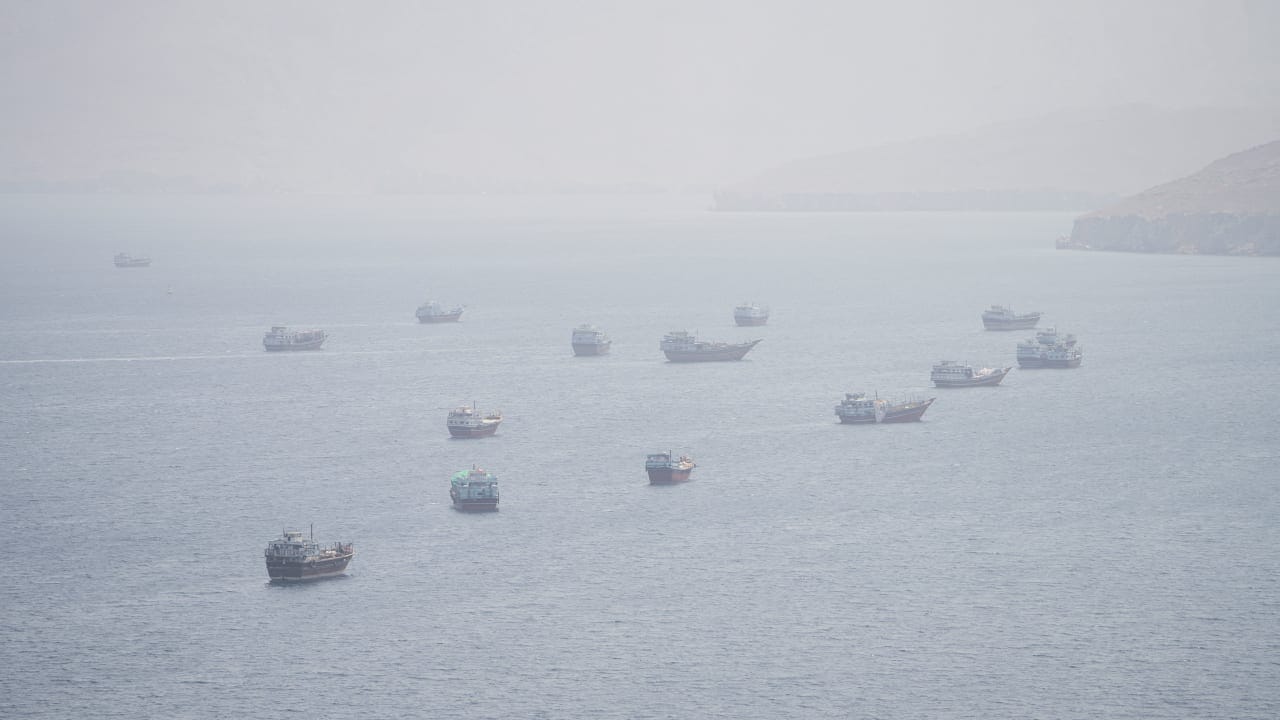
A meeting between Iran and Gulf states planned for Monday in Oman will be a chance to discuss issues including the Strait of Hormuz, but is not expected to yield a signed agreement over the blockaded waterway, a senior Iranian official said on Saturday.
Iran has been negotiating for months with Oman, which controls the opposite bank of the strait, over a deal that would govern transport through it. Oman has long said other Arab countries in the Gulf support its negotiations.
Tehran announced on Friday that it was planning to attend a meeting with Gulf countries in Oman on Monday. Oman has not officially announced the meeting, and other regional states have so far remained silent. Bahrain said on Saturday it would not attend meetings with Iran.
The Kingdom of Bahrain said it will not attend the meeting to discuss the Strait of Hormuz until diplomatic ties between the two countries are restored, according to state media.
The Iranian official, who discussed the plans on condition of anonymity, said Monday’s meeting was called at Oman’s initiative, and would provide a forum to discuss other regional issues as well as Hormuz.
According to the Iranian official, Iran still wants an agreement that would allow it to collect fees from ships that use the strait, which Oman rejects.
Around a fifth of global oil supplies transited the strait before the United States and Israel attacked Iran in February, launching the war.
Global oil prices have surged over the past week after the United States and Iran both fired on tankers in the strait, and Iran’s Houthi allies in Yemen advanced near another crucial Middle East conduit for oil, the Bab el-Mandeb Strait on the opposite side of the Arabian Peninsula.
Speaking to the semi-official Tasnim news agency on Saturday, an unnamed Iranian official source said any understanding between Iran and Oman does not provide for the immediate reopening of the Strait of Hormuz but establishes the basis on which it could reopen.
The source said the arrangement would be a step toward Iran exercising sovereignty over the strait and that its reopening depended entirely on the United States meeting Tehran’s conditions.