
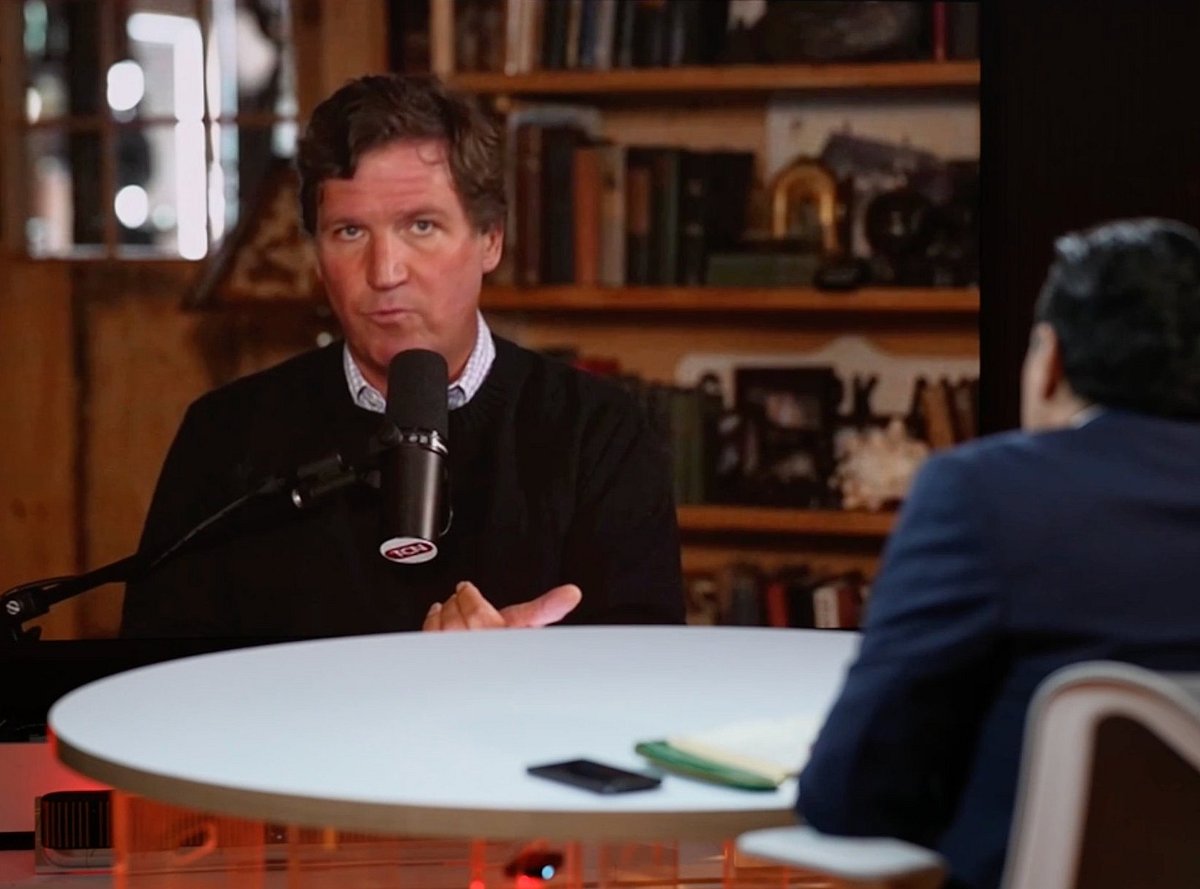
Carlson’s argument about Israel and the Gulf
Carlson framed the conflict within a broader theory of regional power.
He argued that, like other nuclear-armed powers, Israel seeks to dominate its surrounding strategic environment.
According to Carlson, weakening Iran as a regional power, destabilising the GCC and reducing the US military footprint in the Gulf could ultimately serve Israel’s strategic interests.
He compared this with Russia’s influence over neighbouring states, China’s claims involving Taiwan and the South China Sea, and the US “Monroe Doctrine.”
Carlson alleged that Israel has an “interest” in preventing Iran from remaining a major regional power and in limiting the growing influence of the wealthy GCC states.
He pointed particularly to the UAE, Saudi Arabia and Qatar, which have developed into major economic, financial, aviation and tourism hubs.
Why Carlson’s spilt with Trump matters
The Carlson-Trump split is significant because Carlson was not simply another conservative critic. He was one of the most influential voices in the populist media ecosystem that helped shape the modern MAGA movement.
His break with Trump reflects a larger ideological fight inside Trump’s coalition: whether “America First” means supporting Trump’s foreign-policy decisions, or opposing US military intervention even when Trump orders it.
That debate has become particularly acute over Iran.
Other conservatives view Trump’s Iran campaign, launched alongside Israel in early 2026, has evolved into a prolonged conflict resembling the post-9/11 “forever wars” that Trump had campaigned against.
The conflict has also generated economic and political costs, including higher fuel prices and growing opposition at home.
Carlson’s latest comments add another dimension: his claim that he personally warned Trump before the war about the potential consequences for the Gulf.
If Carlson’s account of that Oval Office conversation is accurate, it would mean that the disagreement was not merely a reaction to Trump’s decision to go to war.
Carlson says he directly presented Trump with an alternative interpretation of the conflict — one in which the war could weaken not only Iran but also some of America’s closest Gulf partners.
That helps explain why Carlson’s break with Trump has become more than a disagreement over one military operation: it has become a fundamental dispute over what “America First” means, who benefits from US power in the Middle East, and whether Trump himself has departed from the foreign-policy philosophy that helped propel him back to the White House.