
A 3,600-year-old burial in western Azerbaijan has yielded weapons and other objects linked to a high-ranking Bronze Age warrior.
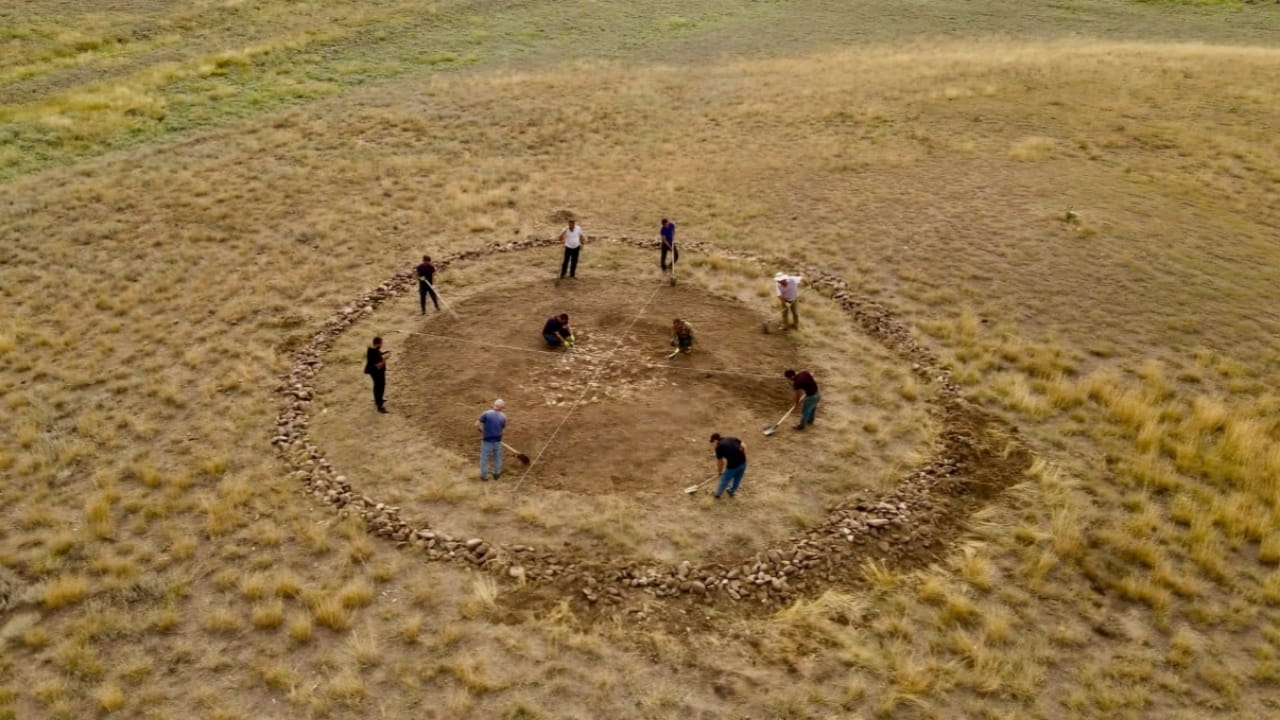
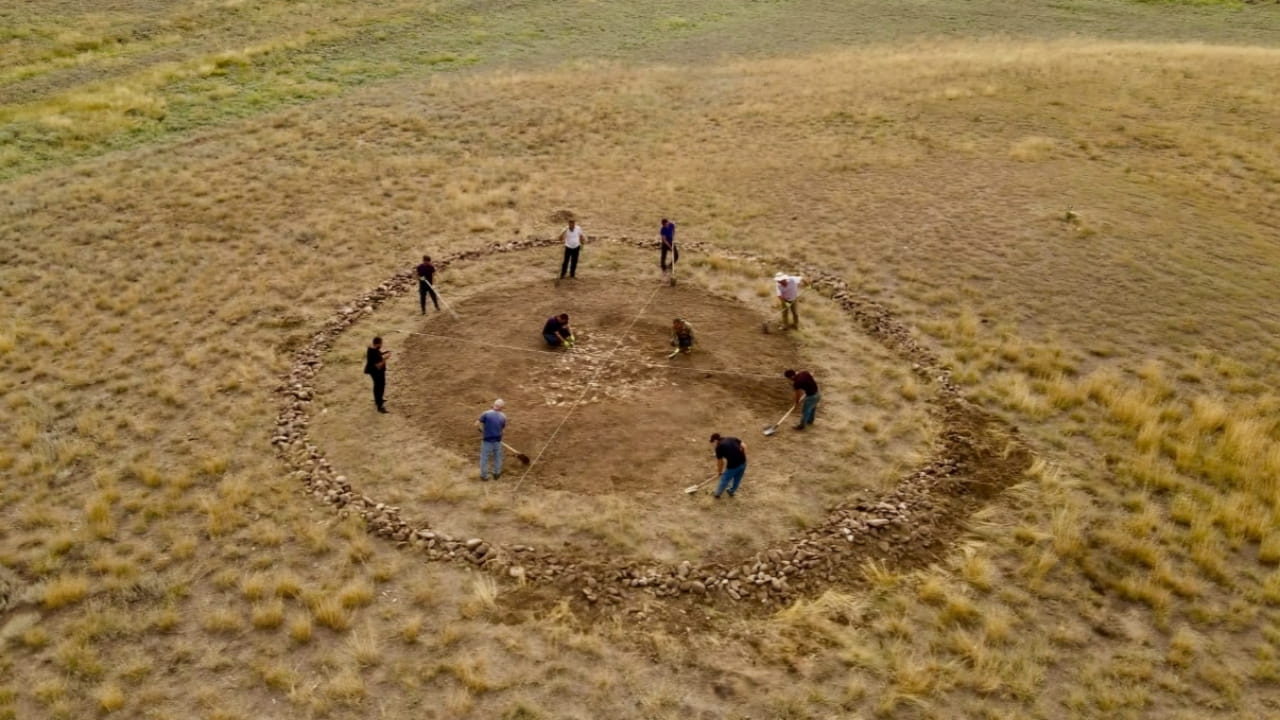 The Bronze Age kurgan under excavation in Azerbaijan. Credit: Keshikchidagh State Historical and Cultural Reserve
Archaeologists found the artifacts in Kurgan No. 4 in the Sariyokhush area of the Keshikchidagh State Historical and Cultural Reserve, in Agstafa district. The finds include a rare stone mace head, a bronze dagger, and several types of arrowheads.
The burial dates to the Middle Bronze Age of the South Caucasus, around the 17th to 16th centuries BCE. Archaeologist Vagif Asadov, a leading researcher at the Institute of Archaeology and Anthropology of the Azerbaijan National Academy of Sciences, leads the excavation.
The stone-covered kurgan measures about 12 meters across and stands around 80 centimeters above the surrounding ground. The burial chamber lies 1 to 1.2 meters below ground level.
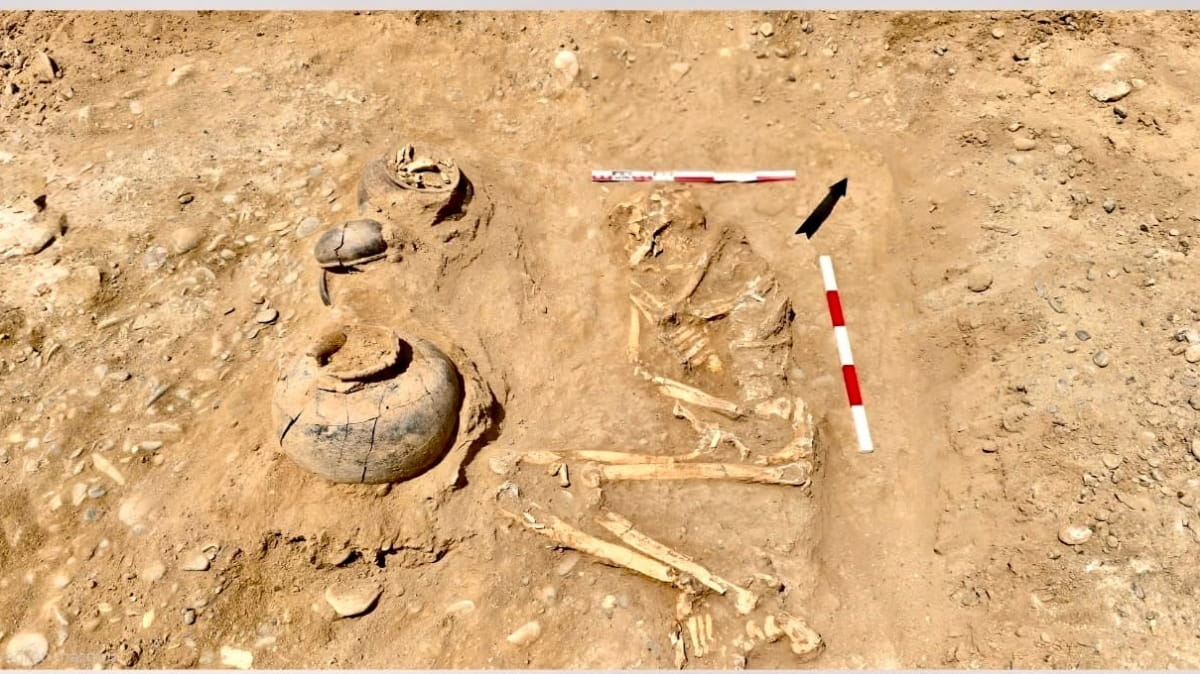 The human burial inside the kurgan, accompanied by weapons and other grave goods. Credit: Keshikchidagh State Historical and Cultural Reserve
The objects placed inside point to a person with high social and military standing. The bronze dagger is especially important because such weapons were linked with warriors and military commanders during the Bronze Age.
A rare mace head made from diorite stone is among the most unusual finds. The object weighs about 400 to 500 grams and has a hole drilled through its center from both sides. A wooden or bone handle was likely fitted through the opening.
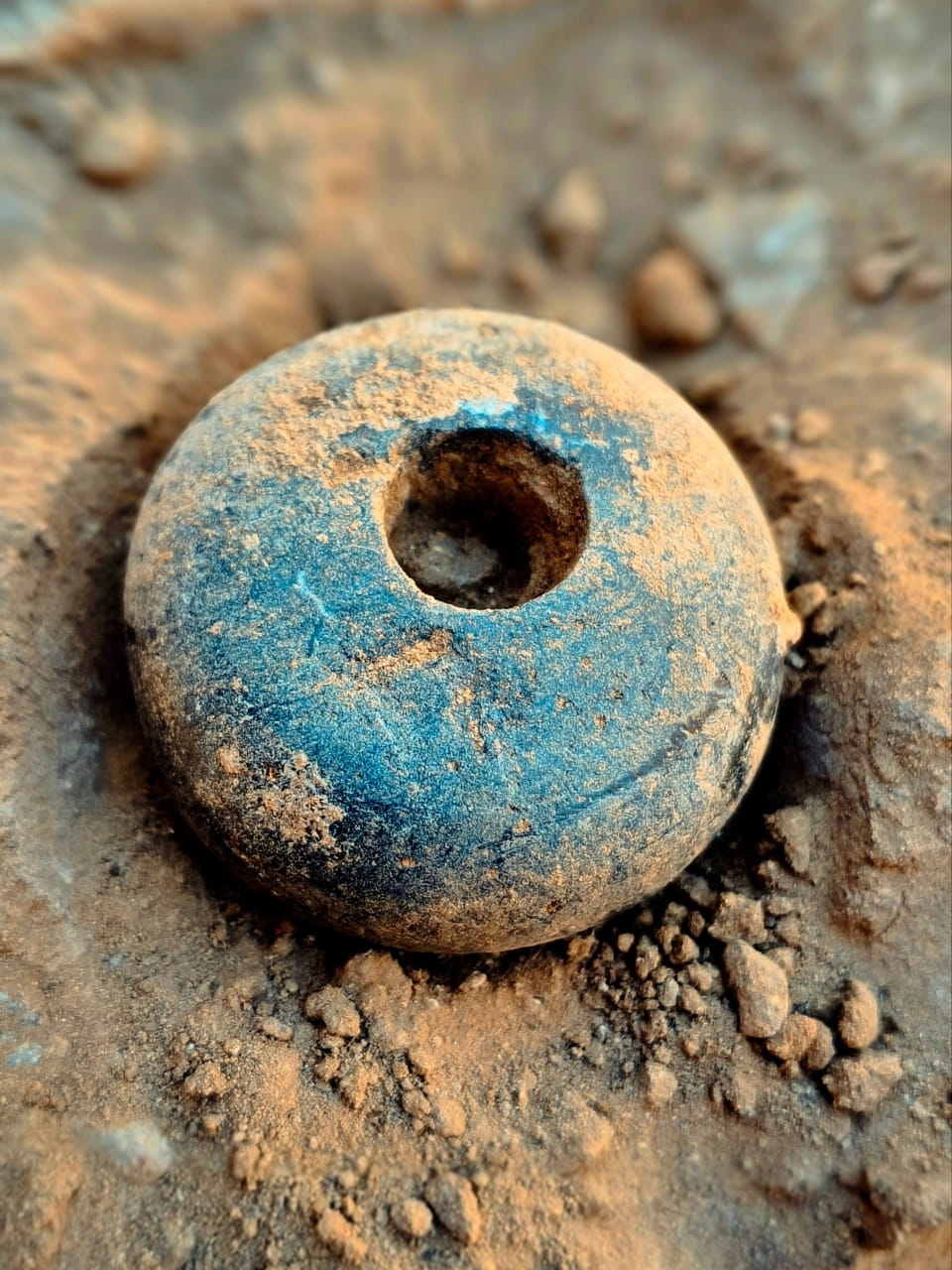 The rare diorite mace head, a possible symbol of high military and social status. Credit: Keshikchidagh State Historical and Cultural Reserve
Mace heads served more than a practical purpose in Bronze Age society. Their use also had a symbolic side, with such objects associated with military leaders, tribal chiefs, and members of the military elite.
The mace head has a smooth, balanced and symmetrical shape. Its careful finish also points to advanced stoneworking skills in the South Caucasus during the Bronze Age.
The excavation team also recovered several arrowheads. Among them are rare winged forms associated with Middle Bronze Age weapons. Two arrowheads were made from black obsidian, showing the use of regional obsidian sources and links between communities through the movement of raw materials.
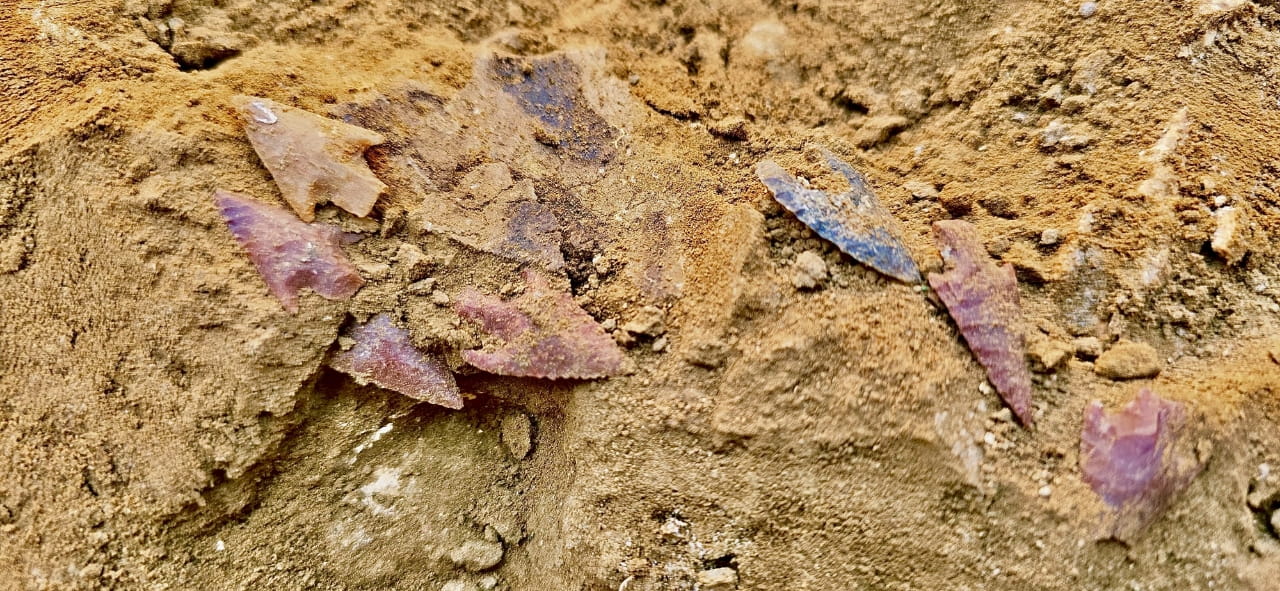 Arrowheads recovered from the kurgan, including obsidian and flint examples. Credit: Keshikchidagh State Historical and Cultural Reserve
Nine additional arrowheads were made from flint. Their dark oak-red color, fine workmanship and carefully shaped forms add to the evidence for the high status of the person buried in the kurgan.
The artifacts also provide evidence about the social and military structure of Bronze Age communities in the region. Their placement within the burial suggests a society where weapons and symbols of authority held an important role.
The excavation forms part of the Scientific Archaeological Excavations and Summer School 6 in Keshikchidagh project. The project brings together specialists, students, master’s students and young volunteers for fieldwork at the reserve.
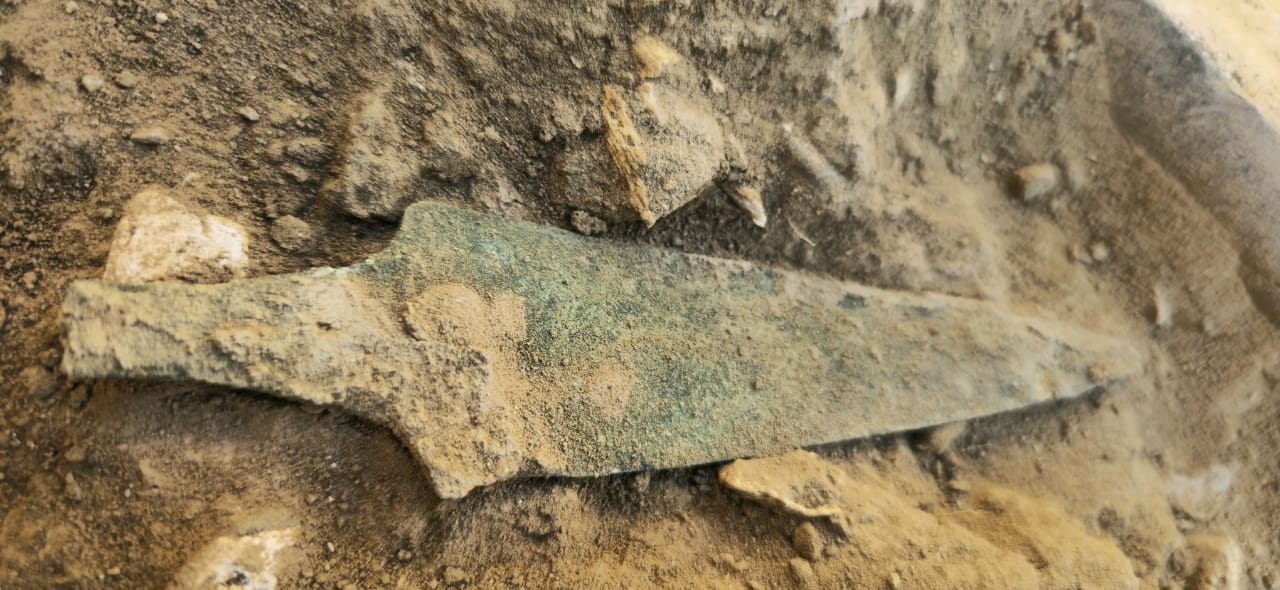 The bronze dagger found in the burial. Credit: Keshikchidagh State Historical and Cultural Reserve
Reserve staff are now carrying out initial restoration and laboratory work on the recovered materials, including ceramic objects. The finds will later enter the reserve’s collection after proper documentation.
Researchers also plan to obtain more precise dates through radiocarbon testing. Samples will be sent to the Museum Center at the University of Tokyo in Japan, TİKA in Turkey, and Woods Laboratories at the University of Miami in the United States.
The ongoing work in the Keshikchidagh Valley adds new archaeological evidence for Bronze Age Azerbaijan and the wider South Caucasus. The kurgans also offer a record of social rank, warfare and exchange during a period of major change in the region.
More information: Keshikchidagh State Historical and Cultural Reserve