
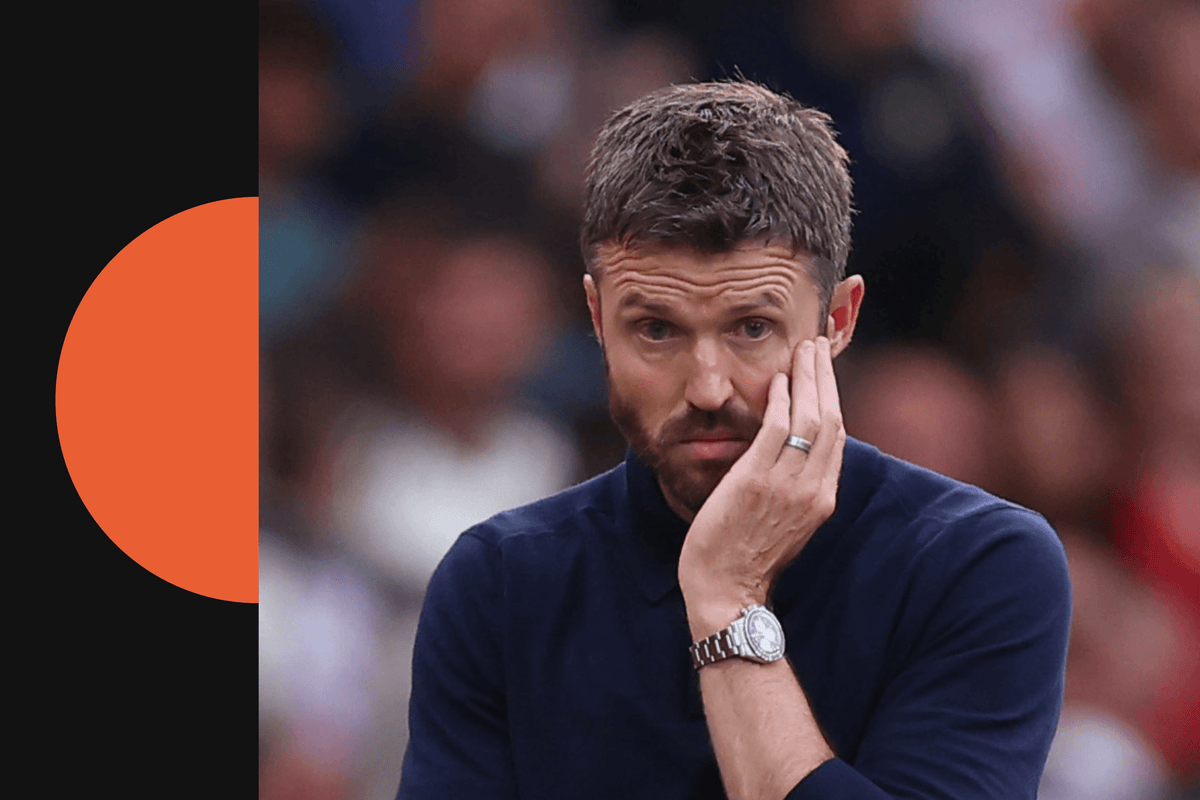
Welcome to The Briefing, where every Monday during this season The Athletic will discuss three of the biggest questions to arise from the weekend’s football.
This was the weekend when Manchester United lost to Manchester City, despite having a man advantage for over an hour, courtesy of a controversial VAR decision. Arsenal beat Sunderland, surviving a highly contentious penalty to win in the north east. And Tottenham Hotspur still cannot score; their 0-0 draw with Everton made it four straight Premier League games without a goal.
Weekend results
Saturday
Bournemouth 2 Brentford 2
Aston Villa 1 Nottingham Forest 2
Chelsea 2 Hull City 2
Crystal Palace 2 Ipswich Town 3
Liverpool 0 Fulham 0
Spurs 0 Everton 0
Sunderland 0 Arsenal 2
Sunday
Coventry City 0 Brighton & Hove Albion 5
Manchester United 0 Manchester City 1
Was this a missed chance for Carrick’s United?
Michael Carrick, you will not get away with many of those.
Perhaps the most damning assessment of Manchester United’s performance in the derby is that for long periods it became easy to forget that Manchester City were playing with 10 men. Phil Foden’s red card was never going to be terminal. City had far too much quality for that. Nevertheless, there were few moments after the 23rd minute when United were able to ratchet up the pressure or make it feel as if they truly controlled the game.
Part of that was City. There were some stirring, resilient performances among their deep midfielders, while all of their attacking players did everything they could with whatever possession was available.
But that only emphasised United’s comparative lack of structure. There was a time, admittedly many years ago, when waves of pressure would crash over an opponent’s box in that situation. It might not have always led to goals, but any team that survived would be thoroughly examined.
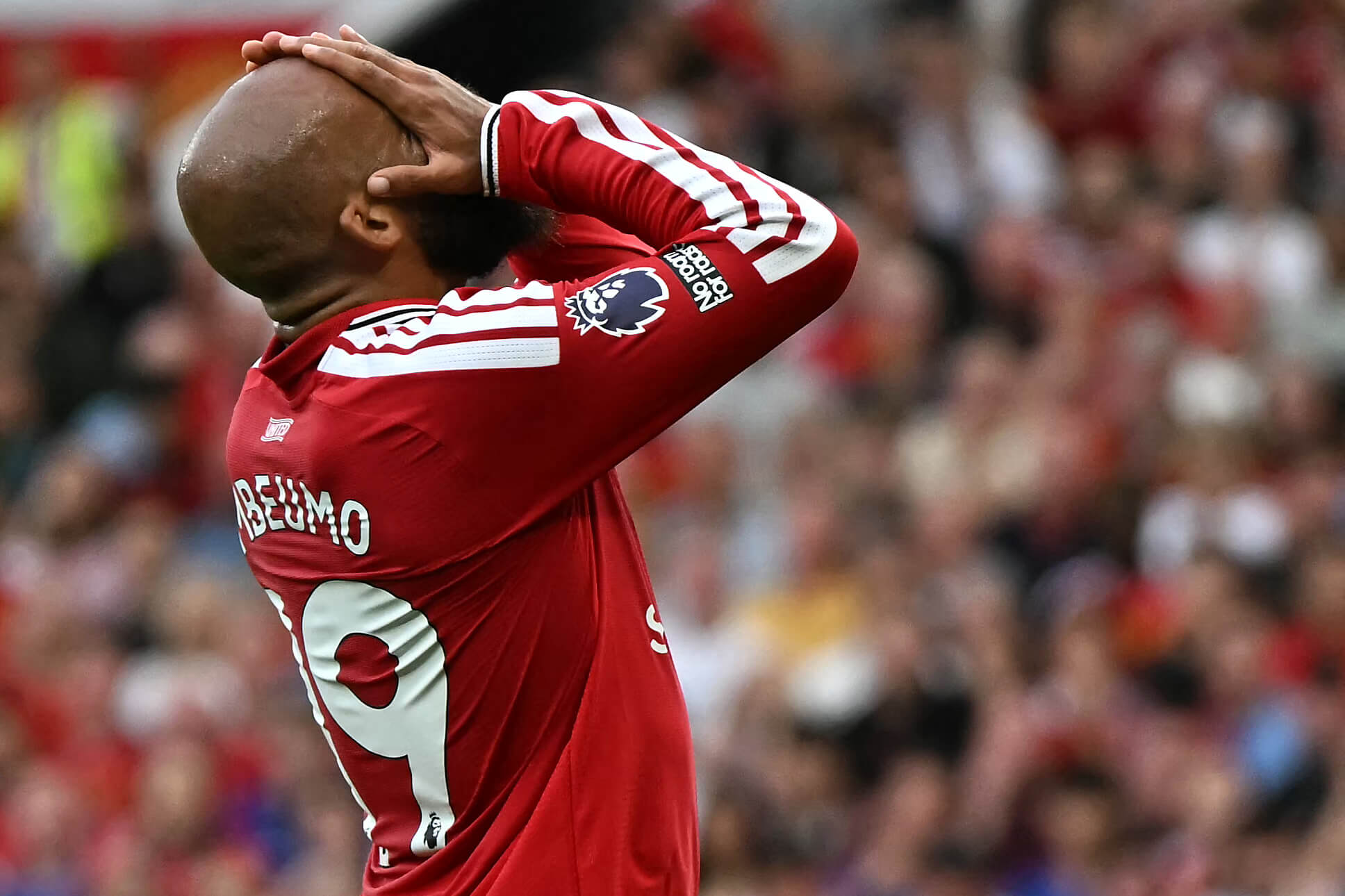
Bryan Mbeumo feels the frustration as United struggle to impose themselves on the derby (Paul Ellis/AFP via Getty Images)
But City never were. United were alarmingly impotent in a way which, even now, is strange to see and damaging for a head coach’s reputation.
On Sunday, the plan appeared no more complex than hoping that Bruno Fernandes or Kobbie Mainoo could produce a miracle pass or, in the first half, that Marcus Rashford could generate momentum by skipping past defenders. It was individual football. The sort of star-led approach that teams tend to fall back on when, sorry, they are under interim management.
Carrick is not an interim anymore, of course, but that’s more of a technical detail than a sporting reality.
And there was no reason for this contrast to be so unflattering. This was not Pep Guardiola’s City. This is a new team, with an entirely rebuilt midfield, that edged past Coventry last weekend and were rattled at home by Bournemouth less than a month ago. And this was all that Carrick’s United could muster against them, with an extra player? Sure, Erling Haaland’s goal might have been given due to an “error of judgement”, but it was still a bad performance.
Times change and eras fade, but a performance like that will — forgive the cliche — never be good enough for Manchester United.
Were Arteta’s comments fair?
Mikel Arteta’s response to the penalty Arsenal conceded at the Stadium of Light has lit a fire. It was ultimately immaterial as Enzo Le Fee’s effort was saved, but Arteta branded the decision “unacceptable” in his post-match interview and that has become the game’s biggest debating point.
Firstly, Arteta says nothing by accident. He is meticulous in his coaching and that includes the way he communicates through the media. When he said, referring to the incident between Ezri Konsa and Dan Ballard, that “making a decision to award a penalty of this kind at this level is unacceptable”, he was knowingly being hyperbolic.
Why not? Creating the perception of injustice is a managerial tactic almost as old as the game itself. Sir Alex Ferguson did it. So did Jose Mourinho, Pep Guardiola and many, many others, each with the aim of suggesting to officials that they are owed something in return. Does it work? Who knows, but even if it applies a pound of extra pressure on a referee in a future match, it’s surely worth it.
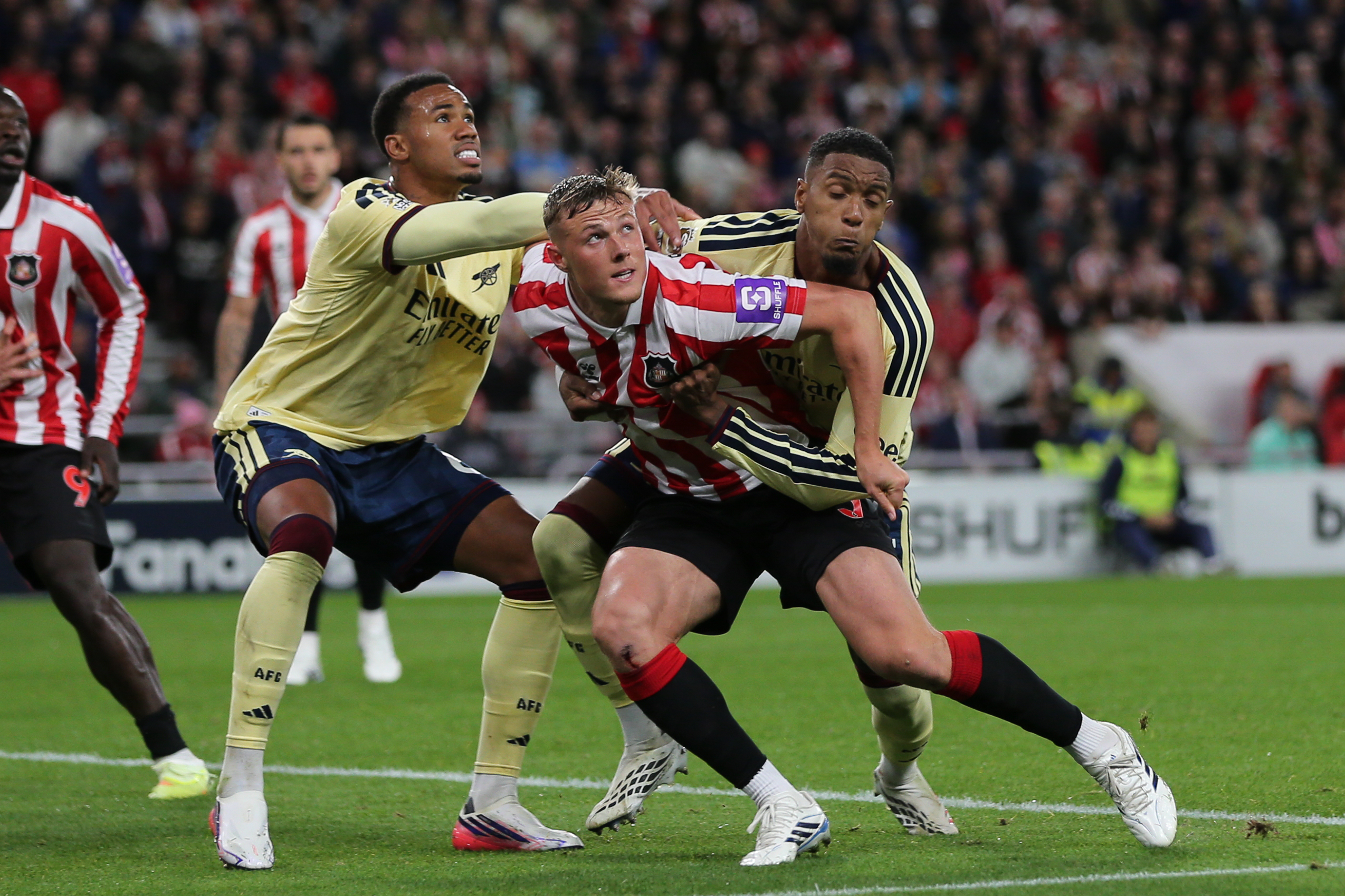
A Sunderland penalty was given for Ezri Konsa’s tussle with Dan Ballard (Michael Driver/MI News/NurPhoto via Getty Images)
And there’s nothing new here. It’s a situation we have all seen dozens of times, just with different actors. It’s Arteta’s job to bend circumstances to his team’s favour and this was an example of him trying to do that. Rival supporters will froth angrily about what he said. Arsenal fans will agree entirely. Welcome to tribalism.
He is right to complain, though, because who understands this law anymore? The interpretation around physical contact has become so vague that nobody can have any faith in what any referee, in any game or situation, will decide to do next. After all, that exact incident could occur in a Premier League match next weekend and produce an entirely different outcome — that’s the “unacceptable” part of this. These decisions come and go, but without ever creating precedents or clarity.
It’s also a shame that David Raya’s save from Le Fee’s penalty has been lost in the furore. Arsenal, Manchester City, Chelsea and Manchester United all failed to win at the Stadium of Light last season, so that could yet prove another significant piece of goalkeeping from the Spaniard.
Spurs still lacking chemistry?
What are Tottenham missing? Goals, obviously, but more than that: someone who takes responsibility for creating and finishing chances.
Their first half against Everton was largely good, with their use of the ball imaginative and — importantly — quick. That was actually some of the best football they have played in a long time. A low bar, sure, but true nonetheless.
But when it came to the critical moments in the attacking third, the point for a final pass, a shot, or a run across a defender, there was always a pause, giving David Moyes’ defence the opportunity to recover position. That helps explain why Spurs had a healthy number of touches in the box (39), but created an xG of just 0.69. They mounted plenty of promising attacks, in overloads on both flanks or from crossing opportunities at the byline, but invariably squandered them.
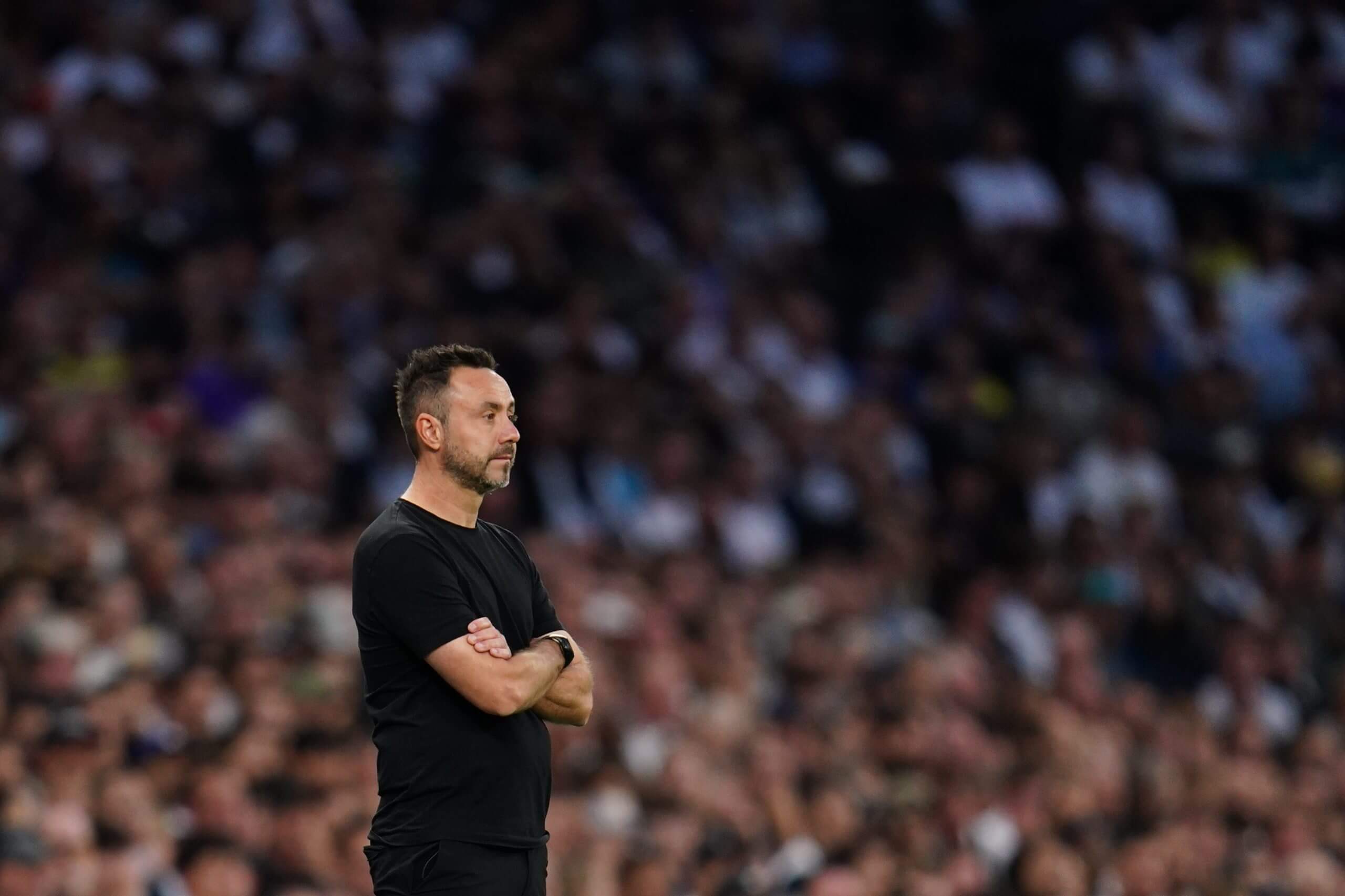
Roberto De Zerbi is yet to see his team score in the league this season (Harvey Murphy/News Images/NurPhoto via Getty Images)
That hesitancy could be seen in other phases, too. In the second half, the crowd were provoked a few times by players choosing conservative options with the ball in midfield.
Some of these issues are growing pains. There is not enough chemistry in Roberto De Zerbi’s team at the moment, which is making everything they do look awkward. But there is also nobody in their attack who seems willing to take a risk with the ball. Because attacking chances are rare, the players are all loath to waste them and be the reason for the crowd to groan. The consequence is really mechanical attacking that surprises nobody and desperately needs a rogue element.
It’s easy to be critical from the outside. Awareness of this problem is growing and, with it, so does the pressure. But Spurs need to punch through this somehow and doing that is going to require courage from somewhere.
Coming Up
Newcastle United travel to Elland Road to face Leeds United on Monday, with both teams still unbeaten in the Premier League.
The Europa League league phase begins on Wednesday. The pick of the games of the first matchday includes Milan against Benfica — that’s now Ruben Amorim against Marco Silva in the technical areas — and the first European game in Bournemouth’s history; they’re in San Sebastian on Thursday to play Real Sociedad.
There’s also a full midweek program in La Liga. Real Madrid are in Elche on Tuesday and Barcelona host Racing Santander on Wednesday.