
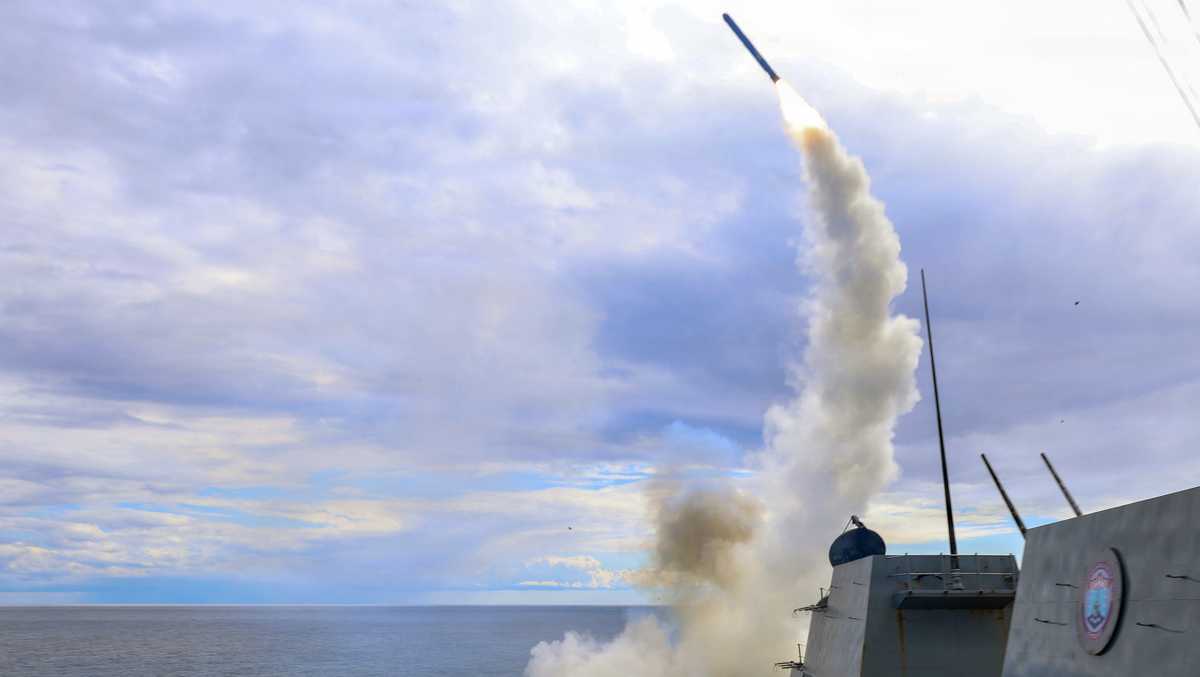
Iran war cost US more than $38 billion in first five months, Congressional Budget Office reports
The Congressional Budget Office reports the Iran war has cost $38 billion so far, with further monthly expenses projected at $3 billion, contributing to higher gas prices and inflation.

 WASHINGTON —
The Congressional Budget Office reports that the Department of Defense spent more than $38 billion on the first five months of the Iran war, through Aug. 1, with monthly costs projected at $3 billion.
According to the CBO, the cost of the war aligns with Defense Secretary Pete Hegseth’s earlier estimate, which noted the war has cost the U.S. about $37.5 billion.
The nonpartisan Congressional Budget Office predicts the Iran war will add half a percent to inflation into the first quarter of 2027. This is largely due to reduced oil and natural gas shipments through the Strait of Hormuz and disruptions to shipping through the Red Sea. That’s driving up energy prices.
According to AAA, regular gas is now $4.37 per gallon, a 47% increase since the war began in February. Diesel has been setting new daily records for the last several days and is now $6.31 per gallon, on average. Diesel is used to transport most goods, and the added cost of shipping will likely be passed on to consumers.
An Associated Press poll from July found that most Americans believe the war in Iran has not been worth fighting.
On Tuesday, Senate Majority Leader John Thune disagreed.
“I also think that the majority of Americans understand what’s at stake and the importance of ensuring that Iran never has a nuclear weapon,” Thune said.
When asked if the war is worth the cost, Thune said, “Well, look, I mean, I think you know, everybody’s going to come to a different conclusion about what the cost ought to be for some. I think in order to keep the country and the world safe, yes.”
House Speaker Mike Johnson acknowledged during a Tuesday press conference that gas prices need to decrease but noted he believes the war is entering a new phase.
This comes as the White House on Tuesday declined to call the conflict a “war.”
Keep watching for the latest from the Washington News Bureau: