
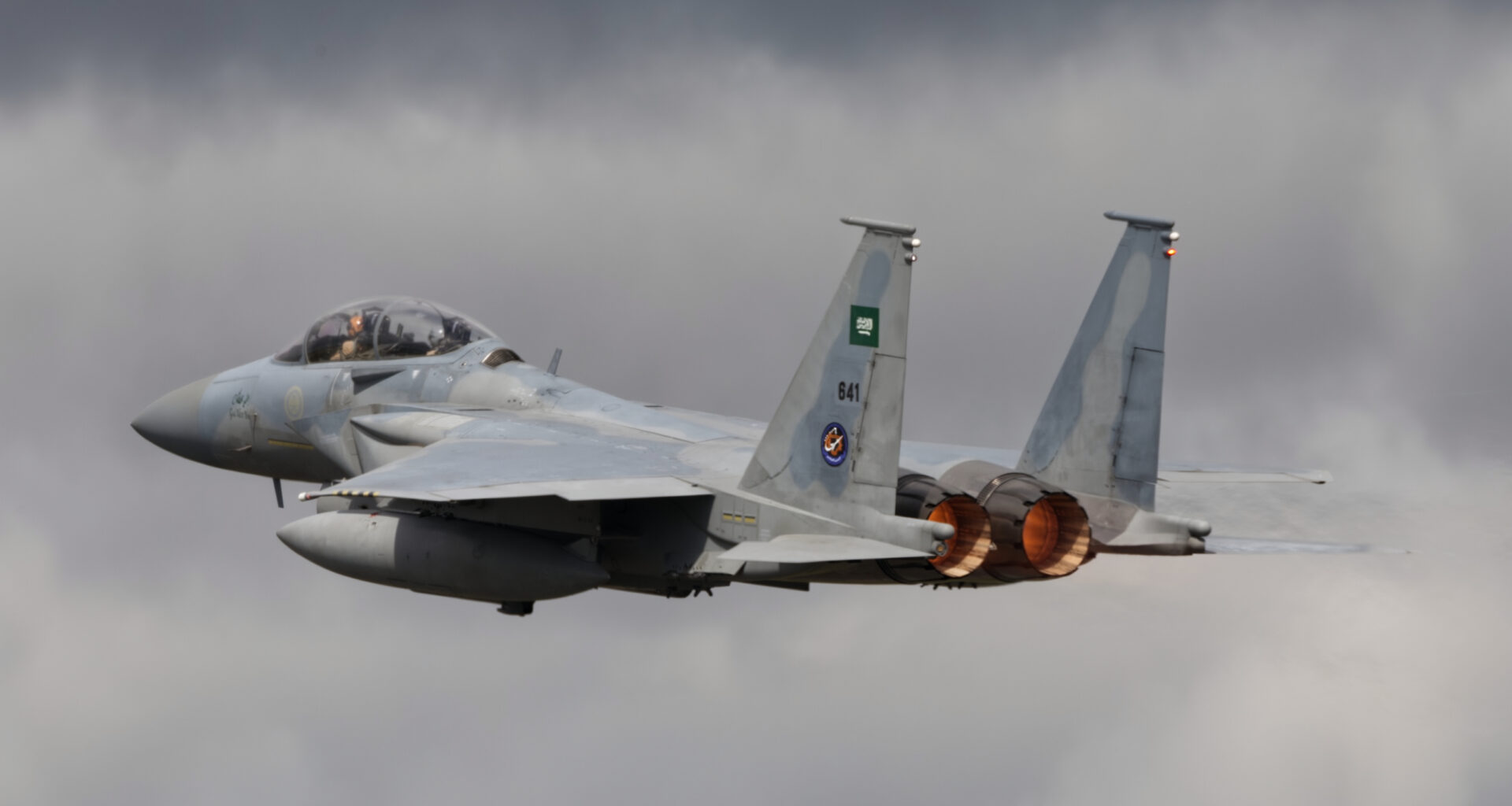
Saudi warplanes pounded Houthi positions in Yemen while the Iran-backed group fired missiles and drones at Saudi cities and energy infrastructure Wednesday and Thursday, opening a dangerous new front even as President Donald Trump voiced hope that the seven-month US-Israeli war with Iran could be approaching an end.
“Well, hopefully we are towards the end of the war,” President Trump told reporters Wednesday evening. Referring to Iran, he added: “They want to make a deal. We’ll see how that works out.” The US president said Tehran had contacted Washington directly but offered no details.
The diplomatic signals come as Yemen again becomes a major battlefield in the regional conflict. Houthi forces have surged along Yemen’s Red Sea coast, capturing territory near the Bab el Mandeb shipping route while attacking Saudi targets. Riyadh has responded with airstrikes in Yemen.
The Houthis have targeted Saudi cities, military facilities and energy infrastructure, while Saudi Arabia says it intercepted a drone near Mecca. The Houthis denied targeting the holy city. Riyadh has sought air-defense assistance from France, the UK, Pakistan and Egypt as stocks of missile interceptors run low.
Energy markets are watching closely. An earlier drone attack temporarily shut Saudi Arabia’s 1,200-kilometer East-West pipeline, which has become crucial for bypassing the Strait of Hormuz. The pipeline had recently carried 4 million to 5 million barrels a day, roughly 4% to 5% of global supply.
The fighting is also deepening Yemen’s humanitarian crisis. More than 100,000 people have been displaced by the renewed conflict, according to the United Nations refugee agency, with insecurity and damaged infrastructure hampering relief efforts.
Washington is pursuing diplomacy on parallel tracks. US officials recently met Houthi representatives in Oman, while President Trump is expected to discuss Iran with Gulf leaders during next week’s UN General Assembly gathering in New York.