
Sept. 17 (UPI) — The United Nations Human Rights Council published a report alleging that the United States may have committed a war crime in its attacks on Iran.
The report said that after the U.S. and Israeli attacks on Iran on Feb. 28, its investigators found reasonable grounds to believe the United States “committed the war crime of launching indiscriminate attacks resulting in the loss of life or injury to civilians or damage to civilian objects.”
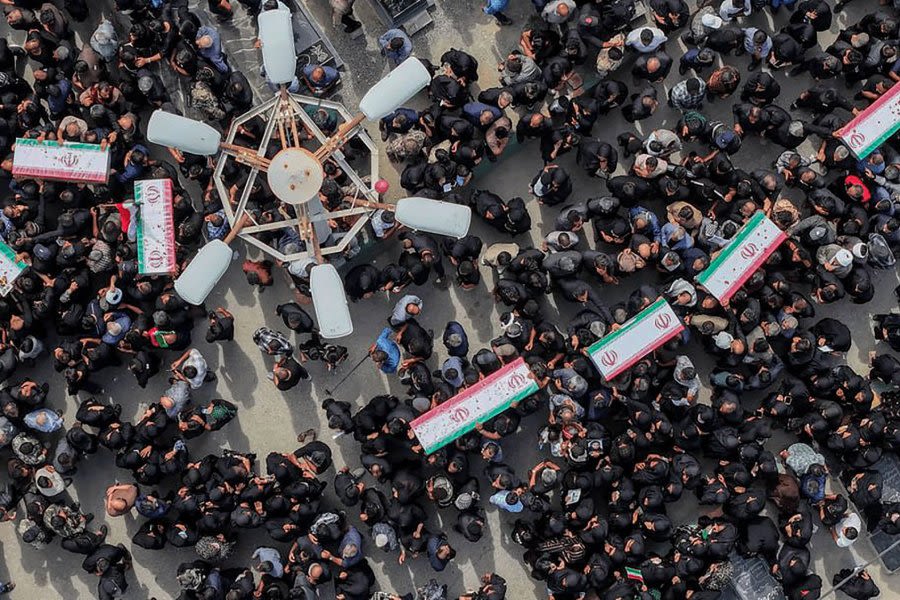
“These included Tomahawk missile strikes on the clearly identifiable Shajareh Tayyebeh Primary School in Minab — which killed over 150 people, including approximately 120 girls and boys — and another airstrike where Precision Strike Missiles dispersed clouds of tungsten pellets over a clearly identifiable sports complex and residential area in Lamerd, killing 22 civilian men and women,” the U.N. said.
The U.N. mission said it urges Iran and the United States to “immediately cease all violations and crimes, provide full reparations to victims and guarantee non-repetition.” It also urged the two sides to end hostilities and renew diplomatic actions for peace.
In March, a group of U.S. Senators on the Senate Foreign Relations Committee sent a letter to Defense Secretary Pete Hegseth demanding answers on the attack. It was later said that the school was hit due to outdated intelligence. President Donald Trump said, “In my opinion, based on what I’ve seen, that was done by Iran.”
On Thursday, Rep. Thomas Massie, R-Ky., introduced a resolution to impeach Hegseth in part for ignoring laws that minimize civilian casualties. House Speaker Mike Johnson shut down the House session early in order to avoid voting on the measure.
The U.N. fact-finding mission also said that Iran had committed gross human rights violations and crimes against humanity in its violent crackdown of civilian protesters.
The report said tens of thousands of people were “deprived of their liberty in large-scale arbitrary arrests and detention. Detainees faced torture, solitary confinement and denial of legal counsel, while families were left in the dark regarding the whereabouts of their loved ones in circumstances raising concerns of enforced disappearances.
“Iranian authorities compounded the suffering of families by delaying or refusing to release bodies. In multiple cases, officials demanded payments, forced relatives to sign false statements claiming that the victims were State agents, and restricted or threatened memorial and mourning ceremonies,” the report said.