
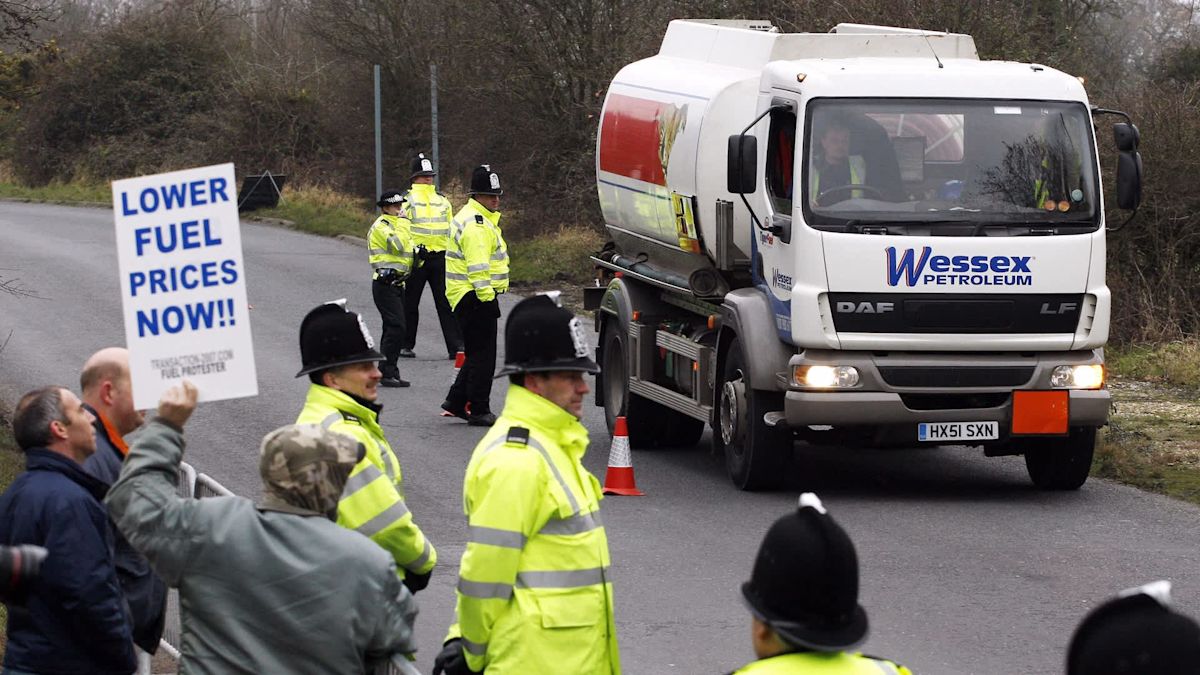
Fuel shortages and the rising prices they are driving are doing more than straining household budgets.
They’re provoking protests around the world, with some government officials tying disruptions in oil supply to the U.S.-Israel war with Iran.
Protests breaking out across multiple countries highlight how deeply everyday life still depends on fossil fuels.
Here’s what to know
A short video from the New York Times (@nytimes) gave a peek into where fuel-related protests have surfaced, with demonstrations taking different forms in countries worldwide.
In the Philippines, transportation workers went on strike, according to the publication. Motorists in Portugal drove slowly and honked to signal their dissatisfaction with $9-a-gallon diesel. In Indonesia, the Times’ video shows a line of motorbikes left alongside empty fuel pumps.
In Guatemala and Syria, protesters set vehicles and tires on fire, obstructing traffic. Government officials in Syria said they had to raise fuel prices by up to 40% due to the ongoing war, the Times reported.
Families may feel the impact first at the gas pump, but it rarely stops there. And unlike some economic warning signs, fuel shortages and sudden price jumps are immediate, visible, and hard to ignore.
More background
Oil disruptions do not stay confined to one sector. Fuel powers personal vehicles, public transit, freight networks, farm equipment, hospitals, and backup generators. When access becomes unstable, the effects can ripple through food prices, health care, work commutes, local businesses, and more.
These burdens also tend to hit hardest where people have the fewest alternatives. Workers who must drive, households already struggling with high bills, and communities with limited public transportation can feel the impacts first and worst. And protests often emerge when people feel they are paying the price for decisions made far beyond their own neighborhoods.
There is also an environmental reality beneath the outrage. Heavy dependence on oil and gas leaves communities vulnerable to both pollution and price volatility.
In the long term, strengthening global investments in cleaner energy, transportation, and infrastructure could give countries real alternatives to the costly, polluting fossil fuels susceptible to supply chain disruptions.
Meanwhile, financial and other supports for individuals seeking to shift household-level transportation to electric vehicles and shared transit strategies like carpooling could help communities right now.
Where can I learn more?
Fuel price spikes and related frustrations are rippling well beyond the gas station:
• Across Europe, pump prices at multi-year highs are pushing more drivers toward electric cars.
• In Southeast Asia, oil shock upends energy security as rooftops fill with solar panels.
• Amid the war, fertilizer prices are up 40% and threaten grocery bills.
Energy shocks rarely stop with transportation, and the fallout can quickly reach other parts of daily life for people all over the world.
Get TCD’s free newsletters for easy tips, smart advice, and a chance to earn $5,000 toward home upgrades. To see more stories like this one, change your Google preferences here.