
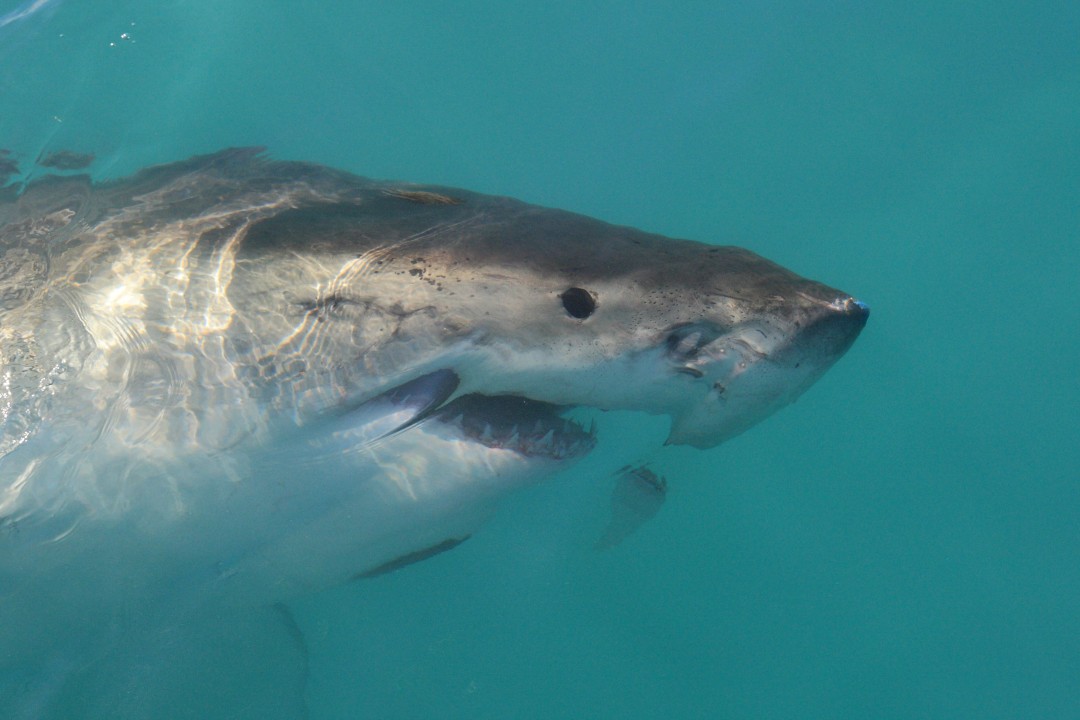
A training dive off Quebec’s Gaspe region turned into a rare shark attack that left a student injured but expected to recover. The male diver was in the water near Perce on Wednesday with another student and the dive shop’s general manager when a great white shark struck, according to Plongee Perce, the scuba center involved, per CTV News. The diver suffered injuries to his chest, shoulder, and back, received first aid at the site, and was taken to a hospital; his injuries haven’t put his life at risk. “It happened in a flash,” says shop manager Steve Melanson, who described the shark as “so big” and said it was his first shark encounter in roughly 2,000 dives over 15 years.
All dives with the center are now halted for the rest of the season. While shark attacks in the Gulf of St. Lawrence remain uncommon, experts say great white shark numbers there have climbed in recent years. The St. Lawrence Shark Observatory cites climate change—which keeps seals and sharks in warmer waters longer—and protections for the endangered species as factors.
The group stresses that the overall risk to the public hasn’t changed and urges basic precautions, like avoiding swimming near seal colonies and staying out of the water at dawn and dusk. A 2020 study also cited a rise in the “wildlife selfie” trend, which “requires close proximity to unpredictable animal species,” which may also exacerbate the problem, per Global News. “I don’t think we should be worried, but it’s still a wild animal, and if we go into its habitat, the risks of encountering it are greater,” says the director of a local science museum, per the CBC.