
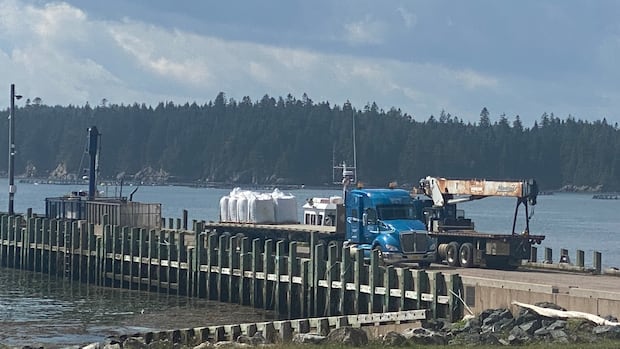
The presence of more than $750 million worth of imported salmon in Canada’s grocery stores is the source of renewed friction between the region’s salmon farming sector and organizations seeking to protect the wild salmon population and other marine life.
A recent report commissioned by the Atlantic Canada Fish Farmers Association showed the value of imports has doubled since 2016. During the same period, the amount of salmon farmed in Canada fell by more than 25 per cent.
“The products that were imported into Canada could be raised here and should be raised here, because we have the people, we have the coastline, we have the knowledge and we have the will,” said Tom Taylor, the executive director of the Atlantic Canada Fish Farmers Association.
Taylor said Atlantic Canada is faring better than British Columbia, where production has fallen dramatically with a ban on ocean-based, net-pen farming coming into effect in 2029.
He believes there is room to double the production of farmed salmon in Atlantic Canada to offset declines in British Columbia and replace imports.
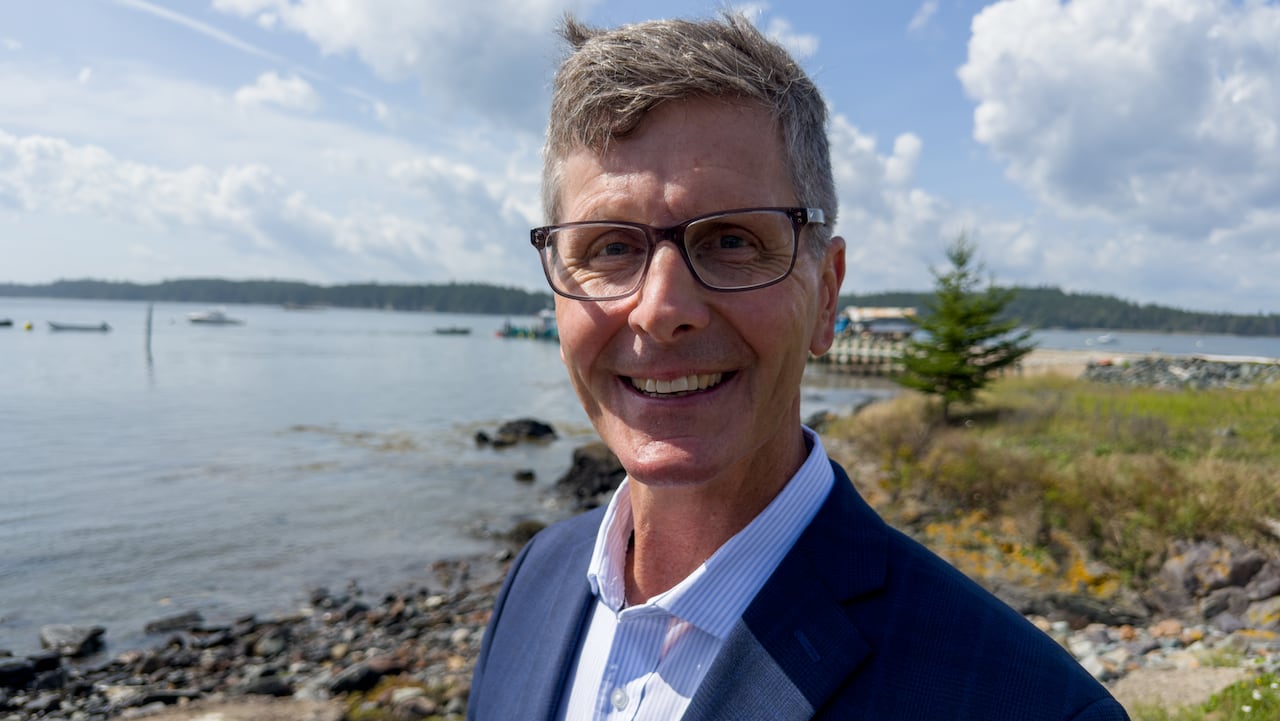 Tom Taylor, the executive director of the Atlantic Canada Fish Farmers Association, said the industry could double in size in Atlantic Canada. (Roger Cosman/CBC)
To get there, the report made a series of recommendations mostly centred around government reform of regulations and better promotion of the industry.
The association stressed the need to cut down on the amount of time it takes to get an expansion or a new project approved, compared to other countries.
The report says it takes an average of six months to approve an expansion or new operation in Norway.
In Canada, it can take years, and the report recommends cutting the time it takes by 50 per cent by 2030, which Taylor said is a good place to start.
“Whether it’s six years today as an average and it becomes three, that’s still not good enough,” Taylor said.
WATCH | ‘They don’t want anywhere taken off the table for aquaculture’ :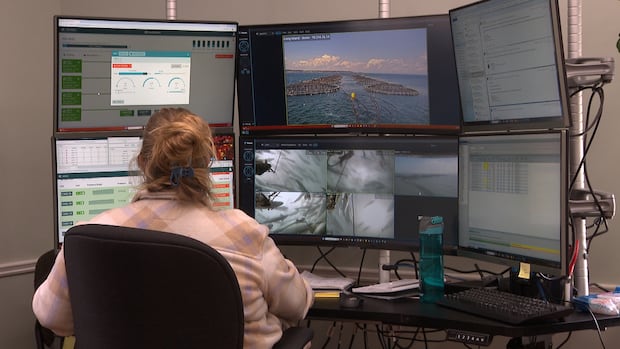
Imported salmon sparks debate about aquaculture industry growth
Atlantic salmon farmers say they could produce more to replace $750 million worth of imports, but conservation groups say new operations would threaten wild salmon populations and coastal marine areas.
“We still have to continue to reduce that processing time and have that decision based on science and based on a full review to protect the citizens of Atlantic Canada and to protect all of our interests.”
New Brunswick Aquaculture Minister Pat Finnigan wouldn’t commit to a specific target even though he supports the growth of the industry.
“We have to show that we are sustainable, that we are responsible,” Finnigan said. “Without cutting corners, we will strive to make it as speedy and … efficient as possible for the new applications. That’s our goal always.”
Neville Crabbe, vice-president of communications with the Atlantic Salmon Federation, said the organization opposes approving new farming operations because they would further imperil wild salmon populations.
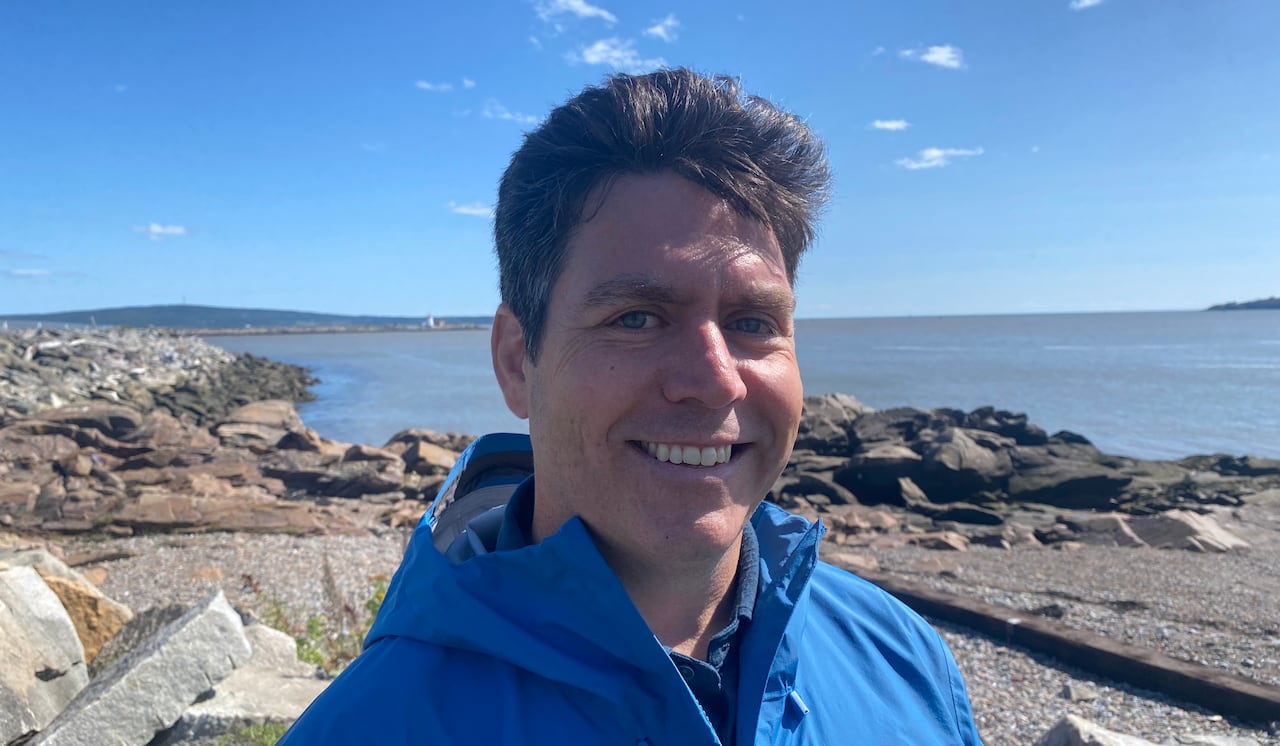 Neville Crabbe, the vice-president of communications for the Atlantic Salmon Federation, said the salmon farming industry should focus on being more productive and focus growth in their existing operations. (Mark Leger/CBC)
Crabbe also questions the case for opening new operations or expanding the footprint for existing ones.
He said there isn’t much available coastline to add new farms or expand the area of existing ones in New Brunswick and Nova Scotia.
Newfoundland and Labrador has been identified as a potential growth area, but Crabbe said companies aren’t even fully utilizing their existing operations there.
He said the federation did survey work in 2025 in Newfoundland and Labrador and found that 56 out of the 112 licensed sites hadn’t been used in at least five years.
Crabbe said the industry can realize growth by making their existing operations more productive.
“One way to think of our position is to stay where you are, use what you have and do what you can,” Crabbe said.
“Even within the existing licensed footprint of the industry, there is truly room for expanding production. It would seem to me logical that it matters less where that increase in production occurs for the industry than it occurring overall.”
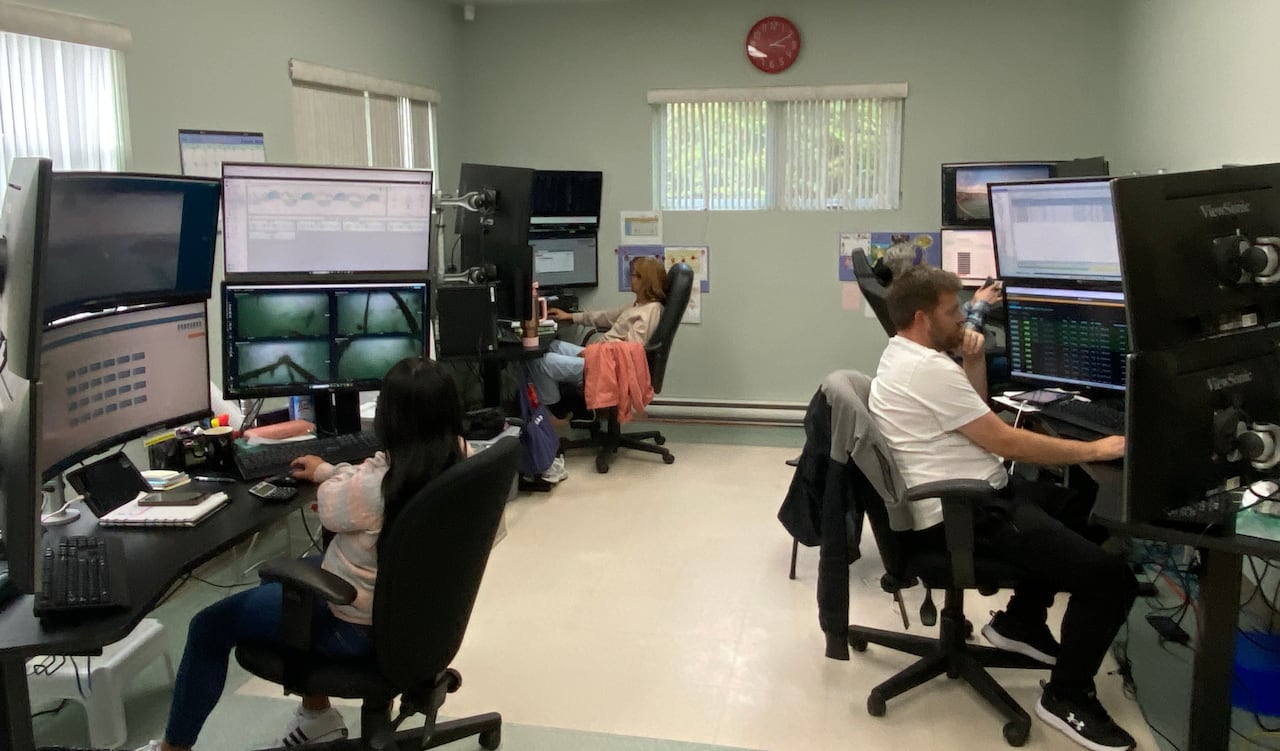 People at this at this Cooke Aquaculture centre in Blacks Harbour feed and monitor salmon by computer for ocean-based sites as close as Grand Manan and as far away as Australia. (Mark Leger/CBC)
Cooke Aquaculture is working on making its current sites more productive.
The Saint John-based company is the dominant player in Atlantic Canada, operating around 130 sites in the region and employing nearly 2,500 people.
It will become even bigger with the pending acquisition of Norway-based Mowi’s Atlantic Canadian hatcheries, sea farming sites and two processing plants.
Joel Richardson, Cooke’s vice-president of public relations, said the company will be adopting new technology and practices that will increase production in its existing operations.
“We see growth of our existing operations becoming much more productive and being able to harvest fish in a shorter time period,” Richardson said, “being able to grow our fish larger in our land-based facilities before they’re transferred to the ocean cages and then [getting] those fish out to market quicker.”
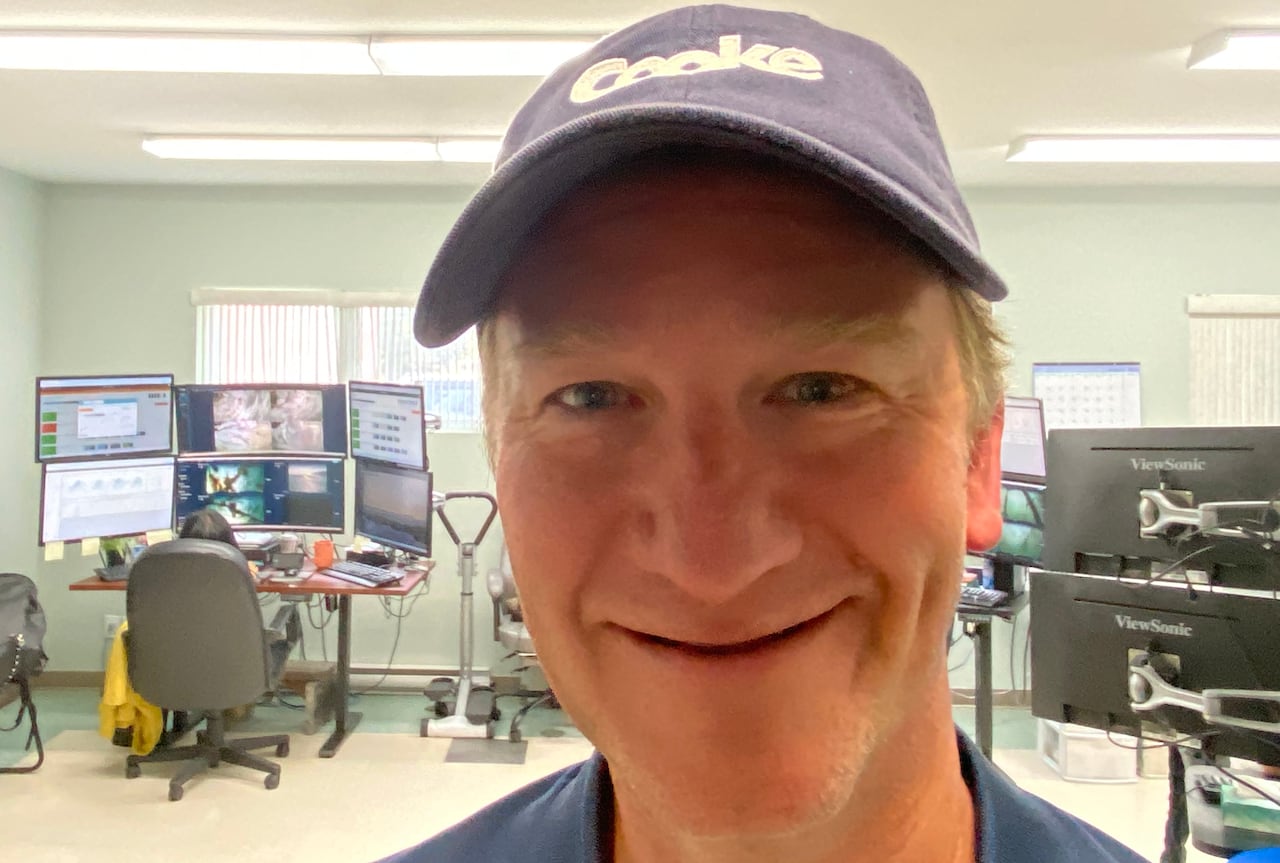 Joel Richardson, the vice-president of public relations at Cooke Aquaculture, said the company that employs around 2,500 people in Atlantic Canada is doing what it can to grow by increasing production at its current salmon farm operations. (Mark Leger/CBC)
Cooke, which has salmon farming operations in five countries, is focused on increasing production in its current operations, but Richardson said Canada still needs to make it easier to expand existing operations and start new ones.
“Sometimes it’s better to invest and grow in other places in the world … because of the length of time that it takes to actually get new operations established,” he said “That’s a real challenge that governments are going to need to answer, [do] we want to see more growth and support, more job creation and investment in Canada?”
Matt Abbott, the marine program director for the Conservation Council of New Brunswick, said the main recommendations in the report are “long standing goals” in the industry, adding that it’s “no surprise” they’re making a renewed push with the emphasis on major projects nationwide.
But Abbott said the governments need to maintain limits to protect ocean ecosystems and other marine life.
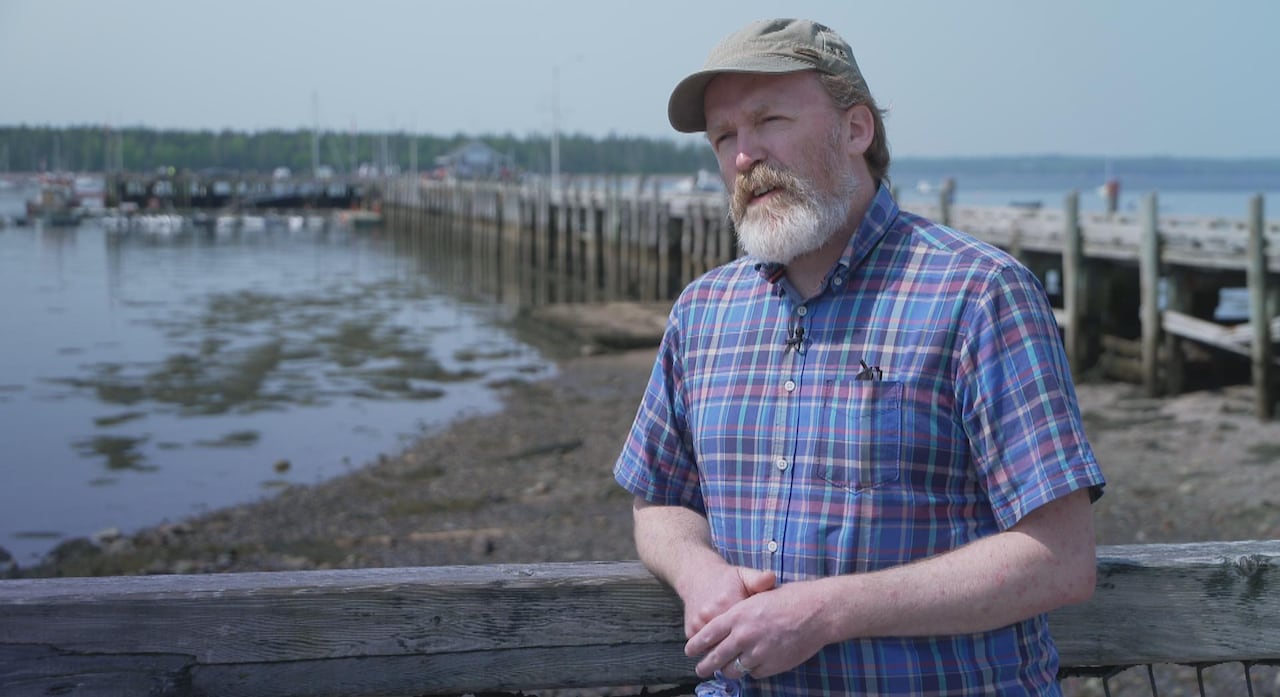 Matt Abbott, the marine program director for the Conservation Council of New Brunswick, said the federal government’s marine protected areas should off-limits for aquaculture. (Mike Heenan/CBC News)
For example, he said, the report recommends lifting restrictions so that aquaculture companies can use medications or treatments, or “deleterious substances,” that would make it possible to operate in federally designated marine protected areas.
Abbott said that could include pesticides to kill sea lice that could harm other marine life like lobsters.
He said we need to protect the ocean ecosystem by balancing the needs of the farmed salmon industry with the natural marine environment.
“Hearing from industry over the last few years, they’ve pretty much said explicitly they don’t want anywhere taken off the table for aquaculture. They want to see possibilities for expansion wherever technology allows them to go,” Abbott said.
“But I think marine protected areas are the one thing … that should be protected from industrial activities, including salmon aquaculture.”
Sylvain Charlebois, the senior director at the Agri-Food Analytics Lab at Dalhousie University, said it nonetheless makes sense for the industry to grow here, given the increase in imports.
The lab tracks food pricing, and he said the increased price in salmon was second only to cottage cheese in August and September. He cited import costs as a factor.
“These products come from far away, Chile, Norway,” Charlebois said. “It’s mind-boggling to accept the fact that we’re importing salmon … when we can actually produce our own salmon, we have the capacity and the ability to do that.”