
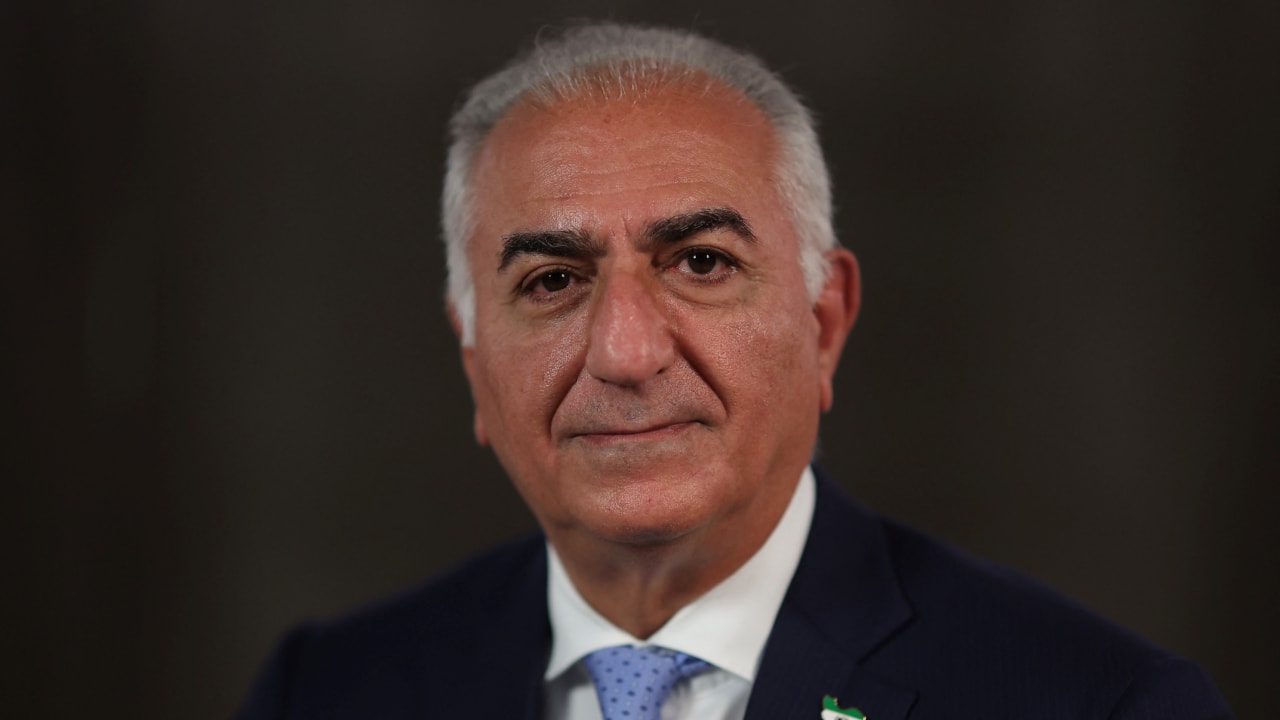
Iran’s exiled Crown Prince Reza Pahlavi said Saturday that members of the Islamic Republic’s military and civilian establishment were already quietly breaking with the regime, describing Iran as having entered an “active defection” phase in the struggle to overthrow the country’s rulers.
Addressing thousands of supporters at the “Cyrus the Great II” gathering in Toronto over the weekend, Pahlavi outlined how in the months since the bloody January uprising, when over 40,000 Iranians were killed on the streets, the opposition had regrouped, adapted its tactics and expanded networks inside Iran, even as the regime sought to convince Iranians that the protest movement had been defeated.
“We are more experienced, more cohesive and more determined today than ever before,” he told the gathering. “Our objective is clear: the overthrow of the Islamic Republic and achieving a free and prosperous Iran.”
Central to his speech was the claim that erosion within the regime itself is continuing. For months, Pahlavi has said that officials from within the Islamic Republic’s apparatus have been quietly reaching out to him to signal their clandestine opposition to the regime.
These members of Iran’s civilian and military structures have used secure channels to distance themselves from the Islamic Republic and side with the opposition. For now, Pahlavi argued, many remain outwardly within the system, retaining their positions while gradually ceasing to perform the functions expected of them.
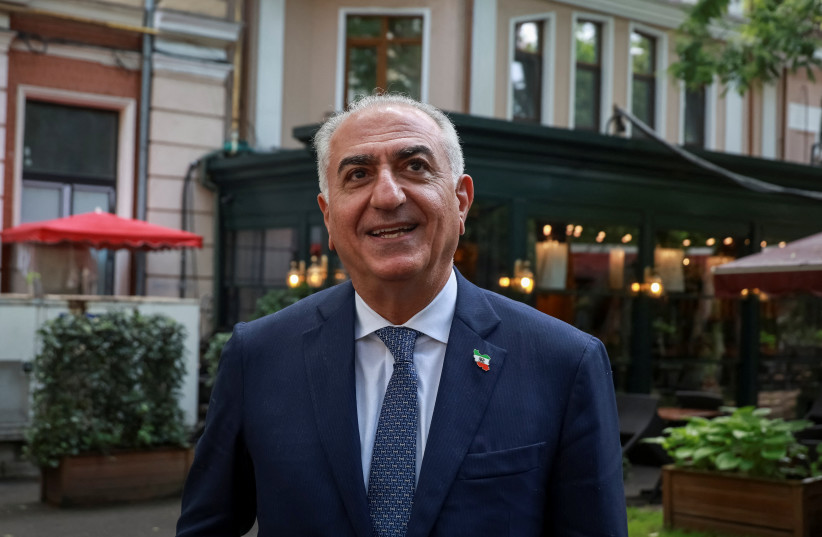 Iranian Crown Prince Reza Pahlavi pictured in Odesa, Ukraine, May 30, 2026; illustrative. (credit: REUTERS/Nina Liashonok)
“They remain within the structure outwardly, but they no longer perform their former functions for the regime,” he said. “Quietly, but decisively, they are eroding the pillars of repression from within.”
Open defections, including soldiers publicly laying down their weapons, would represent a later stage reached once the balance of power had shifted decisively toward the opposition.
Pahlavi placed January’s anti-regime protests within cycle of longer period of Iran unrest
During his Toronto address, Pahlavi also placed January’s uprising within a much longer period of unrest in Iran, dating back through several protest cycles.
Rather than portraying December-January’s demonstrations as an isolated explosion of anger, he traced their origins through a decade of growing opposition, from the large Cyrus Day gatherings of 2016, through the protests of 2017-18 and November 2019, to the nationwide uprising that followed Mahsa Amini’s death in 2022. Saturday also saw global marches across the Iranian diaspora to mark four years since Amini’s death in the custody of the Iranian regime.
“The great uprising of Dey was not the product of a fleeting burst of emotion,” he said. “Behind it lay a long, difficult and costly road.”
The events of January 8 and 9, when the Islamic Republic launched a massive crackdown as demonstrations spread across the country, had nevertheless changed the circumstances confronting the opposition.
The scale of the killing, Pahlavi said, required changes in how the opposition operated, although not in what it ultimately sought to achieve.
“A change in tactics does not mean a change in objectives. It means adapting our methods to new circumstances.”
Saturday’s gathering was held at Meridian Hall as part of “Cyrus the Great II: From a Great Civilization to a Greater Future,” organized by the Cyrus the Great Cultural & Humanity Organization. Organizers had said ahead of the event that more than 3,000 Iranian Canadians and supporters were expected.
The event brought Pahlavi together with Canadian political and civic figures, most prominently Conservative Party leader Pierre Poilievre, who used his appearance to call for stronger Canadian action against individuals linked to the Islamic Republic.
Canada’s Poilievre calls for scrutiny on IRGC-linked actors entering country
Poilievre called for greater scrutiny of those connected to the Islamic Revolutionary Guard Corps entering Canada, continued targeted sanctions, and measures to prevent regime-linked assets from being moved into the country.
Canada severed diplomatic relations with Tehran in 2012 and designated the IRGC as a terrorist entity in 2024.
Poilievre also spoke of Iran beyond the Islamic Republic, invoking Cyrus the Great and the country’s pre-Islamic history while expressing hope that Iranians would one day be able to return freely to their country and see the Lion and Sun flag raised there again.
For Pahlavi, much of Saturday’s address focused on another battle between the opposition and Tehran: the competing picture each presents of the state of resistance inside Iran. He accused the regime of promoting two central claims – that Iran’s opposition remains hopelessly divided and that no meaningful organization exists inside the country.
On the first, Pahlavi argued that agreement over Iran’s eventual form of government was not a prerequisite for cooperation against the Islamic Republic.
Republicans and monarchists, as well as those on the political left and right, could work together around four principles: Iran’s territorial integrity; separation of religion and government; individual freedoms and equality before the law; and Iranians’ right to determine their future system of government through free and fair elections.
“The embrace of Iran’s Lion and Sun Revolution is open to every Iranian who accepts these four principles,” he said.
The second claim – that the opposition lacks organization – brought Pahlavi back to the networks he says now operate beneath the surface inside Iran.
If no organization existed, he asked, how could millions of Iranians inside and outside the country act together at critical moments?
According to Pahlavi, the answer lies in decentralized networks embedded in Iranian society, beyond the regime’s ability to easily dismantle. He claimed Tehran’s intelligence and security apparatus was itself increasingly concerned by their development.
The Iranian opposition leader nevertheless cautioned his supporters against assuming the Islamic Republic’s collapse was inevitable or imminent.
“We must be realistic. The work is not yet finished,” he said. “Overthrowing this criminal sect that has occupied our country is a complex, multi-stage process.”
But the central message of the Toronto speech was that Pahlavi believes that process has moved into a different stage – one increasingly focused on weakening the machinery of the Islamic Republic from within.
“The enemy is decaying from within and is hollow,” he told the crowd. “We are more determined and more organized than ever. Believe that the dawn of freedom is near.”