
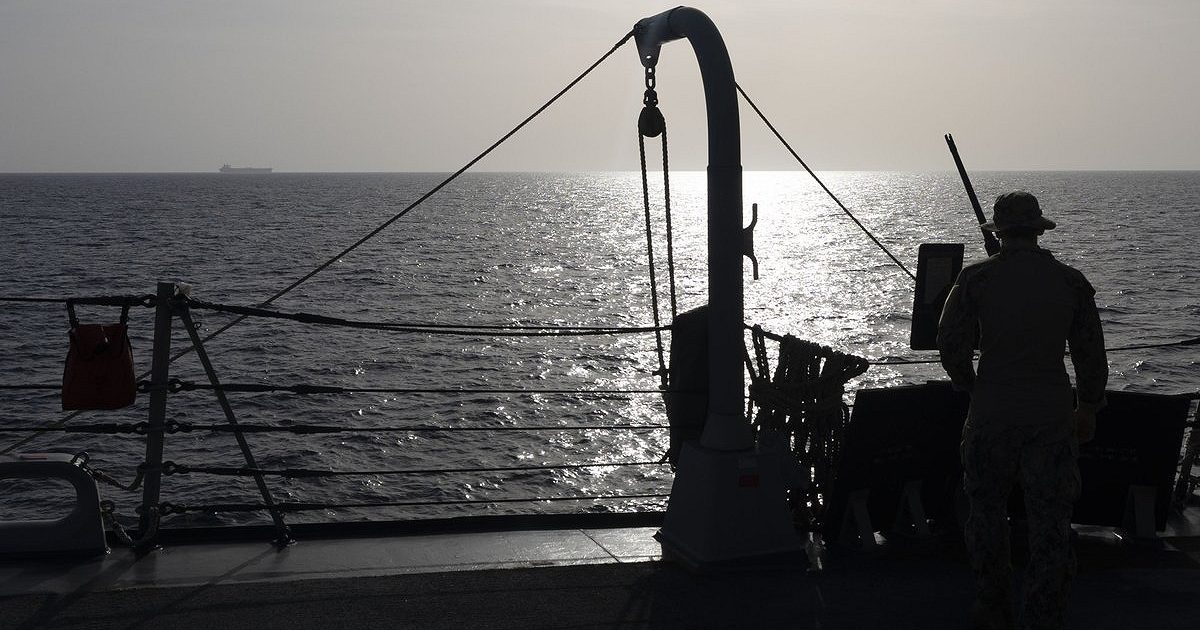
Amid escalating tensions, Iran has issued a stern warning of “continuous, effective and painful” attacks on US bases and interests across the region should Washington resume military action against Tehran, while the US continues its naval blockade on Iranian ports.
Photograph: Courtesy CENTCOM on X
Key Points
Iran’s central military command has threatened “continuous, effective and painful” attacks on US bases and interests in the region if Washington resumes military action.
The command also warned regional countries against supporting any US military action, stating they would be treated as participants in the conflict.
US Central Command (CENTCOM) has redirected 109 commercial vessels as part of its enforcement of a naval blockade on Iranian ports, which resumed on July 14.
US President Donald Trump indicated a major decision on Iran is approaching, warning of severe consequences but also suggesting a potential meeting with Iranian President Masoud Pezeshkian.
Iran has conveyed conditions for ending the conflict through Qatari mediation, including an end to hostilities, release of frozen funds, and lifting of the naval blockade.
Iran has threatened “continuous, effective and painful” attacks on US bases and interests across the region if Washington resumes military action against Tehran, as tensions between the two countries intensify.
The warning was issued by Iran’s Khatam al-Anbiya Central Headquarters, the country’s central military command, in a statement carried by state-run IRNA on Sunday (local time).
The command claimed that Washington was preparing to resume military action against Iran with the backing of some regional countries.
Iran’s Warning to US and Regional Allies
“Should the United States make any mistake against the Islamic Republic of Iran, all its bases and interests in the region will be targeted in continuous, effective and painful attacks without any limitation or consideration,” the statement said.
The Iranian command also warned regional countries against supporting any US military action, saying states that aligned themselves with Washington would be treated as participants in the conflict and could no longer expect restraint from Iranian forces.
Escalating Confrontation and Naval Blockade
The warning comes amid a sharp escalation in the US-Iran confrontation, with Washington maintaining a naval blockade on Iranian ports and Tehran threatening retaliation against American forces and regional partners.
Meanwhile, US Central Command (CENTCOM) said its forces have redirected 109 commercial vessels as part of efforts to enforce the naval blockade on Iran.
“A US sailor stands watch aboard USS John Paul Jones (DDG 53). As of Sept. 20, CENTCOM forces have redirected 109 commercial vessels to ensure total compliance,” CENTCOM said in a post on X.
The US military resumed enforcement of its naval blockade against maritime traffic entering and exiting Iranian ports on July 14.
The development has further raised concerns over shipping through the Strait of Hormuz, one of the world’s most important energy corridors.
CENTCOM has said it is enforcing the blockade while continuing to facilitate commercial traffic through regional waters that does not violate the restrictions.
Trump’s Stance and Diplomatic Efforts
US President Donald Trump, meanwhile, said Washington was approaching a major decision on Iran, warning that Tehran could face severe consequences if it did not change its course.
At the same time, Trump indicated that he could be open to meeting Iranian President Masoud Pezeshkian during the UN General Assembly in New York.
Iranian security chief Mohsen Rezaei said Tehran had conveyed conditions for ending the conflict through Qatari mediation, including an end to hostilities, the release of frozen Iranian funds and the lifting of the naval blockade.
Regional Instability and Security Warnings
The latest confrontation comes after renewed regional instability following Houthi missile and drone attacks targeting Saudi Arabia.
The US has subsequently issued security warnings to Americans across several countries in West Asia, citing the possibility of rapid escalation, flight disruptions and attacks on US interests.