
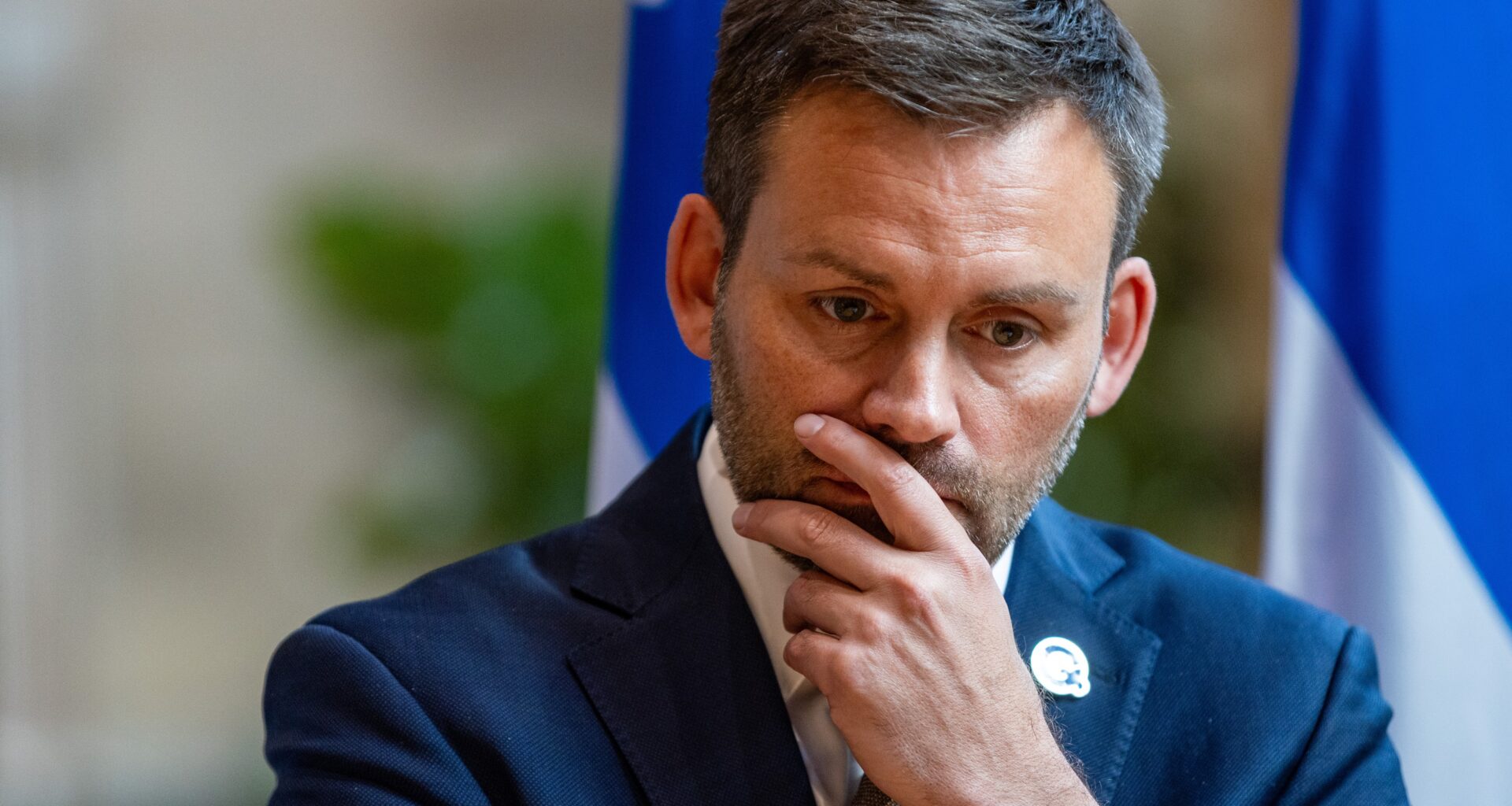
Quebec’s splintered five-party race could hand the province a minority government on Oct. 5 — and the same fragmentation that produces it could make it difficult to hold together.
The increasingly divided electorate and crowded party system in Quebec reflect divisions within the province and a polarization also seen elsewhere in the world, said Concordia University political scientist Daniel Salée.
“Democratic populations tend to be quite divided, and it’s hard to get people together and rally behind just one approach,” he said.
In the Quebec election in particular, “none of the parties have a leadership that is really able to rally people,” Salée said.
After eight years of Coalition Avenir Québec governments, “there is a strong desire for change,” added Valérie-Anne Mahéo, a political scientist at Université Laval.
But voters remain divided on what that change should look like. “Right now we have a fragmented political space in Quebec and a fragmented electorate,” Mahéo said.
For decades, two parties — the Liberals and the Parti Québécois — dominated Quebec politics. The CAQ upended that order by winning in 2018 and 2022.
Today, support is spread across five parties, with three polling above 20 per cent.
Recent surveys suggest the sovereignist PQ leads with just under 30 per cent. The CAQ and the Liberals are battling for second. The Conservative Party of Quebec trails, while Québec solidaire sits in fifth place.
With two weeks left in the campaign, a minority scenario remains plausible, but far from certain, Mahéo added.
Multiple close local races have two or three parties in contention, and many voters remain undecided, she said. A Sept. 14 Léger poll found 42 per cent of voters could change their choice.
A PQ minority’s challenges
If current polling holds, no party would win a majority, forcing Quebec back into minority-government territory. Such outcomes are relatively rare in Quebec politics.
Current projections suggest a PQ victory, but with fewer than the 64 seats needed for a majority. That means the PQ would need opposition votes to pass legislation.
A minority federal Liberal government led by Justin Trudeau survived more than three years. Salée noted that was largely thanks to a support agreement with the opposition New Democrats.
More recently, Prime Minister Mark Carney won a minority but turned it into a majority through byelection gains and defections from other parties as a weak opposition and the trade war with the United States strengthened his position, Salée said.
But a PQ minority Quebec government with Paul St-Pierre Plamondon at the helm would be particularly difficult to sustain, he said.
“I don’t see who he will get to support him if he’s in a minority situation. I really don’t see anyone,” he added.
“So where does he go?”
Salée argued the policy differences between the PQ and the Liberals, CAQ and Conservatives would make lasting alliances difficult.
Québec solidaire, which also supports Quebec sovereignty, is “perhaps the only one that is ideologically close,” but it’s unclear if the party will win enough seats to help the PQ, Salée said.
Having four parties to seek support from could be an advantage, Mahéo said. To pass legislation, a PQ minority would have more options.
But having four parties on the other side of the National Assembly also means “a lot of different actors in front of you, with different agendas,” she said.
And “it may be harder to move from support from one party to support from another party on another piece of legislation,” Mahéo said.
Whichever party wins the election will face a difficult financial situation amid the trade tensions with the U.S.
Quebec faces a projected $5-billion shortfall if it hopes to return to a balanced budget by 2029-30, according to the auditor general.
Options will include spending cuts or tax hikes.
Neither would help the PQ politically.
If the PQ wins, St-Pierre Plamondon is “going to have to cut,” Salée said. “He’s not going to be very popular. And that won’t help if he wants to have a referendum sometime down the line.”
He noted the Philippe Couillard Liberal government slashed spending and left a “relatively healthy financial situation,” but many voters still associate the Liberals with austerity.
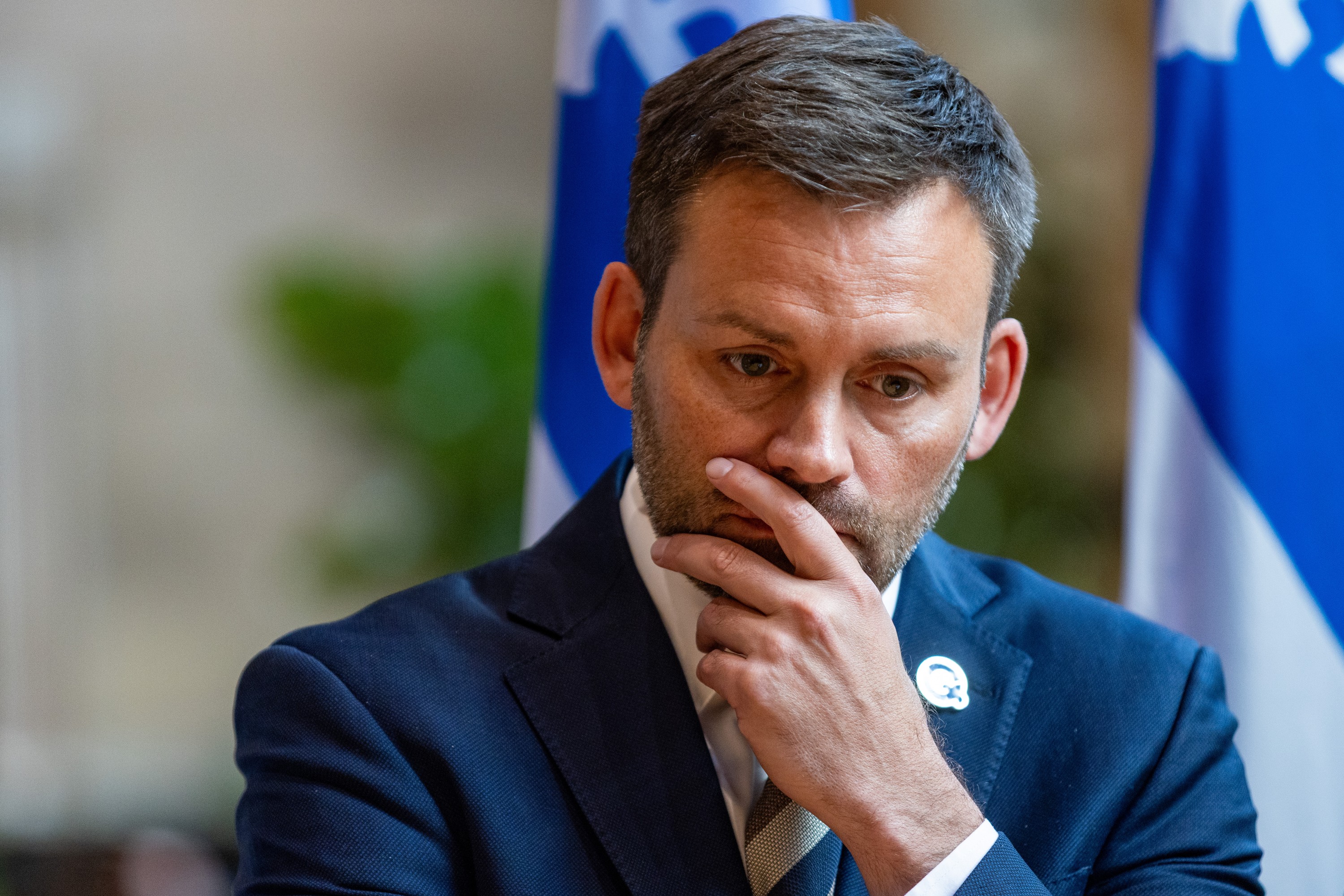 Parti Québécois Leader Paul St-Pierre Plamondon has said that, even in a minority, he would stick to his plan of holding a sovereignty referendum after U.S. President Donald Trump leaves office in January 2029. Evan Buhler / Montreal Gazette
The referendum conundrum
St-Pierre Plamondon has said that, even in a minority, he would stick to his plan of holding a sovereignty referendum after U.S. President Donald Trump leaves office in January 2029.
In a minority, the PQ would need some opposition MNAs to move ahead with a referendum. The National Assembly would have to approve the question.
Québec solidaire has not clearly said whether it would back the PQ, and it may not have the votes to help pass the legislation.
Polls peg support for sovereignty at about 30 per cent.
“There is definitely no appetite for that in the population,” Mahéo said. “I don’t think right now they have the winning conditions.”
Pushing such a “big and contentious project” through a minority National Assembly could also spark a backlash from other parties and among voters, she added.
Mahéo said the PQ and St-Pierre Plamondon will have to decide whether to boldly move forward in a minority situation, or take a slower approach and build political capital by “showing that they can potentially govern and govern well.”
Tight timeline
Time may not be on St-Pierre Plamondon’s side either. Would his minority government last until January 2029? That’s 27 months after the general election.
Minorities don’t usually last the full four years of a normal term, Mahéo said. “There may be a chance that we will be back in an election in 12 to 24 months.”
The most recent Quebec minorities — headed by Liberal Jean Charest and Pauline Marois of the PQ — survived for 20 months and 19 months, respectively.
Salée raised the prospect of an even shorter government.
“I’m afraid that he won’t be able to govern as much as he wants,” he said. “He will probably have to go back to the polls, within, I would say, even less than a year, perhaps.”
Editor’s Picks

The Gazette’s On Quebec Politics newsletter by Andy Riga breaks down key election issues, from polling shifts to legislative manoeuvring to ideas circulating in francophone commentary that don’t make it into English-language coverage.
To sign up, visit this page and check the box labelled “On Quebec Politics” before providing your email address.

A Montreal native, Andy Riga has been with The Gazette since 1991. He covers politics, language and other Quebec issues, and writes the On Quebec Politics newsletter. Montréalais d’origine, Andy Riga travaille au Montreal Gazette depuis 1991. Il couvre la politique, les enjeux linguistiques et d’autres sujets, et est responsable de l’infolettre On Quebec Politics.
ariga@postmedia.com