
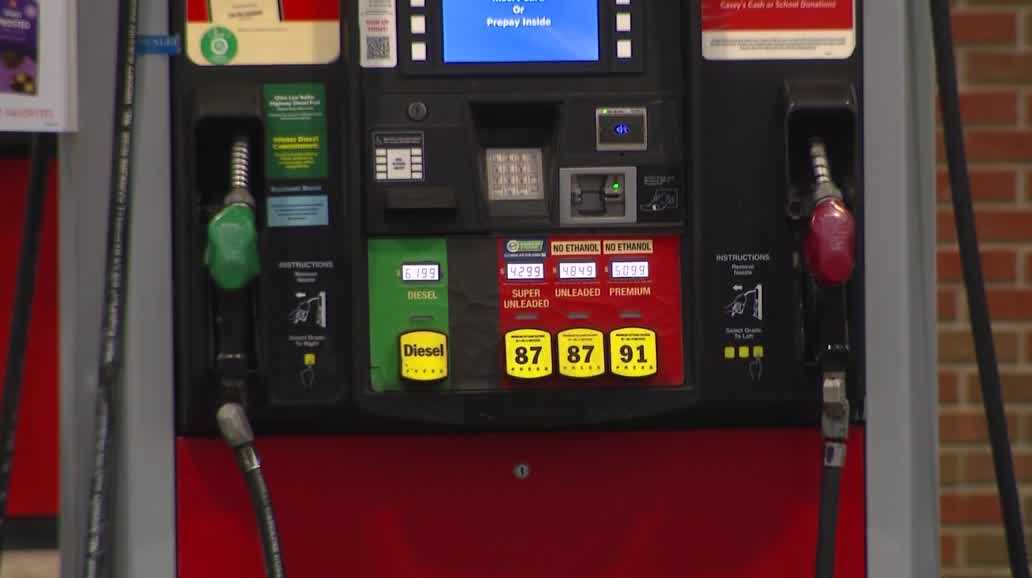
Iowa congressional leaders split over Iran war as diesel prices climb

Iowa Republicans are calling for action as high diesel prices put pressure on farmers, truckers and other businesses, but they disagree over whether ending the war with Iran should be part of the response.
U.S. Sen. Chuck Grassley and U.S. Reps. Ashley Hinson, Mariannette Miller-Meeks and Zach Nunn have each proposed steps they say could lower fuel costs or provide relief.
Iowa lawmakers’ proposals
Grassley is asking President Donald Trump to impose a temporary diesel-export ban through executive action.
“Iran’s nuclear threat puts Americans’ lives at risk, and national security is the number one responsibility of the federal government,” Grassley said in a statement. “Through executive action, President Trump can provide immediate relief for Iowa family farmers feeling the squeeze by imposing a temporary diesel export ban.”
Grassley has also compared a possible diesel ban to U.S. restrictions on chip exports to China. In social media posts, he questioned why the president could not restrict diesel exports as previous presidents restricted agricultural exports during periods of high food prices.
Hinson said Iowans “shouldn’t have to foot the bill at the pump or the checkout line for the war in Iran.” Her proposals include suspending the gas tax, pausing diesel exports, expanding E-15, restoring the $1-per-gallon biodiesel tax credit and creating a diesel relief program for farmers and truckers.
She also called for replenishing the Highway Trust Fund so a temporary gas-tax suspension would not worsen funding problems for roads and bridges. Hinson said the war should be brought to a “successful and immediate end.”
Miller-Meeks outlined a six-point plan that includes suspending federal and state fuel taxes, temporarily stopping diesel exports, providing direct relief to farmers and truckers, expanding domestic drilling, allowing year-round E-15 and extending the biodiesel tax credit.
Her plan also calls for ending the open-ended war with Iran. Miller-Meeks described the approach as stopping the immediate financial pressure first, then addressing the causes of higher prices.
Nunn reposted Grassley’s call for action and said his plan is to “sell American energy to Americans first,” pass an Iowa-led biofuels bill and hold oil companies accountable.
In a separate statement after the House vote on Iran, Nunn said Iran should be held accountable for killing Americans, supporting terrorism, threatening the Strait of Hormuz and pursuing nuclear weapons. He said Congress owes military members “clear objectives and constitutional oversight” and that he would not support another open-ended war.
Iowa Republicans split over war-powers vote
On Sept. 15, the House passed H.Con.Res. 93 by a vote of 220–204. The resolution directed the president, under the War Powers Resolution, to remove U.S. forces from hostilities with Iran unless Congress authorized military action. It preserved the president’s authority to respond to an imminent attack.
Seven Republicans voted for the resolution, including Nunn and Miller-Meeks. Hinson and U.S. Rep. Randy Feenstra voted against it.
The measure did not immediately remove U.S. troops and, as a concurrent resolution, did not go to the president for his signature.
Grassley was not part of the House vote. In June, he voted against a similar Senate war-powers resolution. That measure passed the Senate 50–48.
After the House vote, Grassley said he would continue supporting efforts to prevent Iran from obtaining a nuclear weapon.
Political pressure
University of Iowa political science professor Tim Hagle said lawmakers are hearing directly from constituents about the cost of fuel.
“They’re hearing from their constituents … that these high prices are killing us,” Hagle said.
Hagle said the issue is especially significant in competitive congressional districts, where independent voters could play an important role in the midterm elections. He said Hinson’s opposition to the war-powers resolution may reflect her unwillingness to limit presidential authority while still pressing Trump to reach a resolution.
Fuel industry opposes export ban
The American Fuel and Petrochemical Manufacturers, which represents U.S. refiners, is pushing back against the proposal.
The group said a diesel-export ban could reduce fuel production because refineries produce diesel and gasoline together. It argues that if refiners cannot export or store excess diesel, they could reduce production, tightening supplies and raising prices.
AFPM also warned that an export ban could weaken U.S. energy security, benefit foreign competitors and invite retaliation. The group’s position is that “export bans do not create more fuel for Americans.”
The Trump administration had not announced a diesel-export ban or direct fuel-relief program at the time of publication. Agriculture Secretary Brooke Rollins said the president had discussed diesel relief and that an announcement could be coming soon. Interior Secretary Doug Burgum said the administration would consider proposals but was not convinced an export ban would lower prices.