

This article in 1 minute
What’s the news?
Berlin-based hacker and researcher Lilith Wittmann hacked the licensing system of the Curaçao Gaming Authority, and obtained tens of thousands of confidential documents relating to hundreds of gambling companies registered on the island.The documents reveal the identities of the previously anonymous owners of online casinos that have courted controversy and faced scrutiny worldwide.The files show that Curaçao’s gambling regulator routinely granted licences without establishing whether the declared owners were actually in charge, and despite applicants failing to provide important information.
Why does it matter?
Over the past few decades, Curaçao has become a hub for thousands of gambling websites. Several major operators have been fined or blacklisted in markets around the globe for operating illegally. Anonymous letterbox companies have made it very difficult for gambling regulators, tax authorities, and journalists to identify who is actually in control.Financial experts say that the lack of transparency fuels the risk of money laundering and criminal influence in the industry.
How was it investigated?
Follow the Money analysed dozens of licence applications from gambling companies, supporting documents, and the Curaçao regulator’s assessments.FTM is publishing the findings under the title Casino Secrets, in coordination with Wittmann and media partners NRK (Norway), NDR (Germany), Jetzt (Austria), and SVT (Sweden).
Read more
Fold in
The tiny Caribbean island of Curaçao is a hub for thousands of gambling sites – among them operators that have illegally targeted customers worldwide while their owners stay shrouded in secrecy.
Authorities in Australia, the United States, and across Europe have blacklisted Curaçao-registered online casinos for taking bets without licences, breaching anti-money laundering rules, taking advantage of vulnerable gamblers, and paying no tax.
But regulators, tax authorities, and journalists from around the world repeatedly encounter the same obstacle when trying to identify those responsible: a web of anonymous letterbox companies in a jurisdiction with lax oversight.
Our journalism is only possible thanks to the trust of our paying members. Not a member yet? Sign up now
As a result, the multibillion-euro gambling industry in Curaçao – a self-governing Dutch territory of just over 150,000 people – has long remained a black box.
Until now.
Late last year, Berlin-based hacker and cybersecurity researcher Lilith Wittmann infiltrated the systems of the Curaçao Gaming Authority, the island’s gambling regulator.
Wittmann had previously hacked the Malta Gaming Authority and contributed as a journalist to investigations into misconduct in the gambling industry.
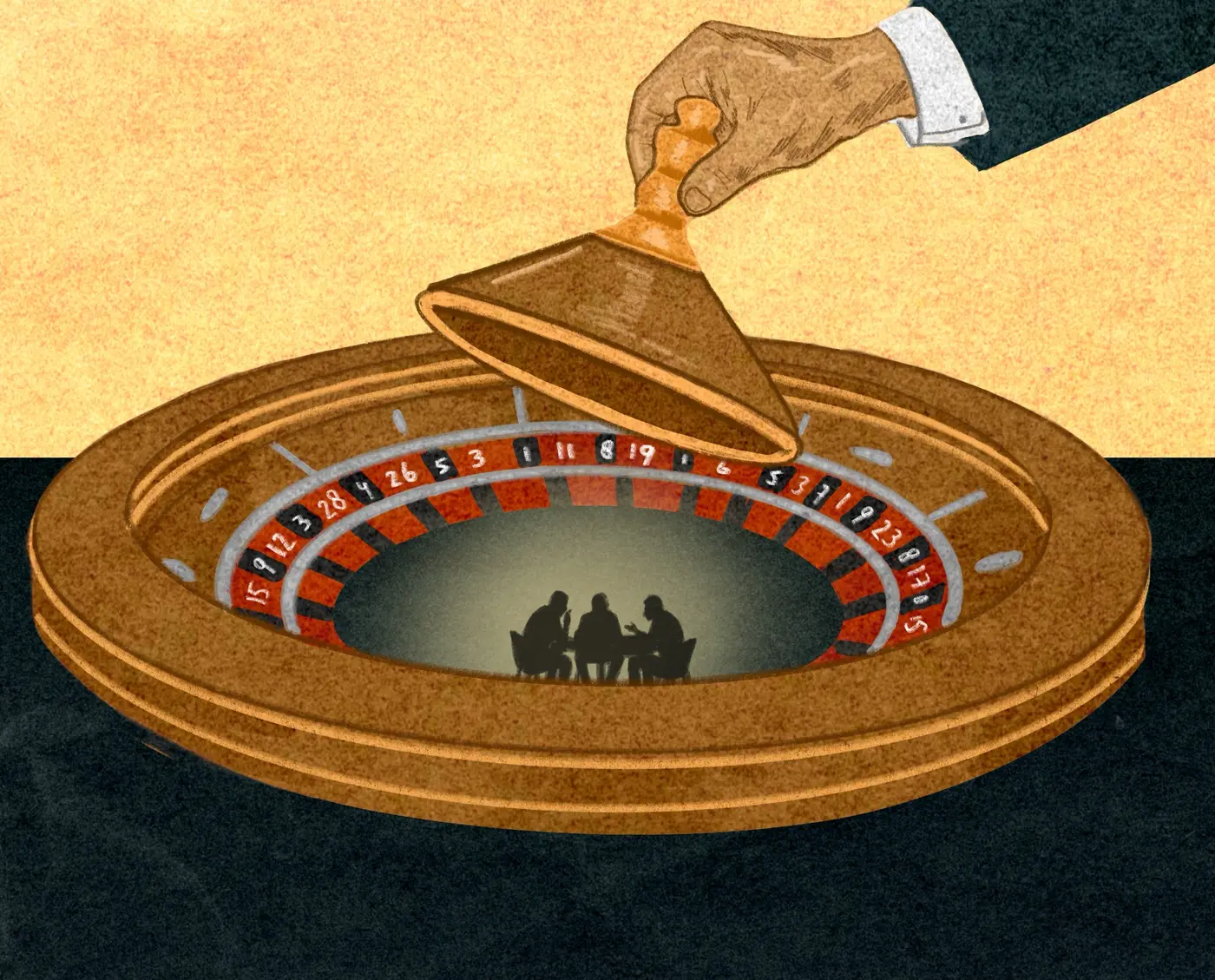
For this latest investigation into Curacao’s gambling industry, she obtained tens of thousands of confidential documents – including the names of companies’ owners, licence applications and the regulator’s assessments. The cache also contained passports, tax returns, and sensitive financial information.
Follow the Money (with reporting by correspondent Dick Drayer in Curaçao) is publishing the findings in coordination with Wittmann, and several media partners: NRK in Norway, NDR in Germany, Jetzt in Austria, and SVT in Sweden.
“I decided it was important enough for us as a society to know who owns these companies”
The investigation, called Casino Secrets, has revealed the identities of about 800 owners of nearly 650 licensed gambling firms, which collectively operate thousands of gambling sites.
They also show that Curaçao routinely granted licences to companies even when applicants withheld key information or were suspected of targeting gamblers in countries where they were not authorised to operate.
Financial experts told FTM that the files reveal more than administrative shortcomings: they demonstrate how Curaçao’s regulator gave its seal of approval to gambling companies whose true owners remained uncertain.
That has allowed opaque operators to claim legitimacy despite unanswered questions about potential money laundering and criminal influence, according to the analysts.
A haven for gambling operators
Since the 1990s, Curaçao has attracted gambling companies either unable or unwilling to obtain licences in the countries where they target players.
For decades, the government granted master licences to a handful of private companies, which then sold sublicences to online operators with virtually no state supervision.
A Curaçao licence allowed gambling platforms to establish themselves on the island and operate offshore, but did not automatically permit them to accept bets in other countries.
The main appeal of the licence was that it gave operators access to a casino-friendly ecosystem of trust offices, payment companies and casino software providers.
The licence also provided a veneer of legitimacy. Payment firms and gambling software providers often treated it as sufficient grounds to work with an operator.
Curaçao-based lawyer Roel Bijkerk – who represents aggrieved gamblers – previously described the licence as an “excuse” for service providers to work with gambling platforms: “They apparently have no problem partnering with these parties as long as they see a licence, even if it is worthless,” he told FTM back in 2023.
Under pressure from the Netherlands, Curaçao overhauled the system in 2024 to bring operators under the direct oversight of a government regulator for the first time.
Yet the reforms have not resolved the industry’s problems.
Curaçao-licensed sites continue to be blacklisted and fined for targeting gamblers in countries where they lack permission to operate, while their owners can still conceal their identities behind letterbox firms administered by trust offices on the island.
Read more
Fold in
Immense wealth
At first glance, the trio appear to have little in common.
One is an extremely wealthy Dutchman barely out of his twenties. Another is the son of a famous US film producer. The third is a Filipino tech manager in Manila.
Even exhaustive searches of corporate registers around the world would be highly unlikely to reveal the connection between them. But Casino Secrets can reveal that all three individuals are – on paper at least – the ultimate beneficial owners of companies behind large and controversial online casinos and betting platforms.
The first is Nick van Gorsel, a 30-year-old from the Dutch province of North Brabant. He is one of the two owners of Prolific Trade NV, the Curaçao letterbox company behind the Brazilian gambling site Blaze.com.
In 2023, Blaze – which hailed footballer Neymar Jr. as a brand ambassador – faced scrutiny in Brazil after users complained that their winnings had not been paid out. The allegations prompted a series of legal proceedings against the company.
Blaze denied the allegations at the time, and refused to disclose details about its owners, arguing that “the focus on individuals distracts from what really matters: the quality, safety and fairness of the gaming experience offered by Blaze.com”.
The site has made van Gorsel very wealthy, according to documents he submitted to the Curaçao regulator. In a 2024 disclosure, he declared assets of €800 million. He owns a penthouse in Amsterdam’s Zuidas district and has a property in Switzerland.
“Blaze’s success made Nick a multimillionaire and secured him a prominent position in the gaming industry,” Van Gorsel wrote in a signed statement regarding the origin of his wealth. His co-owner – American entrepreneur Nicholas Beugg, who is also 30 – declared assets of €500 million to the Curaçao regulator.
Neither owner responded to questions sent to the email addresses they provided to the regulator. Stefanie Knoester of eMoore, the Curaçao trust firm that acts as a director of Prolific Trade NV, said she was bound by “strict confidentiality” and could not “verify, confirm or deny” anything.
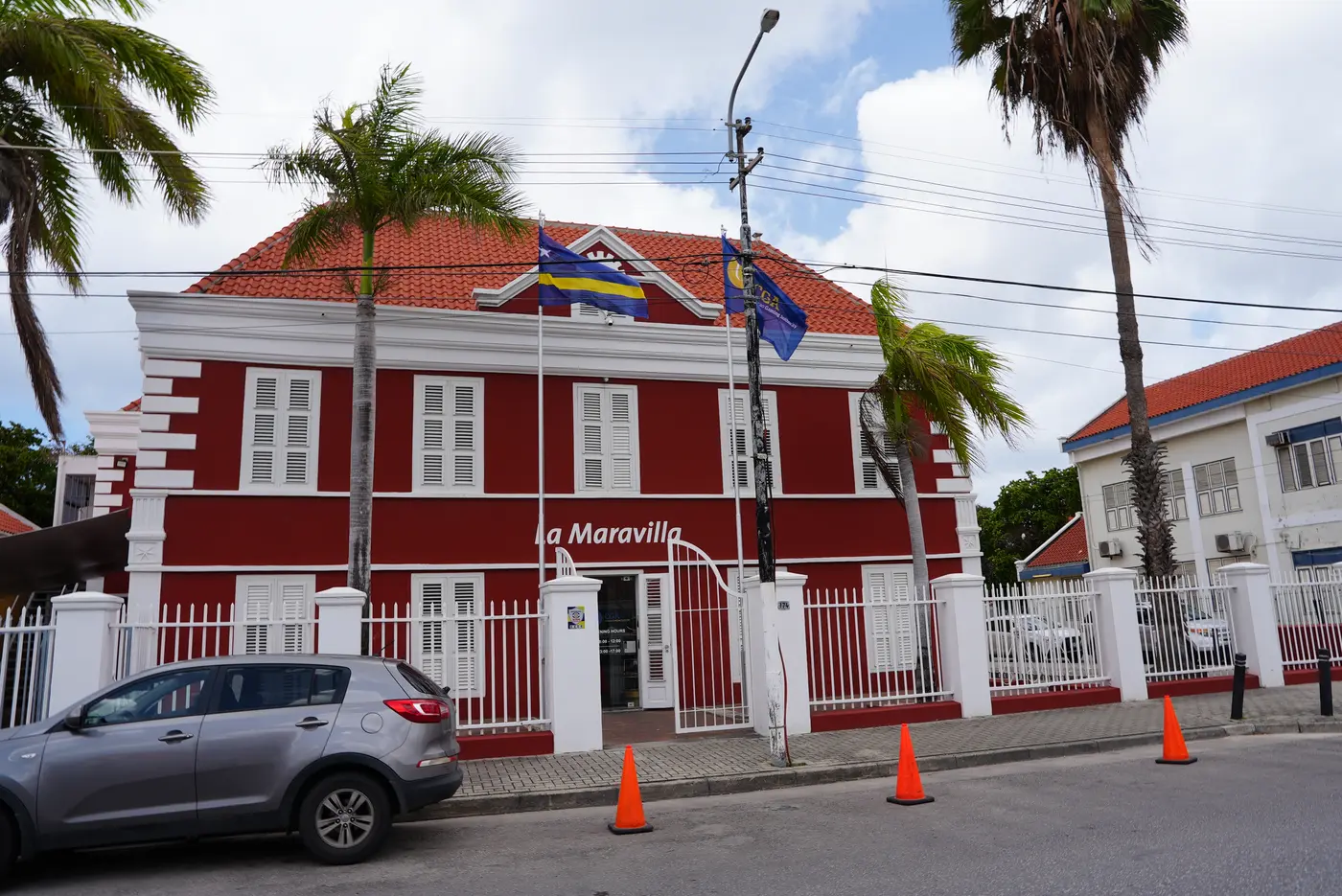
The third figure in this unlikely trio is Manila-based Joanna Tinaco Arenas. The 42-year-old tech manager’s name leads back to a notorious gambling platform that has been recently fined for operating illegally in the Netherlands.
The obtained documents show that Arenas is the ultimate beneficial owner of Novatech Solutions NV, the Curaçao-based letterbox company behind online casino Qbet.com. In 2024, she was also listed as a manager at Novatech (Pasay) Solutions, a company near Manila that provides support services to gambling firms.
In March, the Dutch Gambling Authority hit Novatech Solutions NV with a record fine of nearly €25m for operating illegally in the Netherlands.
Until last year, Qbet was one of the biggest illegal gambling sites in the Netherlands and generated tens of millions of euros in profits, according to the Dutch regulator. Novatech has appealed against the fine. Neither Novatech nor Qbet responded to FTM’s questions.
In April, Nederlandse Loterij – the Dutch state-owned lottery operator – sued Qbet in a bid to “hold operators, trust offices, letterbox companies and their directors liable” for unfair competition.
Exposing red flags
To uncover the people behind Curaçao’s gambling industry, Wittmann first needed access to the regulator’s licensing portal.
In December, Wittmann registered on the Curaçao Gaming Authority’s website using the name of a Dutch trust office manager known to the regulator, but entered her own Gmail address.
She claimed to represent DreamCatcher Private Foundation – a fictitious firm she had invented for the purpose of applying for a gambling licence.
The failure to spot warning signs – or act on them – appears to be a recurring problem at the Curaçao regulator
The fact Wittman had used her personal email address apparently escaped scrutiny. Within days, she was granted access to the regulator’s portal.
Once logged in, the hacker uploaded software that allowed her to take control of the licensing portal and gain access to all information and documents stored there.
The failure to spot warning signs – or act on them – appears to be a recurring problem at the Curaçao regulator, headed by director Cedric Pietersz.
Dozens of licence applications reviewed by FTM show that assessors repeatedly identified serious problems, only to accept vague or incomplete responses.
Time and again, their final recommendation to the regulator’s management board was: “The licence may be granted”. While approval was often conditional on applicants supplying further information, the missing details were rarely provided.
In some cases, the source of an owner’s wealth was unclear – information crucial to preventing money laundering.
On the other hand, some applicants appeared to have too little money to be credible as the true ultimate beneficial owners of gambling companies, raising questions about who was really in control.
The files also contained indications that gambling firms were operating in countries where they lacked a licence, including warnings from and blacklisting by foreign regulators.
newsletter
Bureau Brussels
Subscribe
Unsubscribe
At FTM’s request, Marcel Pheijffer – professor of forensic accountancy at Nyenrode Business University in the Netherlands – analysed several assessments used by the Curaçao gambling regulator to justify licensing decisions.
He found that licences were granted even when important questions remained unanswered.
“In the Dutch context, that approach would not be possible,” Pheijffer said. “In fact, I believe it should not be the case anywhere.”
Casino giants and ‘crypto kings’
The Curaçao regulator’s blind spots extended to two leading gambling operators.
Russian-founded 1xBet and crypto casino Stake were granted licences in the last two years, despite the regulator lacking crucial information about who owned and controlled them.
1xBet has sponsored top-flight football leagues, including Italy’s Serie A and Spain’s La Liga. In 2023, FTM revealed how the company used Curaçao as a springboard to expand globally while flouting the law in several markets.
1xBet has been linked to illegal gambling and illicit advertising across countries from the Netherlands and Russia to the UK, prompting criminal proceedings and the termination of sponsorship deals with leading British football clubs.
Stake, meanwhile, has rapper Drake as its figurehead and was until last year a sponsor of the Formula 1 team Sauber. A previous FTM investigation showed how aggressive and sometimes covert marketing helped turn Stake into a multibillion-dollar company within a matter of years.
This year, its logo even appeared in a post by US President Donald Trump on Truth Social, despite Stake not being licensed to operate in the United States.
Both gambling giants have been fined or blacklisted in numerous countries. In 2019, the Dutch Gambling Authority fined 1xBet for illegally targeting gamblers.
Young tech billionaires Ed Craven and Bijan Tehrani – hailed by the media as “crypto kings” – are widely known as Stake’s founders.
Yet on paper, Stake is owned not by Craven or Tehrani, but by Mladen Vuckovic.
The Serbian national is registered as the owner of Medium Rare NV, the Curaçao-based letterbox company behind Stake. In a disclosure submitted to the regulator in 2024, Vuckovic declared assets of more than $1 billion. He was already publicly known as Stake’s chief executive officer, but not as its owner.
Officials at the Curaçao gambling regulator questioned whether Vuckovic was really the sole owner.
This is a business that is highly susceptible to money laundering
They identified loans and payments worth tens and sometimes hundreds of millions of dollars from Medium Rare to companies and individuals linked to Craven and Tehrani.
Yet neither man was mentioned in Stake’s licence application.
Given the uncertainties over Stake’s ownership, the academic Pheijffer said it was “incomprehensible” that the Curaçao regulator had granted the company a licence.
Officials at the regulator also raised doubts about 1xBet in 2024.
Publicly available information identifies its owners as three Russians: Roman Semiokhin, Dmitry Kazorin and Sergey Karshkov, who died in 2023.
However, the investigation found that Ukrainian national Ihor Hniedash is listed as both the CEO and owner of Caecus NV, the Curaçao letterbox firm behind 1xBet.
There is no other link between Hniedash and either Caecus NV or the gambling site. According to his disclosure to the Curaçao regulator, the 39-year-old earns just under €10 million a year from the company.

In their final report recommending whether to grant the licence, assessors at the Curaçao Gaming Authority said they suspected 1xBet had “multiple owners”.
They wanted Hniedash to provide more information about his possible “business relationship” with the three Russians identified as 1xBet’s founders. Nonetheless, the regulator granted the company a licence in 2024 without receiving those answers.
Pheijffer said it was “remarkable” that the CGA repeatedly grants licences before gambling companies have provided important information.
“This is a business that is highly susceptible to money laundering, particularly when it comes to transactions in cryptocurrencies,” he added.
1xBet and Ronnie de Mei, director of Capital Trust Corporation N.V. – which represents the gambling company in Curaçao – told FTM that they were unable to respond to “assumptions” based on documents they had not seen.
Transition period
In response to the findings and FTM’s emailed questions, the Curaçao Gaming Authority did not dispute that it had granted licences despite unresolved questions about gambling companies’ ownership and corporate structures.
However, the regulator said the sector was going through a transition period.
Companies have been given time to meet the requirements of Curaçao’s new gambling law – which was passed in 2024, after almost 30 years under a system in which the industry on the island was mostly self-governed.
“Under the responsibility of the minister of finance, it was decided not to implement all requirements at once, but to give companies the opportunity to comply with them step by step,” the Curaçao Gaming Authority said.
The regulator explained that its guiding principle was not to “immediately refuse a licence or terminate existing activities whenever there is a question or uncertainty”.
It did acknowledge that Curaçao-based gambling sites operating in countries without permission was “a matter of concern”, but said the issue was “not black and white”.
Distinguishing between actively targeting a market and merely accepting customers from that jurisdiction was “complex”, the regulator added.
Pheijffer of Nyenrode Business University said he did not consider the transition period as a valid justification.
“A regulator must think first and then act,” he said. “And not – as is the case here – the other way round.”
According to Jan van Koningsveld, an expert in offshore finance, Curaçao’s new gambling legislation is clear: regulators must establish, as far as possible, the identity, existence, and involvement of all owners and decision-makers.
This is important, he said, because concealed ownership creates significant money laundering risks in the gambling industry, and could allow organised crime networks to influence companies – or even become their owners.

Van Koningsveld examined the recommendation to license Stake in particular.
He said lingering uncertainty did not necessarily mean the Curaçao Gaming Authority should have refused the licence, but that the regulator could “be expected to carry out an in-depth investigation and exercise ongoing supervision”.
The strongest criticism came from Björn Fuchs, chairman of the Dutch online gambling trade association VNLOK.
He said Curaçao’s new gambling law appeared to be “failing miserably”, pointing to operators that had “actively and illegally targeted the Dutch market in recent years”.
Fuchs called for tougher checks on issues such as ownership, integrity, and financial health – warning that licences should be refused when red flags remain unresolved.
For Wittmann, the regulator’s failure to resolve such questions justified bringing its files into the open. Wittmann compared her hacking to undercover journalism, and said she was motivated by the fact she had rarely encountered a Curaçao-based gambling company operating entirely within the law.
“So I decided it was important enough for us as a society to know who owns these companies,” she added.
Data research methodology
This article makes use of documents which FTM knew had been obtained through hacking. The decision to use this information is based on the public interest of raising awareness about exploitative and illegal practices within Curaçao’s gambling sector.
These abuses are serious, cause harm to people’s lives and countries across the world, and have been taking place over a long period of time.
FTM has chosen to use only those documents that came into Wittmann’s possession in December. This is the information that she obtained before FTM made contact with her or was aware of the hack at the Curaçao Gaming Authority.
As FTM did not use any documents obtained after the initial breach, last December is the cut-off date for this story.
The investigation focused on two key areas: the ultimate beneficial owners and trust offices linked to all 646 organisations that held a licence as of December, according to the documents. We based our analysis on a database from the leak that identified the individuals involved.
In the case of the ultimate beneficial owners, this database did not always match the information contained in the documents. FTM therefore manually checked the files to determine the owners.
This involved examining the corporate structures submitted by applicants, personal disclosure forms describing individuals’ roles within organisations, and the final recommendations drawn up by the regulator’s officials.
This allowed FTM to verify 897 ultimate beneficial owner records relating to 767 individuals, some of whom owned multiple companies. During the manual review, it was also possible to establish their nationalities from the passports provided.
The checks showed that 65 individuals had transferred their ownership stakes before December 2025 and were no longer ultimate beneficial owners.
FTM could not verify whether another 30 people remained ultimate beneficial owners because relevant documents were missing. Nevertheless, both groups were included to provide a broader picture of the nationalities represented among current and former owners.
With the representatives of trust offices, an initial manual review of 100 companies found that the leaked database was more accurate than for the ultimate beneficial owners.
For the remaining companies, FTM therefore extracted this information directly from the database, checking the original documents in cases of doubt. A random sample was then used to verify the unchecked records.
The analysis identified 40 individuals representing the gambling companies, 31 of whom held Dutch passports. Of these, 14 were born in Curaçao and 12 in the Netherlands; the remaining five were born elsewhere, such as Suriname and Turkey.
FTM also identified the trust offices employing each representative. In total, 30 offices were involved, making it possible to calculate the proportion of gambling companies represented by each one.
Read more
Fold in