
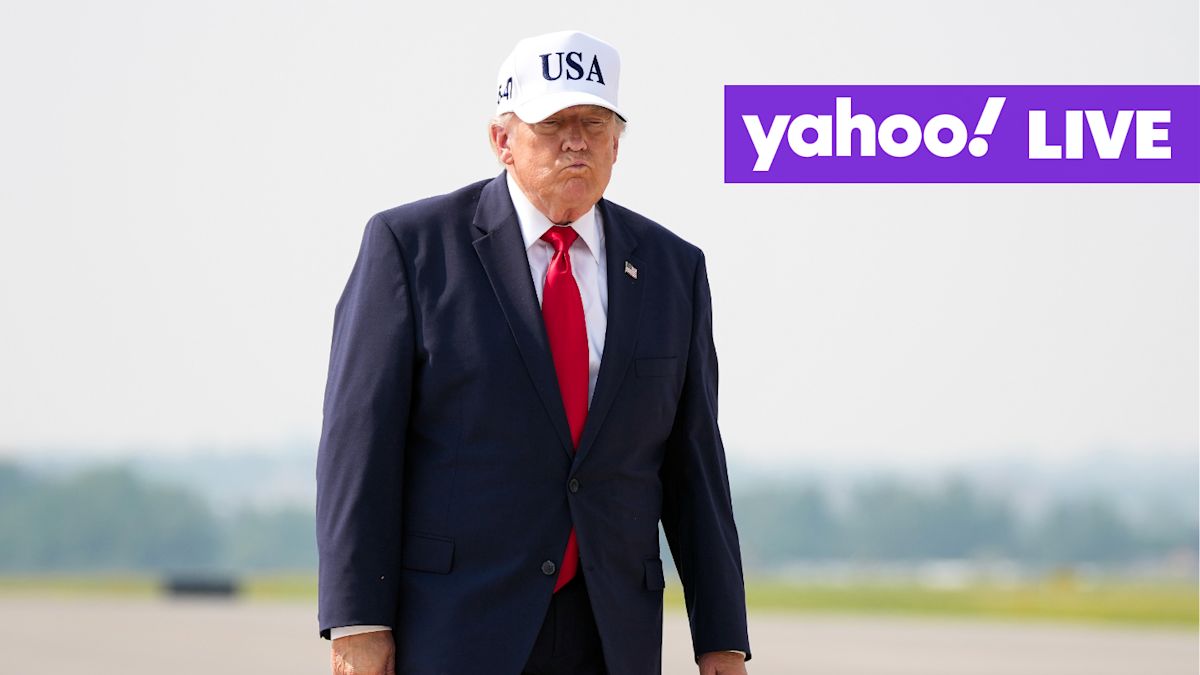

Donald Trump addressed the UN General Assembly with a mix of threats and olive branches toward Iran, days after fresh talks between the two sides. (Photo by Michael M. Santiago/Getty Images)
US President Donald Trump revealed that American and Iranian officials held talks on 22 Sept, the first such meeting in months, even as he told the UN General Assembly he was still deciding whether to “annihilate” Iran. Speaking in New York, the 80-year-old asked whether a deal could be struck that would let Iran “rebuild and create a far greater country,” or whether he should instead “drive them into hell with no chance of survival.”
All but one member of the Iranian delegation walked out during the speech.
Despite the harsh rhetoric, Trump confirmed that Iranian Foreign Minister Abbas Araghchi had met his envoy Steve Witkoff and son-in-law Jared Kushner on the sidelines of the UN gathering, describing it as “a very good meeting, a very productive meeting” with another round already scheduled.
He later told Gulf leaders there was ‘a lot of momentum’ toward a deal, adding that he expects Iran to come to terms shortly after November’s midterm elections. Republicans are at risk of losing control of Congress in that vote, partly due to the war’s economic toll.
Iranian state media offered a different account of the talks.
Citing Araghchi, the IRIB news agency reported that Tehran’s conditions for reopening the Strait of Hormuz include the immediate lifting of the US naval blockade, prompt repayment of frozen Iranian assets, and an end to the war “on all resistance fronts.”
Witkoff, posting on X, described the discussions as constructive, saying mediators had “shuttled between the two sides throughout the day” and would continue their work.
The talks mark the first face-to-face meeting between US and Iranian officials since Vice President JD Vance met senior Tehran officials in Switzerland in June.
Trump had promised the war, launched alongside Israel on 28 Feb, would be over in four to five weeks. Instead, it has dragged on for more than six months, with an April ceasefire collapsing and negotiations stalling over Iran’s refusal to give up control of the strait.
Trump has defended the resulting spike in fuel prices as a necessary cost of preventing Iran from developing a nuclear weapon, framing himself in his speech as a peacemaker who confronts threats rather than ignoring them.
Trump’s UN visit also touched on two other long-running conflicts. Meeting Ukrainian President Volodymyr Zelensky, he insisted progress on ending Russia’s invasion would come “more quickly than people understand,” despite scant sign that Russian President Vladimir Putin is open to a settlement.
Zelensky said Ukraine was ready to halt strikes on Russian energy sites if Moscow reciprocated.
Separately, Trump signed a security pact with Greenland and Denmark that will see the US build two military bases on the Danish territory while barring non-NATO forces from any presence there, a move that has, for now, eased his earlier calls to annex the island.
For more on Trump’s UN speech and the Iran talks, read here.