
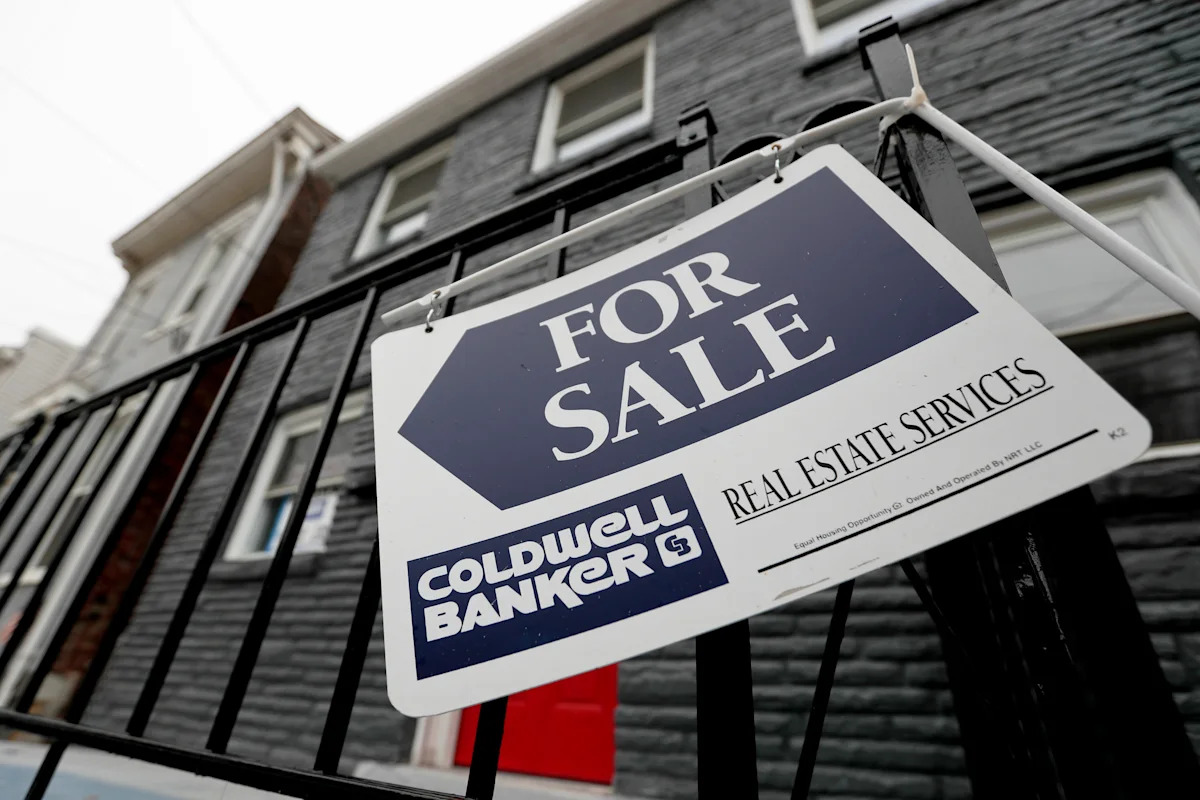
Mortgage rates jumped higher yet again this week as a global bond market selloff intensified.
The average 30-year mortgage rate rocketed 11 basis points to 7.37% on Thursday, according to Mortgage News Daily, the highest level since May 2024.
The 10-year Treasury yield, which mortgage rates closely track, has been rising rapidly in recent weeks amid growing investor concern about oil prices, inflation, and future Federal Reserve rate hikes.
On Wednesday, the 10-year yield topped 5.1% to reach a 19-year high, and jumped again on Thursday, to around 5.14%.
“Turmoil in the U.S. Treasury bond market is disrupting plans for shoppers hoping to buy a home at the tail end of the 2026 season, before sellers and buyers pack up for the holidays,” Zillow senior economist Kara Ng said in a statement.
Other mortgage rate measures also show the pain. Freddie Mac, which conducts a weekly survey of mortgage rates that can be slower to react to big single-day swings, said the average rate was 7.03% for the week through Wednesday, while the Mortgage Bankers Association calculated the average at 7.12% last week, the highest level since May 2024.
Read more: Discover the best mortgage refinance lenders
Today’s mortgage rates
Here are the current purchase mortgage rates for today, Thursday, September 24, 2026, according to the latest Zillow data:
30-year fixed: 7.20%
20-year fixed: 7.17%
15-year fixed: 6.69%
5/1 ARM: 6.73%
7/1 ARM: 6.70%
30-year VA: 6.57%
15-year VA: 6.36%
5/1 VA: 6.23%
Remember, these are the national averages and rounded to the nearest hundredth.
Here are 8 strategies for getting the lowest mortgage rate possible.
Today’s mortgage refinance rates
Here are the current refinance mortgage rates for today, Thursday, September 24, 2026, according to the latest Zillow data:
30-year fixed: 7.13%
20-year fixed: 7.23%
15-year fixed: 6.59%
5/1 ARM: 6.75%
7/1 ARM: 6.56%
30-year VA: 6.70%
15-year VA: 6.48%
5/1 VA: 5.89%
As with mortgage rates for purchase, these are national averages that we’ve rounded to the nearest hundredth. Refinance rates can be higher than purchase mortgage rates, but that isn’t always the case.
Monthly mortgage payment calculator
Use the mortgage calculator below to see how various mortgage rates will impact your monthly payments.
Payment breakdown Amortization
Mortgage payment calculator Mortgage payment breakdown
82% Principal & interest
$2,309 Taxes, insurance, HOA fees
0% Private mortgage insurance
You can bookmark the Yahoo Finance mortgage payment calculator and keep it handy for future use, as you shop for homes and lenders. Be sure to use the dropdown to include private mortgage insurance costs and HOA dues if they apply to you. These monthly expenses, along with your mortgage principal and interest rate, will give you a realistic idea of what your monthly payment could be.
How do mortgage rates work?
A mortgage interest rate is the fee charged by a lender for borrowing money, expressed as a percentage. There are two basic types of mortgage rates: fixed and adjustable rates.
A fixed-rate mortgage locks in your rate for the entire life of your loan. For example, if you get a 30-year mortgage with a 6% interest rate, your rate will remain at 6% for the entire 30 years. (Unless you refinance or sell the home.)
An adjustable-rate mortgage keeps your rate the same for the first few years, then changes it periodically. Let’s say you get a 5/1 ARM with an introductory rate of 6%. Your rate would be 6% for the first five years, and then the rate would increase or decrease once per year for the last 25 years of your term. Whether your rate goes up or down depends on several factors, such as the economy and the U.S. housing market.
At the beginning of your mortgage term, most of your monthly payment goes toward interest. As time passes, less of your payment goes toward interest, and more goes toward the mortgage principal or the amount you originally borrowed.
Read more: Learn how to choose between an adjustable-rate vs. fixed-rate mortgage.
How are mortgage rates determined?
Two categories determine mortgage rates: those you can control and those you cannot.
What factors can you control? First, you can compare the best mortgage lenders to find the one that gives you the lowest rate and fees.
Second, lenders typically extend lower rates to people with higher credit scores, lower debt-to-income (DTI) ratios, and considerable down payments. If you can save more or pay down debt before securing a mortgage, a lender will probably give you a better interest rate.
What factors can you not control? In short, the economy.
The list of ways the economy impacts mortgage rates is long, but here are the basic details. If the economy — for example, employment rates — is struggling, mortgage rates decrease to encourage borrowing, which helps boost the economy. If the economy is strong, mortgage rates go up to temper spending.
With all other factors being equal, mortgage refinance rates are typically slightly higher than purchase rates. So don’t be surprised if your refinance rate is higher than you may have expected.
30-year vs. 15-year fixed mortgage rates
Two of the most common mortgage terms are 30-year and 15-year fixed-rate mortgages. Both lock in your rate for the entire loan term.
A 30-year mortgage is popular because it has relatively low monthly payments. But it comes with a higher interest rate than shorter terms, and because you’re accumulating interest for three decades, you’ll pay a lot of interest in the long run.
A 15-year mortgage can be a good choice because it has a lower rate than you’ll get with longer terms, so you’ll pay less in interest over the years. You’ll also pay off your mortgage much faster. But your monthly payments will be higher because you’re paying off the same loan amount in half the time.
Basically, 30-year mortgages are more affordable from month to month, while 15-year mortgages are cheaper in the long run.
Current mortgage rates: FAQs What bank is offering the lowest mortgage rates?
According to Yahoo Finance’s weekly survey of lenders with the lowest rates, some of the banks with the lowest median mortgage rates are Chase and Citibank. However, it’s a good idea to shop around for the best rate, not just with banks, but also with credit unions and companies specializing in mortgage lending.
Is 2.75% a good mortgage rate?
Yes, 2.75% is an amazing mortgage rate. You’re unlikely to get a 2.75% rate in today’s market unless you take on an assumable mortgage from a seller who locked in this rate in 2020 or 2021, when rates were at all-time lows.
What is the lowest-ever mortgage rate?
According to Freddie Mac, the lowest-ever 30-year fixed mortgage rate was 2.65%. This was the national average in January 2021. It is extremely unlikely that rates will dip below 3% again anytime soon.
At what rate should you refinance your mortgage?
Some experts say it’s worth refinancing when you can lock in a rate that’s 2% less than your current mortgage rate. Others say 1% is the magic number. It all depends on your financial goals when refinancing, how long you plan to stay in the same house, and on your break-even point after paying the refinance closing costs.