
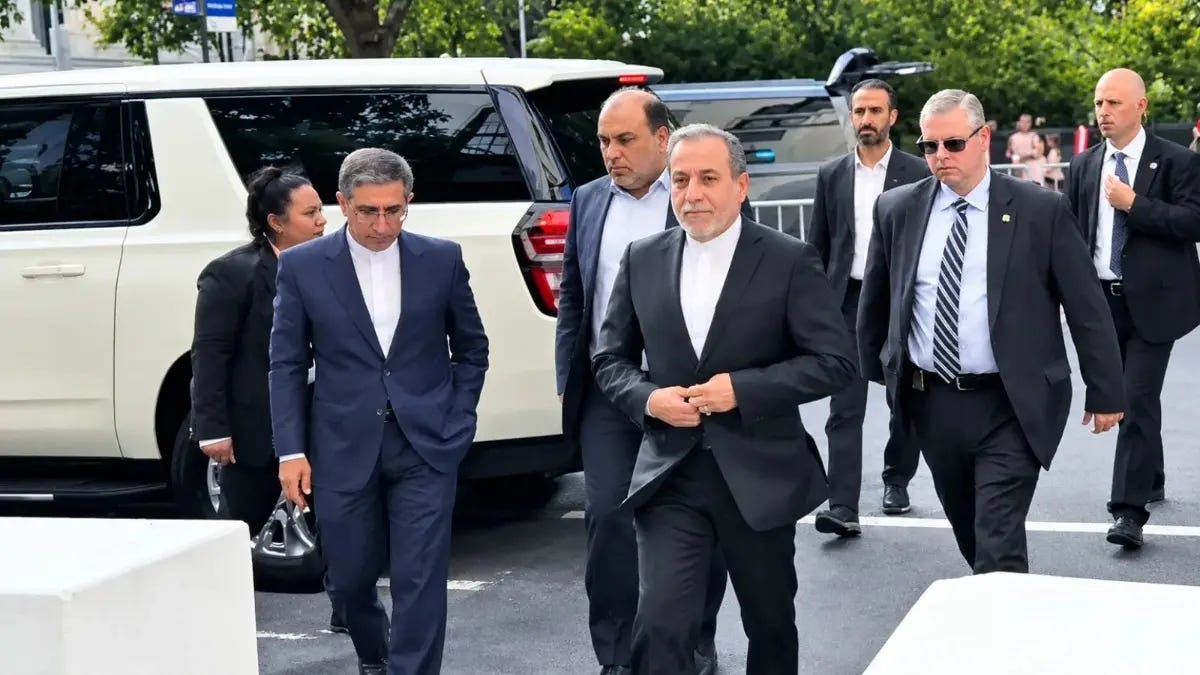
Iran has proposed a new seven day plan for reopening the Strait of Hormuz and resuming nuclear talks with the United States, Iran’s Foreign Minister Abbas Araghchi said Thursday.
The proposal, a kind of compressed version of a June ceasefire deal that subsequently collapsed, was conveyed to the United States through Qatari mediators this week, officials said.
“If certain conditions are met, the Strait of Hormuz will be open at the end of seven days, and talks will be restarted,” Araghchi said, speaking to journalists and think tank experts at a meeting with Iranian President Massoud Pezeshkian on the sidelines of the United Nations General Assembly Thursday afternoon.
“The conditions we have asked the U.S. to meet are nothing new, nothing more than what was already in the Islamabad MOU, which was signed by the U.S. President,” the veteran Iranian diplomat said, referring to the Memeorandum of Understanding which briefly ended the war started by the US and Israel on Iran last February.
The seven days would “begin the day after U.S. accepts this plan,” Araghchi said. “We have introduced this through the through the mediators, and we are waiting for their response and their reaction.”
However, Iranian officials did not seem optimistic that their proposal would gain quick traction with Washington.
The Iranian officials seemed weary of Trump’s erraticness and wildly shifting positions—repeatedly threatening to totally annihilate Iranian civilization followed hours later by predicting an imminent deal; and rejected the Trump administration narrative that they had been unwilling to come to the negotiating table. They’d negotiated multiple times and been attacked in the midst of talks, officials said.
“Iran must be understood by Mr. Trump and those who seek to bully us that we are ready for dialogue and diplomacy, without accepting the language of force,” Iranian President Pezeshkian, a cardian surgeon, said at the end of his speech to the UN General Assembly on Wednesday.
“The Iranian proposal seems to be a micro version of the June MOU, but it faces major hurdles,” said Ali Vaez, director of the Iran program at the International Crisis Group. “Skepticism from some of Tehran’s neighbors over its designs for the Strait of Hormuz, and Washington’s belief that it is weakening Iranian leverage over the Strait while simultaneously weakening its economy.”
Iran’s president is due to return to Iran on Friday.
Foreign minister Araghchi and deputies are expected to stay in New York through the weekend, so there might be further opportunities to try to advance diplomacy in the coming days. Those include Iranian discussions with Persian Gulf and Arab countries on a map for shipping routes in the Strait of Hormuz.
**