
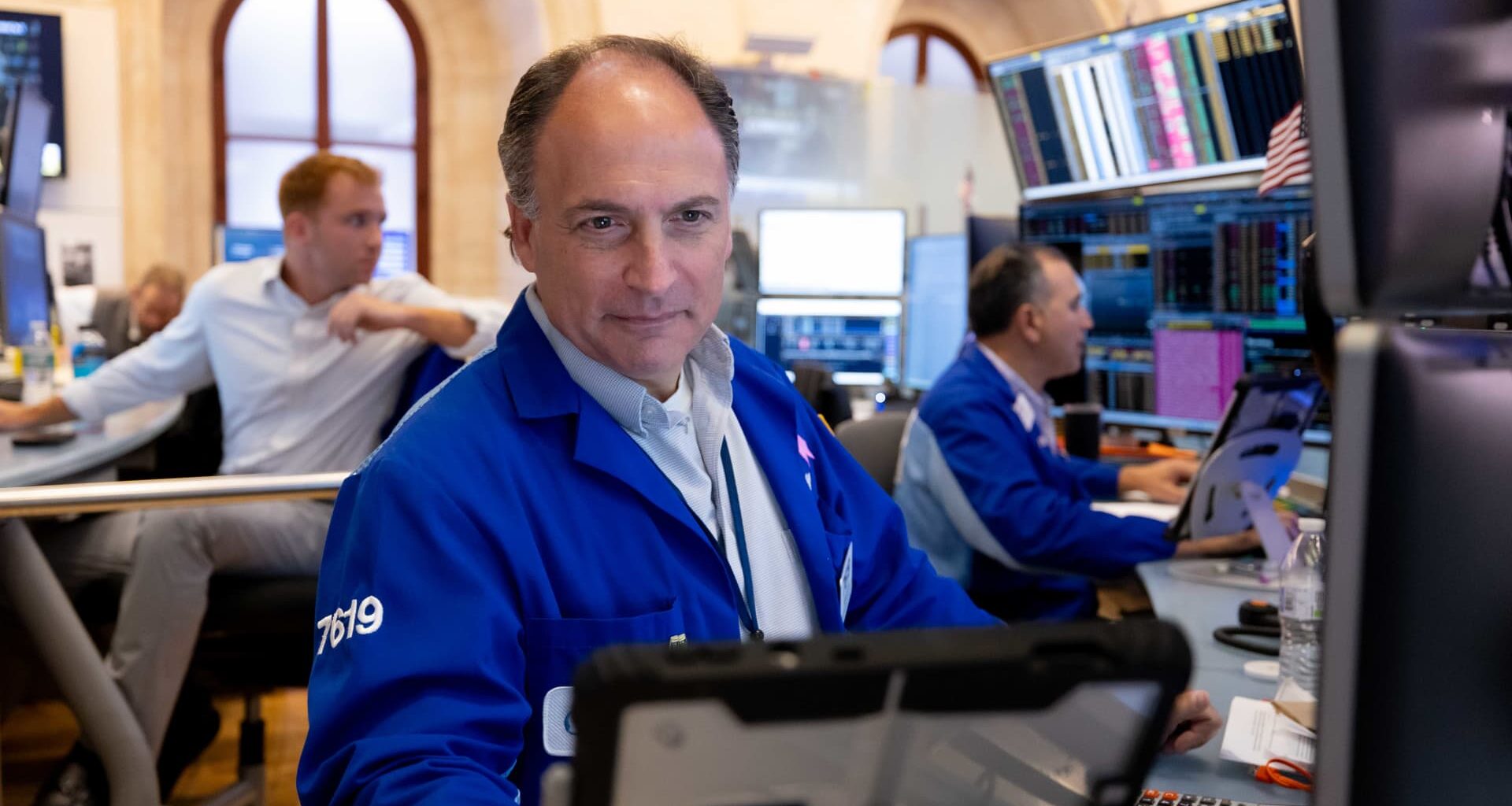
Traders work at the New York Stock Exchange on Sept. 24, 2026.
NYSE
U.S. equities rose slightly on Friday as Wall Street gets set to wrap up a volatile week of trading, with a surge in Treasury yields rippling through financial markets.
The S&P 500 was up 0.3%, while the Nasdaq Composite advanced 0.4%. The Dow Jones Industrial Average gained 190 points, or 0.3%.
Shares of Akamai Technologies led technology higher, jumping more than 14% after announcing a multiyear deal with Anthropic.
Also helping sentiment, oil prices slid amid optimism that the Strait of Hormuz could be reopened, as Iran’s Foreign Minister Abbas Araghchi has proposed to do so as well as restart nuclear talks with the U.S. within seven days if Washington accepts its conditions.
Reuters reported Thursday that the U.S. and Iranian negotiators in New York are considering a phased agreement to end the Middle East conflict.
On Friday, U.S. West Texas Intermediate crude futures dropped 2% to around $92 per barrel, while international benchmark Brent crude futures declined 1% to around $104 a barrel.
Despite the day’s gains, the Dow is heading for a fourth consecutive losing week, down 0.1%. The S&P 500 is on track for a 1% advance, while the Nasdaq is up nearly 2% week to date.
The drama continued in the bond market, where the 10-year Treasury yield climbed to its highest level since 2007 on Thursday, while the 30-year yield reached its highest level since 2004. The two were last seen up slightly at 5.188% and 5.49%, respectively.
This week’s ascent in yields was fueled by hawkish comments from Federal Reserve Governor Michael Barr, persistently high energy prices due to the Iran war, and a hot purchasing managers’ report. Fed funds futures trading suggests a roughly 66% likelihood of a rate hike in October, according to the CME FedWatch tool.
“Even before the moves of the past few days, the declines in credit card [annual percentage rates] and auto loan rates that occurred from mid- 2024 through the start of 2026 had stalled, and mortgage rates reaccelerated,” Heather Berger, economist at Morgan Stanley, wrote in a note to clients.
“We expect these pressures to weigh on spending, largely through goods, which is contributing to the 40 [basis point] deceleration in real consumption growth we expect next year,” she added.
Meanwhile, traders were monitoring Chinese President Xi Jinping’s visit to the U.S. this week. U.S. Trade Representative Jamieson Greer told CNBC Friday that “a lot more details” on negotiations between the U.S. and China are going to be released Monday.
Treasury Secretary Scott Bessent said earlier in the week that the two countries have agreed to extend their trade truce by two months.