
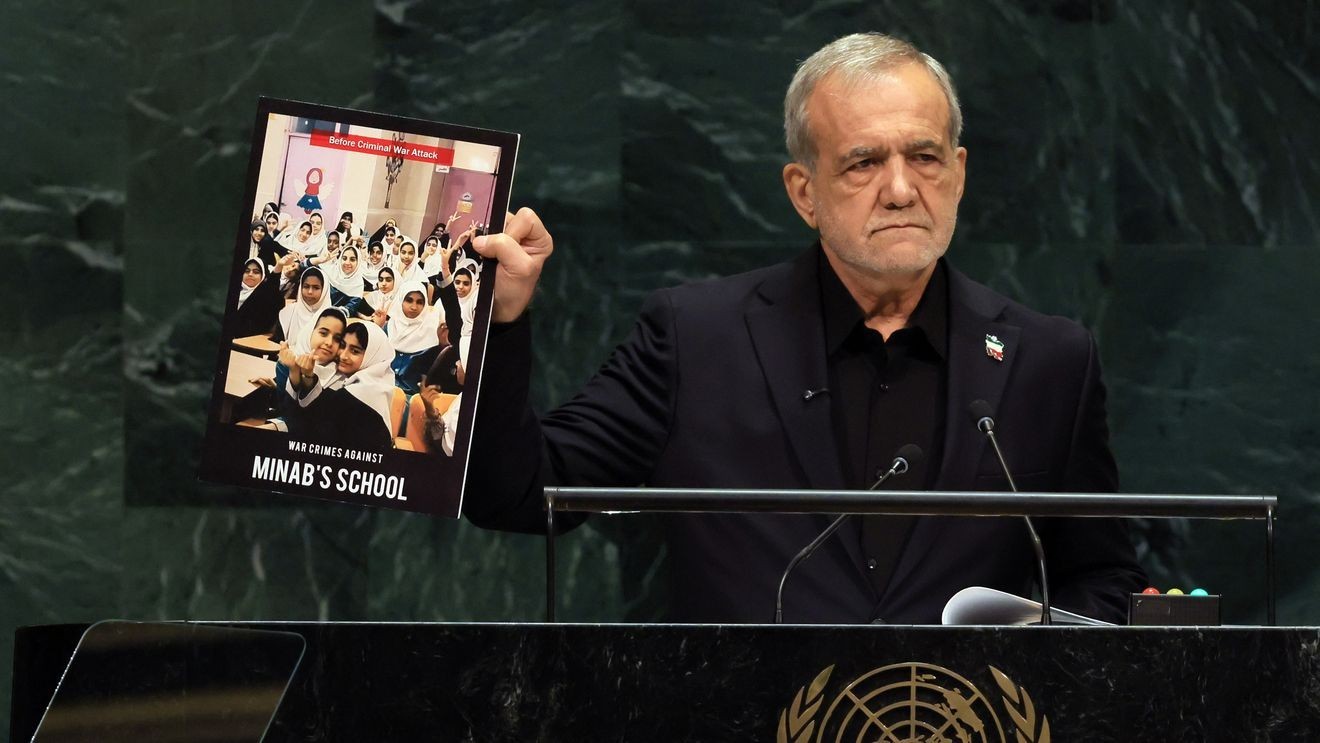
WASHINGTON (TNND) — Iran has presented the United States with a seven-day plan aimed at halting months of fighting, reopening the Strait of Hormuz and restarting negotiations over Tehran’s nuclear program, as both countries signal renewed interest in diplomacy.
Iranian Foreign Minister Abbas Araghchi said the proposal was delivered to Washington through intermediaries. (TNND)
“We’re seeking an agreement if the counterpart agrees to it,” Iranian President Masoud Pezeshkian told Fox News this week.
Iranian Foreign Minister Abbas Araghchi said the proposal was delivered to Washington through intermediaries. Under the plan, Iran would reopen the Strait of Hormuz within seven days if the United States meets several conditions, including easing military pressure, lifting its naval blockade of Iranian ports and waiving sanctions restricting Iranian oil sales.
The proposal also calls for a ceasefire that would extend to Lebanon.
Some former U.S. officials remain skeptical.
“It’s likely not a serious proposal,” former Secretary of State Mike Pompeo told Fox News, accusing Iran’s leaders of continuing to threaten Western interests.
The diplomatic push comes as Iran emerged as a major issue during Chinese President Xi Jinping’s visit to Washington this week.
President Donald Trump confirmed he discussed the war with Xi and expressed optimism when asked whether progress could be made involving the Strait of Hormuz.
“I think we’ll do great,” Trump said.
China is the largest buyer of Iranian oil, providing Tehran with a critical source of revenue despite U.S. sanctions. Washington has also accused Chinese entities of providing technology and other assistance to Iran.
The State Department, meanwhile, is pushing back on Tehran’s characterization of its offer to “reopen” Hormuz.
Deputy State Department spokesperson Luke Ortega said the strait is currently open, while describing U.S. naval operations in the region as a “steel wall.”
Shipping through the strategic waterway has nevertheless fallen dramatically during the conflict. Recent vessel traffic has been far below prewar levels, according to Reuters.
Ortega also emphasized that Washington believes Trump is negotiating from a position of strength, saying the president “holds all the cards” in determining how talks move forward.
Iran’s proposal is not entirely new. It largely revives provisions from a memorandum of understanding reached between Washington and Tehran in June that sought to end hostilities and restore commercial shipping through Hormuz.
That agreement quickly unraveled amid disputes over implementation.
The major difference now is speed. The June framework envisioned up to 60 days of negotiations toward a final agreement. Iran’s latest proposal would compress key initial steps into just seven days.
For now, no agreement has been announced, and the seven-day timeline would begin only if Washington accepts the terms.