

Listen to this article
Estimated 5 minutes
The audio version of this article is generated by AI-based technology. Mispronunciations can occur. We are working with our partners to continually review and improve the results.
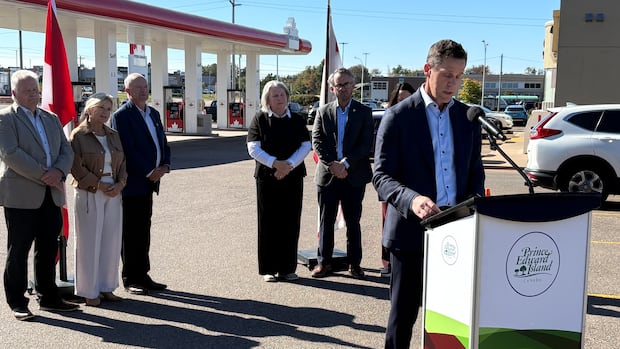
Prince Edward Island is suspending its provincial fuel tax on gasoline and diesel for four months, giving Islanders relief at the pump at a cost of up to $12 million in lost revenue for the province.
The tax will be removed starting Sept. 26 and remain suspended until Jan. 31, 2027, the province said in a news release Friday.
The provincial tax currently adds 8.47 cents to every litre of gasoline and 14.15 cents to every litre of diesel. Both rates will drop to zero during the suspension.
As of Friday, the minimum price at the pump for regular gas on P.E.I. is $2.15 per litre, while diesel was significantly higher at $2.68 per litre, amid ongoing global conflicts.
“We’ve been dealing with a baseline of elevated fuel prices now for six months or more, but we’ve seen a recent spike into historic highs,” Premier Rob Lantz told reporters Friday.
“Now is the time to let Islanders keep their hard-earned money in their pockets. Gas prices are really affecting families and Island businesses right now.”
After the four-month suspension, the tax will return at half its current rate for two months before being fully restored on April 1. From Feb. 1 to March 31, the tax will be 4.24 cents per litre on gasoline and 7.08 cents per litre on diesel.
The province said a driver with a mid-sized vehicle who fills up once a week will save about $115 over the six-month period.
The cost to the province
The suspension, part of the province’s broader affordability measures, comes as P.E.I. is already dealing with a record-breaking deficit in the provincial budget, along with growing debt.
The provincial fuel tax is one source of revenue for the province. According to the government’s 2026-27 operating estimates, the province had budgeted about $28.2 million in gasoline-tax revenue for the fiscal year.
Lantz said the measure is expected to cost the province between $8 million and $12 million in lost revenue.
“I think Islanders are going to be really happy to keep eight to 12 million dollars in their pockets,” he said.
Finance and Affordability Minister Jill Burridge said the province has identified some offsets that could help cover the shortfall.
“We are seeing some HST recovery. There is some room here for this,” she said.
“I don’t know if it’ll be able to offset the whole thing.”
WATCH | High diesel prices mean an expensive harvest for P.E.I. farmers:
High diesel prices mean an expensive harvest for P.E.I. farmers
The price of diesel continues to climb and farmers on the Island are feeling it. They’re getting hit particularly hard now as their machines roll through the fall harvest. CBC’s Connor Lamont explains.
Burridge said the HST in question relates to “provincial operations.”
She added that finance officials are expected to provide more detail at a committee meeting on Tuesday.
“The message is that this is temporary, targeted relief for Islanders that they need right now,” she said. “It is temporary, it’s very targeted, and it will benefit all Islanders.”
For businesses that rely heavily on diesel, the suspension will reduce the cost of fuel used by trucks, delivery vehicles, snow-removal equipment, farm equipment and other machinery, the release said.
Under the Gasoline Tax Act, the provincial fuel tax applies to purchases of gasoline and diesel oil. No tax is levied on home heating oil.
According to the release, the provincial fuel tax rate has not changed since Jan. 1, 2020, when it was reduced from 9.68 to 8.47 cents per litre on gasoline, and from 15.83 to 14.15 cents per litre on diesel.
Why P.E.I. fuel prices are higher
A legislative committee on P.E.I. is looking at whether adding an ethanol‑blending facility on the Island could help lower fuel prices over the longer term.
Lantz said one of the reasons fuel is more expensive on P.E.I. than in parts of the mainland is that the province does not have its own ethanol-blending facility, even though other Maritime provinces do.
“We are the only Maritime province that doesn’t have bulk delivery of ethanol‑blended fuel,” he said.
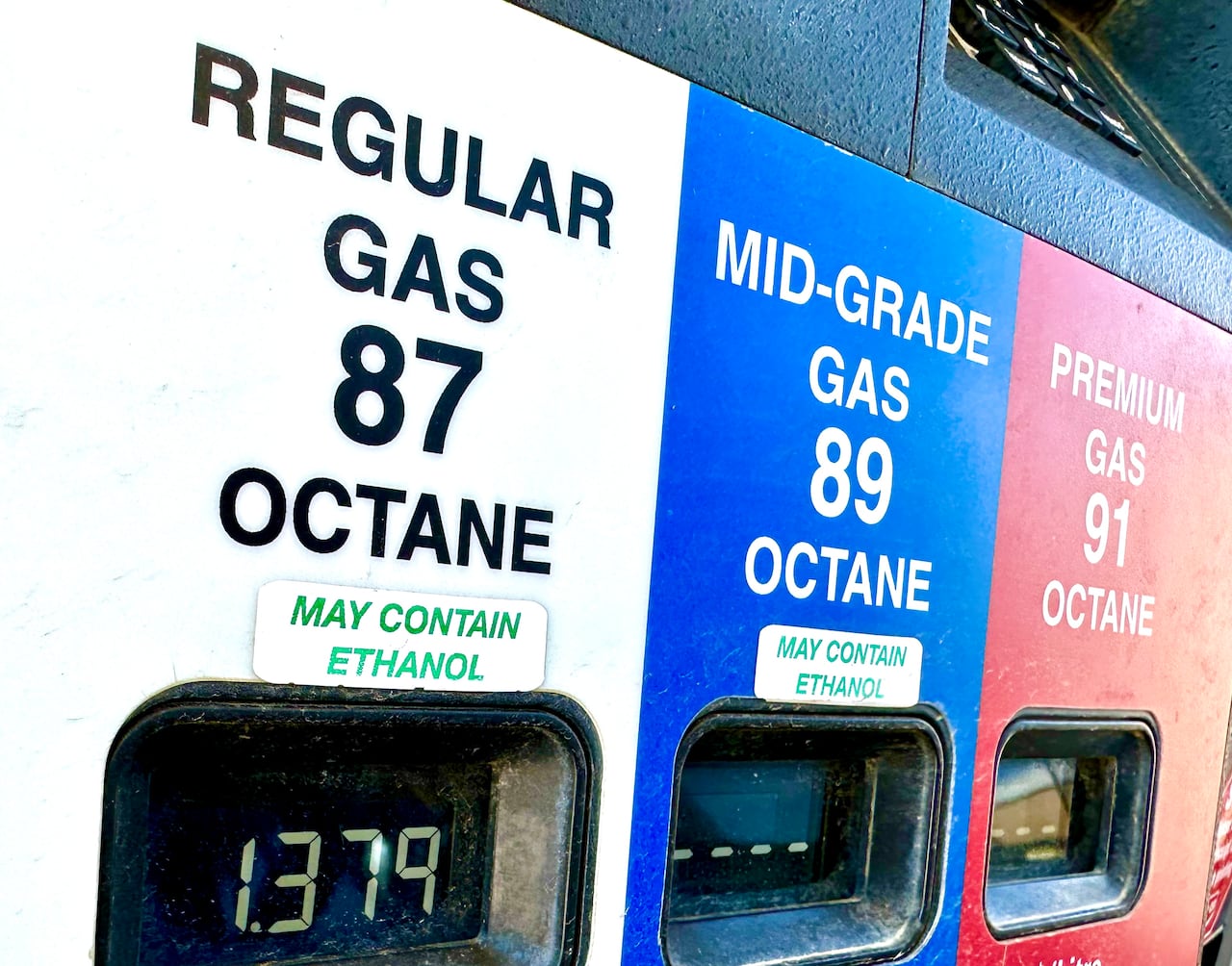 Ethanol has been blended in gasoline for many years in different parts of the country. (Kyle Bakx/CBC)
He added that fuel suppliers have three main ways to meet federal clean fuel regulations: invest in technology to reduce the carbon intensity of fuel, blend with biofuels such as ethanol or buy carbon credits on the open market.
Blending ethanol is probably the least expensive way to comply, Lantz said, while P.E.I. is going with a more costly option.
“As far as I know, the fuel that’s arriving in Prince Edward Island is complying with regulations through the purchase of carbon credits, and so these federal regulations are responsible for higher fuel costs in Prince Edward Island,” he said.
Lantz said he has raised the issue with both federal officials and fuel suppliers, including Irving.