
LISTEN | Interview with analyst Michael Kovrig:
As It Happens7:07Trump cozying up to Xi Jinping could spell trouble for Canada, says Michael Kovrig
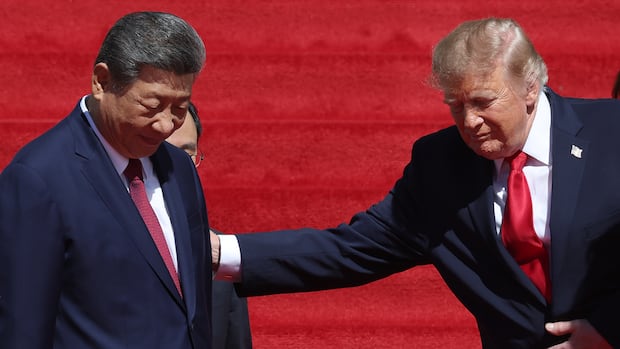
U.S. President Donald Trump’s summit with his Chinese counterpart, Xi Jinping, was more about pageantry than policy, says analyst Michael Kovrig.
Trump rolled out the red carpet this week for Xi in a three-day visit that ended with the two leaders sharing tea at the White House.
The U.S. president has since called the meetings “very, very productive” and said they resulted in “great things for both countries.”
But Kovrig, a former Canadian diplomat and the senior Asia advisor for the International Crisis Group, says the visit produced nothing of substance. Furthermore, he says the optics of Trump’s cozy relationship with Xi undermine the U.S.’s own interests, and potentially those of Canada.
This week marks five years since Kovrig was released from detention in China. His arrest, along with that of Canadian Michael Spavor, was widely viewed as retaliation for the 2018 arrest of Chinese tech executive Meng Wanzhou in Vancouver on a U.S. warrant.
Here is part of his conversation with As It Happens guest host Helen Mann.
Donald Trump says a lot of very positive things came out of this summit. Is that a fair assessment? And if it is, positive for whom?
I think the main positive is actually for his counterpart, Xi Jinping.
The objective, particularly for the Chinese, was to have a ceremonial, really sort of pomp-and-circumstance-filled summit that made Xi Jinping look like a leading world statesman going to Washington on his first state visit in a decade and being received as an equal by the president of the United States.
I think Donald Trump probably appreciated, also, the pageantry and that kind of reciprocity and the image he’s tried to craft that, through his personal relationship with Xi Jinping, they can get things done and solve problems.
The reality, on substance, is a lot thinner.
WATCH | Xi Jinping’s White House visit: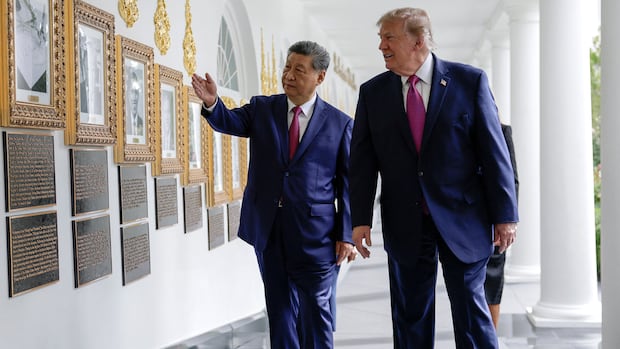
Trump, Xi appear chummy as White House keeps media on tight leash
U.S. President Donald Trump offered Chinese counterpart Xi Jinping the grand tour on the first full day of his official state visit, but with the White House strictly controlling coverage of the summit, it’s unclear what issues the two leaders have discussed so far.
You say that you expected Donald Trump is enjoying the pomp that he’s had in this visit. But is there any kind of much needed win for him in this, given his status at home and abroad has taken such a hit in the last nine months or so?
I think the optics … [are] this is a reciprocal visit. It situates both of them as big men, as strongman leaders, as Trump likes to see himself. But the substance, I think, is mainly just a two-month extension of the trade truce.
This is because China and the U.S. both went toe-to-toe trying to achieve a certain degree of dominance in economic statecraft — the U.S., through Trump’s tariffs, which Canada is all too familiar with, and then China responded by restrictions mainly on its rare earths and critical minerals and used that as a chokehold, and the U.S. backed off.
So that has led to the two countries being in a kind of strategic stalemate where they’re just focusing on small transactional wins and maintaining that kind of trade truce.
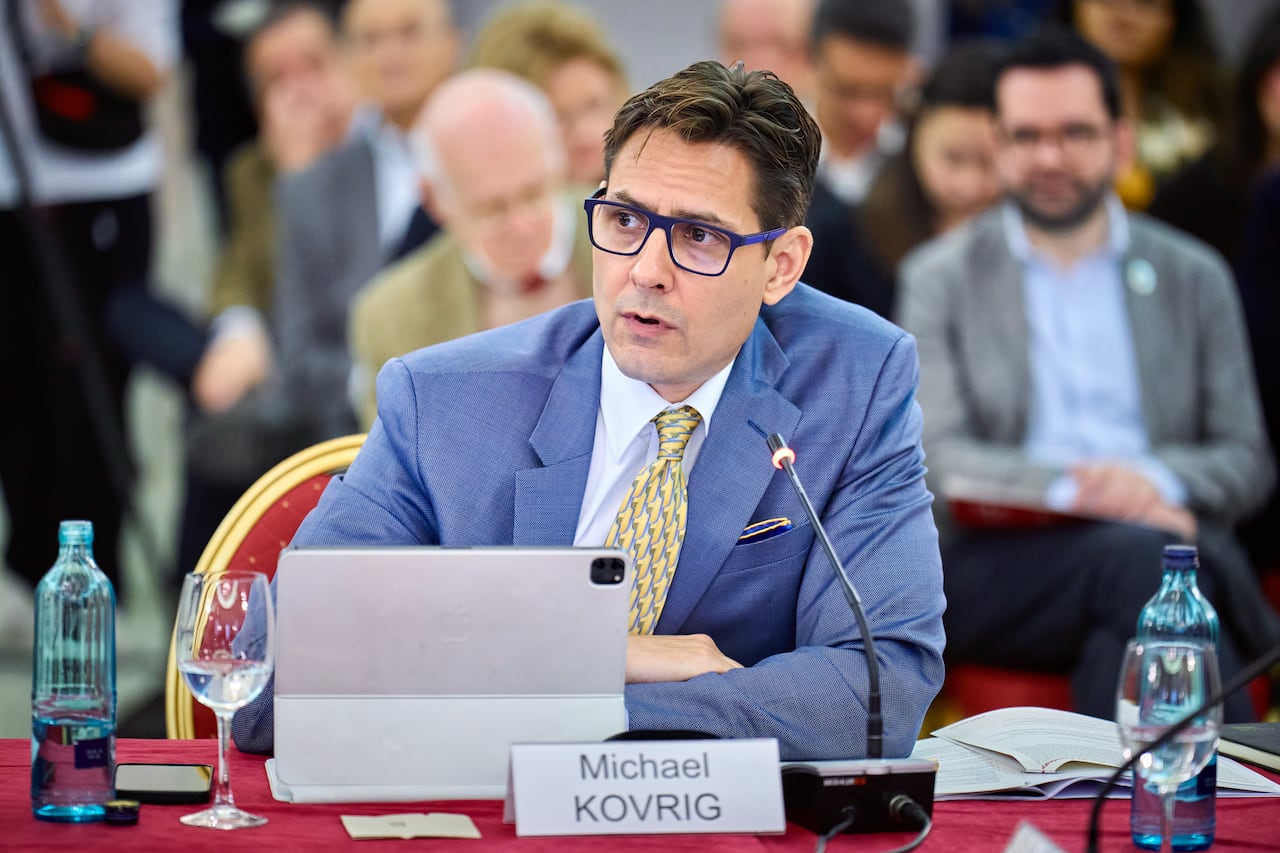 Michael Kovrig is a former Canadian diplomat and the senior Asia advisor for the International Crisis Group, who was imprisoned in China for three years. (Barcelona Centre for International Affairs/The Canadian Press)
What do you think Prime Minister Mark Carney might have been watching for in this summit as Canada faces not just its trade war with the U.S., but also an increasingly assertive China at a time when he is trying to navigate his own relationship with China?
The irony of the situation, right, is that most of the U.S. policy establishment is quite hawkish on China, and justifiably so. They are deeply concerned about a whole host of things that China is doing that are not good for U. S. interests and, by extension, are not good for Canadian interests, either.
But their own president, because of his desire to impress this autocratic leader of China and show himself to be a strongman statesman in these situations with him, has undercut much of that policy.
So there’s this inherent tension there where the U.S. wants allies like Canada to align with it on tough policies on China, but then Trump goes and potentially makes deals with China that could leave those allies hanging out to dry.
What Mark Carney will be particularly looking for is: Did Trump, or is Trump potentially going to, agree to anything with Xi Jinping that could leave Canada out on a limb with a policy that exposes it to Chinese penalties, whether in trade or through diplomatic or other means? And I think he’ll also be looking particularly at any U.S.-China trade deals that potentially disadvantage Canada economically.
From a strategic perspective, there are concerns about Taiwan. Trump has held back a $14-billion [US] arms package that [has been] in the pipeline for Taiwan since May. And he’s directly referred to it as a negotiating chip… and that affects Canada because Canada depends on a stable Indo-Pacific for so much of its economic well-being.
It’s also potentially leaving another democracy that the U.S. has been supporting for decades in a vulnerable position. So it sends a signal about how the U.S. will treat its other allies
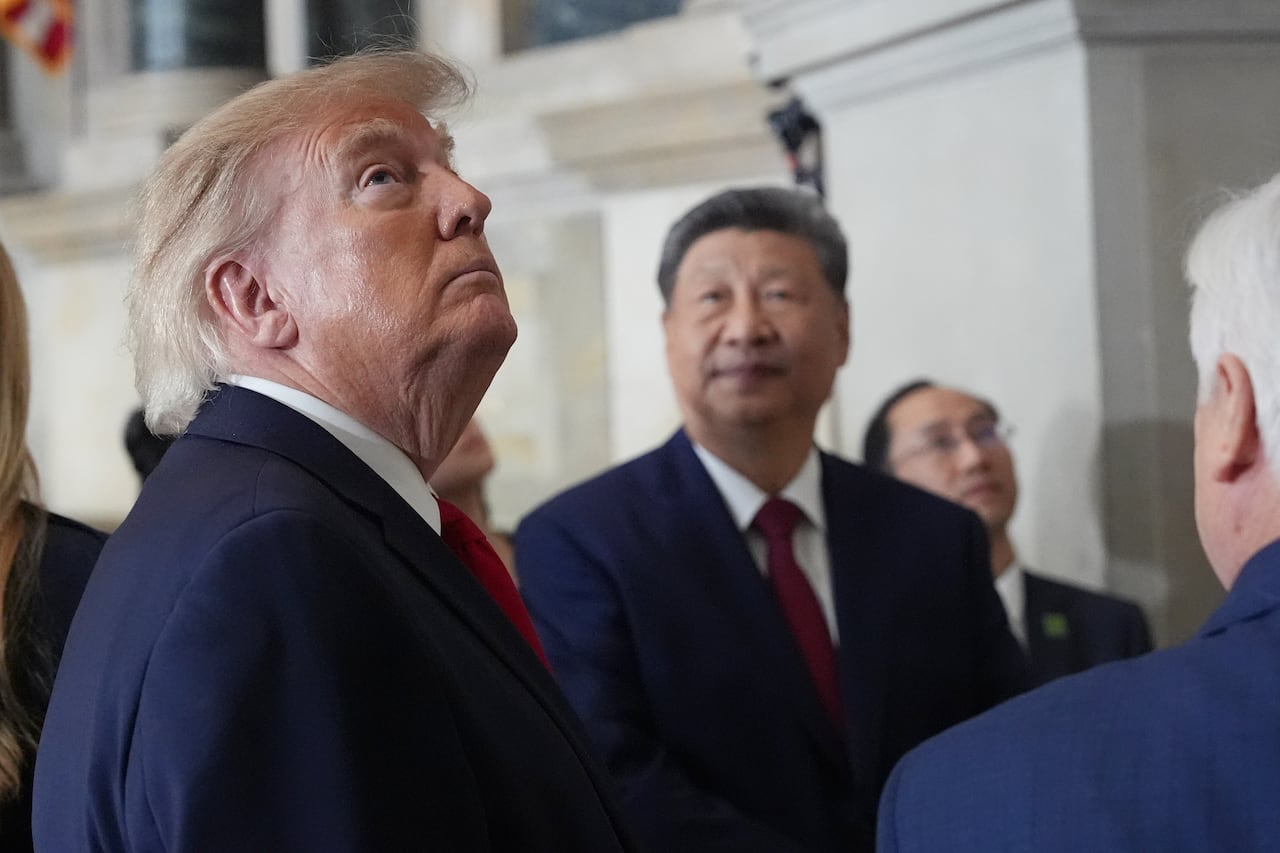 Kovrig says the purpose of Xi’s White House visit was to make him look good in Chinese state-media coverage. (Alex Brandon/The Associated Press)
This week marks five years since your release from detention in China. I’m just wondering what lessons you draw on from that experience as you continue your efforts to try to understand China’s leadership, to sort of suss out its relationship with the rest of the world?
I left China five years ago after its party state finally agreed to a negotiated end to my wrongful detention there. I’d been a political hostage in a ruthless effort to coerce Canada into releasing Huawei Technologies CFO Meng Wanzhou. And, ironically, the echoes of that whole affair are still very much with us.
Xi Jinping is in Washington negotiating with the man who ultimately precipitated that whole crisis, Donald Trump. Meanwhile, the U.S. government’s legal case against Huawei Technologies, of which the Meng extradition process was ultimately a part of, has begun this month in New York City.
It’s also with us in a different way, through detainees. Because I might have been, certainly for Canadians, along with Michael Spavor, the most famous person … detained for political reasons in China. But I was not the only one. There were other Canadians before me … and the cases keep coming.
China is still wrongfully detaining foreign citizens and using them as bargaining chips, either as hostages or for political pressure. And so that risk is very much with us, and Canada needs to be working with allies to incentivize China to stop doing that, to stop behaving that way. Meetings with Xi Jinping, whether it’s Mark Carney or Donald Trump, are opportunities to call for releasing those prisoners.
The message to Xi Jinping should be quite simple: Abducting and torturing people makes you look bad. It tarnishes your image.