

Listen to this article
Estimated 4 minutes
The audio version of this article is generated by AI-based technology. Mispronunciations can occur. We are working with our partners to continually review and improve the results.
The Carney government plans to use a parliamentary tool not seen since the Harper government to prioritize study of its latest major projects bill.
Shortly after Bill C-39 was introduced, the government moved to refer it to a “legislative committee” — a mechanism used for some of the most consequential laws in Canadian history, including the Clarity Act in 2000 and the 2005 Civil Marriage Act, which legalized same-sex marriage across the country.
The 243-page omnibus bill seeks to fast-track development projects and avert labour disruptions. Government House leader Steven MacKinnon called it the “centerpiece” of the fall sitting.
It has been criticized by organized labour, environmental groups and the Assembly of First Nations for proposed changes to consultation practices, impact assessment and the Labour Code. The bill is sprawling — 24 different acts and regulations are either amended or referenced.
WATCH | Liberal House leader on C-39: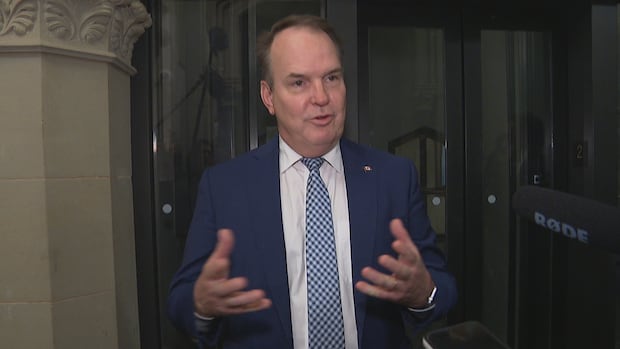
Economic legislation will be ‘centrepiece’ of fall sitting, says MacKinnon
Government House leader Steven MacKinnon says MPs will focus on a bill that will help ‘protect jobs’ and ‘create investment in our communities’ when Parliament returns on Monday.
When bills pass second reading in the House of Commons, they move to the committee stage — where MPs typically hear expert testimony, study the text, propose amendments and draft a report. That job normally falls to committees that exist from one Parliament to the next, called standing committees.
A legislative committee is a bespoke group of parliamentarians who are designated to study only one particular bill, allowing it to leapfrog other business underway by standing committees.
“I would say that the motivation for doing it this particular way was to have a committee that would devote itself to this entire bill,” said MacKinnon on Thursday.
He said with C-39 crossing “a lot of different spheres and departments,” forming “a committee devoted to the entire bill was the way to go.”
He said there was “no other motivation” for choosing this uncommon route, and that he’s not open to splitting C-39 into multiple bills.
According to House of Commons Procedure and Practice, the reference book for how House business is conducted, legislative committees are formed as necessary to examine a particular bill, including calling witnesses and presenting amendments.
But unlike standing committees, legislative committees don’t typically handle any other business, compile major reports on the bill they’re tasked to review or provide recommendations, dissenting or supplementary opinions to any reports.
Last used on government bill in 2012
The last time a legislative committee was formed to study a government bill was in 2012, under Stephen Harper’s majority Conservative government. Then minister of industry Christian Paradis reintroduced the Copyright Modernization Act, Bill C-11, which was sent to a legislative committee and ultimately received royal assent just a few months later.
The Harper government also formed a legislative committee in 2011 for Bill C-18, which ended the single-desk monopoly of the Canadian Wheat Board.
After being introduced in October and moving through committee in November, Bill C-18 swiftly became law by year’s end, despite vows from then Opposition Liberal MPs to slow the process.
Harper’s Conservatives also took the same route for one of their very first bills after forming government in 2006: the Federal Accountability Act, an omnibus push to ban corporate and union donations to campaigns and limit individual donations, among other conflict of interest rules. They followed suit in 2007 for C-2, a tough-on-crime omnibus bill that went from introduction to royal assent in four months.
WATCH | Carney responds to labour concerns over C-39: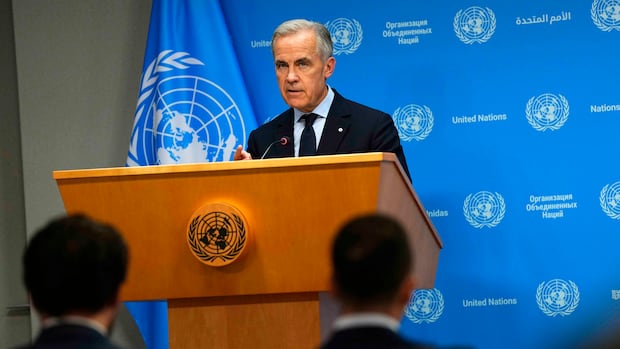
Major projects bill ‘reinforces the right to strike,’ Carney says
Prime Minister Mark Carney says Bill C-39, the Building Canada Strong Act, will reinforce the responsibility of employers to ‘negotiate in good faith’ and create transparency around labour negotiations.
Across Harper’s nine years in office, legislative committees were struck 11 times to move along government bills. The last time a Liberal government struck such a committee was in 2005 for the Civil Marriage Act, which legalized same-sex marriage across the country. A legislative committee was also created to usher along Jean Chrétien’s Clarity Act of 2000, which cemented the process for any future provincial referendum on secession.
Conservative MPs haven’t said how they plan to vote on Bill C-39.
“We are going to take the time to scrutinize the legislation and look for pieces in the legislation that we can improve. Once it gets to that legislative committee, we are going to propose the amendments necessary to actually get shovels in the ground instead of promises into people’s pockets,” said Conservative deputy leader Melissa Lantsman.
It is not yet clear which MPs will be on the committee. But with a majority government, the Liberals have enough votes to pass it through the House without cross-party support.