
Amna Nawaz:
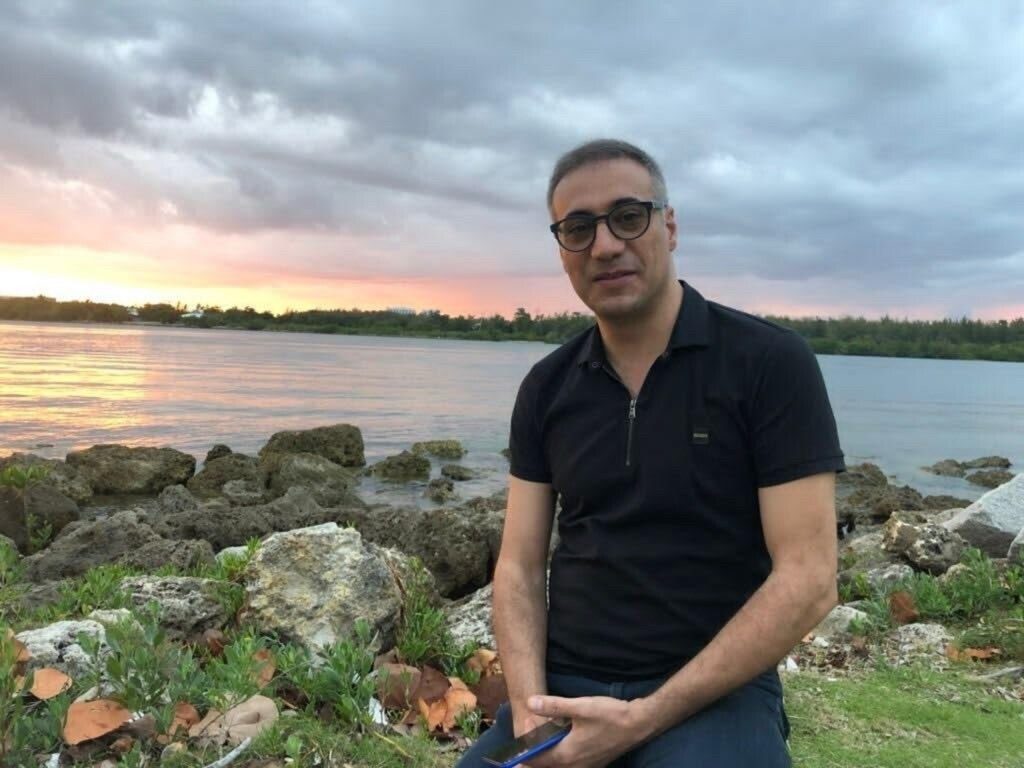
This week marks two years that Iranian-American journalist Reza Valizadeh has been detained in Iran. For a decade, he worked for Radio Farda. It’s an independent, but U.S.-government-funded Farsi language news service.
He resigned in 2022, returned to Iran in 2024 to visit family, then was arrested and sentenced to 10 years in prison for collaborating with a hostile government. He’s now being held in the notorious Evin prison.
I spoke with his attorney, Ryan Fayhee, yesterday.
So we have covered a number of cases of wrongfully detained Americans overseas. You have even worked on Paul Whelan’s case in Russia, for example. But you say Reza’s case in Iran is uniquely challenging. Why?
Ryan Fayhee, Attorney For Reza Valizadeh:
Well, for a number of reasons.
First, Reza doesn’t have any family here in the United States. And so myself, alongside a couple of organizations, have stood in to serve that role the family would ordinarily serve as his advocate here in the Washington, D.C., area. That’s first.
Second, while I have had a number of challenging cases involving some of the U.S.’ adversaries. I have never had one that’s occurred in the midst of all-out war, certainly including a prison that’s been struck by airstrikes by the Israelis late last June, as well as very close to the proximity of war in the neighborhood of Evin prison.
Amna Nawaz:
You said Reza has a number of medical conditions that aren’t being treated. He’s gone on several hunger strikes during his detention. What can you tell us about his health today? What do you know?
Ryan Fayhee:
I do know that he had a couple of preexisting conditions. That airstrike I just referenced worsened them, obviously, a missile striking the prison. He had to be evacuated.
When I have heard his voice in those rare occurrences between blackouts and the war, he sounds pretty terrible, very raspy, labored breathing and the like. So I’m deeply concerned. And I’m concerned about the conditions within the prison, overcrowding, absence of food.
He shared messages that diseases that had been otherwise eradicated are coming back, including tuberculosis. So it just paints a pretty grim picture all the way around.
Amna Nawaz:
I mean, the ongoing war in Iran, as you mentioned, complicates both his safety and his potential release, and I know he’s watching that war unfold from the prison.
You’re sharing with us today, I should mention, for the first time a new audio message you recently received from inside the prison from Reza recorded in the last week. I want to share just a part of that here. Take a listen.
Reza Valizadeh, Held Prisoner in Iran (through interpreter): My 10-year prison sentence pales in comparison to the anguish of families who’ve had to unzip dozens or hundreds of body bags in search of their loved ones. I could have avoided prison and enjoyed substantial rewards had I accepted the IRGC intelligence organization’s tempting offer to entrap my colleagues and lure them back to Iran.
Instead, I chose prison. And I will not beg for my freedom from anyone.
Amna Nawaz:
Ryan, why did Reza want that message to get out?
Ryan Fayhee:
Well, I will tell you, first and foremost, he’s a courageous journalist. That’s Reza as journalist from within the walls of Evin prison warning prominent Iranians, including Iranian Americans who live outside of Iran, against coming back to
Iran. The economy is in shatters, and we know that Iranian political leadership is desperate to get persons living outside Iran back. And that’s a stark warning not to come to avoid the trap that was set for him. And that’s the way he’s spending his time, rather than advocating even for his own release.
Amna Nawaz:
Can you say more on that? We have reported on a number of dual citizens who have been detained by Iran. Are you saying that there is a pattern you see there?
Ryan Fayhee:
Well, there’s certainly a pattern of Iran detaining outsiders, including American citizens.
What I think Reza is referencing there is, there’s this desire to bring money back into Iran. Obviously, the war has had already an even greater detrimental effect on the Iranian economy. And he’s warning those Iranians, including Iranian Americans, to not come.
Amna Nawaz:
Reza has been officially designated as wrongfully detained by the U.S. government.
Just this week, we should note too, there was a bipartisan group of lawmakers who sent a letter to Secretary of State Rubio saying that they’re — quote — “extremely concerned” that Iranian authorities could take sudden arbitrary actions to endanger his life.
From your conversations or what you know, do members of this administration or people negotiating with Iran like Steve Witkoff, Jared Kushner, do they share those concerns?
Ryan Fayhee:
Yes, I believe they do.
The Trump administration has been engaged on Reza’s case now since all the way back to March of last year, when he was officially found by Secretary Rubio to be wrongfully detained. That puts this machinery within the hostage enterprise into motion.
Second, the day before the war began, Secretary Rubio designated, using these new authorities, Iran as a state sponsor of wrongful detention. I have been all over Capitol Hill and at the State Department. I believe the administration takes the case seriously.
What I want for Reza and what Reza wants for himself is for the administration to prioritize it in the discussions with Iran. We shouldn’t wait until the whole war is resolved and all our differences put aside. This should be the very first thing that’s mentioned in the course of every engagement between the two sides, because it’s the easiest to accomplish.
The Iranians want people to return to Iran and feel safe to spend money, to build an economy. They cannot hold an American citizen for being a journalist. And that’s the only reason he’s being held.
Amna Nawaz:
If his name is not raised during these negotiations, what do you worry will happen?
Ryan Fayhee:
Well, it would be deeply disappointing.
It would mean that the administration doesn’t value Reza in the way that they tell me, they assure me that they do. That’s what I have been told over and over again. So I’m very hopeful.
Amna Nawaz:
That is Ryan Fayhee, attorney for journalist Reza Valizadeh, joining us today.
Thank you so much for your time.
Ryan Fayhee:
Thank you. Thanks for having me.