
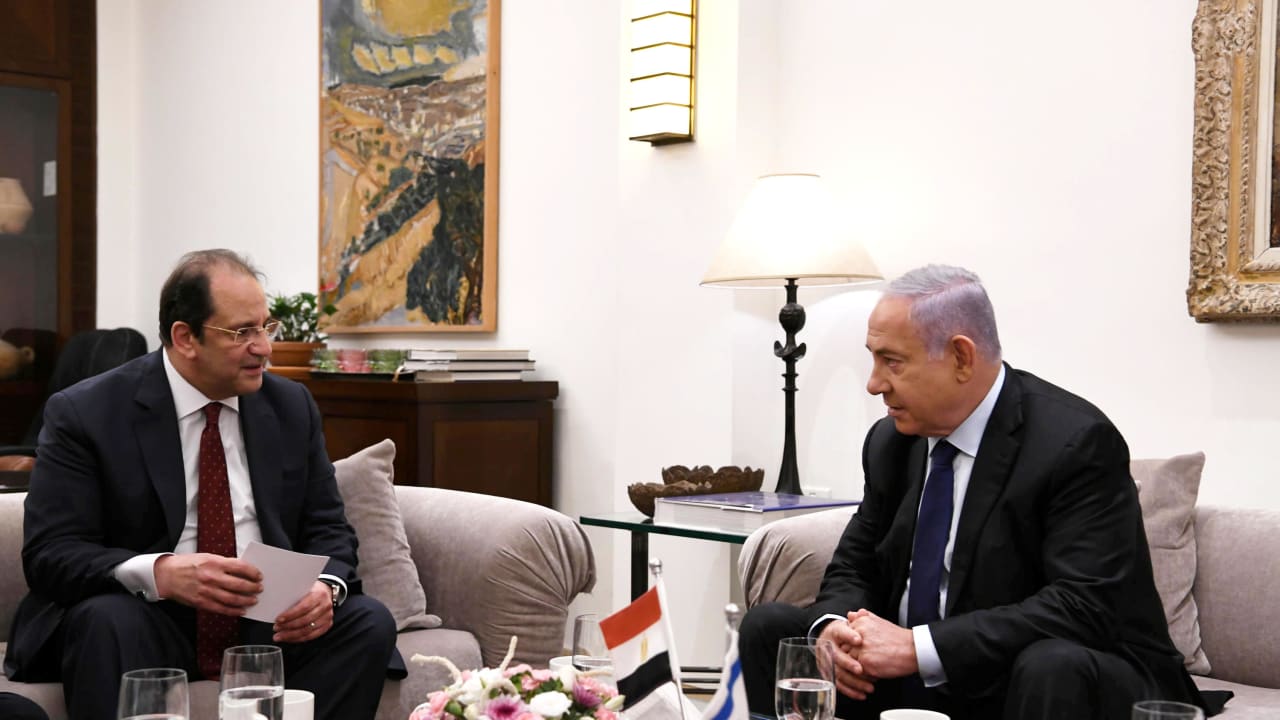
Egyptian intelligence chief Abbas Kamel secretly visited Israel just 11 days before the October 7 attack and delivered a warning that Hamas was preparing for a significant attack and that time to prevent further escalation was running out, an investigation by The Atlantic revealed on Saturday.
The investigation found that on September 26, 2023, as senior Israeli officials gathered in Jerusalem to mark the 50th anniversary of the Yom Kippur War, a chartered Cessna aircraft linked to Egyptian intelligence services landed at Ben-Gurion Airport. The aircraft stopped in an isolated area of the airport used, the report said, for sensitive diplomatic and security missions.
On board was Kamel, who at the time served as head of Egypt’s General Intelligence Service and was one of the closest figures to Egyptian President Abdel Fattah el-Sisi. The aircraft reportedly remained in Israel for only 67 minutes before returning to Cairo, with The Atlantic saying that the timing appears in Israel Airports Authority flight logs and is also documented by independent flight-tracking services.
Israeli, Arab, American and European officials briefed after October 7 on the visit said Kamel warned that Hamas appeared to be preparing for a major attack, the report mentioned, adding that he urged Israel to take economic steps to reduce tensions in the Gaza Strip. A former Israeli official briefed on the meeting described the Egyptian message this way: “If you don’t change course, Gaza is going to explode in your face.”
The warning did not include a specific attack plan
The investigation noted that Kamel did not provide a date for a possible attack, identify targets, or share concrete details about the nature of the threat. It remains unclear who exactly he met with during his hour-long visit to Israel.
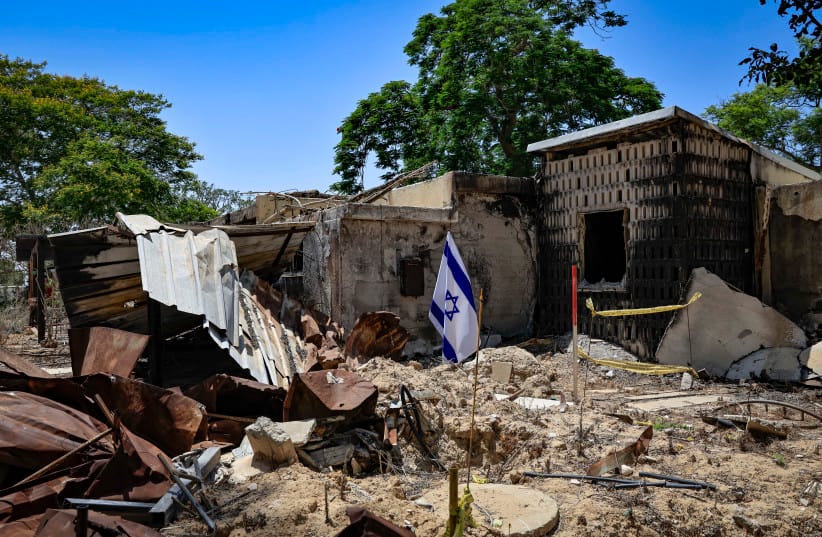 A view of homes destroyed and burned in the Hamas October 7, 2023 massacre at Kibbutz Nir Oz, near the Gaza border, August 5, 2026 (credit: Tsafrir Abayov/Flash90)
At the time, most warnings focused on the possibility of escalation, rocket fire, or renewed violence in Gaza, rather than the coordinated, multi-front assault Hamas carried out on October 7.
Despite this, officials from seven countries who spoke with The Atlantic argued that the fact that the head of Egyptian intelligence personally traveled to Israel for such a short and urgent visit should have drawn the attention of Israel’s political and security leadership.
“The messenger was the message,” a former Israeli official said, adding that no scenario existed in which senior Israeli officials met with the head of Egyptian intelligence without Prime Minister Benjamin Netanyahu being aware of it.
An Egyptian official told The Atlantic that Kamel’s brief visit to Israel indicated that Sisi believed he needed to travel personally to deliver the message.
Egyptian warnings continued until days before the attack
Several days after the October 7 attack, the Prime Minister’s Office rejected reports that Egypt had issued a warning before the attack. It said at the time that Netanyahu “has not spoken or met with the head of Egyptian intelligence since the establishment of the government, neither directly nor indirectly.”
The Atlantic said Netanyahu’s and Sisi’s offices did not respond to inquiries regarding the newly revealed details about Kamel’s visit. Tzachi Hanegbi, who served at the time as head of the National Security Council, told the magazine this week that Kamel did not visit Israel and that no Egyptian warning was delivered.
Israeli, Egyptian and American officials said Egyptian warnings continued until two days before the attack. On October 5, Egypt sent another message to Israel warning that the situation could not continue and expressing urgency over the possibility of an attack. That message also did not include a date or method of operation.
The investigation noted that on the same day Kamel landed in Israel, Netanyahu attended a ceremony marking the anniversary of the Yom Kippur War. In his speech, he referred to the intelligence failure of 1973 and said Israel does not take any threat lightly. His public schedule showed that he later attended a classified briefing that day.