
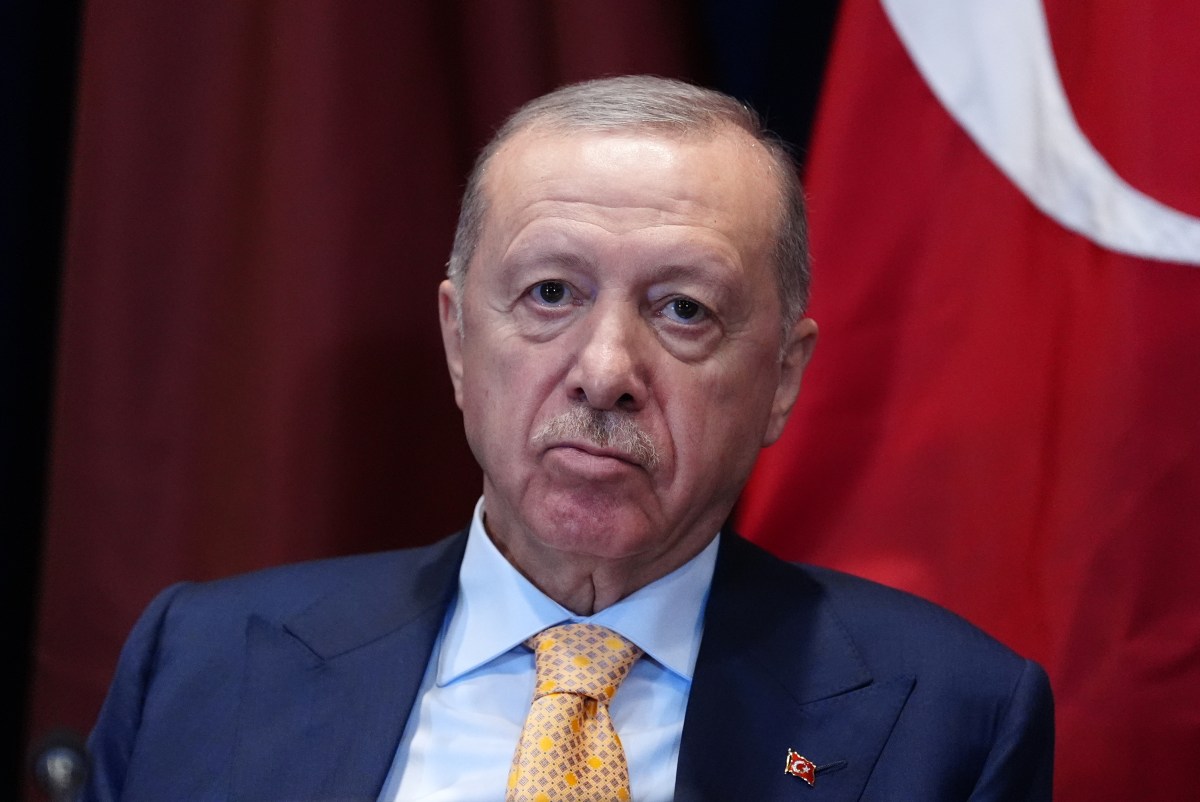
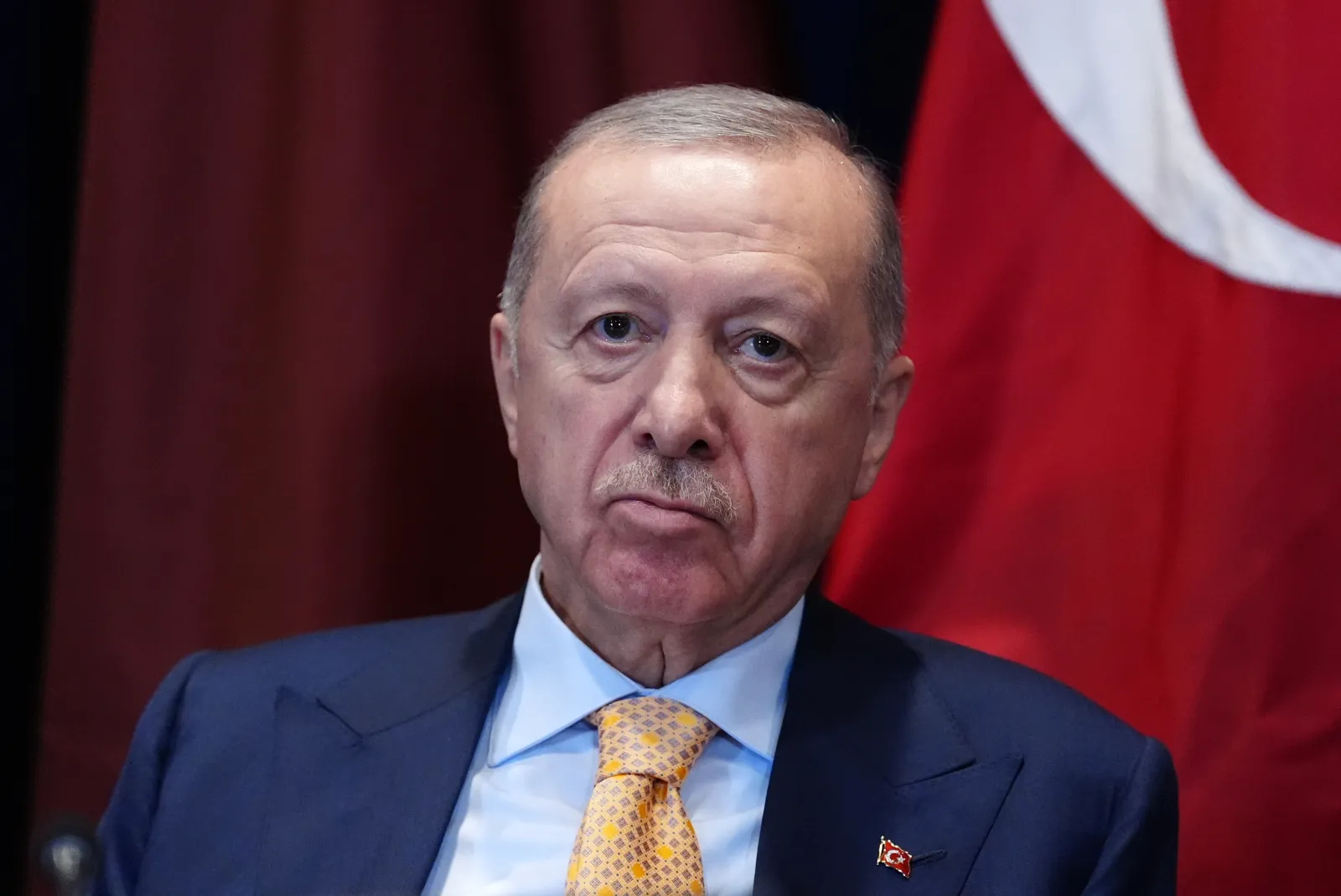
In a recent interview with Newsweek, Turkish President Recep Tayyip Erdogan accused Israel of pushing a false narrative that seeks to depict his nation as a threat to the fellow U.S. ally and the region as a whole.
Against the backdrop of increasingly heated rhetoric exchanged between Israeli and Turkish officials, including Israeli Prime Minister Benjamin Netanyahu‘s branding of Erdogan as a “tyrant” complicit in seeking Israel’s destruction, expanding influence in Syria and repressing journalists and the Kurdish minority community at his United Nations General Assembly address, Erdogan stated that it is “well known that we have serious differences of opinion with the Israeli government on many issues.”
The scope and intensity of these differences appear to be expanding as Erdogan and Netanyahu pursue rival strategies in the Middle East and beyond. And yet the Turkish leader emphasized that it was not Ankara that was looking to stir up trouble.
Read More on News
“Recently, a misguided narrative aimed at portraying Türkiye as a new source of threat has been fueled in Israel,” Erdogan said. “We consider this rhetoric to be linked to Israel’s domestic political dynamics and the electoral climate.”
“We do not view this rhetoric as a responsible approach that fosters regional peace,” he added. “Türkiye has no hostility toward the Israeli people or toward any other society. What we oppose are policies that we consider contrary to international law and steps that deepen instability in our region.”
Newsweek Members can read the exclusive interview in full.
 The Battle for Syria
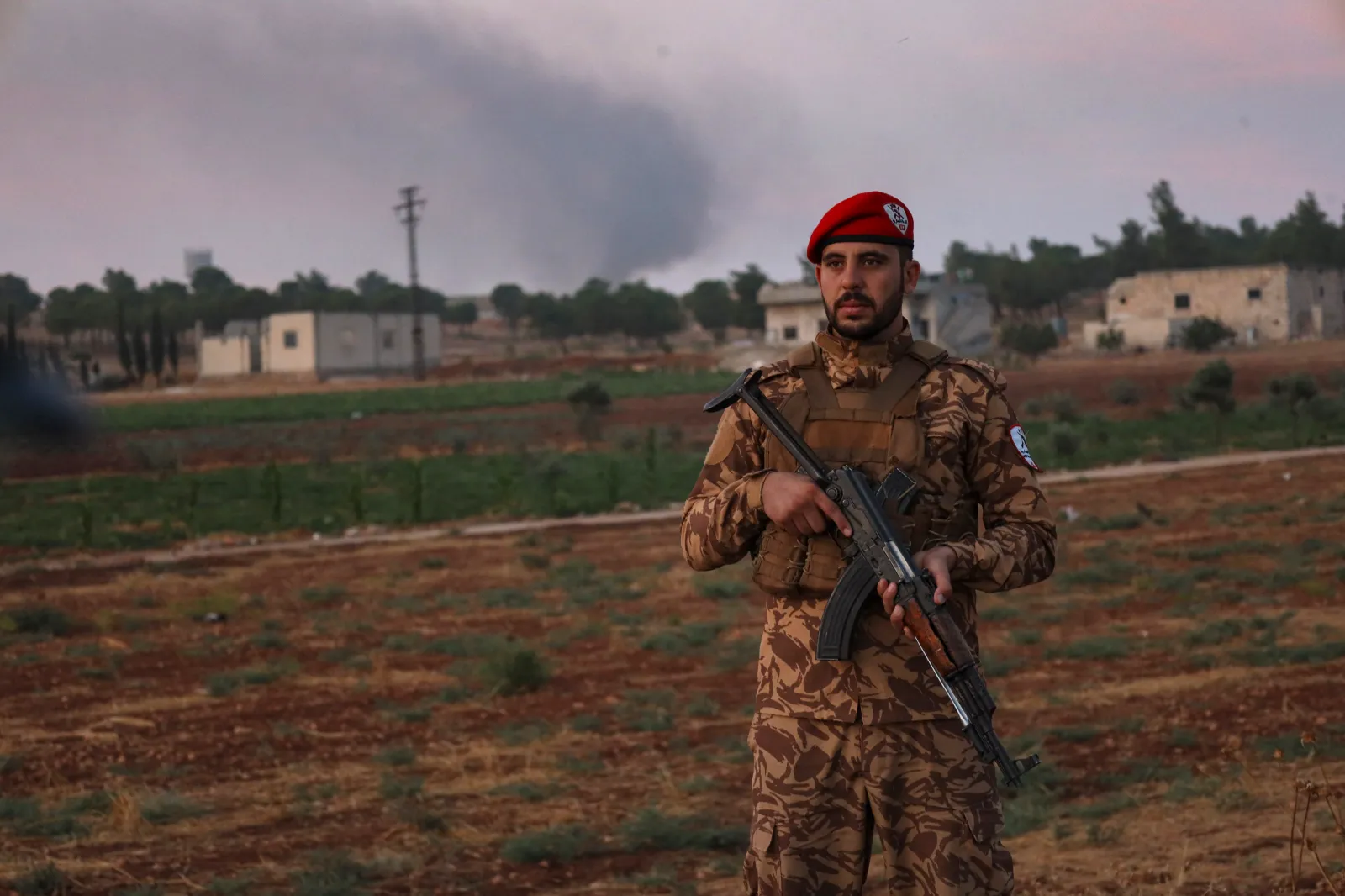
Perhaps the most tangible manifestation of growing tensions between Israel and Turkey has emerged in their shared neighbor of Syria.
Erdogan was an early supporter of the new administration established by Syrian President Ahmad al-Sharaa following the rapid rebel offensive that toppled his longtime predecessor, Bashar al-Assad. Erdogan’s influence has also played a key role in President Donald Trump’s embrace of the former militant chief presiding over Damascus, with Trump crediting Erdogan with having a direct hand in Assad’s ouster.
Netanyahu also initially welcomed the downfall of Assad, a close ally of Iran. But the Israeli premier quickly channeled uncertainties about Sharaa’s jihadi past, ordering a massive bombing of Syrian military sites and the seizure of new territory beyond the ceasefire line established in the Israel-occupied Golan Heights half a century ago.
Israel has continued to maintain a hand in Syrian affairs, particularly in the country’s southwest, where a prominent faction within Syria’s Druze minority has welcomed Israeli support against the central government. But the White House criticized Israeli strikes in support of Druze militias last year; a new operation carried out by Israeli warplanes last month brought the conflict even closer to Turkey.
Just hours after a Turkish military delegation reportedly departed the Abu al-Duhur Air Base in the northern province of Idlib, Israeli strikes pounded the site. Israeli officials accused Syrian counterparts of violating understandings regarding the presence of foreign powers in the country, while the Turkish government hit back with a harsh condemnation.
Since then, a spat of explosions with no readily identified cause have struck arms depots across the country, the most recent taking place in Aleppo last week.
“Our approach to Syria is clear,” Erdogan said. “We want Syria’s sovereignty, territorial integrity and national unity to be preserved. It is in the interest of our entire region for the country to recover, strengthen its state institutions and enhance its capacity to combat terrorism.”
“We also consider Israel’s attacks against Syria within this framework,” he added. “Israel’s attacks, which disregard international law and established rules, are clearly undermining Syria’s sovereignty and making it more difficult to establish stability in the region. Yet stability in Syria would contribute to peace and development throughout our region, including in Israel.”
But even as frictions mount between Israel and Turkey, Erdogan resisted any discussion of an open conflict, stating, “Türkiye does not formulate its foreign policy around inevitable war scenarios.”
 Testing Alliances
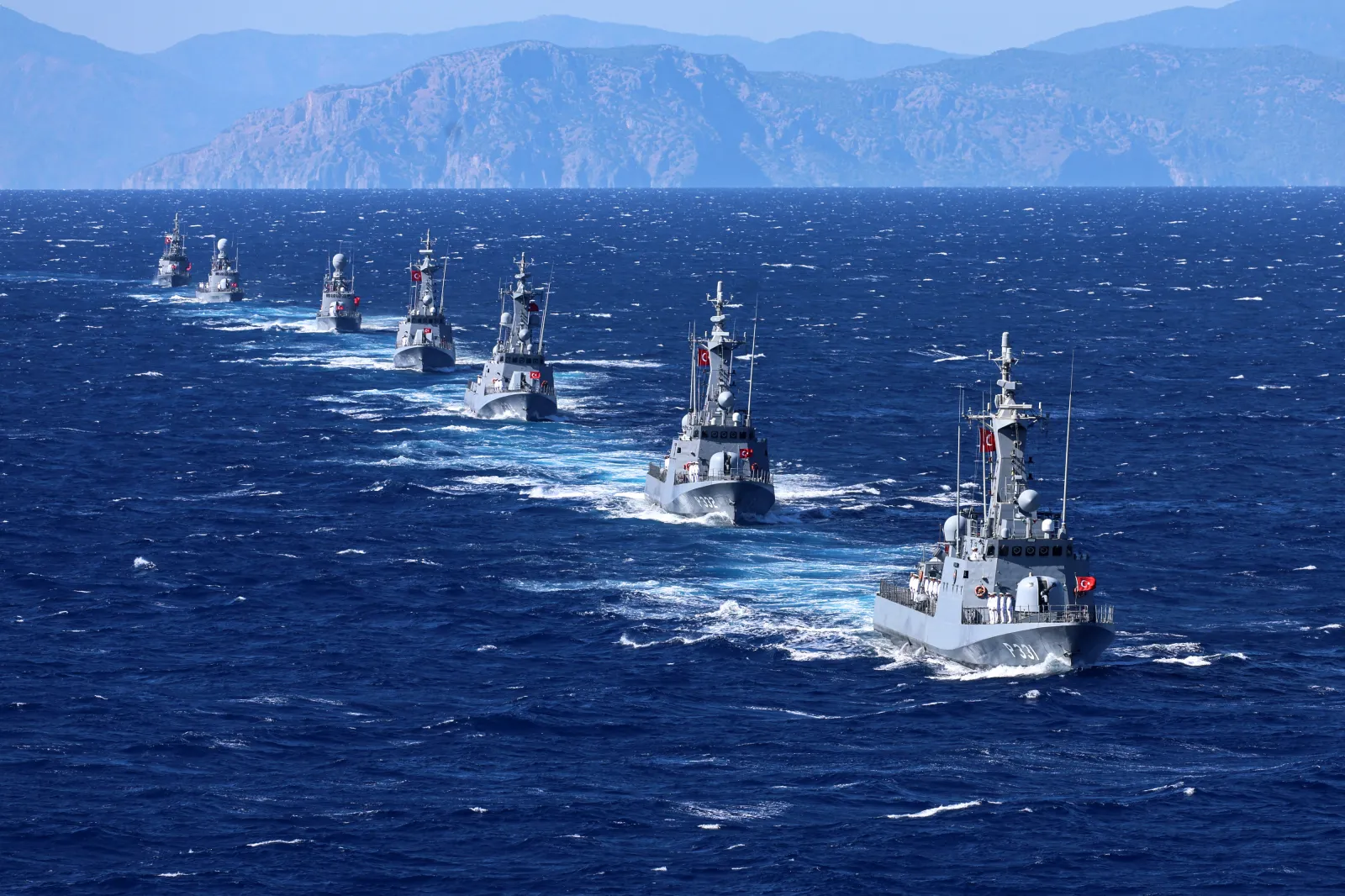
The reverberations of the Israel-Turkey rivalry can be felt beyond further beyond Syria’s shores in the Eastern Mediterranean.
Weeks after Turkey inked a mutual defense pact with Pakistan and Saudi Arabia, known as the Mecca Joint Defense Agreement, Israel signed a major defense deal with Greece involving the establishment of a multilayered defense system known as “Achilles’ Shield” that would cover the entirety of Greek territory, including Aegean Islands immediately off Turkey’s coast.
Greece and Turkey, both NATO members since 1952, have a long history of tensions rooted in events dating back centuries, and remain today locked in dispute over territorial and energy exploration rights in the Mediterranean and the division of Cyprus, whose northern half has remained under the administration of an internationally unrecognized Turkish-backed government since a 1974 invasion.
Even prior to the Mecca pact signing, Israel had begun forging close defense ties with Greece and Cyprus, and the unprecedented multi-billion-dollar deal marks a new step toward achieving what Netanyahu has described as a “hexagon of alliances” also involving bolstered ties with India and the United Arab Emirates.
Erdogan has previously criticized the Israel-Greece defense agreement. At the same time, he told Newsweek that “the relations that Greece or any other country develops with third countries are a matter of their own choice.”
“Türkiye does not view every bilateral relationship as a threat directed against it,” Erdogan said. “Nonetheless, we closely monitor any actions that may jeopardize our national security, lawful rights, and interests.”
And on this front, too, he preferred discussing diplomatic approaches rather than the prospect of conflict.
“Türkiye has a strong position and influence in NATO,” Erdogan said. “Rather than debating the ramifications of a hypothetical military confrontation for the Alliance, it would be more prudent to focus on diplomacy to prevent such a possibility from arising.”
“The path to lasting security in our region lies in a security architecture built on Allied relations and regional partnerships shaped by a 360-degree approach to security that reduces tensions, strengthens deterrence, moves beyond a mindset of mutual encirclement and is grounded in international law,” he added.
 The White House Frontline
Washington, and more specifically, the White House, is another area in which Erdogan and Netanyahu find themselves competing for influence.
Both men have a history of close ties with Trump. But the crisis that has consumed the Middle East since the outbreak of the war in Gaza in October 2023 has increasingly divided the U.S.’ s two regional allies.
Erdogan has long condemned Israel’s military campaigns in Gaza, Lebanon, Syria and elsewhere in the region, and has repeatedly called for a diplomatic resolution to the war launched jointly by Trump and Netanyahu against Iran in February.
While Trump’s decision to enter the conflict validated much of Netanyahu’s core aims in bringing the U.S. into a confrontation with Iran, the U.S. leader has also aligned with his Turkish counterpart on a number of regional issues, including the endorsement of Sharaa’s government in Syria and vows to repeal restrictions against Turkey acquiring advanced F-35 fighter jets, which Israel views as a key component of its “qualitative military edge” in the Middle East.
But Erdogan asserted that the pursuit of U.S.-Turkey ties remained an independent venture from any other actors.
“I do not define Türkiye-U.S. relations through a third country,” Erdogan said. “Our counterpart in Washington is the administration of the United States. Whenever there is an issue we need to discuss with President Trump, we speak with him directly.”
It’s a relationship that Erdogan said “allows us to speak directly and openly with one another,” be it on Iran, Gaza or other matters.
“Türkiye and the United States have a long-standing, deep-rooted and multifaceted alliance relationship,” Erdogan said. “We have an established record of cooperation, particularly in the fields of defense industry, trade and regional security, as well as significant potential to further develop this cooperation.”
Contact Newsweek editors on this story: Jason Lemon and Geoffrey Rowland.