
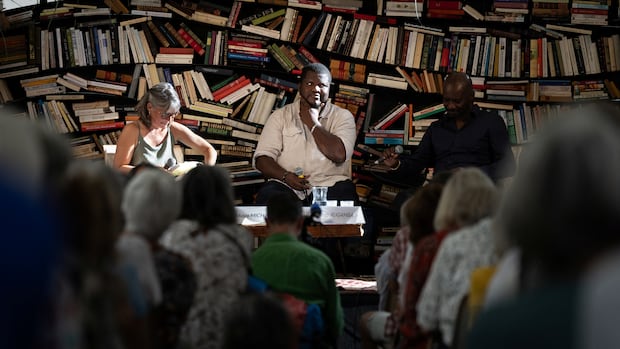
A Quebec-based author is at the centre of an artificial intelligence scandal shaking the French literary world and raising questions around how the industry should be using AI — and its detection tools.
Breakthrough star Thélyson Orélien, a Canadian-Haitian poet and author, has been accused of writing his debut novel using generative AI, which he vehemently denies. The scandal comes as C’était ça ou mourir is being considered for various prestigious awards.
The allegation first surfaced Monday – the same day Orélien won the Prix du roman Fnac – on the anonymous X account “Balance ton Claude,” which claims to expose AI slop.
The account claims to have analyzed several excerpts from the book using the AI-detector tool Pangram, which found the text was “100 per cent” AI.
CBC News replicated the Pangram experiment with different excerpts of the book, which led to the same result.
Friday, the prestigious French Goncourt literary prize announced it removed Orélien’s book from its 16-book longlist.
The Académie Goncourt says its decision is based on its analysis of the work of several “credible” researchers and journalists highlighting the fact that the book “is in all likelihood largely the product of artificial intelligence,” in a statement to CBC.
“It’s about sending a clear message,” the academy said, adding: “A message stating that we do not endorse or sanction, in any way, the creation of AI-generated texts.”
The executive director of Writers’ Trust of Canada, David Leonard, says the trustworthiness of AI-detection tools is a question the entire industry is grappling with. For now, the organization, which recognizes local writers, relies on self-declarations made by the authors.
But it’s exploring its options, he says.
“It’s a very fast-moving issue,” Leonard said. “We don’t want to be in a situation where we’re getting false positives, nor do we want to be in a situation where we’re using a tool that is not effective.”
On Thursday afternoon, Orélien’s Montreal-based publishing house, Éditions du Boréal, announced it was suspending its press tour for the author, who is currently in France gearing up for award season.
“We unreservedly condemn the hateful messages and personal attacks of recent days and call on everyone to exercise restraint,” it wrote in a statement.
It adds that its decision is to preserve Orélien’s well-being and that the book, which was published in the spring, remains available.
WATCH | Allegations of plagiarism surface against Quebec-based author: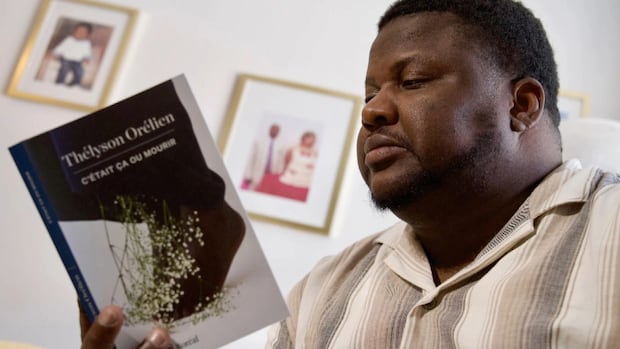
Award-winning Quebec author accused of using AI for bestselling book
In recent months, Thélyson Orélien became a sensation for his debut novel C’était ça ou mourir, which follows a teacher escaping gang violence in Haiti’s Port-au-Prince. After the book won a prestigious award on Monday, an anonymous X account accused Orélien of using AI to write it, which he vehemently denies. Since then, other allegations of plagiarism have surfaced against the author.What happened?
C’était ça ou mourir, which translates to “It was either that or die,” tells the story of a man who undertakes a perilous journey across the Americas to escape gang violence in Haiti’s Port-au-Prince.
Orélien has previously said his own experience of leaving Haiti following the 2010 earthquake and stories of other migrants he met in Montreal helped shape the novel.
In a statement Tuesday evening, he attempted to soothe the scrutiny of his heavy use of metaphors and similes in the book, which many have pointed to as tells that AI was involved in the writing process.
“I come from a Haitian and Caribbean literary tradition in which poetry, imagery, repetition, and rhythm carry a living voice,” Orélien said in the statement written in French and released by Éditions du Boréal.
“One might debate my style, but treating its techniques as evidence of artificial intelligence has nothing to do with literary criticism,” he said.
In the same statement, Éditions du Boréal affirmed its support for the author, saying Orélien’s manuscript was drafted several years ago and evolved over multiple exchanges with his editor.
However, new allegations have cast doubt on Orélien’s credibility beyond the fiction-writing sphere.
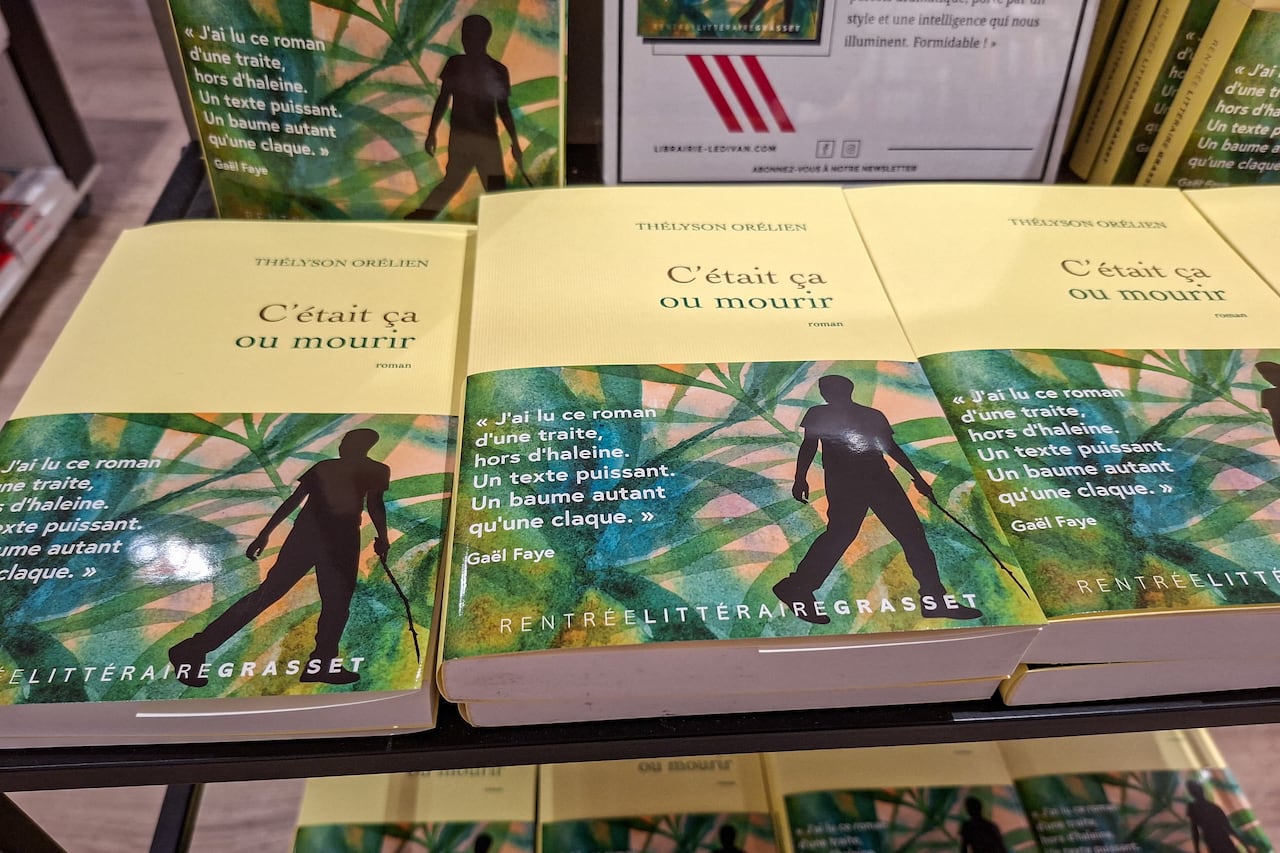 Copies of the novel C’était ça ou mourir, which translates to “It was either that or die,” by Thélyson Orélien are displayed on a bookstore table in Paris on Sept. 23, 2026. The quote highlighted on the cover underlines the strength of the text. (Hans Lucas/AFP via Getty Images)Allegations of plagiarism
On Wednesday, the Quebec newspaper La Presse uncovered multiple instances of possible plagiarism in Orélien’s columns across different publications dating back to 2012. Radio-Canada’s Décrypteurs has since verified those findings.
The new allegations also played into the Académie Goncourt’s decision, it said, to remove the book from the running for the Prix Goncourt Friday.
Orélien has not yet addressed the compounding scandal.
Speaking to Radio-Canada’s Tout un matin Thursday morning, La Presse’s vice-president of information, François Cardinal said he read the book – stopping short of calling it “incredible” – and at no point suspected the involvement of AI.
“We’ll never have a definitive answer on AI one way or the other. We can’t prove beyond all doubt that AI was used. And we can’t prove that AI wasn’t used,” he said.
But given the plagiarism allegations, he said the publication will likely not consider Orélien for future columns.
In an update Thursday morning, Éditions du Boréal said it was taking stock of the newest and “very serious” plagiarism allegations.
Thursday afternoon, the literary festival Salon du livre in the Eastern Townships announced it was dropping Orélien as its guest of honour.
A few hours later, Éditions du Boréal announced its suspension of Orélien’s press tour.
In its latest statement, it continued to defend its editorial process, adding that despite its best efforts to produce a “definitive answer” as to whether the book was written by AI, the publishing house says it is simply “impossible at this stage to confirm or deny the allegations.”
“The fact remains that the novel has reached tens of thousands of readers across the French-speaking world, as well as numerous international publishers,” reads the statement. “In the absence of serious, tangible evidence, it is not for us to decide whether it has the right to exist.”
Tools detect AI, not ideas
For Florent Michelot, a Concordia professor who researches AI in education, Orélien’s ordeal raises a key question: Have we entered an era where the final product is no longer enough when judging someone’s work?
“I didn’t read the book, but maybe [Orélien] developed very complex personalities for his characters, maybe he developed a wonderful atmosphere … and the AI only helped to write the sentences,” he said.
Michelot says he’s personally tested Pangram, the AI-detector tool, and like many other experts who have spoken out since the controversy broke, he says the tool is “amazing.”
Basically, the tool identifies patterns based on probability, he explains. A 100 per cent result on Pangram means either AI produced the entire text or the person who wrote it picked, every single time, the exact word an AI model would most likely use — which experts say is highly unlikely.
A human writer is not working with likelihoods in mind, says Michelot.
“You are breaking the probabilities. You are writing something creative, something that goes outside the box.”
So, as more people lean on AI for things like research, spellcheck and translations, Michelot wonders if the creative process will begin to gain more value over the finished product.
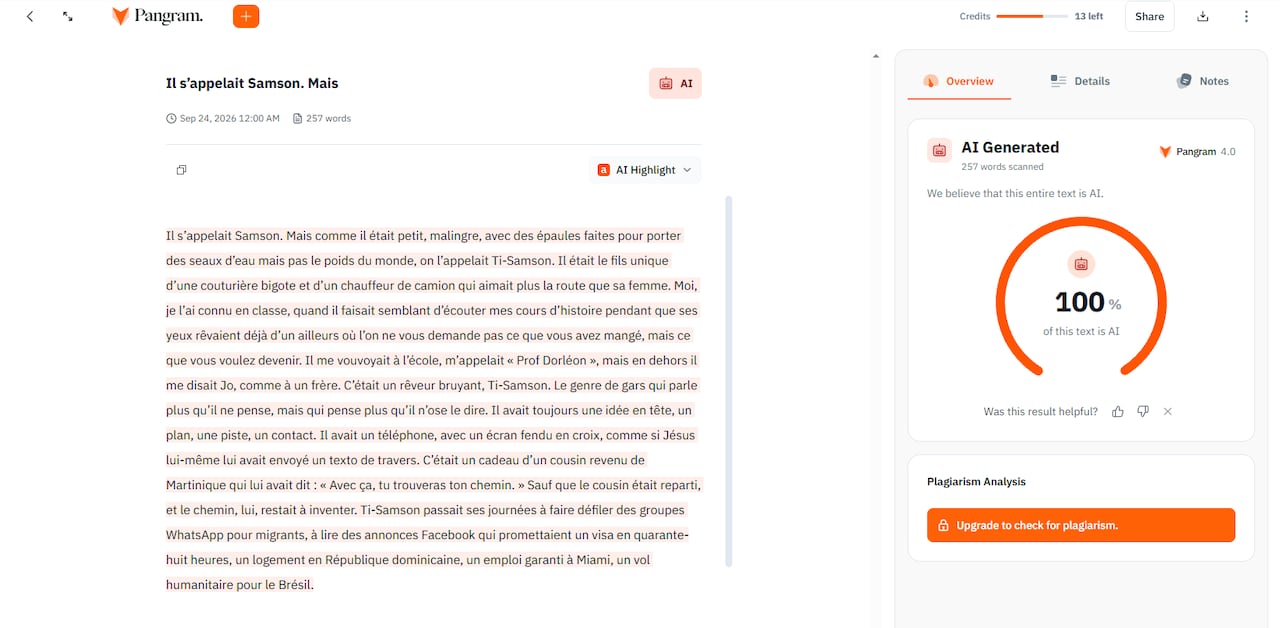 A screengrab of AI-detection tool Pangram’s analysis after CBC presented it with an excerpt from Thélyson Orélien’s novel C’était ça ou mourir. (Cassandra Yanez-Leyton/CBC)Humans reading humans
For French literature professor Emeline Pierre, who teaches at the Université de Montréal, the controversy has created a sense of unease, she says. The questions of why Orélien was targeted and why now are central to how she’s digesting the situation.
Regardless, she puts in doubt the reliability of AI-detecting tools. As for the repetitions and metaphors in Orélien’s text, she says they are characteristic of writing styles in the Caribbean.
“Once again, we see the journey of a Black person who makes their mark. And when that person perhaps goes too far — garners too much recognition — it seems to me that they eventually become a source of discomfort,” she said.
She says the attention the controversy has garnered harkens back to the case of Jason Arday, a Cambridge professor who gained prominence after becoming the university’s youngest Black professor in 2023 at age 37.
He was found dead inside his apartment after becoming the focus of a plagiarism scandal.
Pierre worries about the effect the Orélien story will have on emerging young Black writers, adding that the speed with which scandals seem to close in on their subject when they ’re Black is worrisome.
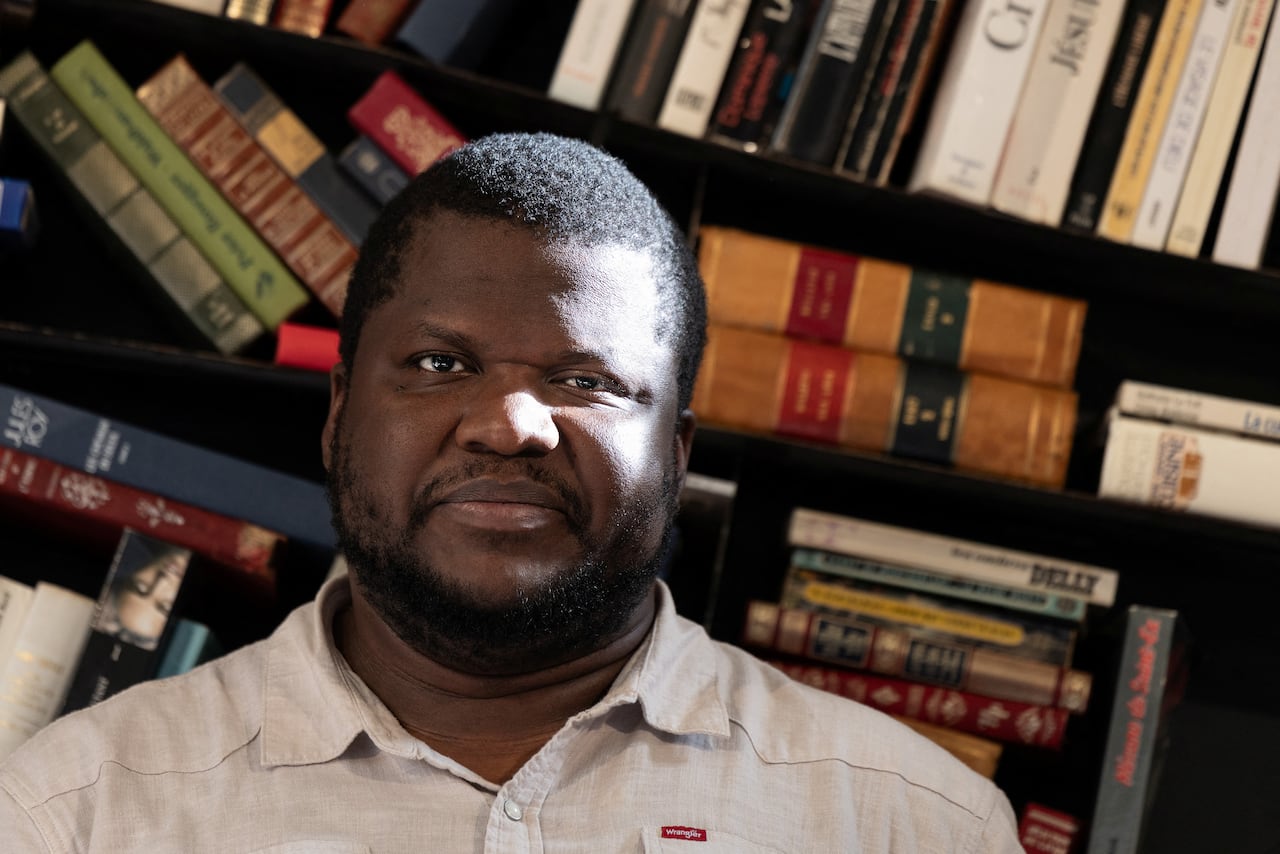 Orélien left Haiti for Quebec after the 2010 earthquake. According to La Presse, a Quebec-based publication for which he’s written a few columns, he lives between Montreal and Ottawa. (Joel Saget /AFP via Getty Images)
The executive director of the Writers’ Trust of Canada says despite the controversy and AI’s seemingly growing writing proficiency, it’s not the future of literature itself he’s worried about, but the viability of writing as a career.
He says many authors support themselves by taking on other types of writing jobs and those are being eliminated by AI.
“So these tools are making it much more difficult for writers to make a living,” he said.
“We’ll continue to write literature, and people wanting to read human-authored works will continue to want to read human-authored works.”