
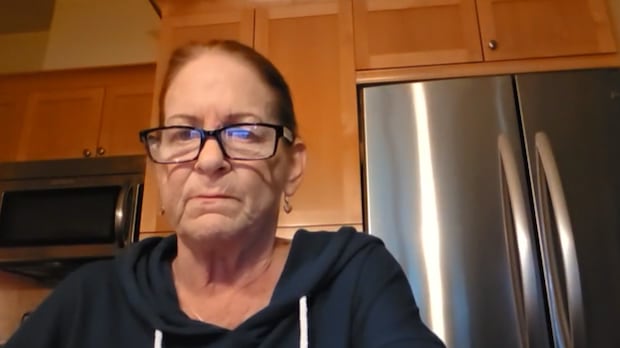
Paige Adamson was on her way home from a birthday dinner in Tsawwassen, B.C., on Sept. 15 when she was stopped at the Point Roberts border crossing.
It was a regular stop that Adamson — a Canadian citizen who has lived in Point Roberts, Wash., as a U.S. permanent resident for 14 years — had grown used to.
But this time, they had a new question for her.
“The very first thing she asked was, ‘Have you ever voted in a federal U.S. election?'” said Adamson.
Adamson, 61, said she told the border agent she had never voted in a federal election.
“They immediately said, ‘Park over here and come into the office.'”
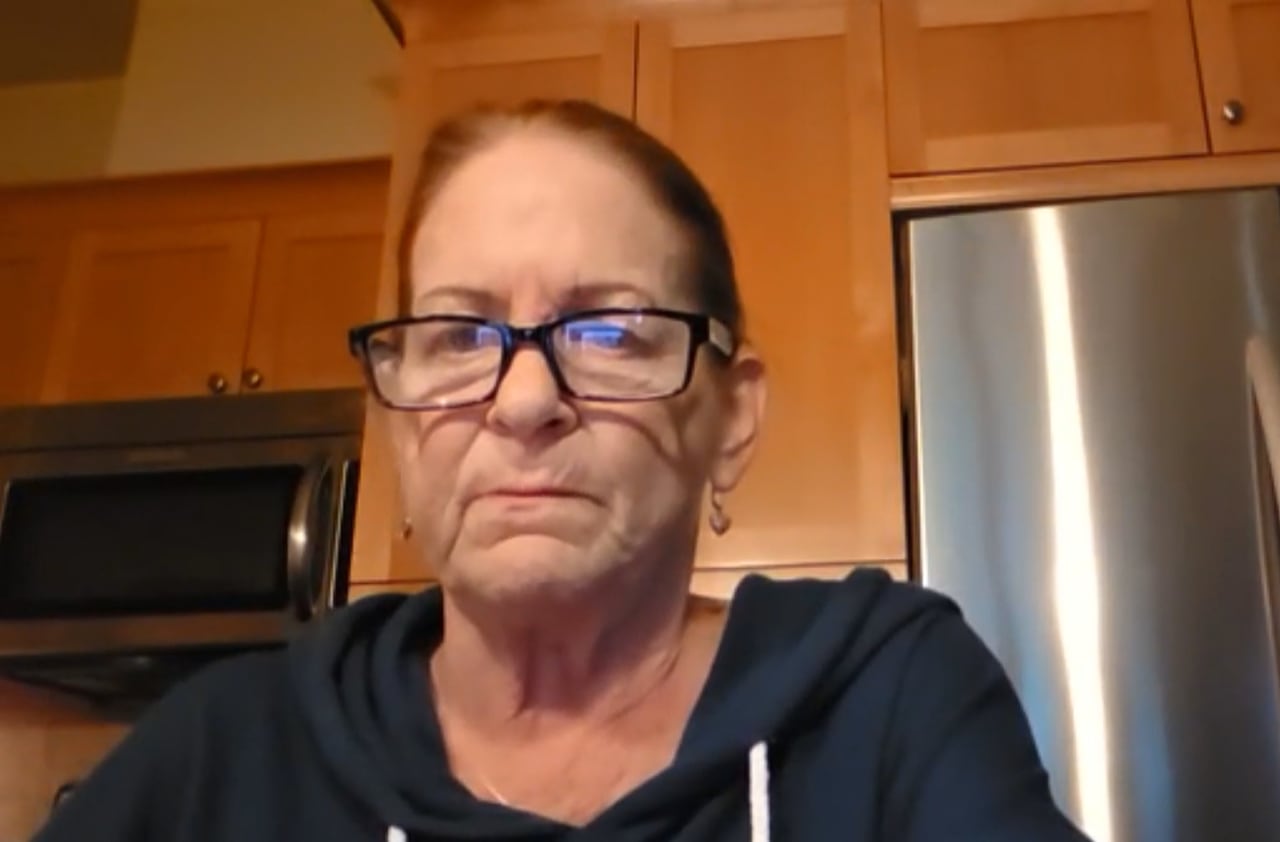 Paige Adamson says she has travelled across the border without issue for all of the 14 years she lived in the U.S. But recently, she faced hours of questioning after being accused of falsely claiming she was a U.S. citizen. (CBC News)
What happened next, Adamson said, was a nearly six-hour-long process — where she went through secondary inspection just after 9 p.m., was interrogated until after 2 a.m. and signed documents before being admitted into the U.S.
One of the documents CBC News reviewed said Adamson “must surrender for removal from the United States, if so ordered.”
Lawyers who spoke with CBC News said U.S. voter registration systems can sometimes catch non-citizens up in errors, and one of them says he has seen an uptick in non-citizens being questioned in the last week.
Grounds for removal
According to documents provided by Adamson, the Department of Homeland Security (DHS) alleges she falsely claimed she was a U.S. citizen “for the purposes of registering to vote in Whatcom County, Washington state.”
The department also alleges Adamson voted in Washington state’s 2018 general election.
DHS cites those allegations as grounds for removing Adamson from the U.S.
 Adamson said she was questioned by U.S. border services agents for hours. (Tyson Koschik/CBC)
But Adamson maintained during questioning, a transcript reviewed by CBC News showed, that she has never voted in a federal election and doesn’t remember ever voting in a state election — though she acknowledged receiving a ballot and may have been registered.
Adamson is now scheduled to appear for a hearing in Seattle, and is grappling with potentially being removed from the state she has lived in since 2012.
“My anxiety is over the top,” she said.
A broader trend
In the past week and a half, immigration lawyer Len Saunders said he has received calls from three people — including Adamson — about being detained at the border and questioned about voting.
One, he said, was a Blaine, Wash., resident who crosses the border daily to work as a nurse in B.C.
Saunders said three near-identical situations like this in such a short period is unprecedented in his career that stretches back more than 25 years.
The Blaine-based lawyer told CBC News there could be hundreds of Canadians facing similar issues, and expects more cases as Canadians cross the border during the holidays.
“This is just the tip of the iceberg,” he said.
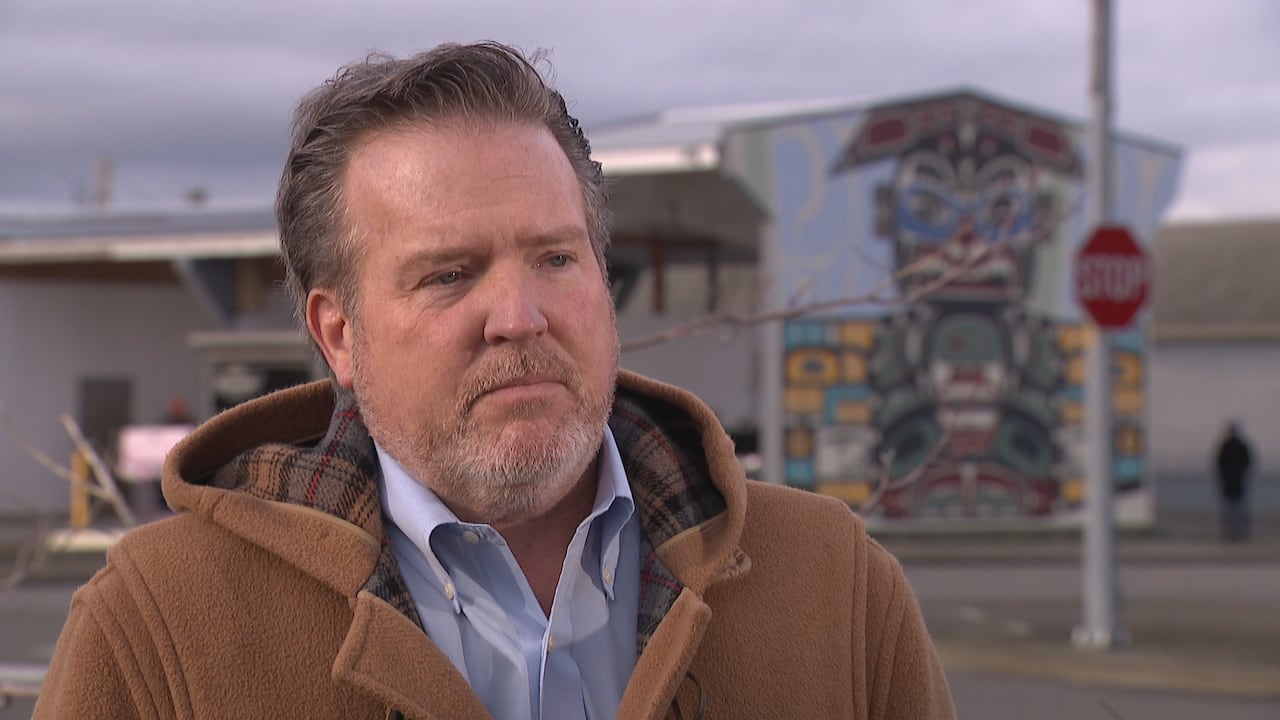 Immigration lawyer Len Saunders is seen in Blaine, Wash., on Jan. 9, 2026. He says that he’s seen a recent uptick in U.S. permanent residents being questioned over voter registration. (Martin Diotte/Radio-Canada)
B.C. immigration lawyer Chris Anders said border enforcement is “way, way stricter and tougher” than at any point in the last two decades.
He said the databases used by border officials are constantly expanding, meaning something that did not cause problems for someone previously could suddenly pop up during a new entry.
Voter registration issues
Washington state automatically registers some eligible voters when they get or renew a driver’s licence or state ID, but the state says the system is tied to proof of U.S. citizenship.
But internal Washington Department of Licensing emails, obtained by the non-profit Federation for American Immigration Reform through a Freedom of Information request, show instances where non-citizens were registered to vote.
“A lot of Canadians say, ‘Well, I thought I was entitled to [vote] because I went in, got my driver’s licence and they registered me to vote,'” said Saunders.
Saunders said that in those situations, he has told clients to immediately deregister and submit a declaration saying they “unknowingly registered or unknowingly voted,” and that used to be a consistent solution.
“Now, it seems to be a completely different scenario during this current administration.”
The detainment
In an email to CBC News, a spokesperson for the U.S. Customs and Border Protection (CBP) said when a permanent resident arrives at a port of entry, officers screen their documentation against federal and state databases.
The CBP says if those records indicate “potential unlawful voter registration, illegal voting, or a previous false claim to U.S. citizenship,” the individual is subject to “rigorous examination and detailed questioning.”
Depending on the case, an individual may face “prolonged” immigration inspections, receive a notice to appear and formal removal proceedings, the spokesperson said.
WATCH | Questions about border questioning answered:
Are U.S. border agents allowed to search my phone? Your border questions answered
Adamson said she wasn’t offered water until around the five-hour mark of her detainment, and no one asked whether she needed to use the bathroom.
“I was basically treated like a criminal,” she said.
She said the large Canadian population in Point Roberts — an exclave of the U.S. located just south of Delta, B.C. — has left her concerned that some of her neighbours could face similar problems.
“This beautiful little place, it’s kind of being invaded,” she said.