
The Kremlin is testing Europe‘s limits.
After months of covert attacks and sabotage across the continent, leaders are warning that Moscow may be about to grow bolder as it seeks to sow chaos and intimidate allies of Ukraine.
Russian President Vladimir Putin could try to test NATO’s resolve to defend members on its eastern flank or respond to attacks that fall short of all-out war, these officials say, at a time when the U.S. is distracted by other conflicts and weighing reducing its military presence in Europe.
An assessment by the Danish Defence Intelligence Service released Thursday warned that in the coming months Moscow will further intensify its campaign of so-called hybrid warfare, “with greater consequences for the targeted countries than in the past.” It also assessed “a low but growing risk that Russia will launch a limited military attack against one or several NATO countries bordering Russia.”
While Moscow has for years embraced tactics that straddle the threshold of war, a string of increasingly brazen incidents in recent months has alarmed U.S. allies.
‘A bit freaked out’
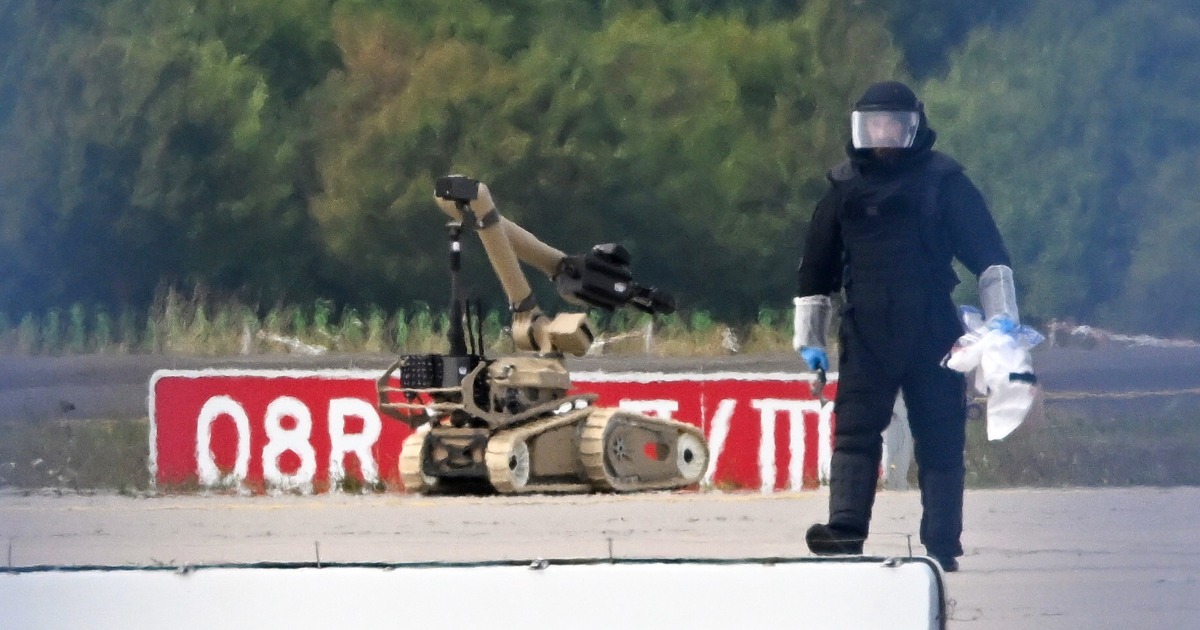
A key moment was the discovery of a Russian drone carrying explosives at an airport in eastern Germany near a Ukrainian aircraft last month. Berlin formally blamed Russia for what it said was a thwarted attack and imposed a diplomatic freeze, though Moscow denied involvement.
That incident appears to have changed the mindset about Russia’s growing threat in Europe, said Ed Arnold, a senior associate fellow in international security at the Royal United Services Institute, a London-based think tank. “It just showed that Putin’s risk calculations are getting more liberal,” Arnold said. “Everyone just got a bit freaked out by that, quite frankly.”
It was followed by the unexpected visit of CIA Director John Ratcliffe to Moscow, during which NATO was discussed.
Incidents have continued to pile up — at defense facilities in Estonia, rail networks in Poland and the power grid in Germany. Many have passed without clear attribution, only intensifying speculation.
All this against the backdrop of near-daily drone incursions into European airspace, fueling anxiety in eastern border towns.
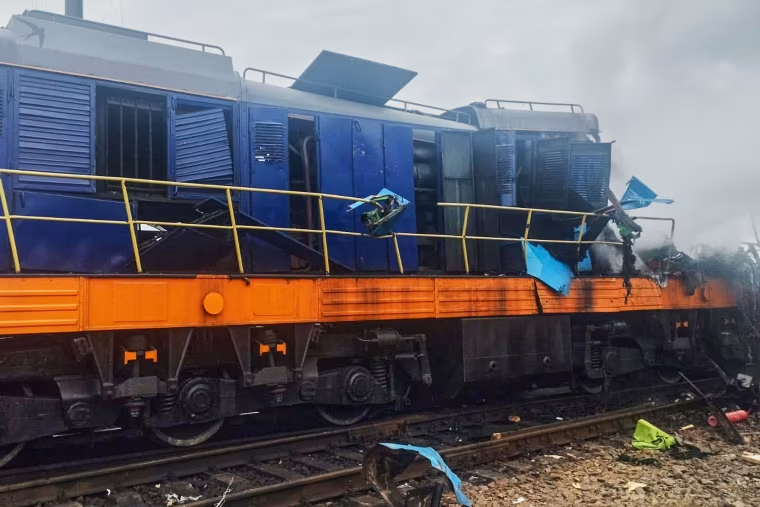 A locomotive damaged in a Russian drone attack at Yahodyn railway station near Ukraine’s border with Poland on Sept. 13.Ukrzaliznytsia Railway via AP
In Ukraine, a passenger train was hit less than 2 miles from the Polish border earlier this month, a close call on NATO’s doorstep that came as European diplomats returned from Kyiv on the same rail line. Another train, with former CIA Director David Petraeus on board, was still at the station when the drone struck.
Just days later, NATO fighter jets shot down a drone that entered the airspace of Lithuania, one of the Baltic member states whose proximity to Russia, analysts say, could make it a prime target for the Kremlin’s next move.
What could this look like? As unease increasingly swirled last week, Polish Prime Minister Donald Tusk said the Kremlin plans to launch drone and missile attacks against European countries that it would argue were accidental to try to weaken any response.
Russia has not claimed involvement in any of the incidents and has repeatedly denied conducting hybrid warfare or sabotage operations in NATO territory. Putin himself accused European leaders earlier this month of seeking out “a war against Russia” and “frightening their populations with an imaginary threat.”
On Friday, Russian state news agency RIA published and quickly deleted an op-ed laying out a potential scenario for a “lightning fast” war that Russia might wage against a NATO state, specifically focusing on the Baltic nations. The article was deleted because it did not “align” with editorial policy or Russia’s state policy, RIA said.
 Lithuanian soldiers securing the area where NATO fighter jets shot down a drone on Sept. 15 near Pratkunai villageAP
U.S. allies have little doubt that the broad pattern reflects the Kremlin increasingly pushing the boundaries.
“With these incidents now so frequent and so brazen, it is increasingly difficult to distinguish them from actual acts of war,” said Katja Bego, a senior research fellow with the Europe program at London-based think tank Chatham House. “The Kremlin is playing with fire here: The risk of more serious escalation — even if unintended — is very real.”
Baltic states urge caution
There is a mounting sense that something must be done, but what?
Lithuania has made plans for the evacuation of older adults and is lifting its ban on hosting nuclear weapons. Finland has warned citizens to be “mentally prepared” for new sabotage attacks. France is putting a plan in place to protect the country’s critical infrastructure.
Hanging over all of this is Article 5, NATO’s collective defense clause.
For Moscow, escalating hybrid attacks could highlight Western divisions over how best to respond and undermine the alliance at a time when the U.S. commitment to this mutual defense has been in question.
“I think they are trying to show Europe they can act without consequences, and more recently, to show Europe that the U.S. will not come to their rescue. It’s worrisome,” said William Alberque, a former senior NATO official based in Berlin.
Secretary of State Marco Rubio met with Russian Foreign Minister Sergey Lavrov on Wednesday and told a media briefing that the U.S. was concerned that the Ukraine war could “metastasize and spread into other places … be it through a hybrid attack, be it through a sabotage attack, be it through a misunderstanding.”
He added: “We watch reports carefully, and we raise them with the right people at the right levels.”
A State Department spokesperson told NBC News: “We continue to monitor Russia’s hybrid activities in Europe and are working closely with our allies and partners to strengthen resilience against the hybrid threat.”
Despite the spreading sense of alarm, some in Europe are urging against getting carried away.
NATO’s Baltic member states have not changed their security assessments, saying there is no imminent risk of a Russian invasion while much of Moscow’s military resources are tied up in Ukraine — and struggling to make progress there.