
In a single week, Israel was confronted with two stories about the moral character of its army.
The first was NAZA, a documentary built around anonymous testimony from soldiers and intelligence personnel alleging grave misconduct in Gaza.
The government and the IDF responded with categorical denials, attacks on the witnesses’ credibility, threats, and accusations that the film was defamatory.
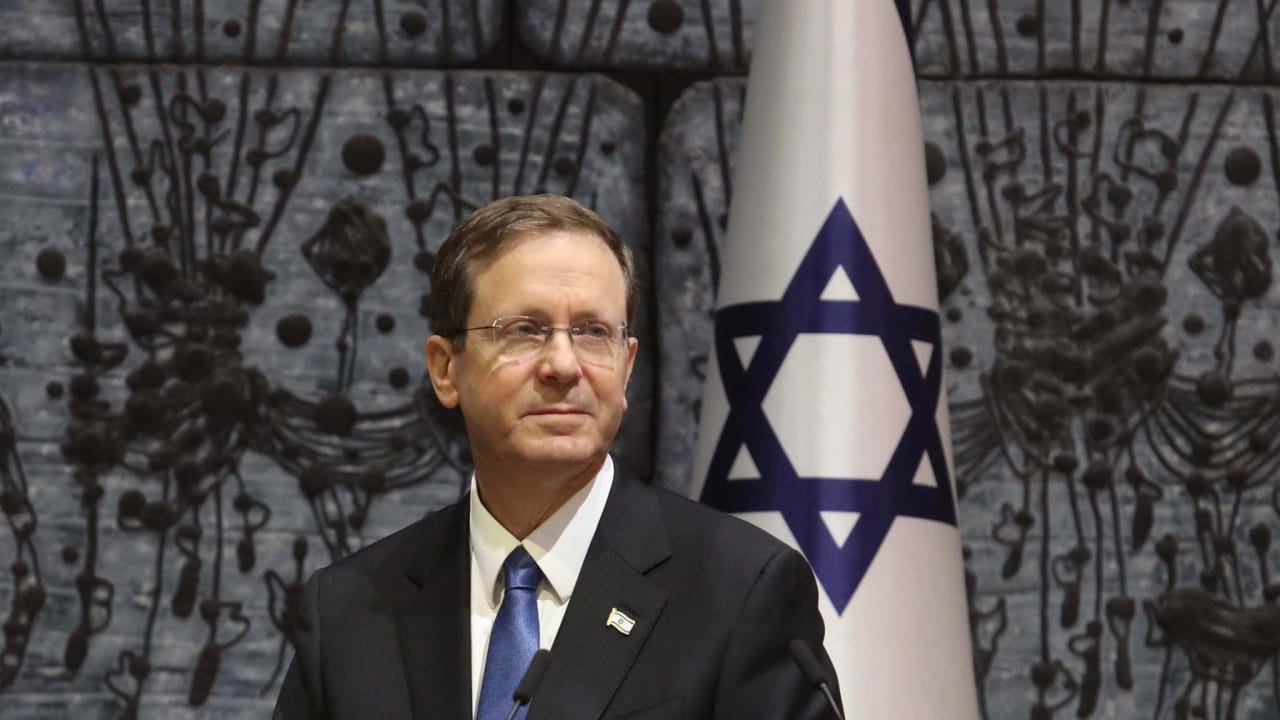
The second was President Isaac Herzog’s decision to erase the criminal record of Elor Azaria, the soldier convicted of killing a wounded and incapacitated Palestinian terrorist in Hebron in 2016.
These events are not separate. One helps explain the other.
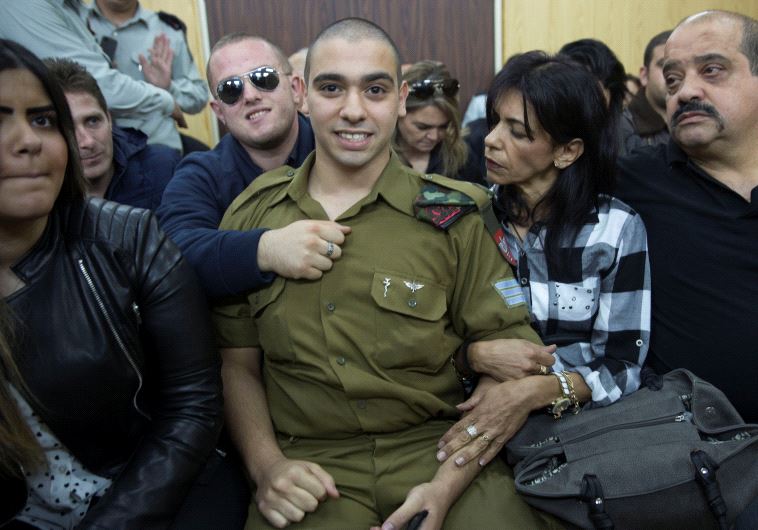 Elor Azaria sits to hear his verdict in a military court in Tel Aviv, Israel, January 4, 2017 (credit: REUTERS)
Azaria served his sentence and is entitled to rebuild his life. Mercy after punishment is a legitimate principle. But the public presentation of Herzog’s decision was not primarily about rehabilitation.
Politicians and headlines treated it as vindication: the symbolic correction of an injustice committed against a soldier who had supposedly been persecuted for protecting Israelis.
It was no such thing. The conviction has not been overturned. A military court examined the evidence and concluded that Azaria shot Abdel Fattah al-Sharif after he had been wounded, disarmed, and no longer posed an immediate threat.
The ability to distinguish between killing an active threat and killing someone after that threat has passed is not weakness. It is the difference between a disciplined military and an armed mob.
At the time, the affair rapidly transformed into a political loyalty test. Azaria became “everyone’s child,” while the commanders, investigators, and military judges who fulfilled their duties were accused of abandoning a soldier.
The shameful call against the then-IDF chief of staff, Gadi Eisenkot, was the realization and birth of the “Azaria syndrome”: “Gadi Gadi beware, Rabin seeks a friend.”
In a private letter to Herzog from IDF Chief of Staff Eyal Zamir, which was later leaked, he objected to the motion. Azaria still has not voiced any remorse over his unlawful action.
A dictionary definition might define this syndrome as a political condition in which a soldier who violates military orders is recast as the victim, while the commanders and legal officers who enforce those orders are treated as traitors.
Its principal symptom is the transformation of accountability into betrayal, discipline into abandonment, and misconduct into heroism.
Its damage extends far beyond one soldier.
The political campaign surrounding Azaria delivered an unmistakable warning to every IDF commander: when you choose to investigate suspected wrongdoing, you may be accused of betraying the troops. When you defend the rules of engagement, you yourself may become a political target.
If you have the audacity to state publicly that even in war there are limits, politicians, activists, and commentators will most likely come after your career, your reputation, and your family.
The military institution learned the lesson, and since then caution has become the starting point. Ambiguity, slow action, and silence when controversy strikes have become safer than voicing moral clarity and publicly admitting any failure.
That is where NAZA enters the story.
The film presents 24 anonymous soldiers and intelligence officers making allegations about the conduct of the Gaza war.
Validity of the witnesses
The IDF argues that the identities and service histories of the witnesses cannot be verified, that some make claims beyond what people in their positions could have known, that the film misuses legal terminology, and that there are factual errors.
Those objections deserve serious consideration. Anonymous testimony is not beyond scrutiny. Nor should allegations of war crimes or systematic policy be accepted simply because they appear in a documentary.
War crimes have indeed been a part of warfare since the dawn of war. But a categorical denial is not enough.
When an army is politically punished for acknowledging moral failure, it gradually loses the ability to persuade the public that it can investigate itself. When commanders have learned that saying “this conduct violated our values” carries a personal price, even a truthful official denial may sound automatic.
That credibility vacuum is where films such as NAZA acquire their power.
The choice is not between accepting every anonymous allegation as fact and dismissing every allegation as anti-Israel or antisemitic propaganda.
A military confident in its values should be capable of distinguishing among false accusations, operational mistakes, unlawful orders, and individual crimes, and of speaking honestly about each.
For that to happen, commanders must know that the country will protect them when they enforce the law, including when their findings embarrass the government.
As someone who served in uniform and returned to reserve duty during war, I reject the claim that accountability means abandoning our soldiers.
Supporting soldiers means giving them clear, lawful orders; protecting them when they follow those orders; and investigating them fairly when evidence shows they did not.
Accountability is not betrayal. It is command.
It also protects Israel. The credibility of the IDF’s investigative mechanisms is one of the country’s most important moral and legal defenses. Israel has celebrated its legal institutions.
But every time politicians attack those mechanisms for political currency or for reaching an inconvenient conclusion, they strengthen the argument that Israel is incapable of investigating itself.
One cannot demand that the world trust the IDF’s investigations while politically persecuting the commanders who conduct them. One cannot dismiss NAZA by insisting that wrongdoing must be reported through official channels while teaching soldiers that those who report or acknowledge wrongdoing will be branded traitors.
The Azaria affair once demonstrated that the IDF could draw a line even amid terrorism and public anger. Since then, the political system, under Netanyahu, has spent the last decade trying to blur that line.
Herzog’s decision does not legally erase the conviction, but the celebration surrounding it rewrites its meaning.
Elor Azaria deserves to move forward with his life. Israel, however, cannot pardon itself from the lesson of his case.
The stain that should concern us is not the one removed from Azaria’s record. It is the fear left inside the IDF: that publicly defending the army’s values may be more dangerous than violating them.
The writer is director-general of International Relations at the Histadrut. He served in the IDF for 25 years, including as a spokesperson, and is an adjunct professor at Reichman University. Follow him on X: @LTCPeterLerner