
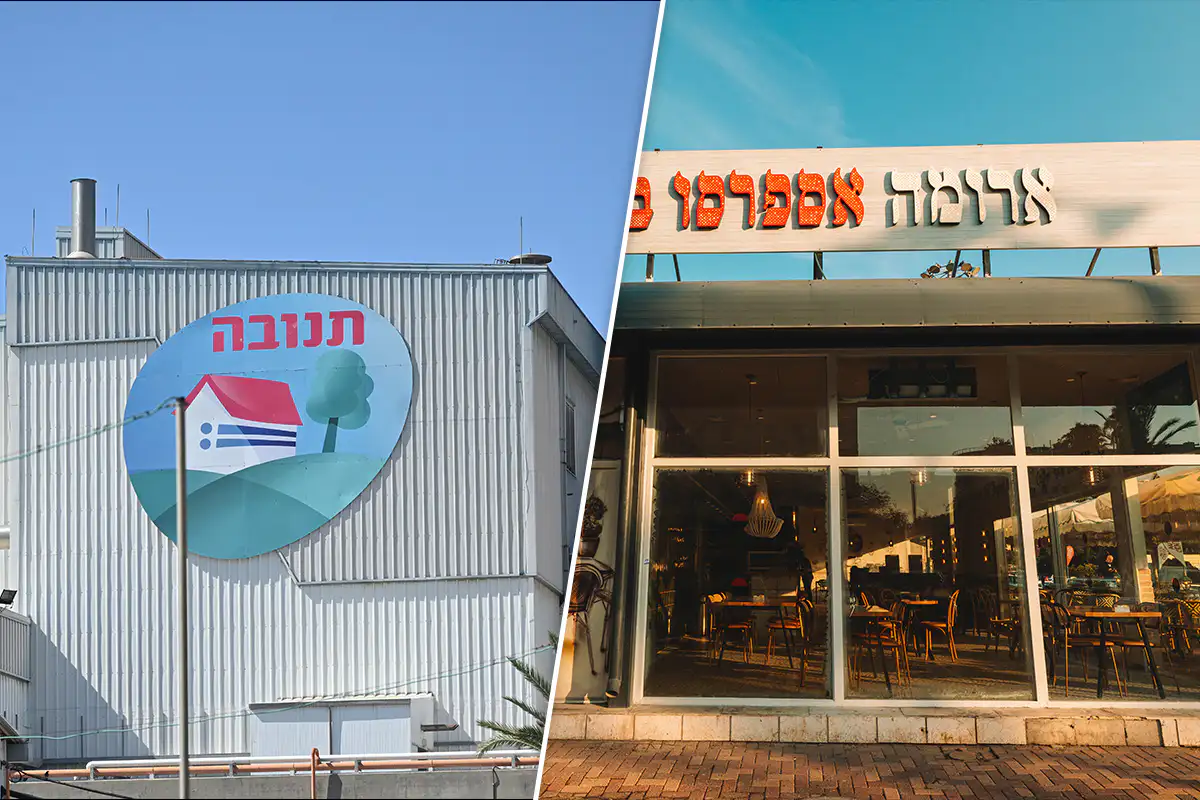
The UN updated its “blacklist” over the weekend of companies that provide services and/or operate in Judea and Samaria and, according to the UN, should therefore be included in the database, which already features a number of major companies in the Israeli economy.
Israel Hayom now attempts to assess, through conversations with figures in Israel’s business and capital markets, just how significant the list is for companies paints the following picture.
The list is not an honorable place to be. It does companies no favors, but it should also be kept in perspective. None of the companies added to the list is in a critical situation, but inclusion certainly places Israeli companies in a sensitive position.
The issue can be divided into two parts. The first concerns companies that rely on exports and overseas operations, such as ADAMA, which has now been added to the list, as well as the banks, which were already included. The second concerns relations between companies and their shareholders, an inherently sensitive relationship in which inclusion on such a list certainly does not help.
The updated list includes companies such as Tnuva, ADAMA, Burger Ranch, the Aroma and Cafe Joe coffee chains and others. All of Israel’s telecommunications companies and banks are already on the list.
None of the companies newly added to the list or those already included agreed to comment officially. Off the record, however, executives had plenty to say. All stressed the need to maintain a consistent approach: Do not antagonize customers and certainly do not antagonize shareholders.
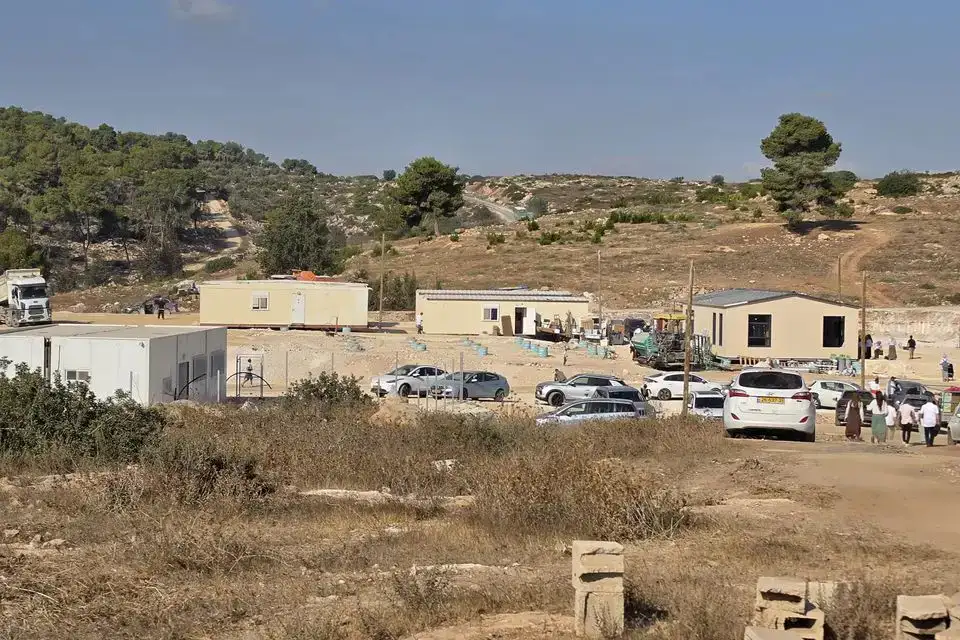 A community in Samaria
‘More sensitive in conversations with customers’
A senior executive at one of the companies already on the list told Israel Hayom: “We don’t deal with it on a day-to-day basis, but we are definitely much more sensitive in our conversations with customers. As for shareholders, they generally ask more questions, but we have not seen any investor take action that forced us to operate differently from the way we normally would.
“In other words, generally everyone understands the situation Israel is in, and everyone understands that for the time being it is better to keep their relationship with us low-profile. But ultimately, what speaks are the numbers and the returns we deliver for them. It’s not good, but we’re not in a situation where we have to prepare differently, beyond strengthening our investor relations and communications operations.”
A senior capital-market figure who maintains very close ties with foreign investors noted that foreign investors account for roughly 20% of trading turnover on the Tel Aviv Stock Exchange. During 2022, foreign investment activity on the exchange fell to about 10%, against a backdrop of global macroeconomic developments unrelated to Israel.
The instability that characterized Israel during the first part of 2023, followed by the outbreak of the war in the fourth quarter of that year, reduced foreign investment activity on the exchange by roughly one-third, leaving foreign investors responsible for approximately 7% to 10% of trading.
As of 2026, foreign investment on the exchange has risen significantly. According to Tel Aviv Stock Exchange data, foreign investors’ portfolios have reached $154 billion, while their share of trading volume stands at around 25% in the middle of the week and jumps to about 40% on Fridays.
So while relations between companies and shareholders are sensitive but not dire, the situation facing exporters is far more complicated.
‘The situation is catastrophic, and this is only the beginning’
Lior Levy, chairman of the Food Industries Association at the Manufacturers Association of Israel, told Israel Hayom: “I think this is only the beginning, and the situation is catastrophic. Israeli exports from traditional industry are entering an enormous crisis. We are essentially dependent on Europe.
“About 30% of consumer-goods exports go to Europe, and we are being hit twice. First, we are now suffering from a wave of boycotts that is only going to grow. On the other side, the exchange rate is of course not working in our favor, while our local costs are in shekels. We are facing two fronts at once and find ourselves caught in a kind of pincer movement. The picture is grim.
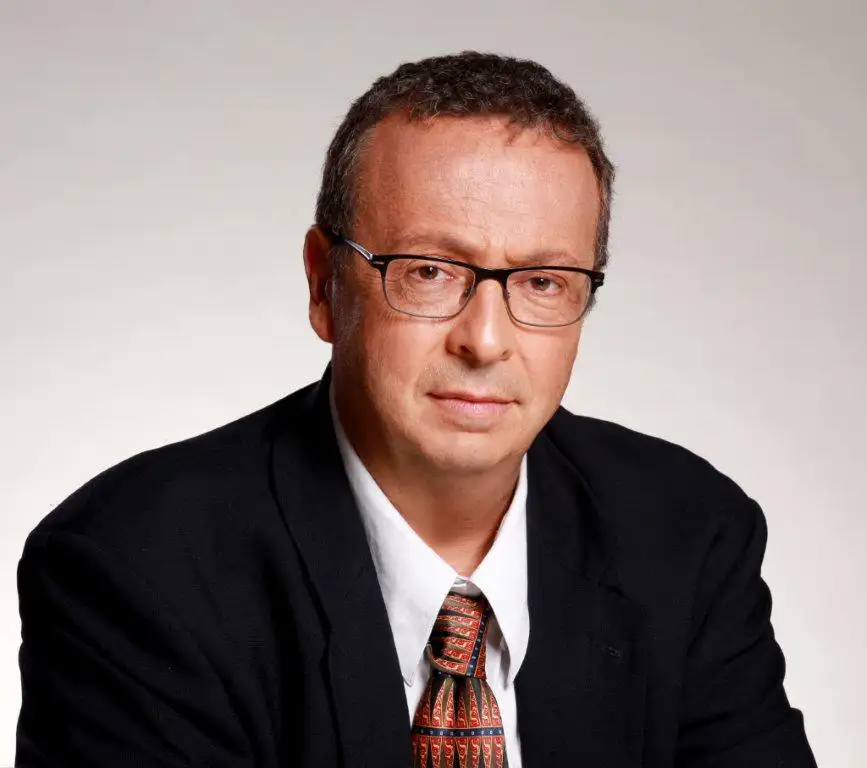 Food Industries Association Chairman Lior Levy | Photo: Ilan Bashor
“At the end of the day, we deal in supermarket products and basic consumer goods. Getting a buyer in a foreign country, outside Israel, to agree to buy from you is something that takes years, sometimes decades. I myself, as CEO of Biscol Group, once worked for about eight years to get into a particular retail chain.
“The buyer on the other end does not really care whether a component in the product comes from the territories or does not come from the territories. He ignores the background political noise and says: ‘Why should I get involved in this? Why should I now have to deal with proof and documentation, and then have people come along and make trouble for me?’
“We also have to remember what happened in the Netherlands. Under the law currently in force there, someone who sells Israeli products containing a component from the territories or the Golan Heights can face up to six years in prison. Six years in prison is no longer merely a political statement. It is something a buyer in another country looks at and says to himself: ‘Why should I expose myself to that risk?'”
‘Systematic action against Israel’
The Manufacturers Association of Israel said in response: “This is another political measure as part of the council’s discriminatory and systematic conduct against Israel. The list has no legal force, and a company’s inclusion does not indicate a violation of the law or of international law. International law does not prohibit companies simply from operating in conflict zones, and there is no basis for presenting legitimate business activity as a human rights violation.
“The publication comes at a time when Israeli industry, and exporters in particular, are already dealing with the repercussions of the diplomatic situation, as well as calls for boycotts and measures against Israeli companies and products in European markets. The list could create an additional obstacle for Israeli exporters and harm their activity in international markets.
“Precisely at this time, the Israeli government must act proactively to strengthen Israeli industry and exports and provide tools and assistance to companies suffering commercial harm as a result of the diplomatic situation and attempts to boycott Israel.
“The Manufacturers Association views publication of the list as another attempt to single out Israeli companies, undermine their legitimacy and encourage economic pressure and boycotts against Israel. We will not allow political moves of this kind to stop Israeli industry. We will continue manufacturing in Israel, exporting to the world, entering new markets and taking a leading role internationally.”