

Listen to this article
Estimated 3 minutes
The audio version of this article is generated by AI-based technology. Mispronunciations can occur. We are working with our partners to continually review and improve the results.
China pushed back against the United States in its speech at the UN General Assembly on Saturday, saying sovereignty of countries in the Gulf should be respected and urging the “relevant country” to stop threatening Cuba and lift its blockade on it.
Chinese Vice-President Han Zheng did not mention the U.S. by name in his remarks.
The U.S. has launched a pressure campaign on Cuba that has largely blocked oil from reaching the island. The U.S. war on Iran started with U.S.-Israeli strikes in February.
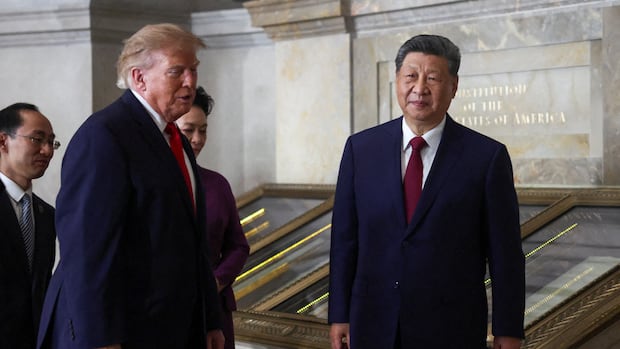
The comments stood in sharp contrast to the bonhomie on display earlier this week at the White House, where U.S. President Donald Trump feted Chinese leader Xi Jinping with military flyovers and at a lavish state dinner.
WATCH | Trump and Xi agree to cut tariffs, discuss AI: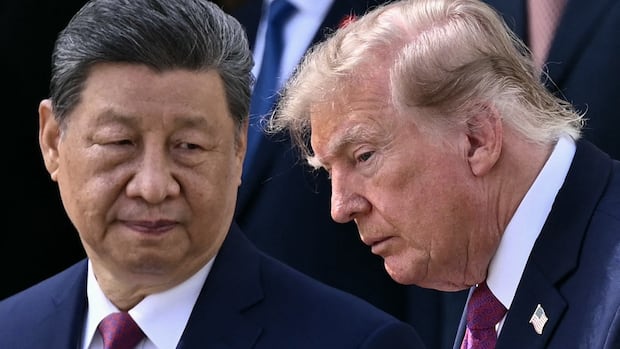
U.S., China agree to tariff cuts and AI talks following Trump-Xi summit
The U.S. and China have agreed to a $30-billion US reciprocal tariff reduction and to launch dialogue on artificial intelligence following Chinese President Xi Jinping’s visit to Washington. Economist Tony Fang discusses what the agreements could mean for Canada as it looks to diversify its trade relationships.
“Major countries should have special responsibilities for safeguarding international peace and security, and they should take the lead in complying with the rules, upholding rule of law and doing what’s right,” Han said.
“China holds that the sovereignty and security of countries in the Middle East, including the Gulf, should be respected.”
Trump warned Xi against providing support to Iran during the Washington talks and received assurances that China would not do so, the U.S. ambassador to China said on Friday.
WATCH | What did the Trump-Xi meeting accomplish?: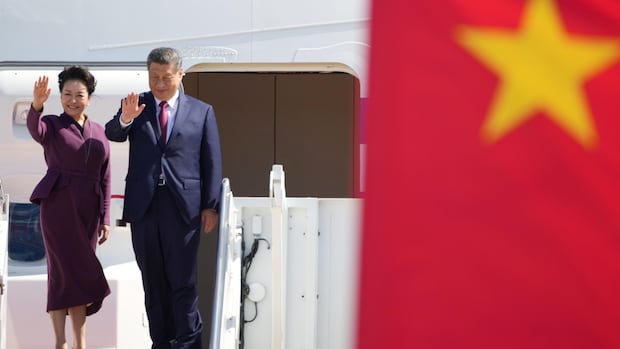
Xi-Trump meeting is now over. What was accomplished? | Hanomansing Tonight
Chinese President Xi Jinping leaves Washington after a three-day visit. What exactly was accomplished during his visit and what is the U.S.-China relationship looking like now?
The warning followed reports that Beijing had supplied Iran with shoulder-fired air-defence missile launchers and that Tehran had found ways to evade sanctions on its oil sales with Chinese help.
Call to lift blockade against Cuba
Han also brought up Cuba.
“China urges the relevant country to immediately stop using threat of force against Cuba and immediately and completely lift the blockade and sanctions against Cuba,” he said.
Cuba’s electrical grid suffered a total collapse earlier this month, plunging the nation into darkness and leaving millions without power as the U.S. continues to press its blockade.
Cuba’s aging power generation system has been under severe strain from fuel shortages and decrepit infrastructure for years, but a U.S.-imposed oil blockade that began in January has worsened blackouts and led to frequent grid collapses.
Meanwhile, Trump predicted on Saturday that the U.S. and Cuba will reach an agreement and said he does not think military action will be necessary.
The Trump administration has openly stated that its goal is to change Cuba’s government.
Han also used his speech to portray China as a reliable partner on the global stage and a steadfast defender of developing nations.
“China holds that all countries, big or small, are equal members of the international community, and that world affairs should be handled by all through consultation,” said Han.
WATCH | Xi’s first state visit in U.S. in more than a decade: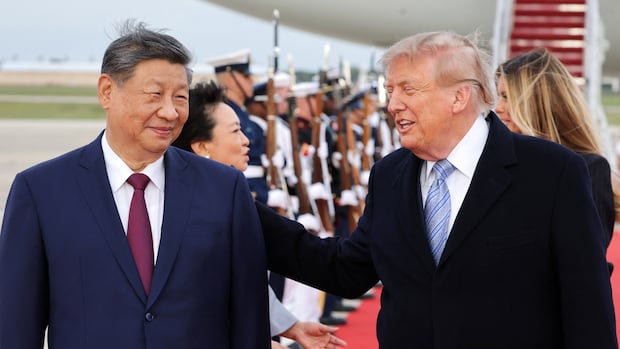
Trump welcomes Xi for first U.S. state visit since 2015
Chinese President Xi Jinping is in the U.S. for his first state visit since 2015. Expected discussions on the busy agenda include China-U.S. trade, Iran and co-operation on regulating AI.