
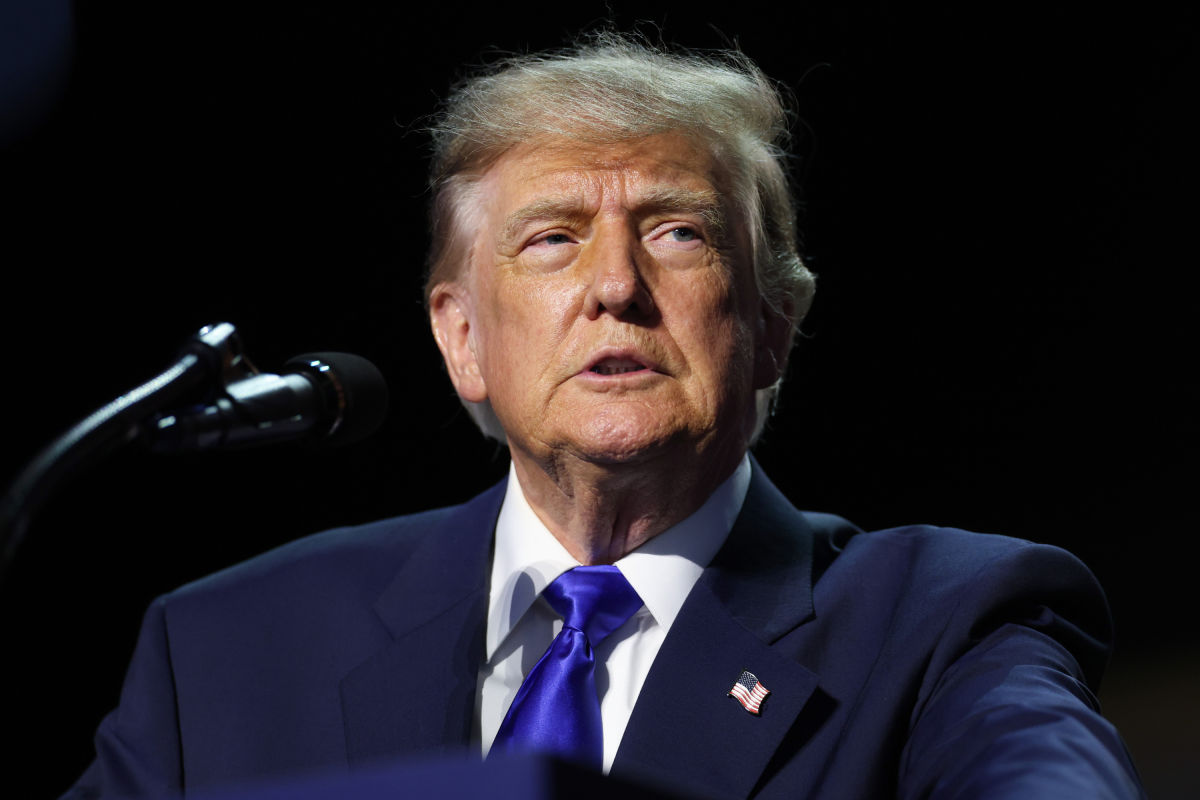
President Donald Trump’s net approval rating in the Midwest fell five points in a month as his national disapproval reached a second-term high in Emerson College Polling’s series.
It comes as Republican candidates in pivotal U.S. Senate races confront rural anger over fuel costs, the Iran war and a beef-import policy opposed by some cattle producers.
Emerson’s September survey found the Iran conflict, jobs and tariff policy were voters’ highest-ranked considerations when choosing a midterm candidate, with voters in Iowa, Kansas, Michigan and Ohio possibly determining whether regional dissatisfaction with Trump becomes a wider problem for the GOP.
Read More on Politics
Trump-endorsed Iowa Republican Ashley Hinson has opposed increased beef imports and called for the Iran war to end while running for an open Senate seat.
White House spokesman Davis Ingle previously told Newsweek that the 2024 election was the “ultimate poll,” saying nearly 80 million Americans had endorsed Donald Trump’s agenda.
Ingle said the president had already made “historic progress” on jobs, inflation and housing affordability, and argued that further results would emerge as his policies took effect.
Newsweek contacted the White House via email for further comment on Friday morning.
What to Know
Trump carried Iowa, Kansas and Ohio in 2024, while Michigan was closely contested, making any weakening across the region politically significant.
Emerson’s August figures showed Trump with 43 percent approval and 52 percent disapproval among Midwestern likely voters, giving him a net rating (those who approve minus those who disapprove) of -9.
By September, approval had edged down to 42 percent while disapproval rose to 56 percent. That widened his regional deficit to -14 points.
Rising opposition, rather than a large-scale loss of support, produced most of the movement.
Because the Midwest is a regional subset of each national poll, however, its sample is smaller and has a wider credibility interval than the survey as a whole. The change should therefore be treated as a warning signal rather than definitive evidence of a durable swing.
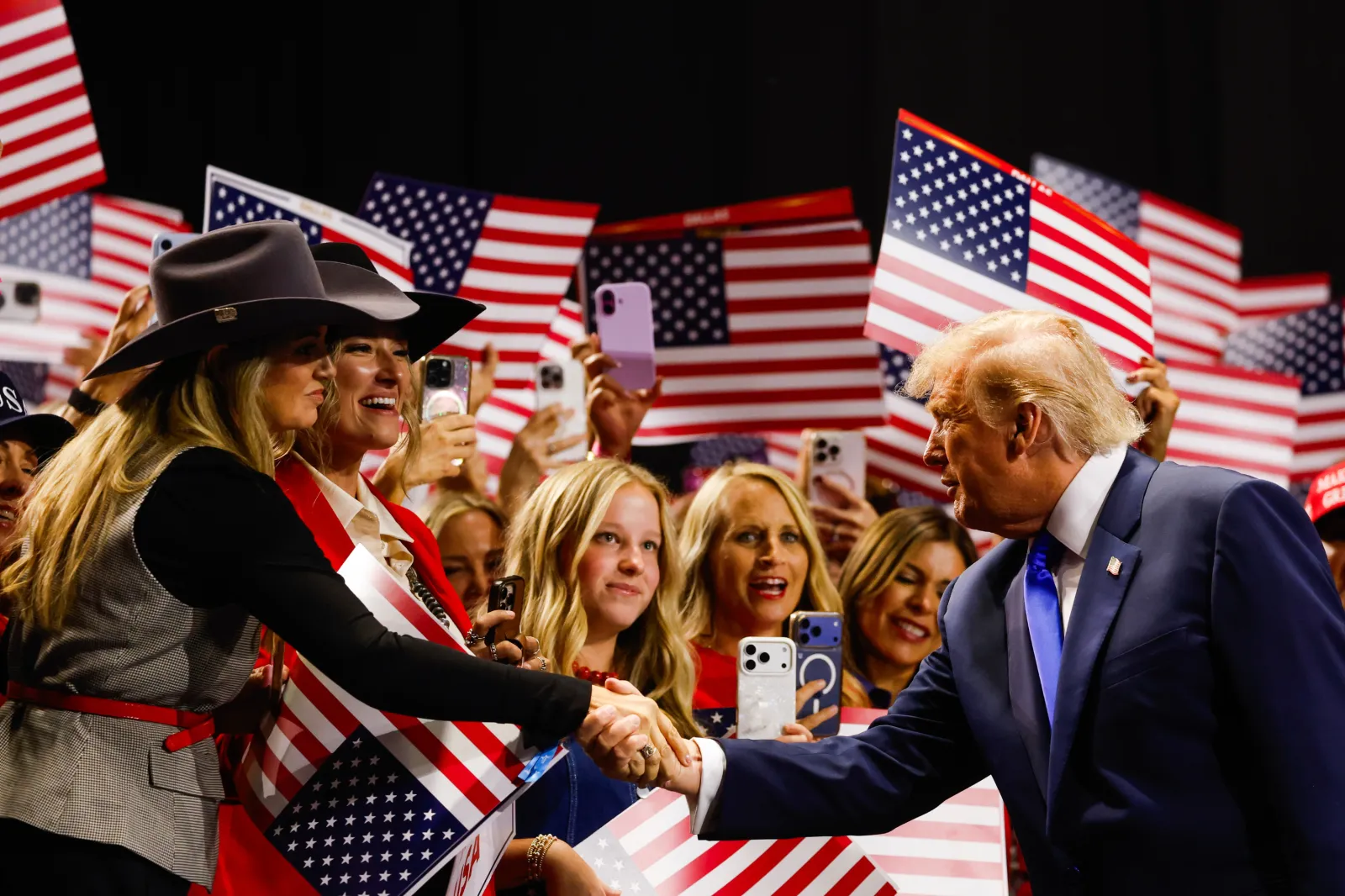 Trump’s Disapproval Rating Hits Record High
The regional result follows the national trend.
Emerson’s September poll put Trump at 39 percent approval and 58 percent disapproval, leaving him 19 points underwater.
Disapproval was the highest Emerson had recorded during his second term, while approval matched the low first reached in May.
Both the August and September surveys involved 1,000 likely voters and carried margins of error of plus or minus 3 percentage points for their full national samples. August’s fieldwork was conducted from August 16 to 17, while the latest poll was carried out from September 21 to 22.
Respondents were contacted through probability-based panels using text-to-web interviews, with results weighted by gender, education, race, age, party registration and region.
Rural Pressures Reach the Campaign Trail
The political tension is clearest in Iowa, where Hinson and Democratic state Representative Josh Turek are competing to succeed retiring Republican Senator Joni Ernst.
Hinson, a three-term House member, called Trump’s decision to increase beef imports in order to combat rising prices “a bad idea.” The dispute carries particular resonance in a state with a major cattle industry where producers may fear that expanded foreign supply will push down the prices they receive.
Turek, a Paralympic gold medalist in wheelchair basketball, gives Democrats a candidate with a biography extending beyond party politics.
Polling has produced different leaders, underscoring the race’s competitiveness: a late-August Emerson survey put Hinson ahead by 5 points, while Turek was seen more favorably in YouGov (45 percent to 43 percent) and Marist (50 percent to 42 percent) polls earlier this month.
Concerns Over Fuel Prices
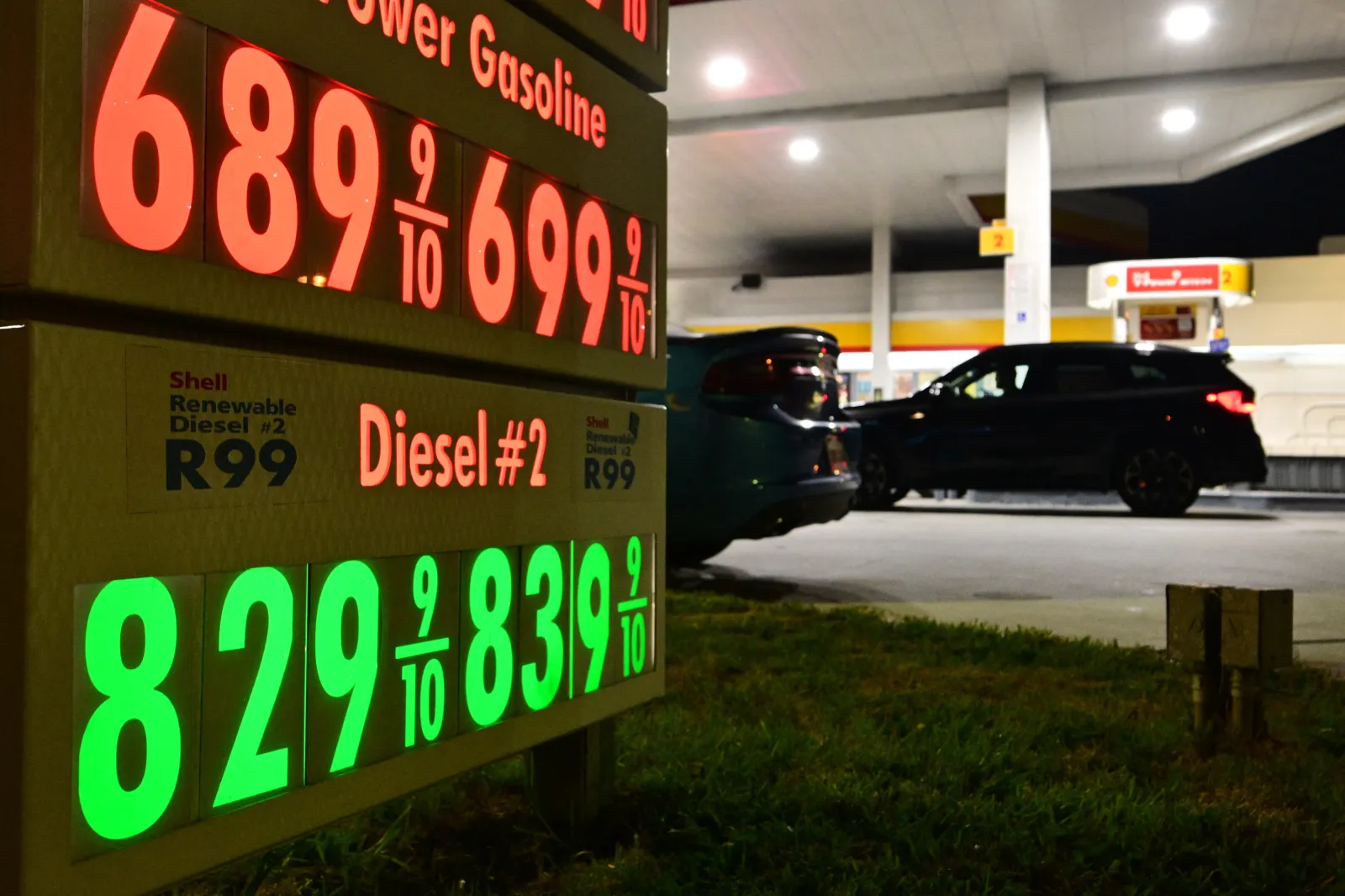
Fuel prices have added another point of separation. Hinson said Iowans should not have to pay more “at the pump or the checkout line” because of the Iran war, calling for gas-tax relief, a pause in diesel exports and a “successful and immediate” end to the conflict.
Farmers use diesel to plant, harvest and move crops while freight businesses carry goods across long distances. Higher fuel prices can consequently enter voters’ lives through several doors at once.
Emerson found 41 percent of national voters named the economy as their leading concern. The Iran war, jobs and tariff policy received the highest importance ratings among the issues tested for the midterms. The poll does not show whether those concerns explain Trump’s Midwest decline.
 Midwest Senate Races Put Republicans on Alert
Kansas provides the most unexpected pressure point.
Democratic challenger Adam Hamilton held 45 percent to Republican Senator Roger Marshall’s 43 percent in a September Emerson survey, an unusually close result in a state that has not elected a Democratic senator in decades.
Michigan’s contest pits Democratic physician and former Detroit health director Abdul El-Sayed against former Republican Representative Mike Rogers.
Having narrowly lost a Senate race in 2024, Rogers entered this campaign with statewide experience, yet Emerson found the candidates separated by only two points, with El-Sayed leading 48 percent to 46 percent in a mid-September poll.
Ohio offers a contest between two politicians who have already served in the Senate.
Republican Jon Husted, appointed to the seat vacated by Vice President JD Vance, faces former Democratic Senator Sherrod Brown, who represented the state for 18 years before losing in 2024.
Husted has called for an end to the Iran war and suggested Ohio consider temporarily suspending its gasoline tax.
The state’s average regular gasoline price rose from $2.76 a gallon in February to an estimated $4.48 for the week of September 21, according to figures cited from the U.S. Energy Information Administration.
Together, these races turn the Midwest approval shift into more than a regional curiosity.
Republicans do not need every dissatisfied voter to defect. In a close contest, reduced enthusiasm, weaker turnout or a modest movement among independents may be enough to matter.
Newsweek’s reporters and editors used Martyn, our AI assistant, to produce this story. Learn more about Martyn here.
Contact Newsweek editors for this story: John Fitzpatrick and Anthony Murray.