

Environmental groups are sounding the alarm on the federal government’s Building Canada Strong Act as an “astonishing undermining of environmental law,” saying it gives cabinet the authority to approve virtually any project—across the country—regardless of its environmental impacts.
“The package of changes to environmental law over the last year-and-a-half … since this government first tabled the Building Canada Act has truly been like beyond anything we’ve ever seen,” said Margot Venton, program director of nature at Ecojustice, referencing Bill C-5 which became law in June 2025.
 Ecojustice’s Margot Venton said Bill C-39, alongside the Building Canada Act, will result in ‘no limitations’ on what can be considered a national interest project or zone. Handout photograph
“What, essentially, they have done is created the power to avoid federal environmental standards for any project. … There are no limitations on what can be designated under the law as a national interest project or area,” Venton said.
Transport Minister and Government House Leader Steven MacKinnon (Gatineau, Que.) introduced Bill C-39 on Sept. 21, the first day of Parliament’s fall sitting. The almost 250-page bill is aimed at streamlining project approval and construction by completing project reviews within a year.
“One project, one review, and one year to decision,” MacKinnon declared in press conference that day shortly after tabling the bill.
To achieve that goal, Bill C-39 proposes amending a number of pieces of legislation—including the Building Canada Act, Prime Minister Mark Carney’s (Nepean, Ont.) flagship nation-building legislation, passed in June 2025; the Impact Assessment Act; and the Species at Risk Act—and creating “regions of national interest.” In those regions, projects could be pre-approved, subject to conditions, and following an assessment of the region by the Impact Assessment Agency, to then be exempt from environmental laws.
The legislation would give a governor-in-council the authority to name regions of national interest, “on the recommendation of the minister,” C-39 reads. Though the bill sets out criteria for the “types of projects that are eligible within the region,” it does not offer details for a national interest region itself—raising questions around the designation’s size and scope.
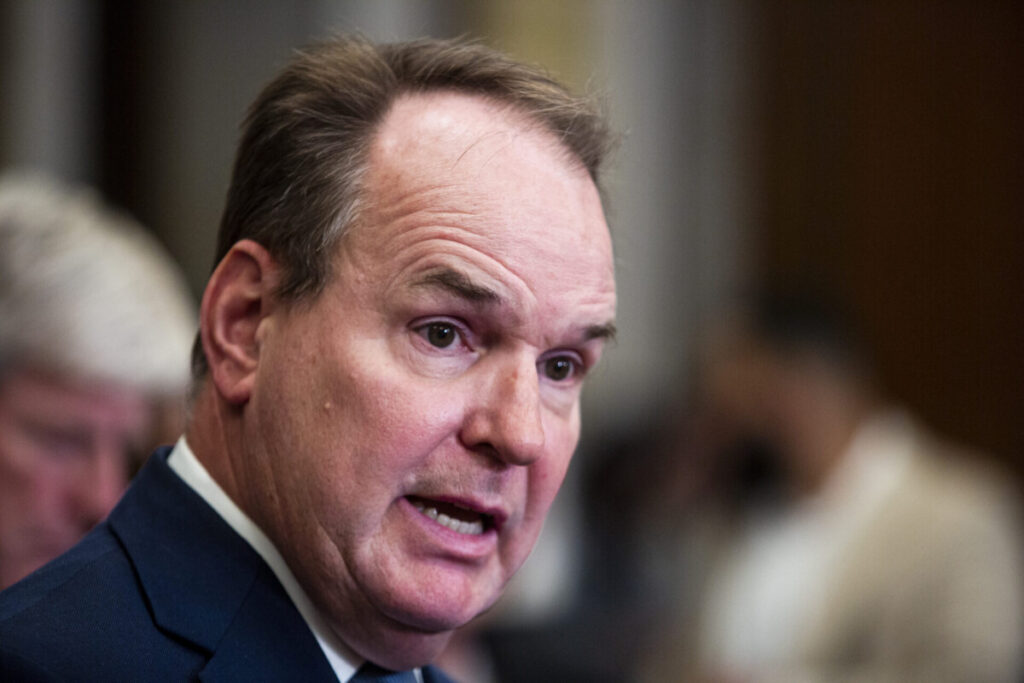 Government House Leader and Transport Minister Steven MacKinnon tabled Bill C-39 on Sept. 21, the aim of which is ‘one project, one review, and one year to decision.’ The Hill Times photograph by Andrew Meade
“If you look at … how do they define what one of these zones is, it says it appears on schedule three [of the Building Canada Act,” Venton noted. “What does that mean? How is that helpful?”
Liberal MP Corey Hogan (Calgary Confederation, Alta.), parliamentary secretary to the natural resources minister, offered some insight in a Sept. 23 interview with CBC Power & Politics host David Cochrane.
Asked about what would be considered a region of national interest, Hogan pointed to areas where mining and port opportunities are in the same region and gave the example of the “linear infrastructure” of power lines running from northern British Columbia to the Yukon.
“The whole point of creating these regions is that you get to have all of those conversations with the people in the regions and say: ‘What’s the cumulative impact we’re willing to entertain? Where does it make sense to build if we are going to build?’” Hogan said, calling the zones a natural extension of municipal and provincial regional planning.
Venton called the zones a “continuation” of the issues with the Building Canada Act, where she said there is also no criteria for what makes a project in the national interest.
That 2025 law is what first created the feds’ Major Projects Office, aimed at streamlining approval and construction for projects of national interest. At the time, First Nations and climate groups warned it could be used to impose projects on them without consent.
Currently, four projects are in the process of receiving national interest designation: an oil pipeline running from Alberta to British Columbia’s coast, an Ontario nuclear waste depot, the Roberts Bank Terminal 2 in the Port of Vancouver, and the Mackenzie Valley Highway.
“A zone could be very large. It could be very small. It could be designated for really any reason that cabinet deems to be relevant, and that is an extraordinarily broad power,” Venton said of Bill C-39’s proposed zones.
C-39 gives cabinet ‘unchecked discretion’ to approve projects: Greenpeace campaigner
Green Party Leader Elizabeth May (Saanich—Gulf Islands, B.C.) criticized the bill for similar reasons, telling reporters on Sept. 23 that no government has “ever” put forth legislation with powers like those floated in Bill C-39.
“We see now the same expansion of power from the executive branch of government—the Prime Minister’s Office and the cabinet—without anything other than political discretion to advise them,” May said.
“There are no fixed criteria, for example, there are no factors that must be considered … to identify a project of national interest, or now, under C-39, to determine a region of national interest.”
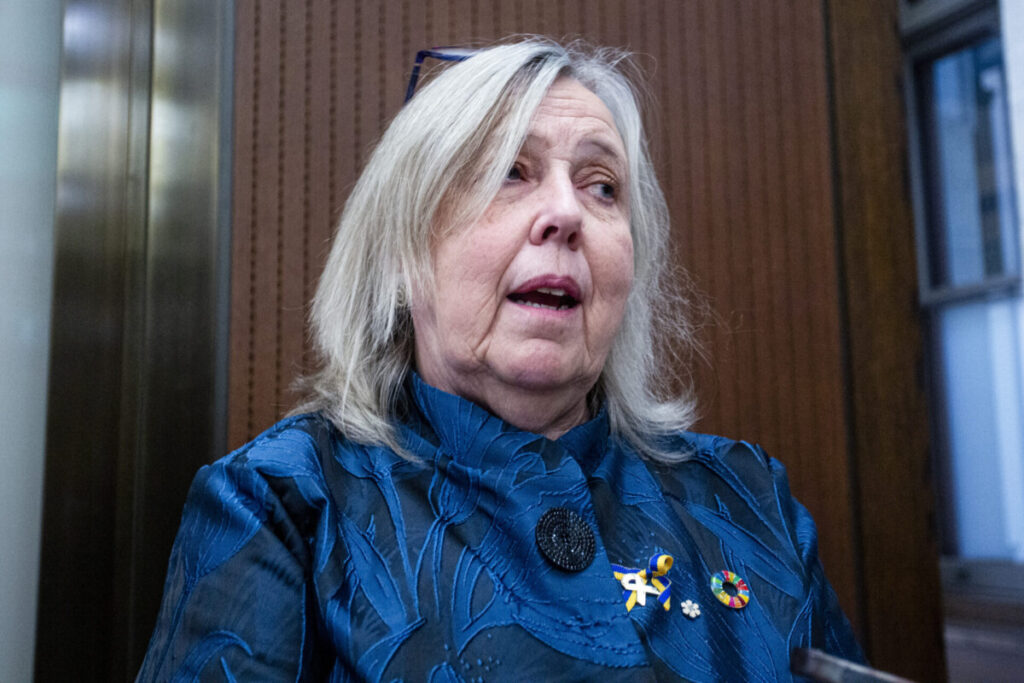 Green Party Leader Elizabeth said there is no ‘fixed criteria’ on what designates something in the national interest. The Hill Times photograph by Andrew Meade
Salomé Sané, Greenpeace Canada’s nature and biodiversity campaigner, echoed that assessment, stressing that the bill’s potential implications are very broad.
“[Bill C-39] would provide pretty much unchecked discretion to the federal cabinet to approve projects—whatever the impacts of these projects might be on nature, climate, or communities—and it also is very much at odds with what people in Canada want,” she said.
Ottawa, however, maintains that Bill C-39 would not mean an erosion of environmental protections or Indigenous rights—pointing to the economic crisis facing Canada in the face of the ongoing trade war with the United States, which Carney, speaking on the sidelines of the United Nations General Assembly, said his government has a “very clear mandate” to tackle.
“A decision delayed is a project denied,” Carney said on Sept. 22, telling reporters that under the previous government, businesses stopped building due to red tape. “If you’re going to say no, decide it within a year.”
 Prime Minister Mark Carney, pictured, said that his government has a ‘very clear mandate’ to tackle the economic threat of U.S. President Donald Trump. The Hill Times photograph by Andrew Meade
The government had intended to table C-39 before Parliament’s summer recess, but pushed it back, extending consultations over the summer in the wake of backlash. The discussion paper on the proposed legislative changes received 21,000 responses, and prompted the feds to ditch one proposal that would have exempted projects from the jeopardy test in the Species at Risk Act—a provision that prohibits a project’s construction if it would kill an at-risk species.
On Sept. 9, the Carney Liberals also changed Canada’s regulatory framework so that select projects—including pipelines, transmission lines, and some oilsands extraction facilities—would only need to be federally reviewed by the Canada Energy Regulator (CER), and not Canada’s Impact Assessment Agency.
Climate groups have warned that this change will mean less comprehensive assessments, saying the CER isn’t equipped to conduct the same level of review.
Bill C-39 proposes similar changes. It would move federal reviews of pipelines, nuclear facilities, and power lines to the CER and the Canadian Nuclear Safety Commission, both of which are under Energy Minister Tim Hodgson’s (Markham—Thornhill, Ont.) jurisdiction. Canada’s Impact Assessment Agency reports to Environment Minister Julie Dabrusin (Toronto—Danforth, Ont.).
 Greenpeace Canada’s Salomé Sané said the government is ‘assuming’ all projects are good, when that is ‘not necessarily’ the case. Handout photograph
Sané called the CER “more friendly to industry,” stressing that environmental laws as assessments exist “for a reason.”
“It’s also this idea of assuming that all projects are good, when, not necessarily. And that’s the whole point of having an assessment,” she said, “you need to ensure that the project is actually good.”
“This is not what people wanted when they put Prime Minister Carney in power. … We all live the realities of the trade war that we’re having with the U.S. and the Trump politics shaking things around the geopolitical world, but at the same time, we need to lean into what makes Canada Canada.”
Current federal review process a ‘nightmare,’ says Sen. Gignac
While Bill C-39 has been slammed by climate groups—and by unions over its changes to the Canada Labour Code—many firms and business associations have praised the move as a step in the right direction for improving Canada’s investment appeal.
In addition to its project regulation changes, C-39 changes some conditions around invoking Sec. 107 of the code to force workers back to their post, requiring the minister to declare that a strike is affecting Canada’s “national interest,” to review a report from a new special mediator, before invoking 107.
Unions have slammed the move as infringing on their right to strike, with the Canadian Union of Public Employees voting unanimously to defy C-39 if it passes unamended.
But Canadian Senators Group Senator Clément Gignac (Kennebec, Que.), an economist and chair of the Senate Banking, Commerce, and the Economy Committee, said told The Hill Times that he likes the bill’s labour code changes and its commitment to one-year reviews.
“Canada has, in the past, [a] particularly bad reputation because you have delay, delay, red tape, and so on,” he said. “From an economist’s point of view, I think that this is a very large positive step in the right direction.”
He also noted that a Senate Transport Communications Committee report recommended modernizing collective bargaining in order to reduce the frequency of work stoppages back in June.
Still, when it comes to review times, Gignac acknowledged that it “depends” on the project if a year will be enough time to complete a review process, but said centralizing review processes to one agency will improve efficiency.
 Senator Clément Gignac said Canada has had a ‘pretty bad reputation’ for red tape. The Hill Times photograph by Andrew Meade
“The intention of the government is there,” he explained, “rather to have one department, for example, give a ratification, wait for another department like environment [to] give another certification, … it will be centralized, and that will help to have more efficiency.”
Get Today’s Headlines Newsletter
Your quick scan of the news you need each weekday to be the smartest person in the room.
By entering your email address you consent to receive email from The Hill Times containing news, analysis, updates and offers. You may unsubscribe at any time. See our privacy policy
“Because right now it’s a nightmare. In some cases, you have different departments at the federal level. You have the provincial government as well.”
When asked about environmental concerns, Gignac said he would wait for the Red Chamber’s study of the bill, encouraging concerned parties to share their thoughts with Senators, adding that if it makes sense to propose amendments, the Upper Chamber will.
He said that it wasn’t the “game plan” of then-prime minister Justin Trudeau’s Liberal government to generate wealth and make Canada competitive—but it is Carney’s, so parliamentarians will have to find the “proper balance” in a “new era.”
“It’s a new leadership. Its priority is simple: … to create wealth and to make Canada stronger and more competitive and less dependent [on the] U.S. and have a more resilient economy. So, that means that we have to make things differently. We have to work differently,” he said.
“That will imply some changes, as well, in terms of how do we include the environment … in a context that Canada wants to increase its sovereignty, be less dependent, and have a stronger economy.”
ewand@hilltimes.com
The Hill Times

Reporter Eleanor Wand closely follows the Bloc Québécois, NDP, Indigenous relations, the environment, and the Senate. She joined The Hill Times in April 2025 after relocating from Montreal, where she began her journalism career covering current affairs and local news for the CBC. Wand has studied at McGill and Concordia Universities, and previously worked for rabble.ca. Contact her at ewand@hilltimes.com. See all stories BY ELEANOR WAND