
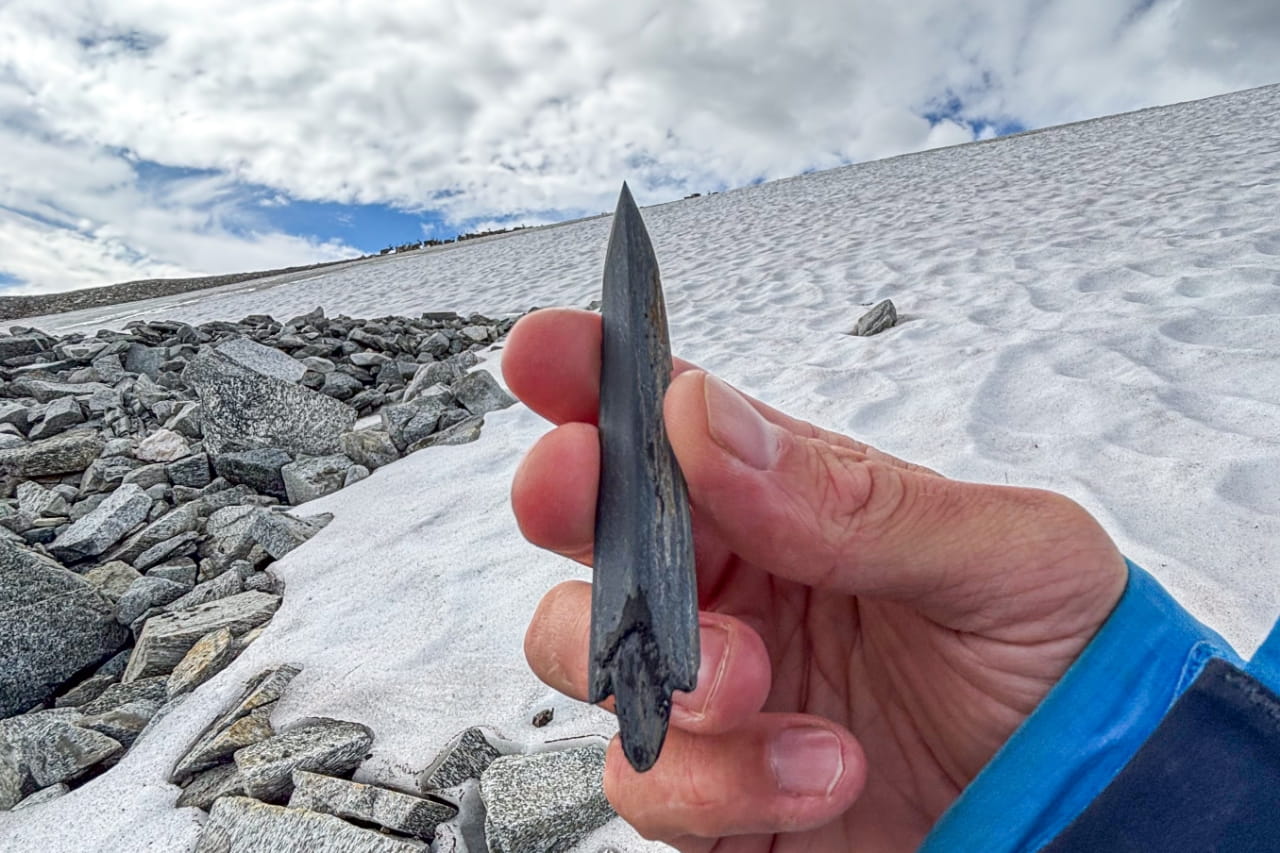
Archaeologists have recovered 48 prehistoric arrows from melting mountain ice in Norway’s Jotunheimen mountains. One of the oldest is a 5,000 to 6,000-year-old arrow with a slate arrowhead, wooden shaft, and traces of prehistoric bindings.
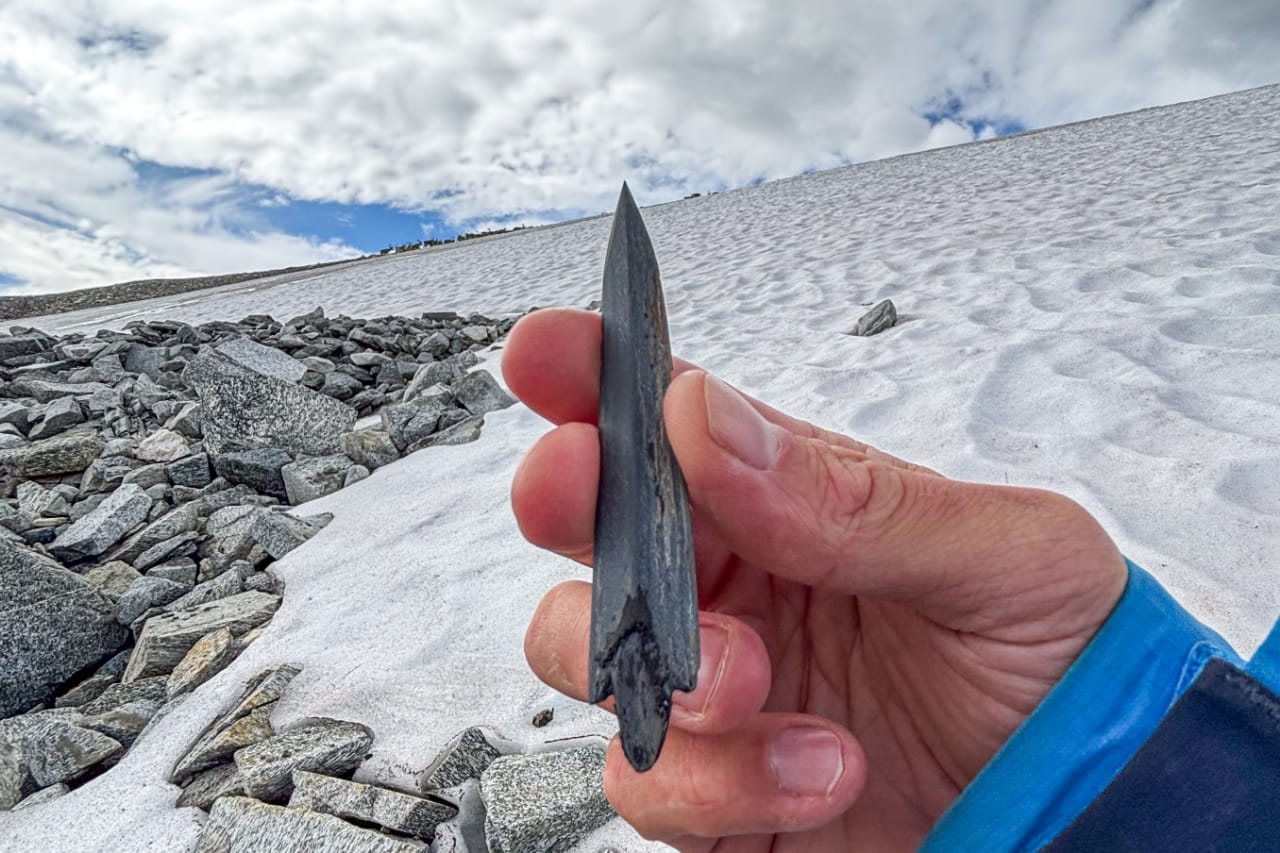 Slate arrowhead, approximately 5,000 years old. The fine slate arrowhead was found with parts of its wooden shaft (next image) at the edge of the ice. Credit: Åsa Rommetveit Celius, Innlandet County Municipality, Secrets of the Ice.
The find comes as researchers report a clear shift in the age of objects emerging from Norway’s melting mountain ice. More artifacts now date to the Stone Age and Bronze Age, while some are more than 2,000 years old.
The new finds come from the Kvitingskjølen mountain area of Jotunheimen. Researchers from the Glacial Archaeology Programme in Innlandet, known as Secrets of the Ice, spent three weeks working at Langfonne, Storfonne, and Handklefonne.
The team found large areas of ice had disappeared. Some places recently covered by ice are now completely exposed. The oldest ice is also producing some of the oldest archaeological finds.
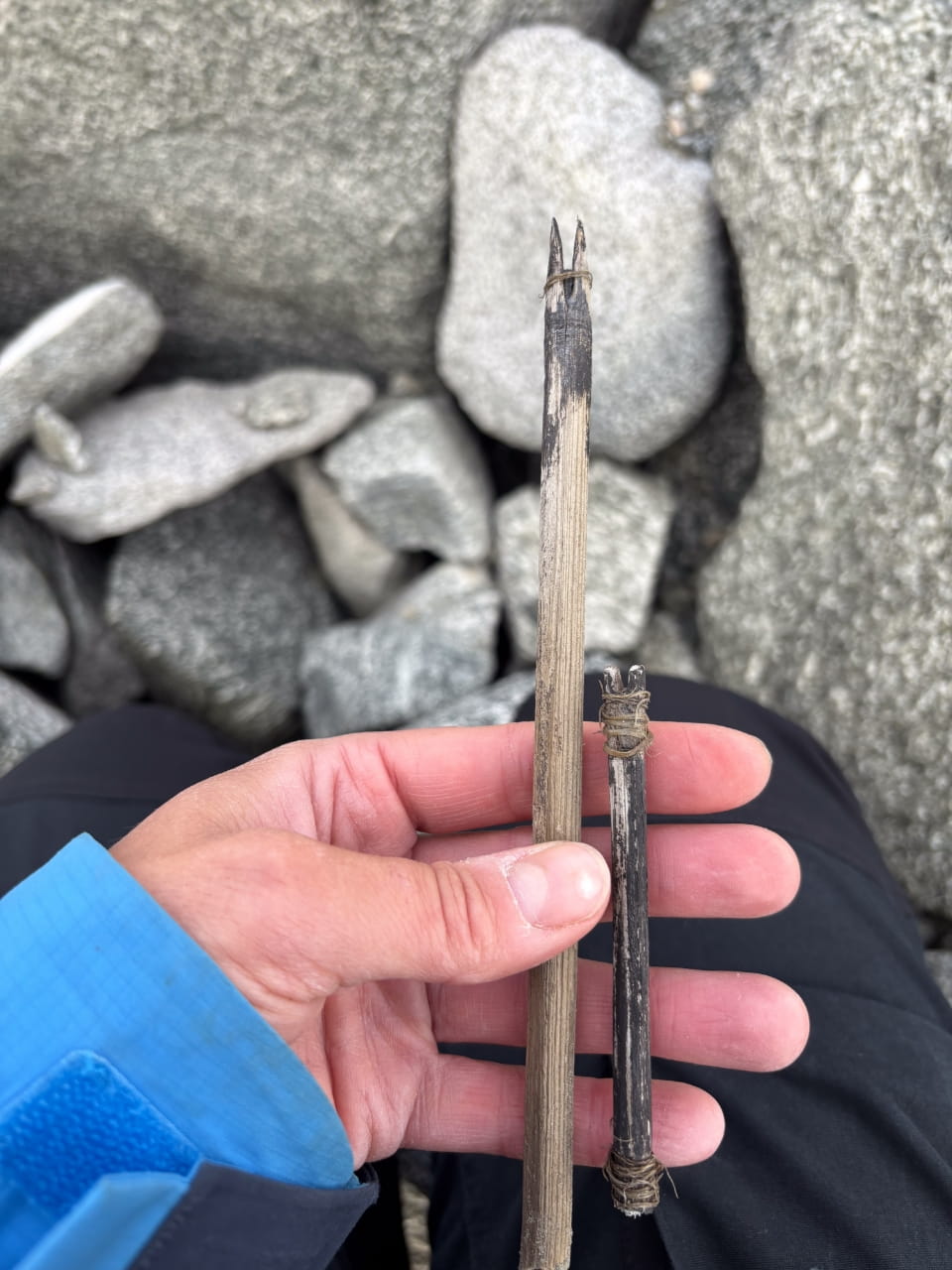 Parts of an arrow shaft. Approx. 5,000 years old. Credit: Åsa Rommetveit Celius, Innlandet County Municipality, Secrets of The Ice.
This pattern differs from the early years of glacial archaeology in Innlandet. When the work began in 2006, most recovered objects were less than 2,000 years old. Viking Age finds were especially common. Objects older than 2,000 years were much less frequent.
Researchers now see far more Stone Age and Bronze Age objects emerging from the ice. The oldest finds from the wider programme date back more than 6,000 years.
The change points to the loss of older ice layers. As these layers melt, ancient objects appear at the surface. Once exposed, organic materials such as wood, hide, sinew, and textiles start to decay.
 Complete arrow with arrowhead and shaft (approx. 1,300 years old), displayed at the find site. Credit: Espen Finstad, Innlandet County Municipality, Secrets of The Ice.
Since 2006, the programme has recorded 73 archaeological sites and recovered more than 5,000 artifacts. The finds include arrows, bows, and other hunting gear linked to ancient reindeer hunting. Archaeologists have also found clothing, shoes, packhorses, and objects from daily life.
Frozen conditions helped preserve these fragile materials for thousands of years. Such preservation gives researchers rare evidence of how people lived, traveled, and hunted in the high mountains.
The 48 arrows recovered this year come during the 20th anniversary of glacial archaeology in Innlandet. Over two decades, researchers have watched the mountain ice retreat and the archaeological record change with it.
The team expects this trend to continue. Based on observations from the past 20 years, ice at many archaeological sites could disappear completely within about two decades.
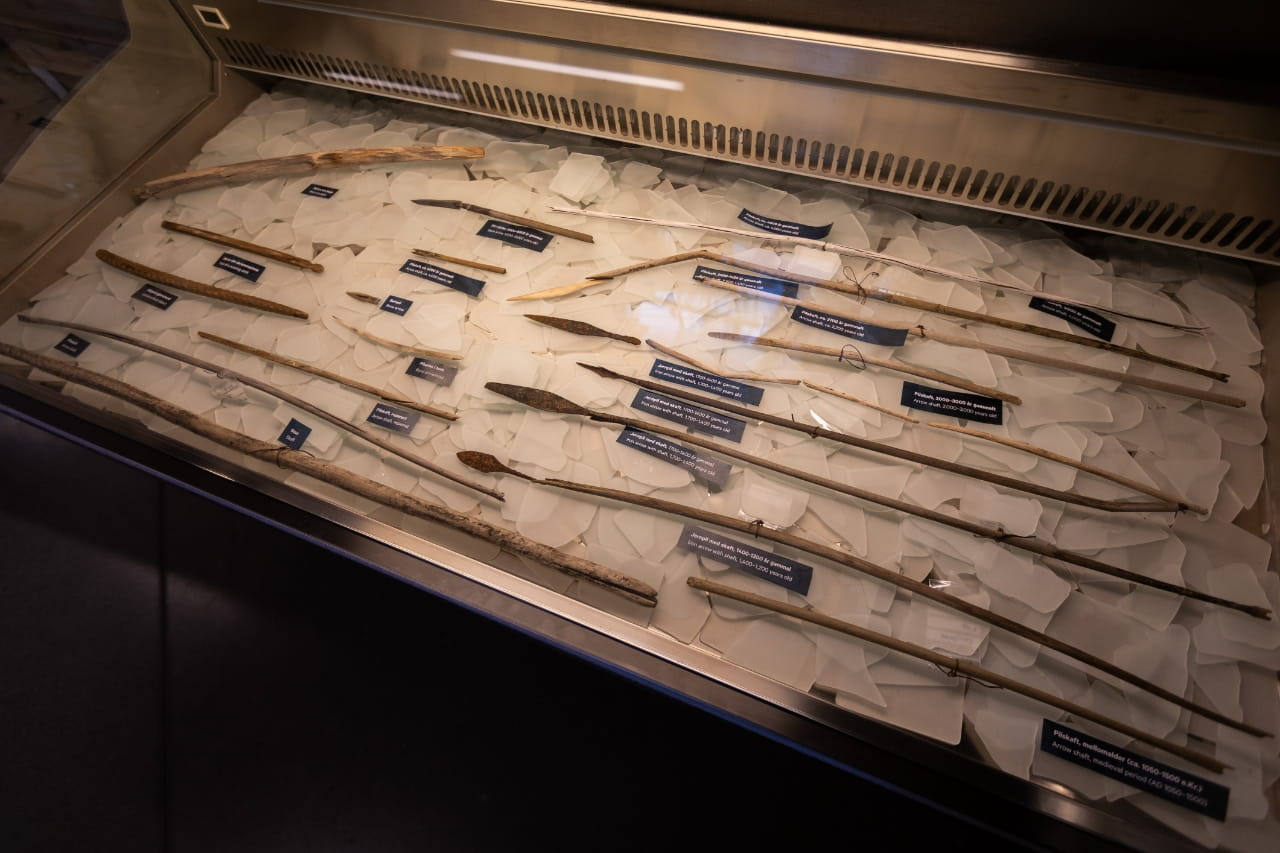 Some of this year’s finds in the “fresh finds display” at the Norwegian Mountain Museum in Lom. Credit: Live Andrea Sulheim, Norwegian Mountain Museum.
The loss creates a limited period for archaeological work. Objects exposed by retreating ice often decay quickly, so researchers need to record and recover them soon after they appear.
The field season is still underway. Researchers are securing and documenting the new finds before preparing them for further study and conservation.
Some of the oldest objects are already being placed in a refrigerated display at the Norwegian Mountain Centre in Lom. Among them is the 5,000 to 6,000-year-old arrow with its slate head and wooden shaft. Visitors are seeing some of these finds only days after archaeologists recovered them from the ice.
More information: Secrets of the Ice