
Iran is becoming increasingly desperate to get the US naval and economic blockade imposed upon it lifted, but is overestimating its bargaining power against the United States and its Gulf allies. The desperation is born out of the increasing impact the blockade is having on Iran’s economy, which is affecting the supply of basic essentials and the fiscal wherewithal to run the government – a situation which is worsening day by day. To increase the pain and pressure, the U.S. government has extended its economic blockade to air traffic, with all external flights now closed down and aircraft even avoiding Iranian airspace due to the risk of sanctions.
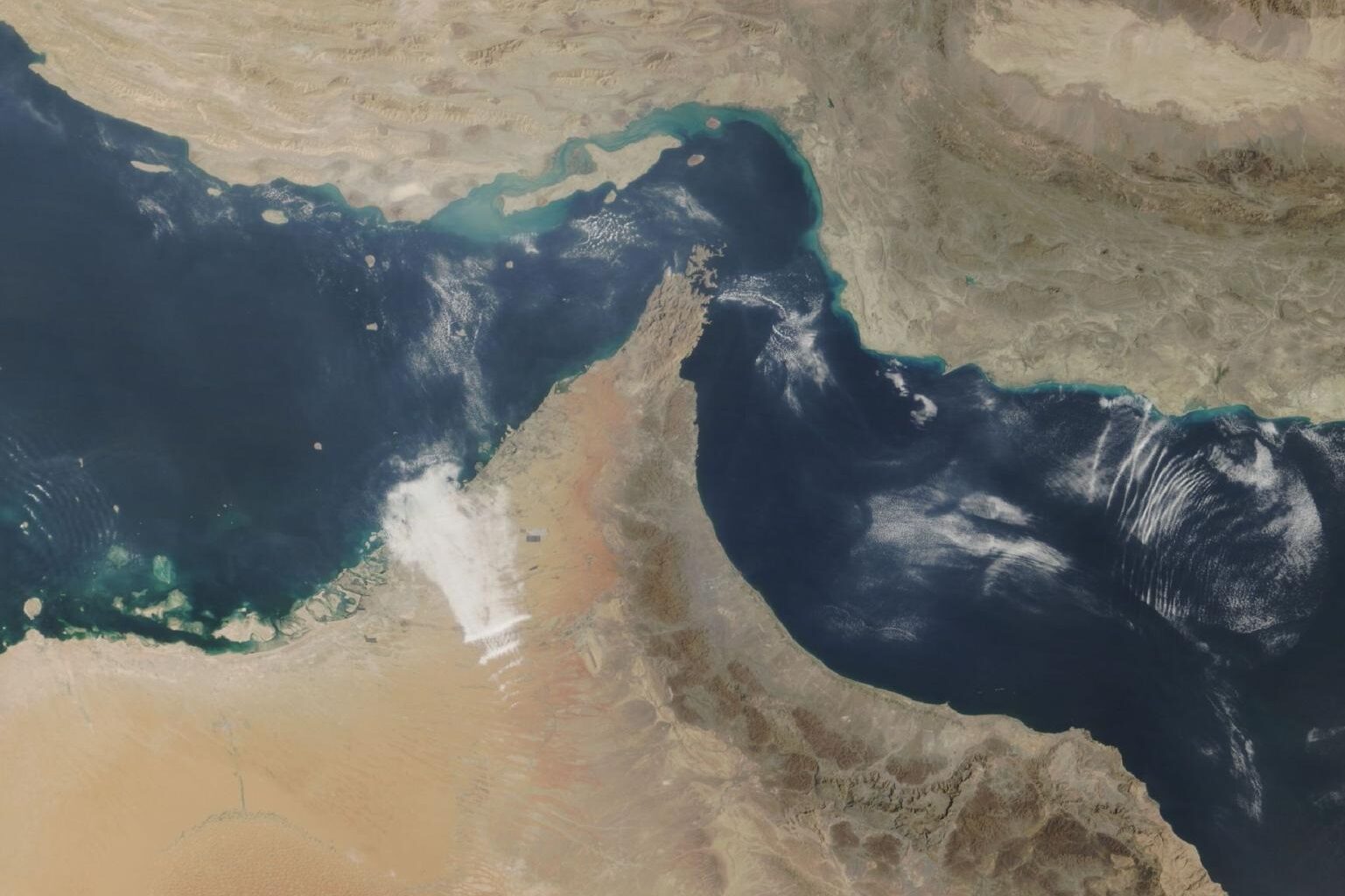
In his address to the UN General Assembly, Iranian President Masoud Pezeshkian echoed what other Iranian politicians have been saying: that the United States needed to accept seven preconditions from Iran before the Strait of Hormuz can be reopened, without appreciating that the United States and its Gulf allies feel no immediate pressure to reopen the Strait. Indeed, the Gulf States explicitly made this clear last week when they flat refused to attend the conference in Salalah, where Iran had intended to win approval for its takeover of control in the Strait on a permanent basis. While the United States might have been prepared to contemplate some form of reopening arrangement with Iran – so as to obtain some relief for domestic diesel prices in the United States before the mid-term elections – the Gulf states see Iranian control of the Strait as a red line, considered critical to national economic survival.
Faced with resistance from the United States and the Gulf states, Iran’s IRGC/Paydari hardliners are now seeking to broaden the threat they pose to the region in a bid to get the blockade lifted. The senior military advisor to the new Supreme Leader, IRGC General Yahya Rahim Safavi, told the Fars News Agency that the conflict will spread beyond the Strait of Hormuz to the Red Sea, and could possibly ‘expand even further, reaching the Indian Ocean’. IRGC spokesman Hossein Mohebbi added that ‘Tehran may expand the Middle East war to the Indian Ocean’. IRGC General Mohsen Rezaei, recently indicted for his role in the 1994 attack on the Jewish Cultural Centre in Buenos Aires, apparently believes Washington has ‘no choice but to accept the seven conditions and Iran’s rights and conditions’.
These aren’t quite empty threats. Notwithstanding the neutralization of the Iranian and IRGC navies, Iran probably still has the capacity to mount nuisance attacks further afield and outside the Gulf, based on its continuing demonstrated ability to smuggle arms out of Iran to the Houthis. But the United States is dominating the electromagnetic spectrum, making it hard for the Iranians to find gaps to move through without themselves being detected.

Stay on Top of the Daily Maritime News
The maritime news
that matters most
Get the latest maritime news delivered to your inbox daily.
The offensive armory that could still pose a threat is Iran’s ballistic missile capability, which appears to have been technically upgraded and has demonstrated a high degree of accuracy, aided by Chinese and Russian satellite imagery intelligence. If the Iranians use this reserved capability, the targets are likely to be in the Gulf states, in order to apply political pressure. But this escalation risks drawing in Israel, activating an offensive response from the Gulf states, and maybe even from the wider military alliances that the Gulf states have been developing since the war began.
The Iranians are in trouble, even if the carefully-curated output of Iranian state media portrays a different image. Behind the scenes, bitter in-fighting will likely be taking place between leaders who want to open meaningful negotiations, led by Foreign Minister Araghchi (who has been threatened with trial as a traitor) and probably President Pezeshkian, versus the IRGC/Paydari hardliners hiding behind the new, as-yet-unseen Supreme Leader.
The opinions expressed herein are the author’s and not necessarily those of The Maritime Executive.