
Facebook
Twitter/X
LinkedIn
Pinterest
Reddit
Email
Print
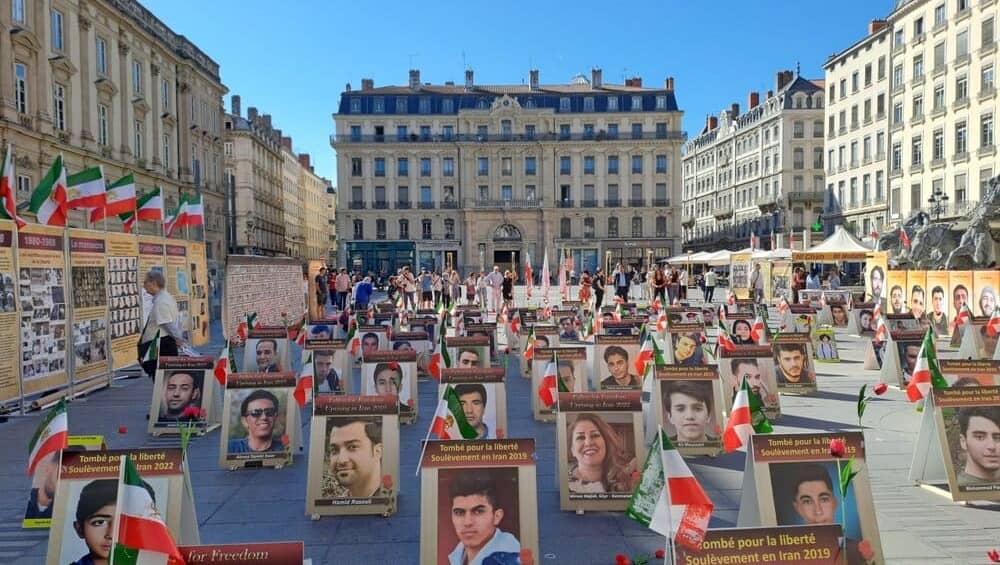
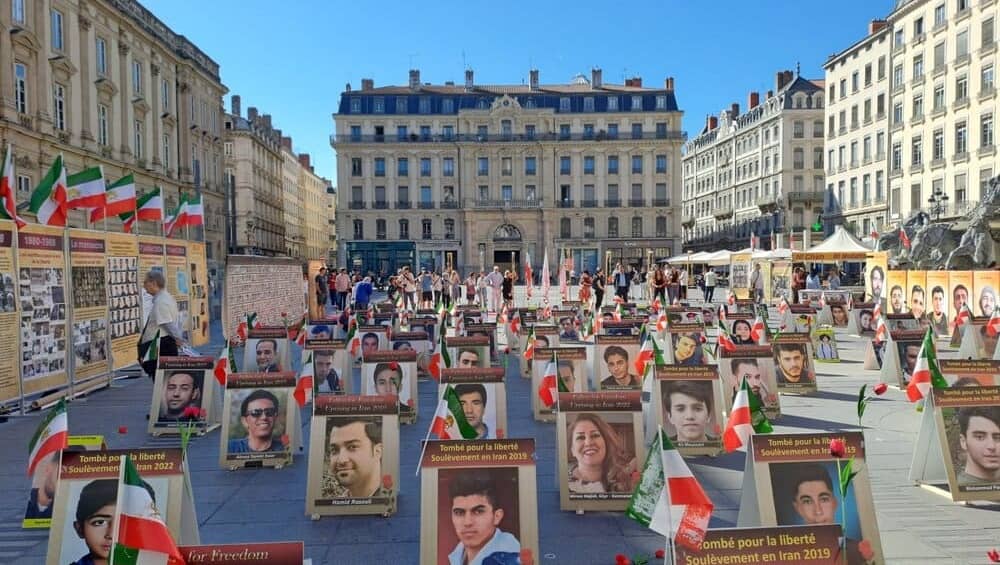 On September 26, 2026, NCRI supporters in Lyon, France, staged a photo exhibition honoring the victims of Iran’s uprisings and political prisoners in front of Lyon City Hall
THIS PAGE WILL BE UPDATED WITH THE LATEST NEWS
UPDATE: 7:30 AM CEST
Iran’s Sweeping Security Alert Puts Domestic Unrest at the Center of Regime Calculations
In late September, Iranian authorities placed the country’s principal military and security forces on maximum alert while deploying tens of thousands of personnel in Tehran and expanding measures ranging from street patrols and phone searches to detention capacity and anti-riot preparations.
Information obtained by the Iranian Resistance and published by the National Council of Resistance of Iran (NCRI) on September 25 indicated that the Army, Islamic Revolutionary Guard Corps (IRGC), Basij, and State Security Force (SSF) had been placed on a 100% alert status, with leaves canceled until midnight on September 27. The alert could be extended or reinstated depending on political developments and social conditions.
The individual measures reveal what the security apparatus is preparing for. The deployment includes 51,000 IRGC, Basij, and SSF personnel in Greater Tehran, concentrations of forces at major and secondary locations, motorized patrols, searches of pedestrians and mobile phones, new detention facilities, reinforcement of plainclothes units, recruitment efforts, new anti-riot equipment, and financial incentives for forces assigned to confront protests.
Safe Shelter Closures Leave Only 5 Shelters for Women Survivors of Violence in Iran
Safe Shelters that provide support to women survivors of violence are disappearing across Iran. At a time when rates of violence against women, femicide, and suicide resulting from domestic violence are on the rise, a new report by Shargh newspaper has revealed the closure of these already limited shelters.
According to the report, of the 15 non-governmental Safe Shelters and six centers that were in the process of being established and operating in Iran in recent years, only five non-governmental Safe Shelters now remain across the country. Most of these centers are also struggling with severe financial and administrative difficulties and face the threat of closure. (Shargh Newspaper, September 17, 2026)
Safe houses or shelters are facilities where women who have experienced domestic violence can temporarily remove themselves from unsafe family environments and make decisions about their future in a secure setting. The closure of these centers, which are already extremely scarce throughout Iran, leaves women with no avenue of escape from violence.
Until 2014, there were essentially no Safe Shelters in Iran. From 2014, when permits were first issued for the establishment of governmental and non-governmental Safe Shelters in Iran, to 2017, 28 such houses were established. Even then, their numbers were extremely limited, and the admission requirements were difficult for vulnerable and homeless women to meet. (Fararu, October 21, 2023) These 28 Safe Shelters operated in 25 provinces, while six provinces did not have a single safe shelter.
Iran Regime’s “Strategic Depth” Under Pressure: How External Expansion Became a Pillar of Survival
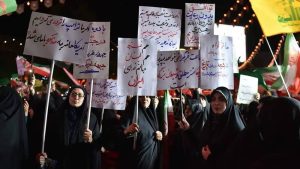
For decades, Iran’s regime has presented its intervention beyond the country’s borders as a matter of national security. From the doctrine of exporting the revolution to the creation of an extensive network of armed proxies, the regime has invested heavily in building what its leaders have described as “strategic depth.”
But that strategy is increasingly facing pressure. The severing of diplomatic relations by Colombia, the designation of the Islamic Revolutionary Guard Corps (IRGC) as a terrorist organization by the Colombian government, restrictions affecting Iranian aviation, and mounting international scrutiny of the regime’s regional activities are not merely separate diplomatic developments.
Taken together, they raise a larger question: what happens to a regime when the external networks it built as instruments of power and survival increasingly become sources of diplomatic, security, and economic vulnerability?
Iran Regime Officials Warn of a “Spark” Becoming a “Flame” as Fear of Popular Anger Grows
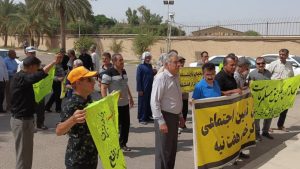
A series of increasingly alarmed warnings from Iran’s security and military officials is exposing the regime’s deep concern about the situation inside the country. Rather than projecting confidence in its ability to control society, senior officials are repeatedly warning that a seemingly minor incident could trigger a much larger confrontation.
The language is striking. Former police commander Esmail Ahmadi-Moghaddam recently warned the regime’s intelligence, Basij, Islamic Revolutionary Guard Corps (IRGC), and police forces to remain vigilant because adversaries could turn “every spark” into a “flame” and set parts of the country alight. He also stressed that officials, politicians, and media figures must avoid sending any signal of weakness or internal disagreement.
The warning points to a central vulnerability for the regime: its ability to maintain control increasingly depends not only on repression, but also on preventing the population from seeing divisions or weakness within the ruling establishment.
Ahmadi-Moghaddam described the current period as exceptionally sensitive and called for political, economic, and social measures to help the regime navigate it.
Iran: Alireza Sepahi at Risk of Execution after Retrial Request Rejected

Alireza Sepahi was born in 2001–02 in Isfahan. He was the cousin of Abolfazl Sepahi Badjani, who was executed on 28 July 2026. According to the information supplied, the two men were also related by marriage and met family members before their scheduled executions. Independent information about Alireza’s occupation, education and marital status is unavailable.
Alireza Sepahi was arrested in Isfahan after the protests of 8 January 2026; the exact date is unknown. Reports allege that officers shot him in the leg at arrest and that he and other defendants were tortured during interrogation. He had court-appointed counsel at first instance and, according to the information supplied, lacked independent counsel and full access to the case file through his lawyers.
The authorities announced that four members of the Basij were killed during events in Alikhani Square. They charged Alireza with moharebeh (enmity against God) in a case connected to those events. The available information does not establish the evidence attributing the killings to him personally. According to the reports supplied, he received four death sentences. On 5 July 2026, the Supreme Court upheld the death sentences of 12 defendants in the case.
He was reportedly scheduled for execution at dawn on 28 July 2026 alongside Abolfazl Sepahi Badjani and Amirhossein Safari Hosseinabadi, but was taken to hospital after a medical event described as a stroke. He returned to Dastgerd Prison two days later; the other two men were executed that day. On 2 September, his lawyer Shahrzad Shahbazi said that Branch 39 of the Supreme Court had authorised a retrial, but an equivalent branch of the Isfahan Revolutionary Court rejected the request without holding a hearing or hearing the defence, and returned the case to the enforcement office.
Iranian Officials Differ Over Hormuz Deal Terms as Trump Rejects Tehran’s Proposal
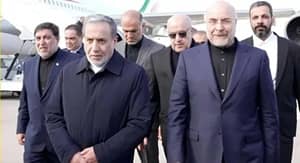
Pezeshkian and Araghchi signaled room for a negotiated settlement in New York, while other Iranian officials rejected concessions on uranium enrichment and set broader conditions for reopening the Strait of Hormuz.
A reported rejection by U.S. President Donald Trump of Iran’s seven-day proposal to reopen the Strait of Hormuz has stalled a diplomatic push launched in New York, as President Masoud Pezeshkian and Foreign Minister Abbas Araghchi signaled room for a negotiated settlement while other Iranian officials publicly set tougher terms on uranium enrichment and the conditions for reopening the strategic waterway.
Iran’s proposal was put forward while President Masoud Pezeshkian and Foreign Minister Abbas Araghchi were attending the United Nations General Assembly. According to reports published in Iran, indirect talks mediated by Qatar took place in New York.
Lyon Photo Exhibition Raises Awareness of Executions and Human Rights Violations in Iran
Lyon, France – September 26, 2026: A photo exhibition honoring the victims of Iran’s uprisings and political prisoners was held in front of Lyon City Hall by the Committee in Support of Human Rights in Iran ( CSDHI ) and supporters of the Iranian Resistance.
Many people from Lyon visited the exhibition and expressed their hope that such an initiative could be organized on a monthly basis. Through a timeline documenting executions in Iran, the exhibition presented a poignant picture of the repression taking place across the country.
The exhibition also highlighted the courageous resistance of Iranian women and young people in the face of repression and drew attention to the ongoing struggle for human rights and freedom in Iran.
Berlin Sit-In on Day 211 Calls for End to Executions in Iran, Commemorates September 27, 1981 Uprising
Berlin, Germany — September 26, 2026: Supporters of the People’s Mojahedin Organization of Iran (PMOI/MEK) have continued their sit-in protest outside the Iranian regime’s embassy in Berlin for the 211th consecutive day. The demonstrators commemorated the September 27, 1981, uprising, which was marked by a confrontation between PMOI fighters and the clerical regime in Tehran.
The protesters called for the closure of the embassy, as a center of espionage and terrorism operated by the Iranian regime in Germany. They are also demanding accountability for the regime’s systematic repression, human rights violations, and continuing executions in Iran.
Stockholm Rally Condemns Executions in Iran and Commemorates September 27, 1981 Uprising
Stockholm, Sweden – September 26, 2026: Supporters of the People’s Mojahedin Organization of Iran (PMOI/MEK) held a rally outside Sweden’s Ministry for Foreign Affairs, condemning the execution of political prisoners and protesters by Iran’s ruling regime and calling for an end to the death penalty. The demonstrators also commemorated the September 27, 1981, uprising, which was marked by a confrontation between PMOI fighters and the clerical regime in Tehran.
The demonstrators honored PMOI members who were killed for their political activities and called on the Swedish government to take decisive action against the Iranian regime over executions. Their demands included the closure of the Iranian regime’s embassy in Stockholm, as a hub for espionage and terrorism, as well as the immediate and unconditional release of all political prisoners in Iran.