
Plenty to criticize
There is plenty to criticize in Israeli policy. Some of that criticism comes from governments, Jewish communities, scholars, journalists, and civil-society actors who accept Israel’s right to exist as the nation-state of the Jewish people, recognize its right to defend itself, and genuinely want Israel to succeed.
They may strongly oppose aspects of Israel’s conduct in Gaza or the West Bank, the absence of a credible political strategy toward the Palestinians, or policies advanced by members of the current government. Such criticism may be painful, unfair in parts, or factually mistaken. But it is not inherently hostile to Israel.
Alongside it, however, is something fundamentally different.
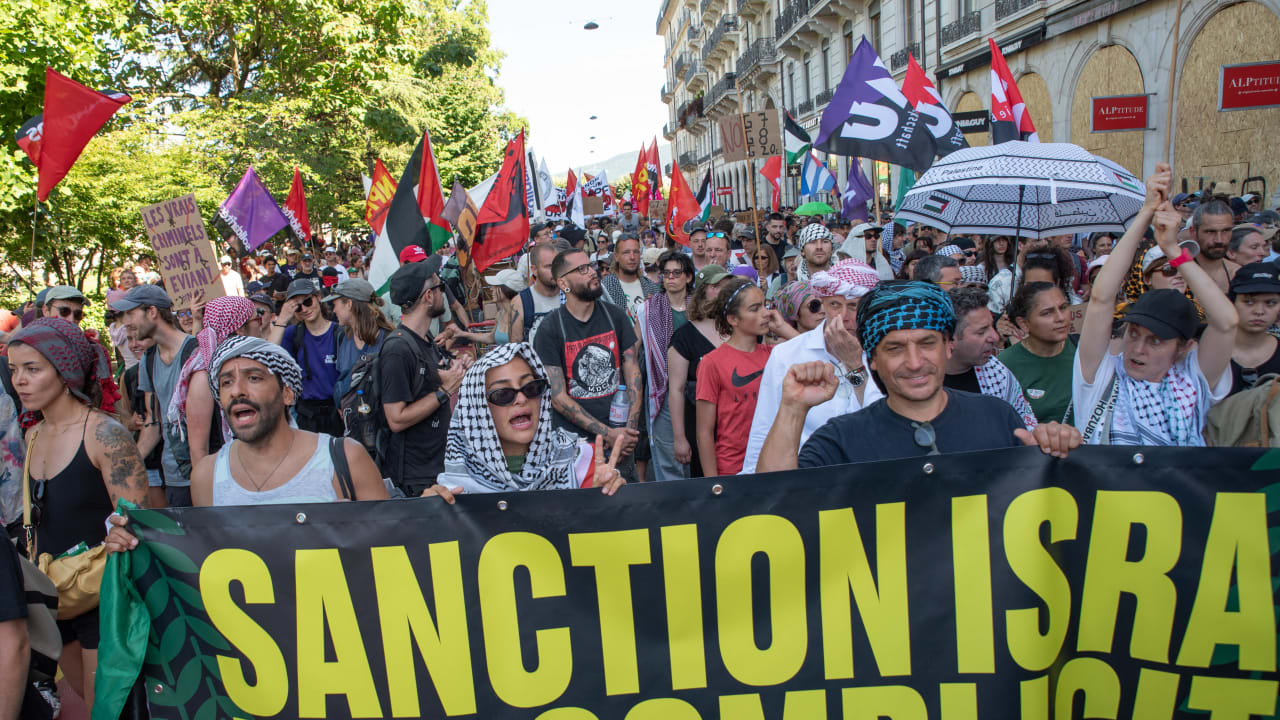
There are actors for whom criticism of Israeli policy is not the objective but the instrument. They reject Jewish national self-determination and, with it, Israel’s continued existence as the nation-state of the Jewish people. Any political settlement that preserves that character of Israel is therefore unacceptable to them. For these actors, the ultimate issue is not borders, settlements or Gaza, but the nature and legitimacy of Israel itself.
This camp has been remarkably successful in injecting concepts such as genocide, apartheid, and colonialism into mainstream discourse on Israel, presenting them as the conclusions of legal and analytical inquiry while masking the political agenda they serve.
More broadly, sweeping accusations are repeated as established facts, context is often stripped away, and the history of the conflict is reduced to a simple morality tale of a powerful oppressor and a powerless victim.
This has consequences far beyond Israel’s image.
If Israel is understood not as a country that has committed serious mistakes or even wrongful acts, but as a genocidal or inherently criminal state, compromise with it becomes morally suspect. That weakens Palestinians who might support a negotiated settlement. It is difficult to persuade a public to accept compromise with a country it has been told is comparable to the worst regimes in history. In this sense, maximalist anti-Israel narratives do not advance peace. They make the political space for compromise narrower on both sides.
Touching on hostility
The effect inside Israel is equally damaging.
The trauma of the Hamas-led massacres in Israel on October 7, 2023, produced a profound sense of existential insecurity. Israelis then saw Hamas’s massacres minimized or rationalized abroad, calls for Israel’s elimination presented as political activism, and a sharp rise in hostility and antisemitism. Against that background, many Israelis have concluded that the distinction between criticism and hostility is meaningless: that the world is against Israel, that criticism is merely a respectable cover for antisemitism, and that nothing Israel does will change the verdict.
That conclusion is understandable. It is also dangerous.
Once criticism itself is treated as evidence of hostility, legitimate criticism becomes easy to dismiss. Criticism of civilian harm, humanitarian policy, settlement expansion, settler violence, failures of law enforcement, or inflammatory rhetoric can be waved away as part of the same campaign that denies Israel’s right to exist.
Israel’s current government has often reinforced this tendency. For politicians advancing extreme policies, the claim that “the whole world is against us anyway” is politically useful: if all criticism is antisemitic or irredeemably biased, there is no need to ask whether any policy should change. If Israel is condemned whatever it does, restraint becomes pointless.
This creates a destructive feedback loop.
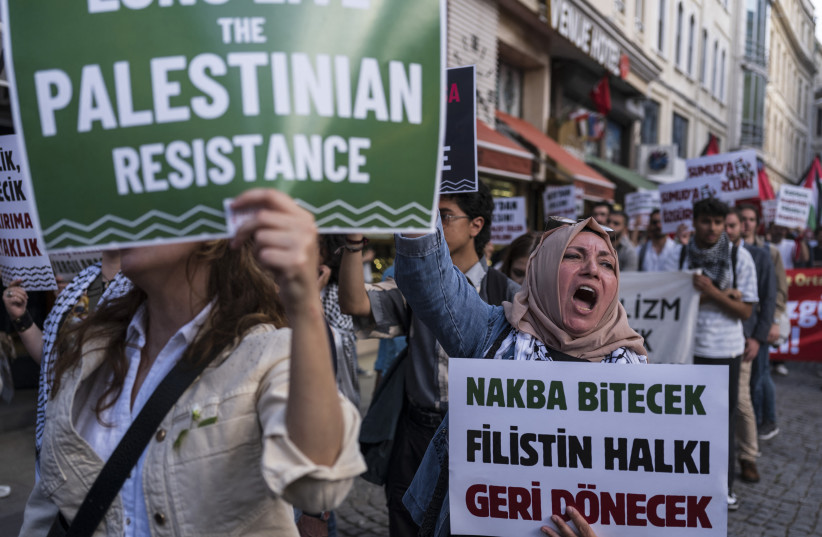 Protesters in Turkey. Those who see themselves as Israel’s legitimate critics must also be willing to criticize Hamas, Palestinian rejection of compromise, and terrorist attacks on Israeli civilians with comparable clarity. (credit: TOLGA SEZGIN/MIDDLE EAST IMAGES/AFP VIA GETTY IMAGES)
The more extreme anti-Israel voices dominate international discourse, the more Israelis distrust all external criticism. The more Israeli leaders dismiss all criticism as hostility, the less influence serious foreign critics have. Frustrated by their inability to affect Israeli policy, some of those critics adopt increasingly sweeping language – which in turn confirms the Israeli belief that none of the criticism was ever serious or fair.
Both sides then lose influence to their extremes.
Breaking the cycle
Breaking this cycle requires a change in Israel, but not only in Israel.
Israel must become far more disciplined in distinguishing between different kinds of criticism. It should confront actors who seek its elimination, expose factual distortions, and challenge the misuse of legal and historical terminology. But it should not use such campaigns as an excuse to ignore substantive criticism from those who accept Israel’s legitimacy.
Serious allegations should be investigated. Indefensible policies should be changed, and the law effectively enforced against violence by Israelis against Palestinians. When criticism is inaccurate, Israel needs to answer it with evidence, legal argument, and credible facts – not merely with accusations of bias.
But those who see themselves as Israel’s legitimate critics also bear responsibility.
If they want to influence Israeli society, it is not enough to criticize Israel accurately and forcefully. They must also be willing to criticize Hamas, Palestinian rejection of compromise, and attacks on Israeli civilians with comparable clarity. They should challenge campaigns that erase the October 7 atrocities, deny Jewish historical and national connection to the land, treat Zionism itself as racism, or turn “decolonization” into a euphemism for the disappearance of Israel.
Most importantly, they should contest falsehoods and distortions even when those distortions are politically useful to a cause they sympathize with.
This is not a demand for “balance” in the sense of pretending that every side is equally right or wrong. It is a demand for intellectual and moral consistency. Criticism gains credibility when the critic is committed to facts and principles rather than to a predetermined verdict against one side.
That credibility matters because Israelis are more likely to listen to critics who not only recognize the threats they face and the legitimacy of their national existence, but are also willing to say so clearly – including by condemning the eliminationist agendas of some of Israel’s opponents and challenging its most extreme detractors. Such critics may still be disagreed with – but they are much harder to dismiss.
Israel’s friends should criticize it when criticism is warranted. Israel should listen when that criticism is serious. But Israel’s friends should also say clearly when criticism crosses the line into delegitimization, distortion, or rejection of Israel’s right to exist.
That is not a favor to Israel. It is a condition for having influence inside Israel – and for preserving any realistic possibility of persuading Israelis and Palestinians that compromise is preferable to permanent war.■
Col. (res.) Adv. Pnina Sharvit Baruch is a senior research fellow at the Institute for National Security Studies and chair of Forum Dvorah – Women in Foreign Policy and National Security.