

Listen to this article
Estimated 3 minutes
The audio version of this article is generated by AI-based technology. Mispronunciations can occur. We are working with our partners to continually review and improve the results.
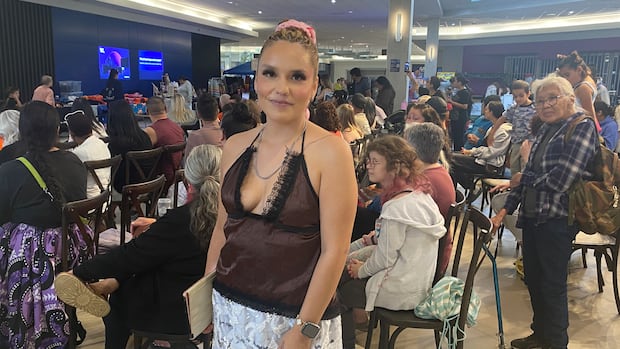
Most people commemorate Orange Shirt Day by wearing orange shirts. Saskatoon’s Crystal Kaye wanted to do even more with fashion, so she helped organize a runway show.
The show was part of a larger event organized by Pihtikwe Market, a group that supports Indigenous commerce. Tenielle Bird and Naomi Baker were also organizers.
“We connect the shows with our culture to entwine and honour our ancestors that have been in residential schools, who have been in part of the Sixties Scoop, as well as foster care survivors.”
Kaye, who is from White Bear First Nations in Treaty 4, said she spent about three months working long hours to help organize the Mâmawapowin – Kâhkithaw Awâsisak Kîspin Kîyânaw, or Every Child Matters, Gathering, which took place on Saturday at Confederation Mall in Saskatoon.
“What I want to take away from this is knowing that our ancestors are up there and they’re seeing us honor them and they’re knowing that this event is for them,” Kaye said.
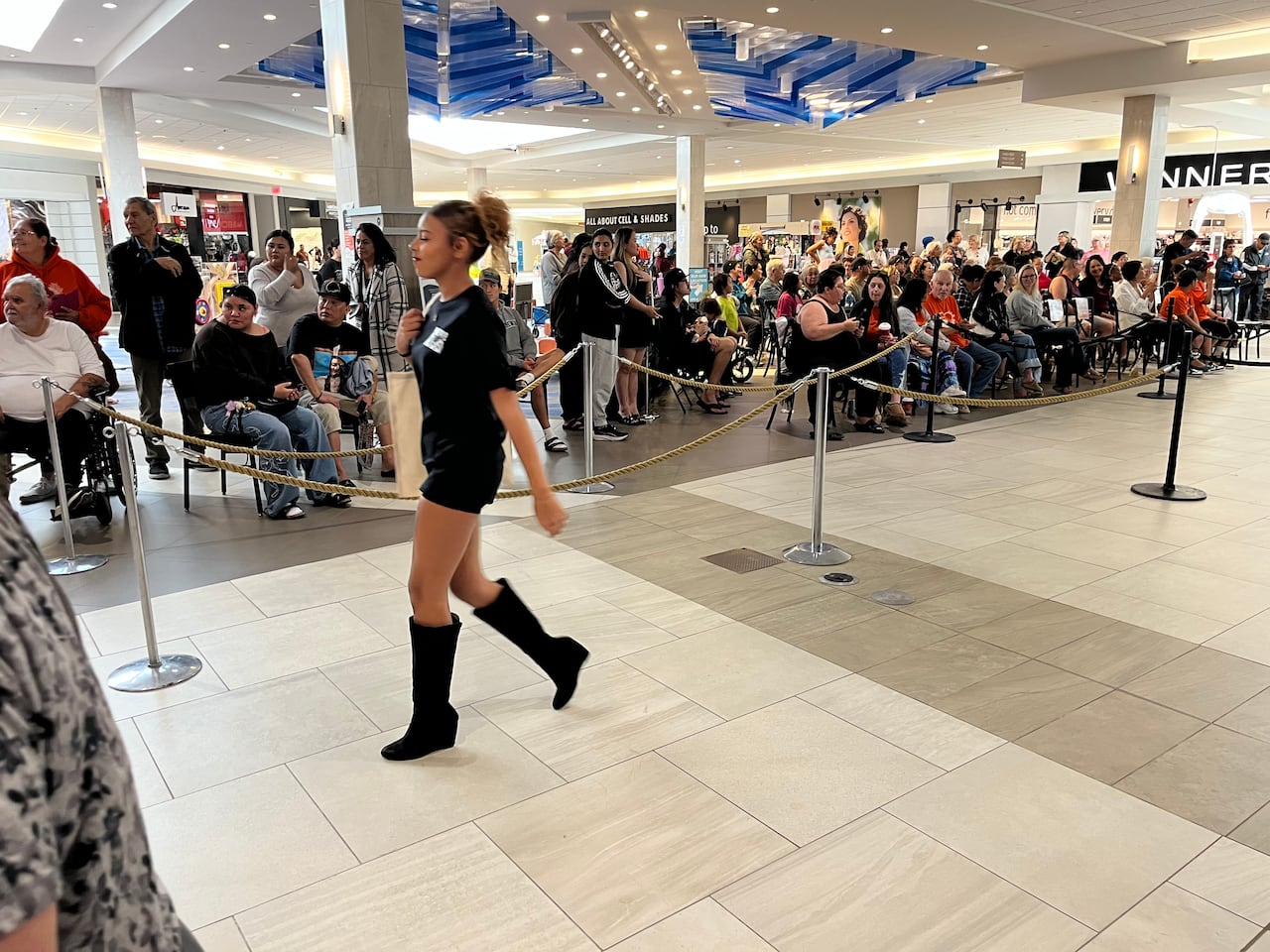 A woman walks down Confederation Mall’s temporary runway. (Maeve Ellis/CBC)
Kaye says she spent the first 13 years of her life in an abusive foster care home and wants to help extend opportunities to young people.
“I make these shows show the youth that there’s a light at the end of the tunnel and that when you have a passion and you keep at it, it comes to life,” she says.
The show had about 50 models who trained for over a month and about 150 spectators. There were also 26 vendors present.
“They get contacted through email and as soon as they’re accepted, they get super excited,” says Kaye.
National Day for Truth and Reconciliation, another name for Orange Shirt Day, is on Wednesday, Sept. 30.
Sara Carriere-Burns, a designer from the James Smith Cree Nation, says her designs were for honouring people’s experiences.
The theme of her designs, which focused on ribbon skirts, was the concept of coming home.
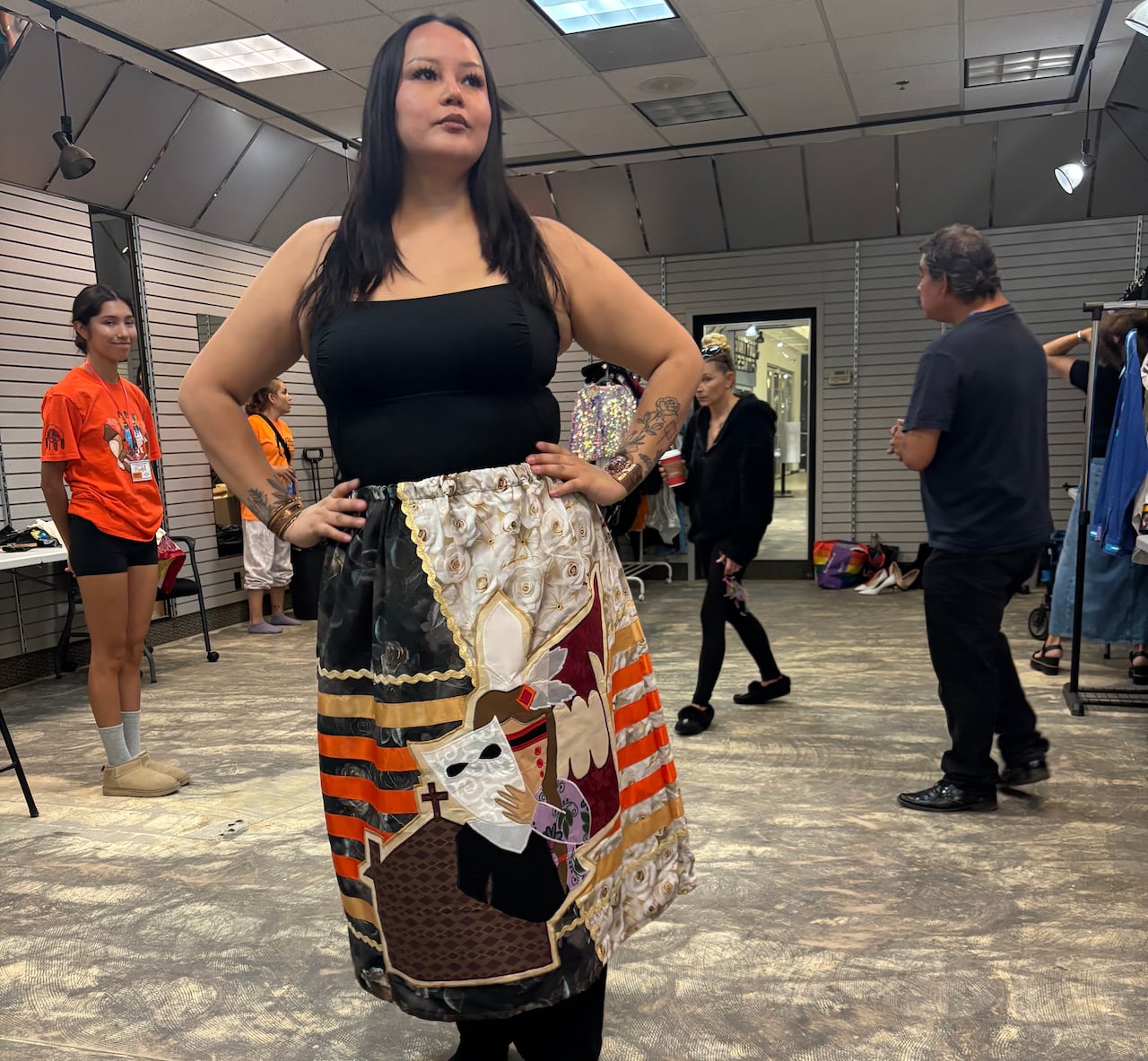 A model wears a design by Sara Carriere-Burns which she calls ‘Embracing who I am.’ (Submitted by Sara Carriere-Burns)
“Through my designs I’m able to bring awareness to Every Child Matters and residential schools, bring honour to those that survived it and that are here with us today, to remember those that weren’t able to come home,” she told CBC.
She says fashion is important for reconciliation.
“We’re very affected by residential schools and it’s just a good way to bring awareness, and so I participate and offer designs that can help with that,” she said.
Tenielle Bird, who is from the George Gordon First Nation but has always lived in Saskatoon, was one of the designers, and also helped with the fashion show and organized the vendors through her organization Pihtikwe Market.
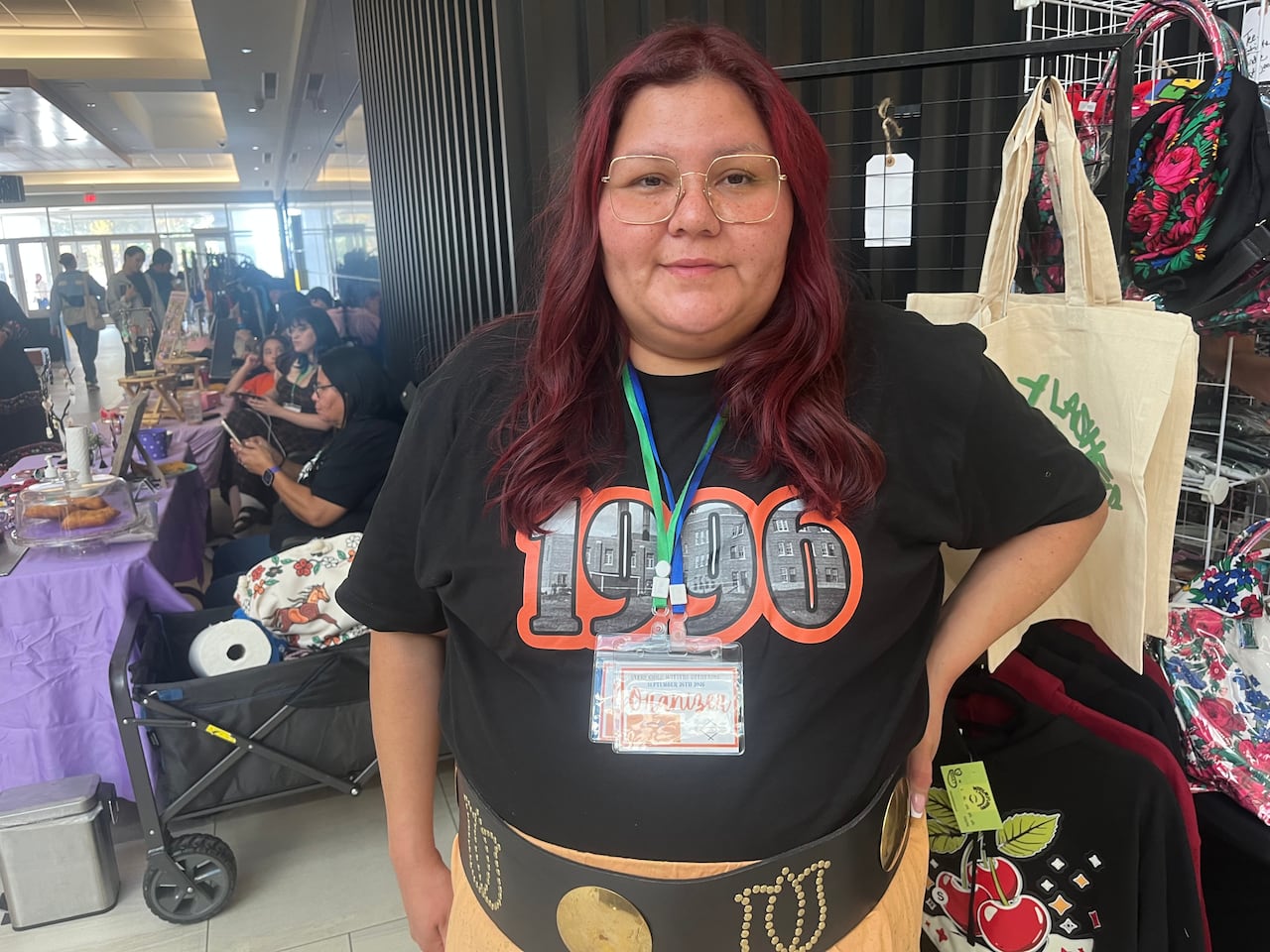 Tenielle Bird says she was happy after seeing the number of people who came. (Maeve Ellis/CBC)
She said this is her biggest event yet.
“It gives a positive perspective on intergenerational trauma and it’s also healing for people,” she told CBC.
She also brought her son in to volunteer and that the community aspect is a benefit.
“It’s like an intergenerational healing.”
A national 24-hour Indian Residential School Crisis Line is available at 1-866-925-4419 for emotional and crisis referral services for survivors and those affected.
Mental health counselling and crisis support are also available 24 hours a day, seven days a week through the Hope for Wellness hotline at 1-855-242-3310 or by online chat.