
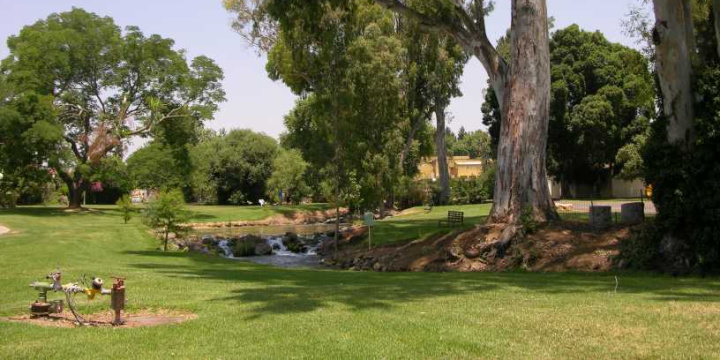
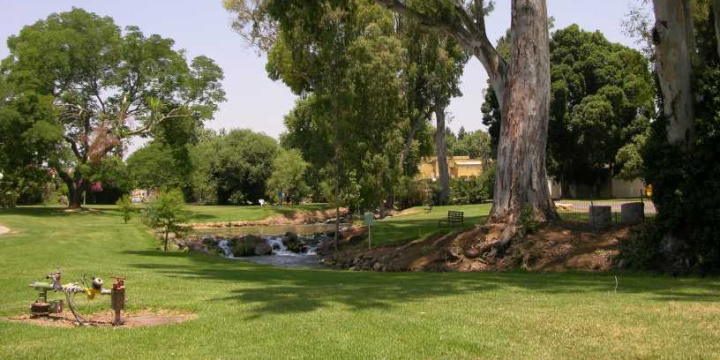
Kibbutz Dafna. Photo: Wiki Commons.
There are places in Israel where the reality of living under threat is impossible to ignore. And yet, despite everything around them, people carry on, choosing to live fully and unapologetically.
I recently traveled north to Kibbutz Dafna, just kilometers from Lebanon, with Lt. Col. (Res.) Eyal Dror, whom I first met during a geopolitical briefing near the Syrian border.
Over the years, I have come to know Eyal, who was the commander of the IDF’s Operation Good Neighbor, which had saved hundreds of thousands of Syrians during the Syrian civil war. This time, I had the privilege of seeing the place he calls home.
What I encountered was not simply resilience. It was life lived to the fullest.
I woke up to coffee overlooking the mountains, breathing in the crisp northern air and listening to the music of chirping birds. The landscape was lush and green, almost surreal when you remember that just a couple of kilometers away is Lebanon, where Hezbollah has spent years embedding terror infrastructure among civilian communities and targeting Israelis across the border.
And yet here I was, drinking my coffee in peace.
That, in many ways, is Israel.
Kibbutz Dafna immediately felt less like a place I was visiting and more like a family I had somehow joined. There is an extraordinary warmth in Israeli communities. People welcome you, feed you, introduce you to others, and quickly make you feel at home. Israelis disagree passionately, of course, but then, which family doesn’t?
Perhaps that is what makes Israel so special. The entire country often feels like one enormous family. There are arguments, differences, and plenty of strong opinions, but underneath it all is a remarkable sense of belonging and connection.
Eyal took me through the heart of the kibbutz, where I saw community centers and spaces designed to bring generations together. There are libraries, shops, and even a culinary center where people learn to prepare traditional home-cooked food from the Upper Galilee.
We walked through the sports complex and saw plans for activities that will bring children, teenagers, and older residents together.
Then I felt a strong sense of peace and calm wash over me as I walked beside the Peleg Tal stream and took in the magical surroundings. The stream flows from the Dan River, coming down from Mount Hermon. Birds were singing, water was rushing over the rocks, and for a few moments, the only sound filling my ears was nature itself.
Dafna is beautiful. Its homes, both modern and older, each have their own character. I was actually surprised by how spacious many of the kibbutz houses were. This is not communal living in the sense that everyone gives up their privacy. Rather, it is a community where people choose to live alongside one another and invest in each other.
It felt like the kind of place where families could grow up together. In the town square, with its cosy café and a few restaurants, young mothers chatted while their babies rested in strollers beside them. Nearby, young adults gathered over coffee and babka during a short break from the army. For a moment, it felt almost like a small-town Gilmore Girls scene.
Who would have thought? A northern Israeli town, facing relentless attacks from some of the most dangerous terrorists in the region, giving off such a warm, small-town feeling.
But perhaps that is precisely the point.
These communities refuse to allow conflict to define them. They are defined by their people, their homes, their land, and their love of life.
One of the things that inspired me most was the community garden. Here, young and old work the land together. They plant seeds and trees, get their hands dirty, grow vegetables, and harvest what they have cultivated. On Shabbat, generations gather together and eat the fruits of their labour.
There is even a protected shelter next to the barbecue area.
A shelter beside the place where people gather to eat, talk, and celebrate.
That single image says so much about life in Israel.
Because this is their reality. They plant knowing that they may have to run for shelter. They build knowing that threats may lurk around the corner. They raise children knowing that the border is close.
And still, they plant.
Later, we traveled to Misgav Am, overlooking the Lebanese border. The atmosphere there was different. I could hear the distant sound of IDF operations, including explosions as Hezbollah terror infrastructure was being destroyed.
I met a community leader who told me about life since Oct. 8, 2023. Many residents are still living elsewhere in Israel, dispersed from their homes and waiting for the security situation to allow them to return. I hope they can return soon.
Standing there, only a few meters from the Lebanese town of Odaisseh, the contrast was impossible to miss. On the Israeli side, there were gardens, homes, children, families, and a community determined to rebuild and flourish. Across the border, for years, terror infrastructure has been built with the capacity to send rockets and destruction towards these very communities.
And yet, looking east towards the Golan Heights and taking in the overall atmosphere of the Upper Galilee region, I found myself filled not with fear, but with awe: awe at the beauty of the land and at the people who have chosen to put down roots here.
This, to me, is Zionism at its most tangible. It is a people deeply rooted in their ancestral land, choosing to build, cultivate, raise strong children and pass on a love of the land to the next generation. The Torah gives us a simple instruction: “Choose life.”
Standing on Israel’s northern border, those words took on a real meaning.
Choosing life does not mean pretending the threats do not exist. It means knowing they exist, protecting yourself against them, and still choosing to plant the tree, build the home, gather around the table, raise the next generation, and drink coffee while looking at the mountains.
That is the resilience I witnessed in Kibbutz Dafna.
Not simply surviving.
Choosing to live.
Paushali Lass is an Indian-German intercultural and geopolitical consultant, who focuses on building bridges between Israel, India, and Germany.