
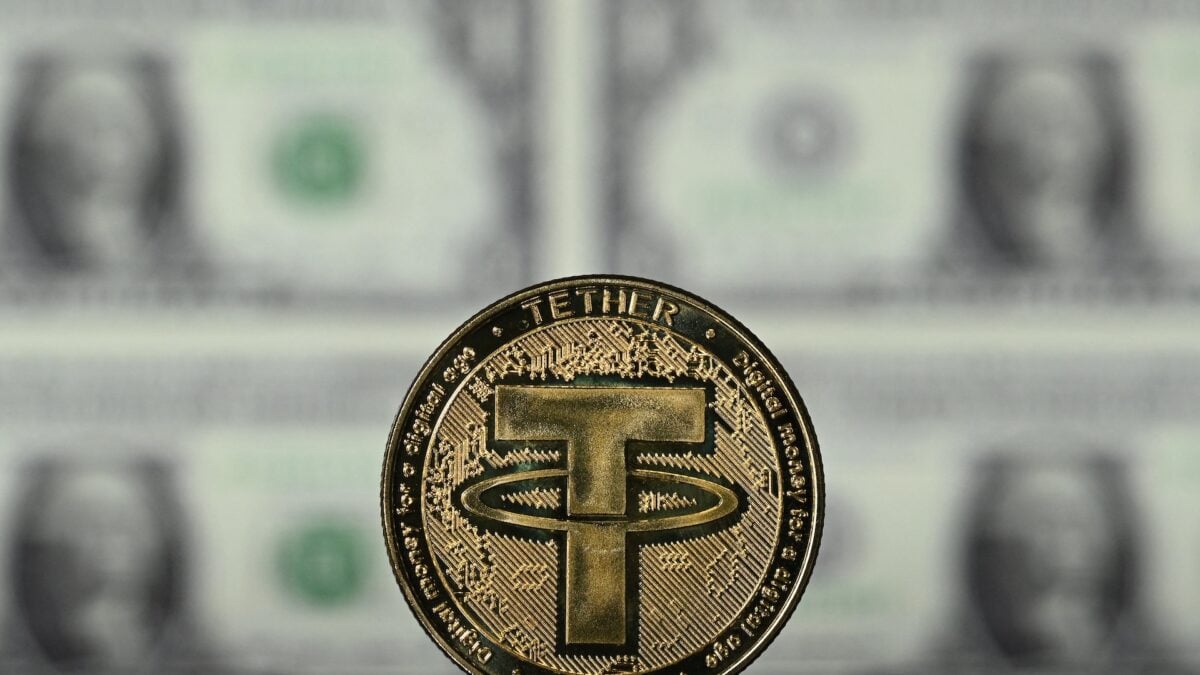
A 28-page Senate report published Monday by Democratic Senator Richard Blumenthal paints a vivid picture of the central role the Tether stablecoin USDT is thought to play in the Iranian regime’s underground financing system. USDT is, in short, a major financing pipeline for groups like Hezbollah, according to Blumenthal.
The politics at play couldn’t be clearer. While the U.S. continues to be mired in a war with Iran, the current Republican president and his family have made billions thanks to their embrace of cryptocurrencies, and partly own a company with its own stablecoin. President Trump also signed the GENIUS Act, which aims to create a regulatory framework for stablecoins.
The findings, referred to in the report as “preliminary,” say USDT is a “significant financial lifeline within Iran’s shadow banking network.” It examines 846 sanctioned crypto wallets targeted for Iranian affiliation, and found that 84% exclusively or “nearly exclusively” transacted in USDT.
By way of an example, the report says that over four years, Alireza Derakhshan and Arash Estaki Alivand, who the report says are two sanctioned oil smugglers, transferred over $603 million in the form of USDT within a network that the report claims links the Iranian finance world to Hezbollah and the Houthis.
And the report is not shy about attempting to tie its preliminary findings to at least one member of the Trump Administration:
“Tether’s primary custodial relationship for its treasuries runs through Cantor Fitzgerald, the New York-based financial services firm formerly led by Secretary of Commerce Howard Lutnick and now run by his children. Cantor Fitzgerald has a stake in Tether worth billions. Tether reportedly provided Secretary Lutnick’s children with a loan to enable them to buy out his stake in Cantor Fitzgerald when he divested assets after his nomination.”
The report also claims that Tether didn’t freeze enough Iran-affiliated crypto wallets prior to 2024, and that the “absence of deterrence invited abuse.”
According to Reuters, Tether gave a statement claiming to be cooperating with the U.S., and supporting the freezing of $550 million in Iran-linked USDT. Tether CEO Paolo Ardoino said, per Reuters, that his company “has consistently demonstrated that USDT is not a haven for sanctioned actors, terrorist organizations or criminal networks.”