
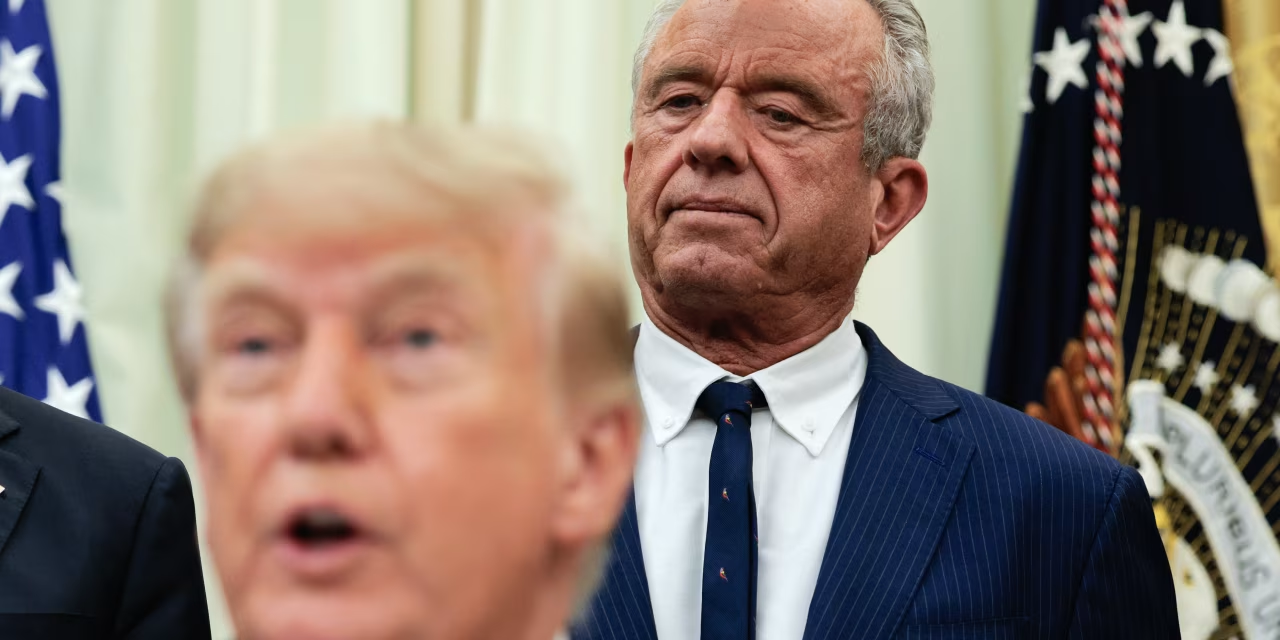
Health Secretary Robert F. Kennedy Jr.’s efforts to revamp America’s food system have hit their biggest hurdle yet: the White House.
Two years ago, the Trump campaign joined forces with Kennedy, embracing his ambition to wage war on chronic disease. But concerns about whether his ideas on food are even feasible have prompted clashes within the administration, casting uncertainty over a once-potent political agenda that drew support from millions of voters.
At a July meeting convened by senior White House officials, tensions were running high. Up for discussion was a definition of ultraprocessed food—a wonky but critical part of Kennedy’s plans to overhaul the U.S. food supply—and whether it should undergo a layer of further review by White House staff.
The definition that health officials pushed for: Processed food should be considered ultraprocessed if it contains ingredients such as artificial colors, nonnutritive sweeteners or chemical preservatives, with exemptions, according to people familiar with the matter and a document viewed by The Wall Street Journal. White House staffers were concerned the definition could cover most food in U.S. grocery stores and support existing efforts to sue food companies over bad health outcomes.
Copyright ©2026 Dow Jones & Company, Inc. All Rights Reserved. 87990cbe856818d5eddac44c7b1cdeb8