
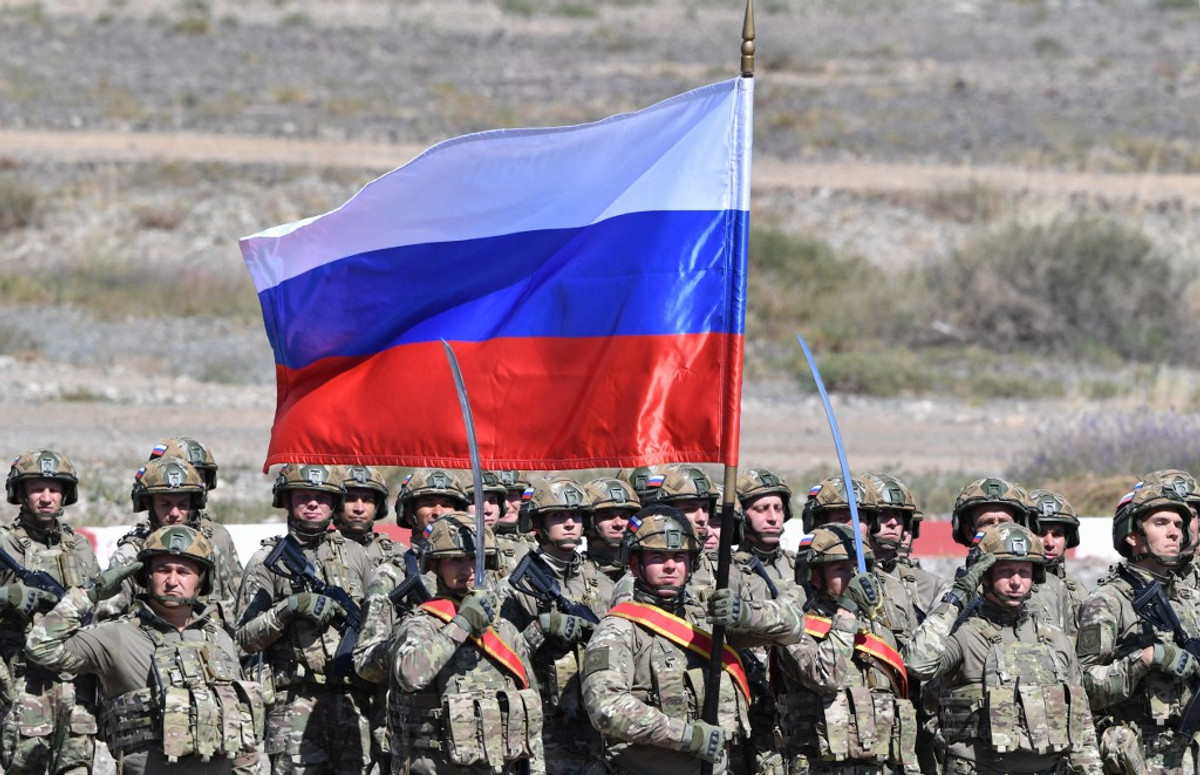
Ukrainian President Volodymyr Zelensky in a Monday evening national video address said the Kremlin’s military was intensifying recruitment and incorporating mercenaries into the Russian Armed Forces in an attempt to fill chronic personnel shortages at the front.
Zelensky stated on Sept. 28:
JOIN US ON TELEGRAM
Follow our coverage of the war on the @Kyivpost_official.
“Today I received a report from the Defense Intelligence [Ukraine’s military intelligence agency, Головне управління розвідки, or HUR] on the steps Russia is planning next. In practical terms, the Russians have begun new mobilization of conscripts. They are increasing the number of people that they take in [into the military] by various means. They are planning to increase recruiting for foreigners.”
More than 8,000 North Korean soldiers are currently on Russian Federation territory assisting in operations against Ukraine, and Pyongyang is training another 10,000 soldiers to reinforce them, Zelensky said, adding:
“Russia is paying for all of this by various illicit means, and in return, for this this help, for the technical assistance by Russia on North Korean territory, there has been set up a production line for Shahed-type strike drones. This is how evil works together, and how a deadly threat in one end of the world becomes a deadly threat in another end of the world.”
Countries from which Russia recruits foreign soldiers to fight as mercenaries in Ukraine should work with Kyiv and international law enforcement agencies to prevent that, Zelensky said.
Other Topics of Interest
EU Might Press Ukraine on Reforms to Unlock Billions in 2026 Aid
An early draft of the October summit conclusions calls on Kyiv to accelerate reforms needed to release EU funding, though Ukraine’s finance minister says this is a difficult time to raise taxes.
Western states also should intensify sanctions against Russia and states cooperating with Russia, because if unchecked, the Kremlin’s attacks against Ukraine and other countries will only increase, Zelensky said.
Zelensky’s comments followed a Monday order by Russian leader Vladimir Putin for a limited increase in the size of his country’s armed forces, and a decree instructing military recruiters to work harder to find men for the Russian Armed Forces.
The Presidential order raised by 15,500 the size of Russia’s armed forces to a total of 2,441,630 personnel, including 1,550,500 military personnel, and directed state funding be funneled to intensified recruitment.
It was the fourth increase in military personnel ordered by the Kremlin in 2026 alone. In 2022, the Kremlin faced with a collapse of its pre-war professional military caused by unexpectedly heavy casualties among mobilized reservists.
The executive decree published on the Presidential register made no mention of increased conscription or mobilization of reservists. In the run-up to national elections earlier in the month, some Kremlin critics had suggested the moment voting was over the Putin regime would implement a wide-ranging draft forcing tens of thousands of civilians into the military to fight in Ukraine.
Putin in early September called reports he was planning to mobilize reserves “utter nonsense” (Russian: “чушь собачья”) and during a Sept. 3 speech in Vladivostok told an audience, “There is no scenario today that would require mobilization… from the point of view of availability of military service members, Russia has no problems whatsoever.”
According to both tracking by the Ukrainian Armed Forces (AFU) and international military observers, Russian forces operating in Ukraine are suffering heavy and sometimes devastating losses in attacks most often carried out by unsupported infantry soldiers ordered to traverse open terrain under continuous observation by Ukrainian drones. According to those sources, Russian personnel shortages are severe and, thus far, Kremlin efforts to fill shortfalls have been insufficient.
According to data published by the Icelandic-based researcher Ragnar Gudmundsson on Tuesday, two days in Sept. 2026 saw some of the highest daily losses by Russian forces of the entire war (Sept. 28 – 2,090 men, Sept. 17 – 1,960 men).
Russian forces have probably suffered more than 405,000 combat deaths in Ukraine since invading in February 2022; and total Russian casualties are on track to pass the 1.6 million mark in mid-November 2026, Gudmundsson estimated.
Heavy losses have made voluntary recruitment of replacements so difficult, that Russia to sustain operations in Ukraine will have no option to force men into service, if not by conscription than by other means of impressment, most western observers say.
Analysis published by the Institute for the Study of War (ISW) on Sept.18 said in part:
“The Kremlin will have to change its recruitment practices and likely conduct some form of involuntary reserve call-up in order to sustain its war effort in Ukraine…Russia’s current casualty rate exceeds its recruitment rate by thousands per month, and the Russian war effort is even so failing to achieve its operational and strategic objectives.”
Petro Andriushchenko, director of the Ukrainian government agency Center for the Study of Occupation (CSO), on Monday possibly confirmed that prediction with a report saying that the Russian state has “factually begun” shadow mobilization of reservists, with recruiters contacting former service members now civilians in the central Sverdlovsk region to “volunteer” for service in drone defense units.
Their mission would largely be in the Svedlodvsk regional capital Yekaterinburg protecting “energy facilities, industrial plants, and other critical infrastructure. Mobile fire teams are also being formed specifically to counter UAVs,” Andriushchenko said in a Monday report published on the CSO public channels.
Key qualifications are minimum nine years of schooling, age 52-62 or less depending on rank, and meeting the third category of physical fitness (Russian: Category “В”) for a recruit, which permits a soldier with moderate medical impairments like reduced respiratory capacity or inability to run for extended periods of time to be accepted into service.
“Russian authorities specifically emphasize that this is not a military service contract and that reservists will supposedly not be sent to the war against Ukraine. Formally, they remain civilian employees who attend training assemblies and receive additional payments,” the CSO statement said in part. Men, including reservists taken into service in 2022-2023, usually found themselves transferred to frontline units, the report said.
Ukraine’s 3rd Corps, a major combat unit in action on the eastern front in the eastern Lyman sector, on Monday announced a wide-front counter-offensive in progress since August had captured more than 250 Russian prisoners of war, and published images of 58-60 disarmed Russian service personnel under Ukrainian guard, reportedly in a northern Donetsk region forest.
Ukrainian mainstream media and Russian milbloggers confirmed the 3rd Corps claims of prisoners of war captured, as well as 2,500-3,000 Russian soldiers killed or seriously wounded. The operation took advantage, in part, of low Russian troop numbers in the path of the Ukrainian attack.
Russian official sources have largely ignored evidence of the defeat and heavy losses and insisted Kremlin forces are continuously advancing.
French researcher Clément Molin’s in a Friday analysis of claimed Russian territorial gains in Ukraine, compared with independently-confirmed evidence of actual Russian control of Ukrainian territory, found that for much of 2026 Russia had “barely advanced in Ukraine but continued to update their official maps and claims. This gives a more than 5,000 square kilometer difference between reality and what Russia claims.”
[KP Note: A land space with an area of 5,000 square kilometers (1,931 square miles) is roughly the size of the British county Northumberland, France’s Bouches-du-Rhône department, or the US Grand Canyon National Park.]