
One of the side effects of social media is the podcast phenomenon. So many podcasts have been launched in recent years that the common joke among podcasters is that “everyone has a podcast these days.” In the virtual marketplace of ideas, which is constantly expanding, though not necessarily deepening, thanks to the internet, some manage to stand out, gain increased exposure and attention through their podcasts and even earn a handsome income from them.
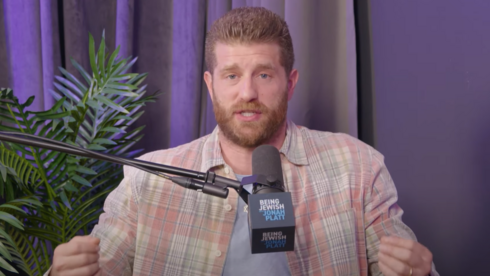
Those who have made it big in the United States include figures like Tucker Carlson, Candace Owens and Myron Gaines on the right and Hasan Piker on the left. Ostensibly ideological rivals, they seem to have found themselves on the same side against Israel since October 7, with some even making antisemitic statements. While they are protected under the banner of free speech, others are fighting back on that same playing field. At the forefront of this struggle is Jonah Platt, whose podcast, “Being Jewish,” is the most successful among kosher podcasts.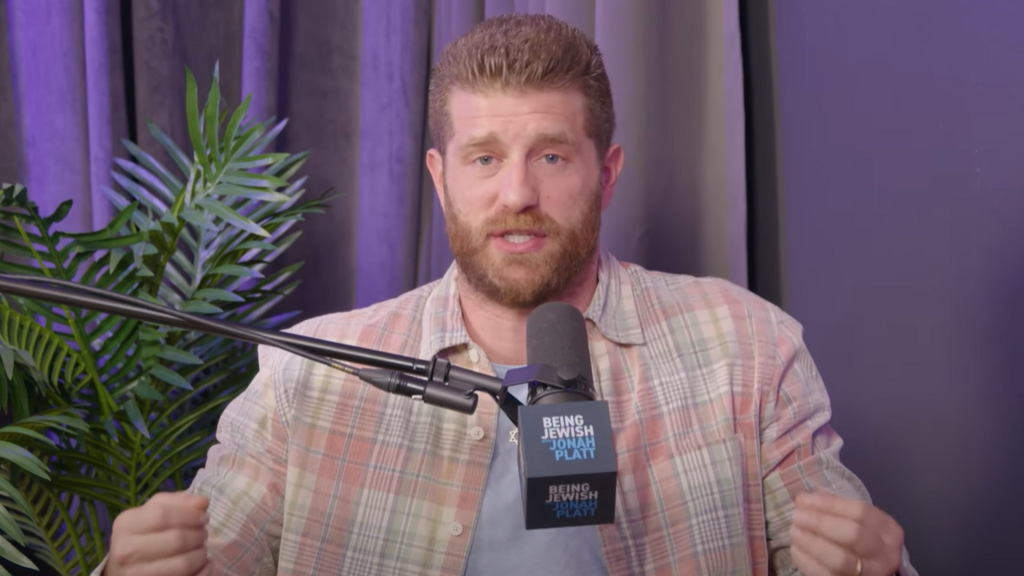
Jonah Platt
(Photo: Screenshot from the podcast Being Jewish with Jonah Platt)
“We didn’t just enter an information war. We lost it early on. The score feels like a thousand to two,” Platt says in an exclusive interview with ynet. “When Oct. 7 happened, the other side was completely organized, deploying synchronized messaging, bot farms, paid influencers, and fake accounts across social media. Without sounding like a conspiracy theorist, figures like Tucker Carlson or Candace Owens clearly have commercial motivations for what they do. They spread horrible, easily debunked lies because outrage and incitement drive clicks, views, and algorithm engagement. There aren’t enough real truth-seekers calling them out and offering unifying perspectives. It’s much easier to be controversial and contrarian to gain attention than it is to demonstrate loving-kindness, understanding, and nuance.”
Being a truth-seeker also means being critical of your own side, and that’s certainly something Platt is trying to do through his interviews with Jewish celebrities, artists and community leaders who present a variety of views and opinions about Judaism, Israel and its politics. “We should all be able to criticize respectfully, even passionately, any government, country, or public figure,” he says.
“I criticize Israel, I’ve done it plenty of times. So that’s a no-brainer for me. I support Israel because Israel is family — literally and figuratively. America is my home, and I criticize the heck out of America, but I love it, defend it, and love being an American. I love being a Jew, and Israel is my homeland. I will criticize it, I will defend it, and I will love it regardless of who is in power. You don’t stop loving the people or the country. When you do that, you’ve lost the plot.”
Is there a red line for you when it comes to anti-Israel guests?
“Where I’ve hesitated — and where I haven’t gone yet on the show — is having someone who is virulently anti-Israel. Maybe I will, maybe I won’t, I’m not quite sure. I have to think, is there a purpose to it beyond some inner satisfaction of sticking it to an anti-Israel person? For an audience, I don’t necessarily know that’s what I need to provide. The issue is that for a lot of those folks, their entire Jewish persona is being anti-Israel. The only time they ever talk about Judaism or say the words ‘as a Jew’ is to condemn Israel. That’s not what my show is about. My show is about deep, meaningful Jewish identity.”
Before starting his podcast in the wake of October 7, Platt was mostly known as an actor and singer and as the son of Hollywood mega-producer Marc Platt and brother of Broadway star Ben Platt. His familiarity with the entertainment industry helped him with “Being Jewish,” since he had access to top talent and celebrities such as Mayim Bialik, Scooter Braun, Cindy Crawford, Jake Tapper, Jason Alexander, Tiffany Haddish and Dana Bash, among others, as well as politicians and community leaders, including President Isaac Herzog.
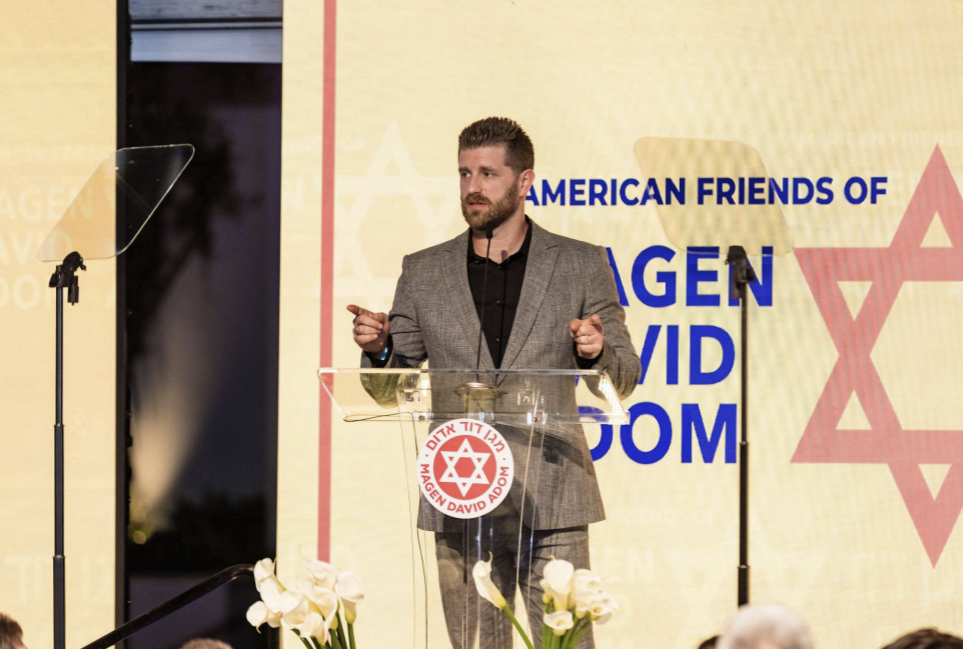
‘It’s frustrating when people are too afraid to speak their truth because they fear getting canceled, receiving death threats, or facing backlash’
(Courtesy of Lynn Abeser)
Still, Platt admits that lately it has become increasingly difficult to book guests, largely because many fear public backlash for speaking out in support of Israel and the Jewish community.
“It’s really frustrating, not just as a podcast producer, but as a member of the Jewish community,” Platt says. “It’s frustrating when people are too afraid to speak their truth because they fear getting canceled, receiving death threats, or facing backlash. Some major celebrities came out, took a lot of flak, and retreated because it felt unsafe or overwhelming. That is hard for me to judge, though I think those cases are the exception. By and large, the people who are out there – proud, respectful, and standing their ground – are doing fine. Their careers are fine. Having hosted over a hundred guests, almost every single one has experienced overwhelming love afterward. It’s disappointing when public figures stay quiet out of commercial interest or career concerns at a time when we desperately need their voices.”On the other hand, you hear famed actors like Susan Sarandon and Melissa Barrera complain about the same pushback for speaking out in support of Palestinians. The latest case was Mark Ruffalo’s account of being accused of antisemitism because of his criticism of the Ellison family and the Paramount merger with Warner Bros.
“The Mark Ruffalo situation, to me, was clearly harboring Jew-hatred. He doesn’t see it. You have decided to make it about Israel to demonize Jews and Israel just because the owners are Jewish. The bosses of every media company are mega-rich, and their job is to make money for their companies. But singling out Jewish owners as uniquely evil, greedy, and power-hungry is straight out of Nazi propaganda. It comes back to the libel stuff. The people who believe and spread those libels don’t think they are parroting Jihadist propaganda talking points, but they are.”
Do you feel he represents the film industry? The common opinion among Israelis is that Hollywood is a bunch of antisemitic moralists, even though many of the studios are run by Jews.
“170 people signed a statement supporting Ruffalo, but 90% of them weren’t even in entertainment. It was a list of random anti-Zionist activists and rabbis. A very small group of the usual suspects who do nothing Jewish in their lives except speak out against Israel. They don’t have rich Jewish lives and don’t show up for the community. They are a loud minority, representing a microcosm of the American left. The majority of people in Hollywood are in the middle. They either don’t know enough or are too busy to pay attention, or they have Jewish friends and know they aren’t ‘genocidal baby killers,’ but stay quiet because of the surrounding noise and negative coverage of Netanyahu.”
Maybe they are right? Many American Jews blame Netanyahu and the current Israeli government for fueling antisemitism abroad with their policies.
“There is plenty to criticize. For instance, the easiest person in the world to criticize has been Itamar Ben-Gvir. That guy is doing outrageous, horrendous stuff publicly all the time, and he likes being outrageous. We can talk about how that guy sucks. We have extreme people on the right in the States who do outrageous stunts, and everyone outside their camp criticizes them. But in America, we don’t look at that and say, ‘That’s why the entire country of America is horrible.’ Yet with Israel, people point to Ben-Gvir and say, ‘All of Israel is horrible.’ To me, that’s not criticism, that’s bigotry. When you hate an entire country based on a single individual, that is prejudice by definition.
“They say, ‘The Israeli government did something bad, therefore, I hate all of you, any act against you is justified, and you’re a villain.’ Saying the sole reason for Jew-hatred is the Israeli government gives Jew-haters a free pass. When any other country in the world does something bad, you don’t see its diaspora getting beaten up on the streets, and when you do, people call it out. But for Jews, the rules don’t apply. People act like, ‘Do whatever you want, they deserve it, it’s their government’s fault.’ That reasoning is totally illegitimate.”
How can we fix this?
“I hope there will be a new government in Israel that understands and cares about how its actions impact Jews around the world. There has to be a margin of care there. I think a non-Netanyahu opposition government will do a better job of this because they get it. A change in leadership will bring the temperature down organically. It’s a lot harder to be mad at an Israeli prime minister when millions of people don’t even know their name. Additionally, any new government or slate of ministers will feel a mandate for change and recognize that part of that change involves their global image. Removing public figures like Ben-Gvir from major ministerial roles would be immensely helpful.”
Another intriguing and original solution discussed in the episode with Scooter Braun was to stop using the term “antisemitism” and simply call it racism or Jew-hatred. There’s more to it than terminology.
“I want to get rid of the word ‘antisemitism.’ I hate that word. All it does is invite endless debates over ‘Is this antisemitic or is it not?’ You can call it anti-Zionism, antisemitism, or anti-Judaism – it all falls under the umbrella of bigotry, hatred, and racism towards Jews. I have no problem calling those things what they are. If we simply said to Ruffalo, ‘That was a really bigoted statement about Jews,’ that is much harder for him to combat than arguing over whether or not he is an ‘antisemite.’ What I liked about Scooter’s framing is that it fosters empathy. It makes people think, they’ve experienced hate or racism against them. It’s the same thing they deal with.”
While working in the U.S., Platt says he still yearns for Israel, the homeland he hasn’t visited since the first anniversary of the massacre. “It’s so important to me to be there. It was wonderful to be there, and I’ve been itching to get back ever since,” he admits. “In the immediate days following October 7th, I was spending all of my free time and energy as a Jewish advocate on social media and in real life,” he says, describing a sense of purpose that is not driven by spreading hateful slurs or the clicks they generate. “It all leads to the notion that we really need each other, we need to respect each other, we need to speak to each other, and we need to understand each other’s different needs. We must continue to make sure the pathway between Israel and the diaspora is strong in both directions.”
Amir Bogen, PhD, is a journalist, writer and film critic for ynet, artistic director of the Lighthouse International Film Festival in Long Beach Island, New Jersey, and a programmer for the Woodstock Film Festival in New York.