
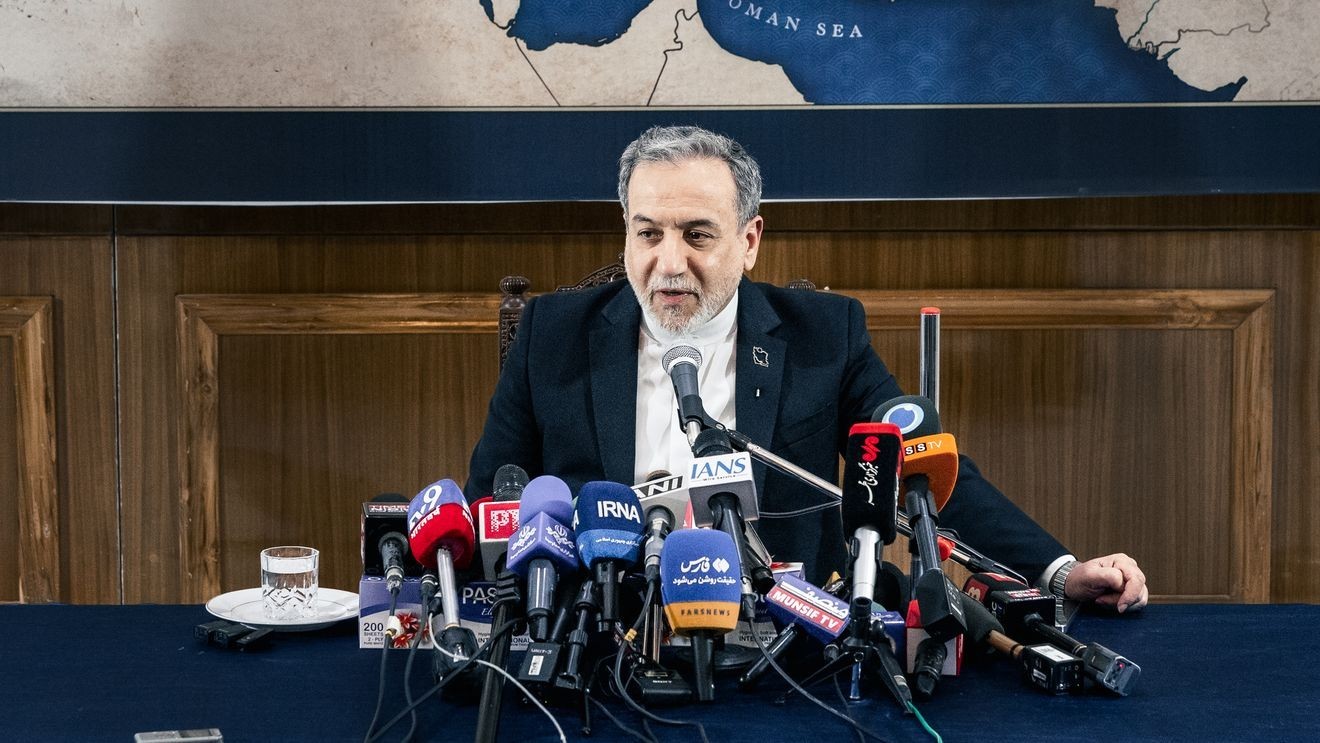
WASHINGTON (TNND) — Iran said Wednesday it has received the latest U.S. counterproposal aimed at securing a ceasefire and laying out a framework to end the conflict, as new reports of attacks on commercial vessels in the Strait of Hormuz underscored the high stakes for global energy markets.
Iranian authorities said Foreign Minister Abbas Araghchi presented the U.S. proposal to Iranian President Masoud Pezeshkian during a Cabinet meeting. The proposal reportedly calls for a seven-day ceasefire, though it was not immediately clear whether Washington accepted Iran’s broader conditions tied to reopening the Strait of Hormuz.
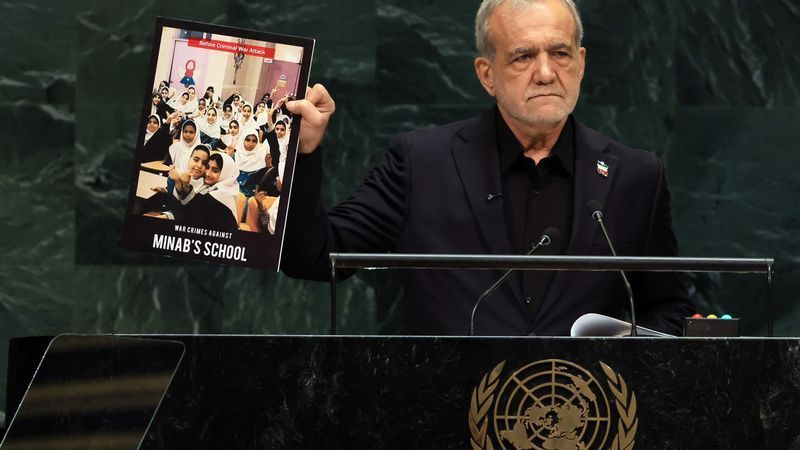
NEW YORK, NEW YORK – SEPTEMBER 23: Iranian President Masoud Pezeshkian holds up a picture of a school that was bombed during Israeli and American airstrikes while the leader speaks during the 81st session of the United Nations (U.N.) General Assembly at U.N. Headquarters on September 23, 2026 in New York City. World leaders have gathered in New York for the annual session of the United Nations General Assembly, with this year’s global issues ranging from the threat of artificial intelligence to the continued wars in Ukraine and Gaza. (Photo by Spencer Platt/Getty Images)
Iran has demanded sanctions relief for its oil sector, the release of frozen assets, an end to the U.S. naval blockade of Iranian ports and a seven-day ceasefire across the region.
Qatari mediators have been shuttling messages between the sides, but negotiations have made limited progress as the U.S. and Iran remain divided over key concessions. The counterproposal follows talks in New York last week involving Araghchi and U.S. envoys Steve Witkoff and Jared Kushner.
Shortly after Iran received the counterproposal, three commercial vessels, including an oil tanker and an LNG tanker, were reportedly hit by unknown projectiles in the Strait of Hormuz. No immediate attribution or damage details were released.
Iran has maintained a blockade on commercial shipping through the strategic waterway since the conflict began in late February, while the U.S. has sought to restrict Iran’s oil exports through a counterblockade of its ports.
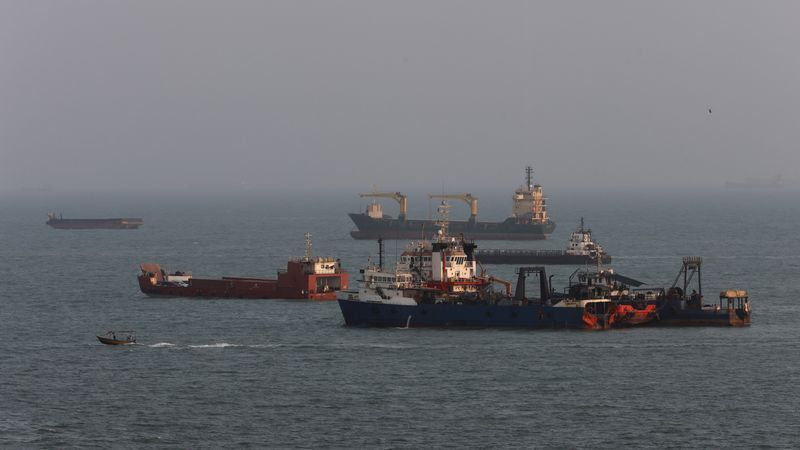
BANDAR ABBAS, IRAN – AUGUST 10: Ships are anchored in the Strait of Hormuz on August 10, 2026 off the coast of Bandar Abbas, Iran. In a recent statement, Iran’s Supreme National Security Council said the vital waterway would not reopen until the United States corrects its behavior, demanding that the U.S. end its war on Iran and compensate the country for war damage, among other conditions. Iran has largely halted vessel traffic through the strait with the threat of strikes; meanwhile, the U.S. has imposed a blockade on Iranian ports. (Photo by Ali Saeedi/Getty Images)
The Strait of Hormuz previously carried roughly one-fifth of the world’s oil and liquefied natural gas, raising concerns that stalled diplomacy and continued attacks could further rattle energy markets.
President Donald Trump denied a report that he had offered Iran sanctions relief in exchange for nuclear concessions.