
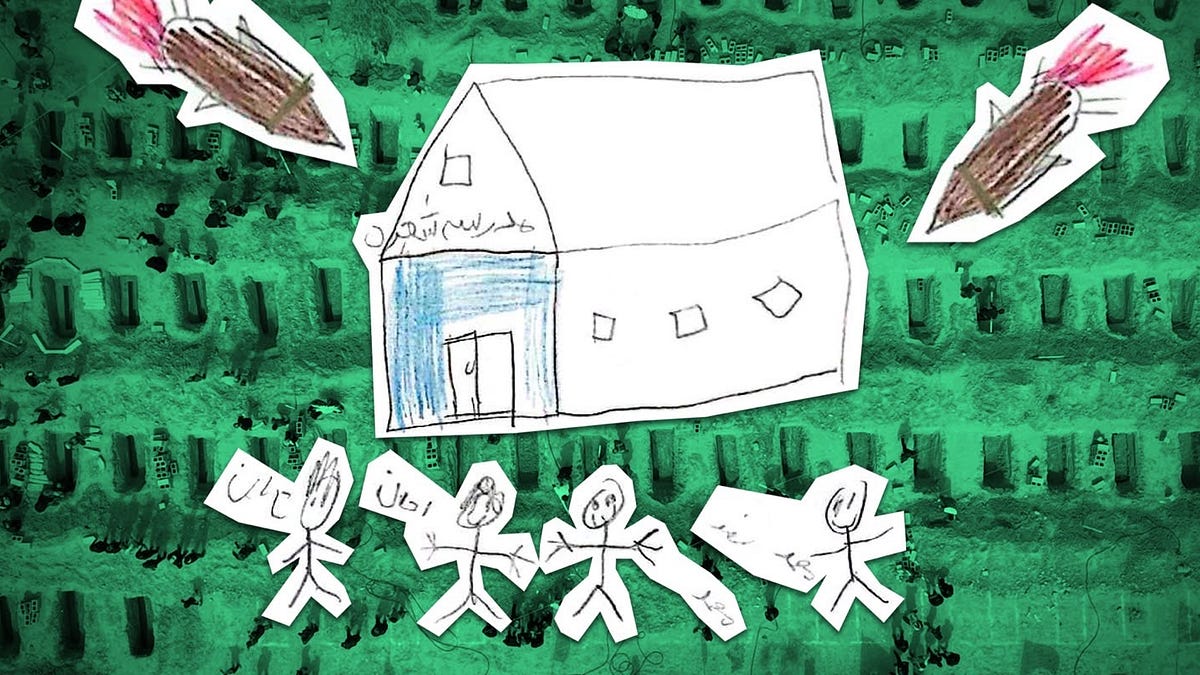
 Illustration: Images drawn by Fatemeh Zahra Bahrami, a child who survived the school bombing at Minab, provided to Drop Site. In the background, the cemetery where the victims are buried.
On the morning of Saturday, February 28, people across Iran began their day like any other. It was one week into the Islamic holy month of Ramadan, and people were preparing for their work and school week. Parents hustled their children out the door for school as the notorious morning traffic jams filled the streets of Tehran and other cities.
In the southern Iranian city of Minab, preschool teacher Hossniyeh Salem was getting ready to leave the house. “Like any other day, I got my child ready at 7 o’clock—because my son is in fifth grade and attended the same school,” she recalled. “I got Yassin ready and headed to school. Yassin went to the boys’ school and I stayed at preschool, in my own class.”
It was Salem’s seventh year as a teacher at Shajareh Tayyebeh, a well-respected, private school. “The upper floor was for girls and the downstairs was for boys. One section was for preschool. You can say there were three schools there. The preschool was in the same building,” she said. “There were students there from all walks of life—children from working class families, educators. We had all kinds of students there.”
Among the students at the school was 6-year-old Fatemeh Yazdanpanah from the fishing village of Gurzang, about eight miles from Minab. The village is well known for its daily fish market—a bustling, strategic hub where fishermen trade their catches from both the Minab River and the Persian Gulf. There is a girls’ school in Gurzang, but Fatemeh’s father, Yaghoub Yazdanpanah, saw gifts for poetry in his daughter and he wanted to secure for her the best education he could find.
 Left: Fatemeh Yazdanpanah, a 6 year old student at the Shajareh Tayyebeh school in Minab. Right: Fatemeh with her father, Yaghoub. Photos courtesy of the Yazdanpanah family.
“Fatemeh’s mother and I had noticed Fatemeh’s overflowing intelligence. I am a poet myself. When I would write poetry, edit poetry, I would repeat the poem. After hearing the poem once or twice, Fatemeh would immediately memorize it. When we would tell her a story, she would never forget the story and she would recite the story moment by moment, word for word,” recalled Yaghoub, who teaches Persian literature. “I wanted to find a school that would address Fatemeh’s needs and her active mind. I visited several schools myself. Certainly, you would do the same thing. Any parent would take their child to a good school for a brighter future,” he said. “Thank God,” he recalled thinking, “I found Shajareh Tayyebeh School.”
That morning, Yaghoub kissed Fatemeh goodbye before walking to the local school in Gurzang where he taught.
Iranians had gone to bed the night before with the news that negotiations between government officials and the Trump administration aimed at averting war were proceeding smoothly and a new round of technical talks would soon be held in Vienna. The foreign minister of Oman—the longtime mediator in the U.S.-Iran nuclear negotiations—was in Washington, where, after meeting with Vice President JD Vance, he announced that recent negotiations between the two sides had “yielded substantial, momentous, and unparalleled progress” that could pave the way for “an honorable agreement” to halt the U.S. drive to war.
“We were very optimistic about the negotiations that were taking place,” said Pouria Askari, a prominent Iranian international law expert, who recalled being stuck in his car that morning on his commute to the university where he lectures. “We were not expecting the beginning of the war.”
At Shajareh Tayyebeh in Minab, the little girls gathered that morning in the prayer hall in observance of the day when Shia Muslims across the world commemorate the passing of Umm al-Banin, the wife of Imam Ali and the mother of four martyrs who died at the battle of Karbala in the year 680.
After the prayers, Salem laid out for her students a breakfast sofreh, a traditional Iranian fabric placed on the floor to serve meals. The small girls of the preschool had not yet reached the age of fasting during Ramadan. They did some lessons and then went out to the playground for recess. It was around 9:30 a.m. when Salem received word that the U.S. and Israel had begun attacking Iran.
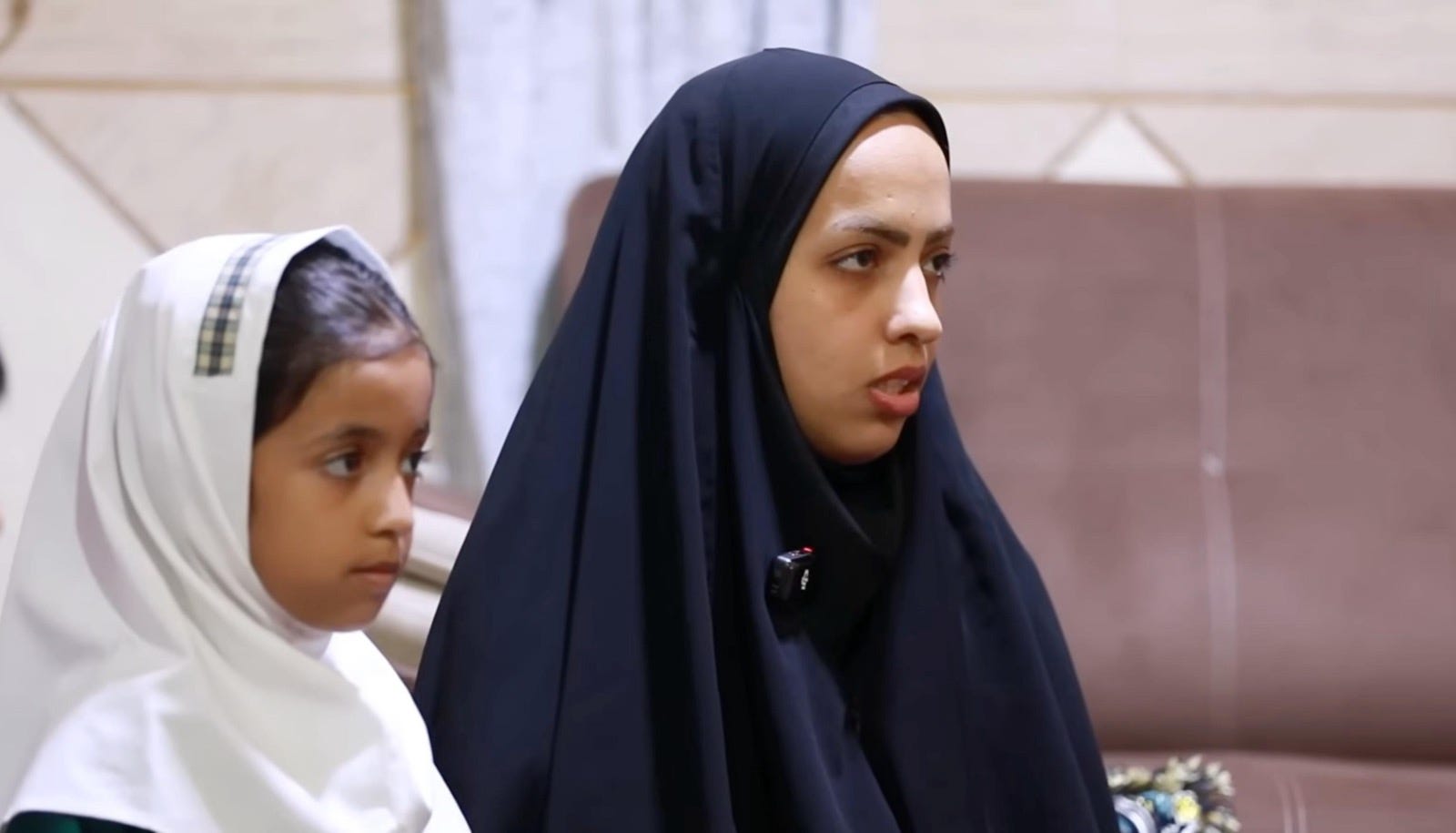 Hossniyeh Salem, right, a teacher at Minab’s Shajareh Tayyebeh Girls School, with her niece. Image courtesy of Helyeh Doutaghi / Khana House/ Still, Minab.
Local authorities issued a directive instructing schools to send students home. Salem and other teachers immediately messaged parents to come and get their children. Iranians had experienced a similar situation the previous June, when the U.S. and Israel carried out what became known as the 12-Day War. Salem said there was no strong sense of panic. “They said these are war conditions and it’s better if the children go home early. We didn’t have a single thought or didn’t imagine that they might want to hit our school,” Salem said. “In complete calm and relaxation, we were calling families and telling them to come and take their children.”
When Salem and other teachers stood in the school yard handing off students to their parents, a massive explosion struck not far from the school campus. “As they were coming to get the kids—a number of the children had left and some were still at the school—I first heard the sound of an explosion,” she recalled. Salem and her son Yassin raced back into the school where some of the preschool kids were still waiting for their parents to arrive. The blast had shattered the windows and shards of glass sprinkled the carpeted floor.
“The children were five years old and all they did was yell, ‘Miss! Miss!’ and were crying. I ran to the children. I just said, ‘Get under the table!,’” Salem remembered. “I didn’t think they were going to strike the school. I just thought that some place had been hit. I said, ‘Don’t be afraid, sit down.’”
Other teachers began grabbing students and hurrying them back toward the building and into a prayer room for cover.
As Salem and her students huddled together under desks, she heard the sound of missiles hitting the building. “Two simultaneous sounds. They’re still in my ear. My son even describes them—‘Wooosh, boom! Woosh, boom!’—and then the explosion very close by,” Salem said. “Plaster was falling, the ground was shaking, and at that moment I just looked at my preschool girls and my son, and I said to myself, ‘It’s over. Now is the time when we go under the rubble, it’s going to fall now,’” she continued. “Then there were no more sounds. The class was full of smoke and dust. I told my son, ‘Yassin, run and open the door. Let’s get out!’ My preschool kids didn’t have shoes on since our classroom was carpeted. I took the children in my arms, one by one, and brought them outside.”
Chaos had broken out throughout the campus. Frantic teachers and parents. Children screaming. The building was engulfed in smoke and dust, concrete was collapsing, windows were breaking. Salem couldn’t pause to take stock of any of the details. It was just apocalyptic. “We exited from the preschool yard gate until we reached the first street. I looked behind me and I saw smoke and fire coming from the school office. All I said to the preschool children was, ‘Kids, just look in front of you. Don’t look back,’” Salem said.
As rescue workers began to arrive, some encountered Salem with her students outside the gates. “Run to the school—they hit the school!” she yelled. “The children are under the ruins. Go save them!”
Word that the war had begun spread quickly through Iran. The residence of Supreme Leader Ali Khamenei had been bombed, and military sites across the country were being struck by U.S. and Israeli missiles.
In Gurzang, Yaghoub was teaching his class when a colleague told him of the developments. As he gathered his things to leave, a friend from the fish market called and told him that there were reports a school had been struck in Minab in the Mahdi neighborhood. “My heart told me the school they were talking about was Shajareh Tayyebeh. I lost it,” he said, thinking of his daughter Fatemeh. “I left my classroom, ran home, took my car, and sped to Minab. When I arrived, I said, ‘Oh no!’ The unimaginable had happened.”
“There was no school left. Two-thirds of the school, maybe more, had been destroyed. Smoke was rising from all over the school. It had turned into rubble. For a moment, I thought I was asleep and having a nightmare,” Yaghoub said.
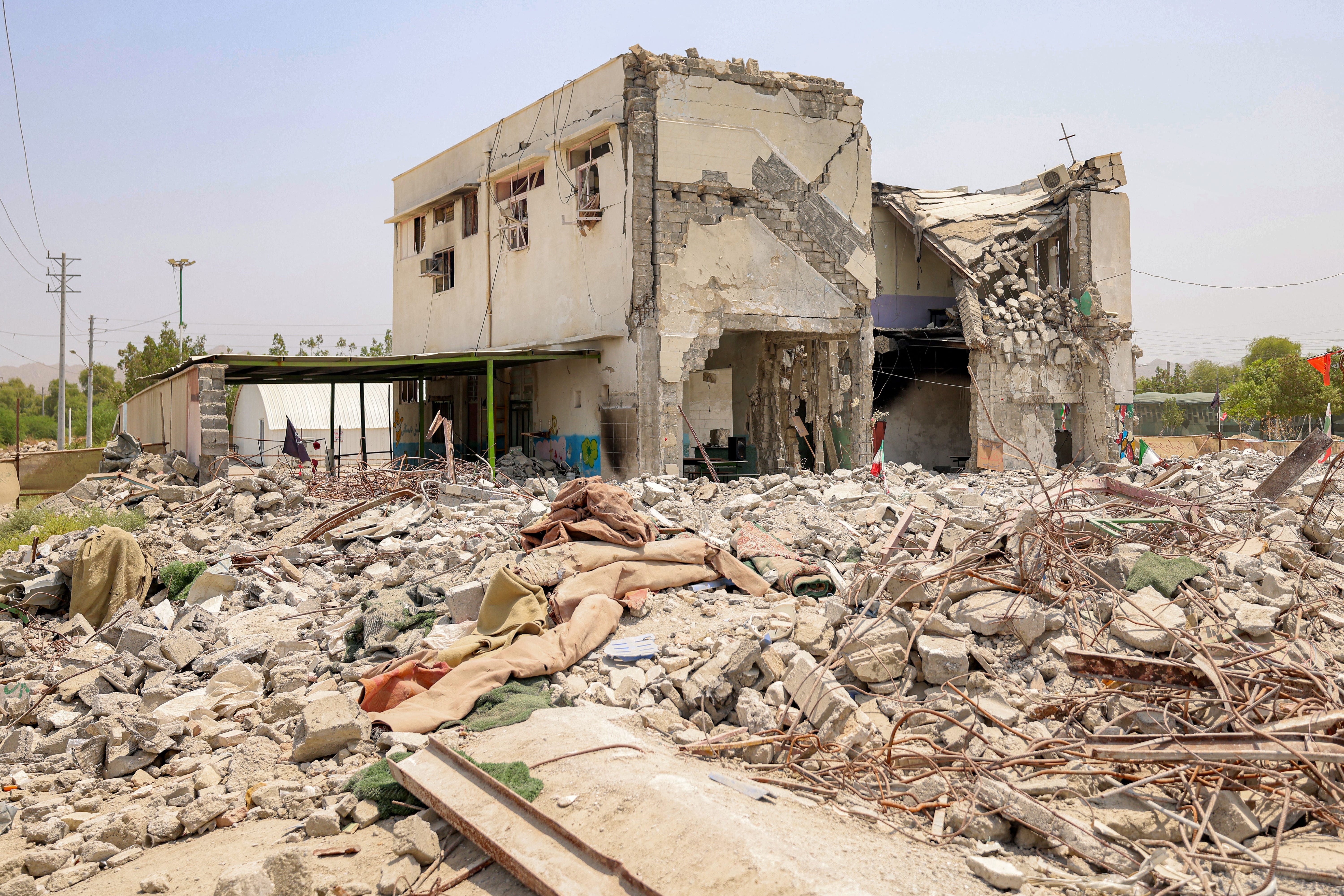 The building of the destroyed Shajareh Tayyebeh primary school is pictured surrounded by rubble in Minab in Iran’s Hormozgan province on August 10, 2026. Photo by Atta Kenare / AFP via Getty Images.
What happened that day will go down in history as one of the single worst massacres committed by the U.S. government since the Vietnam War. Multiple direct air strikes, including with Tomahawk cruise missiles, hit a school packed with children and teachers. The attacks killed at least 156 people; 120 of the victims were children and 26 were teachers—all women, including one who was pregnant. Among the dead were also parents who had come to pick up their children.
“The killing of pupils in a place dedicated to learning constitutes a grave violation of the protection afforded to schools under international humanitarian law,” the United Nations Educational, Scientific and Cultural Organization said in a statement a day after the bombing.
“I was absolutely horrified,” recalled Hala Rharrit, a career U.S. Foreign Service officer who spent 17 years at the State Department, primarily focused on the Middle East, before she resigned in 2024. “Knowing the capabilities of our military, knowing how careful the review is for targets, I was horrified. How, how could this have happened? How could this have happened on Day One of the war?”
According to the Iranian government, from 10:45 a.m. to 11:30 a.m., a total of nine missiles hit the school and the surrounding area. Witnesses described multiple distinct strikes within a short period of time. An additional four missiles struck the area between 1-2 p.m., hitting a medical clinic, as well as a nearby car wash and other small businesses in a small commercial district close to the campus. “These were not double-tap attacks. It was more than that. They were triple-taps,” said Iran’s Justice Minister Amin Hossein Rahimi, in an interview with Drop Site. “The type of attack was the most serious type of war crime, which indicates a direct and heinous criminal intent.”
Dr. Mohadeseh Darvishi—a psychologist specializing in trauma—lives an hour away in Bandar Abbas but is originally from Minab. Soon after the war began that morning, she began receiving calls from friends and colleagues. “This incident was such a catastrophe and so big and it was heard everywhere. It wasn’t like one specific person told us. It was a crisis,” she recalled. “My colleagues from Minab and surrounding provinces were calling me, both psychologists and different aid workers because of my specialization in this area, most of the calls were people wanting to find out what had happened in Minab. ‘Is it true that America had attacked a school?’ It was puzzling to everyone why something like this had happened. Why a school?”
As Darvishi made her way to the scene, rescue teams from the Iranian Red Crescent Society and the Minab Fire Department arrived at the campus. Parts of the school were on fire, while others were already reduced to rubble and collapsed concrete under massive clouds of dust. First responders described a cataclysmic scene of screaming and running, bloodied faces and bodies, with parents frantically searching for their children.
Screams can be heard as parents and others arrive at the scene of the Minab school, soon after the U.S. struck it with Tomahawk cruise missiles, via Tasnim News Agency.
“When I arrived, I saw there in the area of the school yard, it was completely covered in body parts of the children—students who had only their hands left, their legs, their heads, their fingers,” recalled Majid Dadania of the Red Crescent Emergency Response team. “I was frozen. I couldn’t start working. Even though I was part of the rescue crew, my arms and legs went numb until I snapped out of it and started collecting the body parts of the martyrs—the children who were in pieces.”
“During the initial moments, we were wearing masks and gloves for safety but after one or two hours we couldn’t even use any masks or gloves because the lives of these dear children were so important to us that gloves and masks no longer mattered,” said Mehran Zakeri, chief of the Minab fire department. “When we removed the remains of the martyrs, we had pieces of these dear martyred students’ brains under our fingernails—we had to remove their brains from under our fingernails,” he recalled. “The next day when I went to take a shower, I had to cut my fingernails because the brain matter couldn’t easily be removed. Our clothes were all ripped to shreds and pieces of the students’ and teachers’ remains were stuck to our clothes.”
That morning, Ehsan Mohseni, Minab coordinator of the Red Crescent Society, was in his office, less than a kilometer from the school. He was scanning the latest breaking news reports detailing the opening attacks of the U.S.-Israeli war against Iran when he heard a strong blast in the distance. “We were very, very close to this school. I had moved from my room to go downstairs to see what happened when there was a second strike and a few seconds later, a third strike. In the span of about 53 or 54 seconds, we had three strikes,” he remembered. “I realized that what was attacked was the Shajareh Tayyebeh school in Minab. When I got there, the school was destroyed and engulfed in fire and smoke. We saw extremely terrible scenes.”
Mohseni described seeing children’s bodies flung into trees, pulverized against concrete—small, severed limbs of children strewn around. “I saw the most painful scene. Look, I’ve seen many things. I’ve worked 15 years as a rescue worker and member of the Red Crescent Society,” he said. “My colleague approached me and he was carrying the head of a young student.”
“I saw doomsday,” he added.
As the rescue teams worked to evacuate survivors from the building and search the rubble, more parents had arrived. “Mothers came to me and said, ‘My daughter is in the classroom,’ ‘My son is in the classroom. In God’s name please bring me my son,’” Mohseni said. “We didn’t know how to answer these families. Each body part that was brought out from the building and taken to the ambulances, the families ran, looking to see who it was.”
Among the parents at the scene was Yaghoub, searching for Fatemeh. “People kept coming and coming to help, to remove the children from under the ruins. All of us were there waiting. I—a 32-year-old father—was waiting for them to bring my daughter from under the ruins,” he said. “Imagine the depth of this catastrophe and how hard it was for us.”
For more than three days, Iranian search and rescue teams, parents, and local residents worked together around the clock to recover the bodies. It was Ramadan, so they did so on empty stomachs. Each small person or body part they recovered had its own story. The boy who was identified only by his socks embroidered with an image of the cartoon character Sponge Bob. The girls with their backpacks still strapped to their lifeless bodies. “There was a father with us who was searching for his two children until it was four or five o’clock at night when his fingers no longer worked. His fingers were covered in blood. He had lost his fingernails. In that same condition, he fell asleep,” recalled the Red Crescent’s Dadania. “There was also a father—we had nothing to give him. The only thing that remained [of his child] was a school bag and shoes. The father sat and was talking to the school bag and shoes. Nothing from his child has been recovered.”
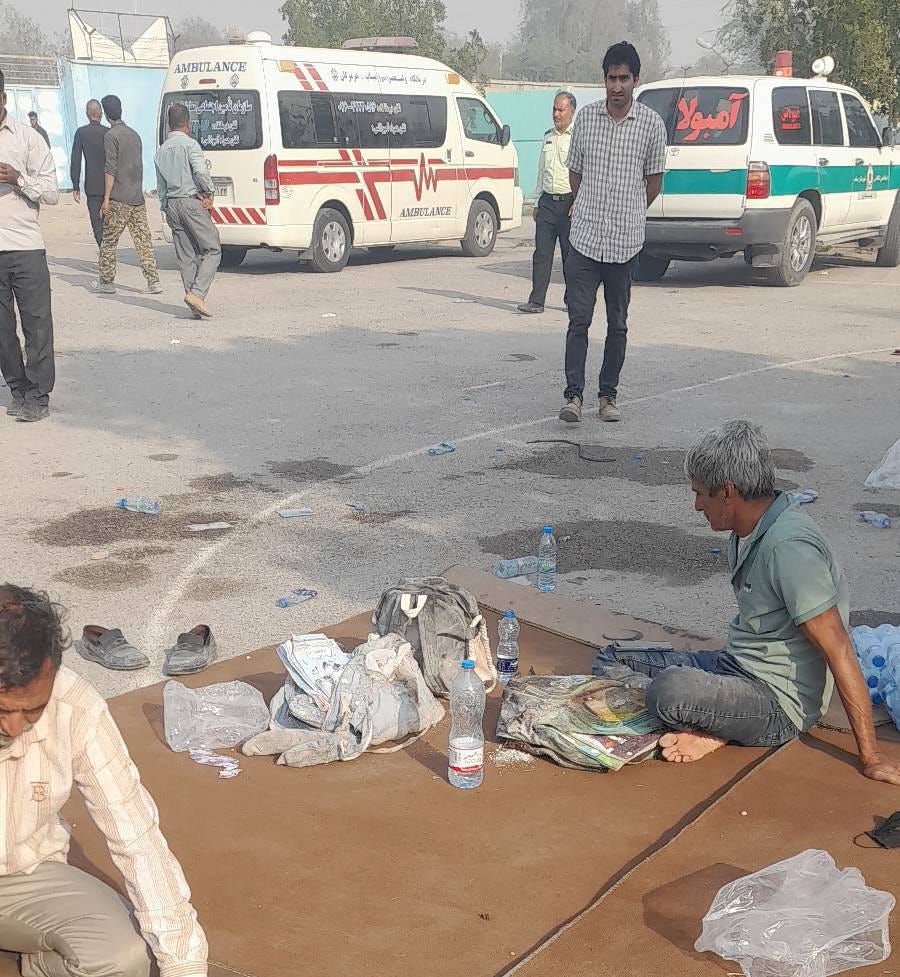 A father who sat talking to his child’s backpack, in the aftermath of the U.S. missile strike on the Minab school, after failing to find them in the rubble, on February 28, 2026. Photo courtesy Majid Dadania of the Red Crescent Emergency Response team.
Most of the children who sought shelter with their teachers inside the prayer hall after the first cruise missile hit the area were killed in the subsequent strike.
Firefighter Mohammad Yazdanpanah said that large excavation equipment was required to retrieve some of the bodies or search for survivors. He recalled a moment when an excavator was moving large slabs of concrete to clear the space for rescue workers. “The moment the excavator’s bucket hit the concrete, a four or five-year-old girl—I don’t know if she was in preschool—was inside the bucket and from up where she was, the back of her brain and her skull completely fell in front of me. I was down on the ground and she was up high,” he said. “That really impacted me. I couldn’t control my tears. I sat and kneeled down. I couldn’t go and remove her. One of my colleagues went and picked up the little girl in his arms, brought her down. We placed her in a body bag. I was carrying the body bag while I cried until I placed it in the ambulance that was there, and they took her.”
Dr. Darvishi eventually arrived at the school and began coordinating the emergency mental-health response. “We can never accept that this was an accident. An accident can’t happen like this,” she said. “We have the notion of martyrdom, but many mothers got to say goodbye to their martyred children when they sent them to the frontline to fight [in war]. Their minds were prepared for what was to happen. But in the therapy room, a mother [of a Minab victim] described to me that she had prepared her child’s snack and placed it in her backpack, kissed her face, and sent her to school. What was returned to her was her child’s backpack with an uneaten sandwich.”
In the aftermath of the Minab strikes, the Trump administration unleashed a flurry of contradictory statements and justifications. “The Department of War would be investigating that if that was our strike,” Secretary of State Marco Rubio said on March 2. “The United States would not deliberately target a school.” Israel’s UN ambassador Danny Danon suggested that Iran itself had bombed the school. “Some reports show that it was actually IRGC attack that targeted this school,” he said. The talking point was swiftly adopted by President Donald Trump.
“In my opinion, based on what I’ve seen, that was done by Iran,” Trump said on March 7. “We think it was done by Iran, because they’re very inaccurate with their munitions, they have no accuracy whatsoever. It was done by Iran.” Trump offered no evidence for his claim.
Drop Site obtained a set of high-resolution photos of the missile fragments and components taken by Iranian investigators at the scene of the strike. “These all appear to be remnants of Tomahawk missiles,” said Trevor Ball, a weapons technical analyst at Armament Research Services, who reviewed the images. The CAGE code—a five-character identifier used by the U.S. government to identify companies and organizations that do business with the Department of Defense—is that of Raytheon, the primary contractor for the Tomahawk missile, Ball observed. “The images show at least two different turbofan engines, which would indicate remnants of at least two Tomahawk missiles,” Ball added. “The proximity between all the struck buildings makes it very likely that remnants from different strikes could be intermixed, depending on where the remnants were specifically found. Any remnants found buried under the rubble of the school would be from the munition that hit the school.”
Missile fragments that Iranian investigators recovered from the site of U.S. missile strikes in Minab. The cruise missile components indicate they were manufactured by Raytheon Corporation.
“Tomahawks have a loiter capability, and the capability to be redirected in flight,” Ball said, referring to the possibility that the inbuilt camera feeds in the missile should have allowed an operator the possibility to change course if they saw a school being targeted. “Tomahawk missiles can take and send photos, but unless they were already programmed to loiter after taking the photo, there wouldn’t have been time to select a different target.”
When video and photographic evidence first emerged indicating that a U.S. Tomahawk missile was employed in the strike, Trump claimed “a Tomahawk is very generic. It’s sold to other countries,” falsely asserting that “Iran also has some Tomahawks. They wish they had more.” In fact, only five countries possess Tomahawk missiles: the U.S., UK, Australia, Japan, and the Netherlands.
Rubio and other U.S. officials deflected questions about Trump’s claims and reiterated that the U.S. would never deliberately target civilians.
War Secretary Pete Hegseth, however, continued to suggest Iran was ultimately responsible for the school bombing. “The mullahs are desperate and scrambling,” he told a news briefing on March 10. “Like the terrorist cowards they are, they fire missiles from schools and hospitals, deliberately targeting innocents.”
No evidence has ever been produced indicating a single munition was fired from the vicinity of the Minab school.
“This level of propaganda and misinformation, disinformation that’s put out, we’ve never seen in the U.S.—even with the previous corrupt administrations we’ve had since the time of our inception, just nothing to that level,” said Wes Bryant, a former senior targeting advisor at the Pentagon who previously served as a special operations tactical air controller in the elite special warfare branch of the U.S. Air Force. “These are things that you would expect someone [from] the Iranian regime to do and say. And, sadly, we see almost in some ways more truth being put out by the [Iranian] regime than being put out by Trump himself when it comes to these incidents.”
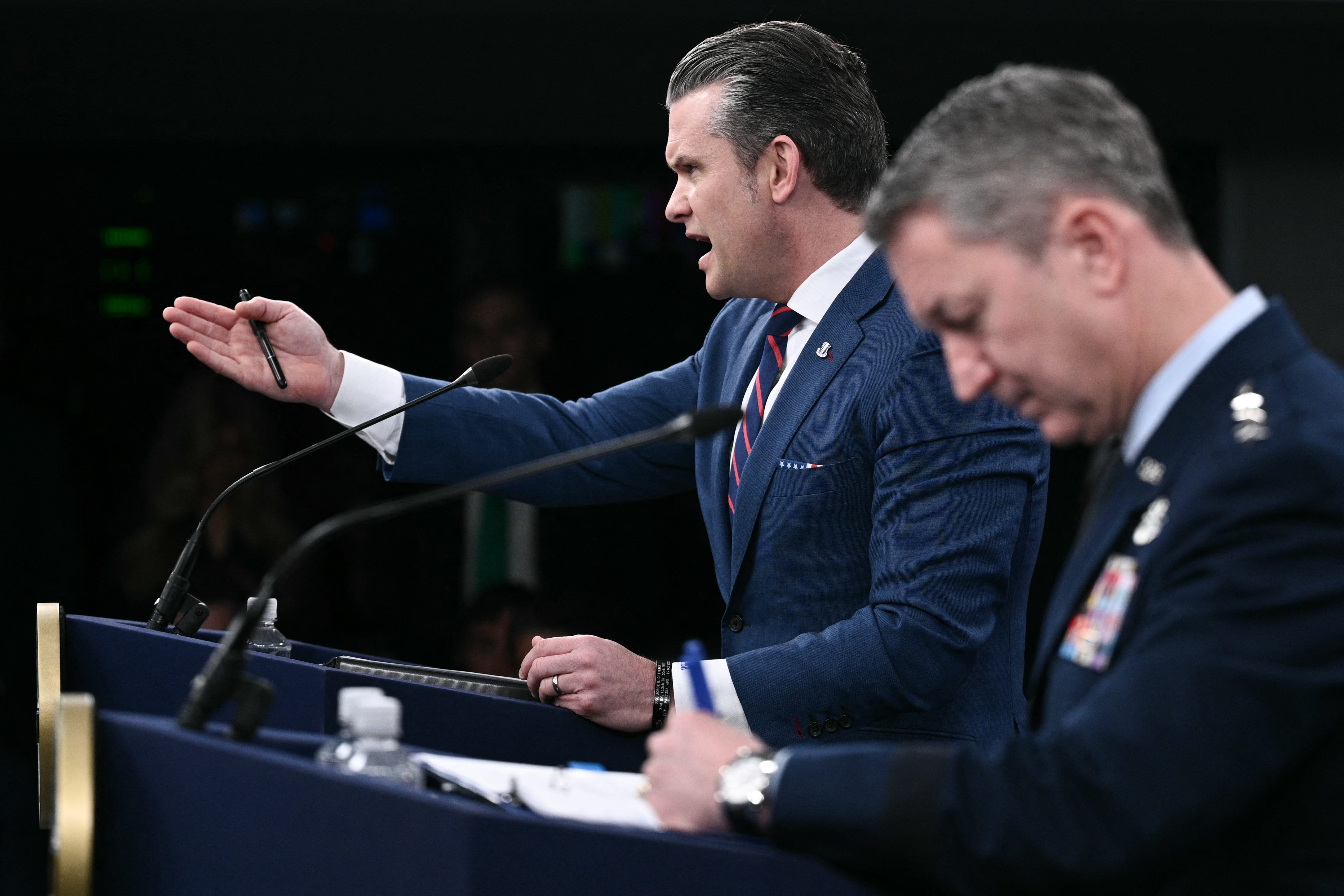 War Secretary Pete Hegseth and Gen. Dan Caine, chairman of the Joint Chiefs of Staff, speak during a press conference on U.S. military action in Iran, at the Pentagon in Washington, DC, on March 2, 2026. Photo by Brendan Smialowski / AFP via Getty Images.
On March 12, the New York Times reported that an “ongoing military investigation has determined that the United States is responsible for a deadly Tomahawk missile strike on an Iranian elementary school.” Citing sources briefed on preliminary findings, the Times wrote: “The ‘target coding’ provided by the Defense Intelligence Agency, the military intelligence agency that helps develop targets, labeled the school building as a military target when it was passed to Central Command, the military headquarters overseeing the war.”
The next day, Hegseth announced that U.S. Central Command (CENTCOM) had launched an internal investigation. “There’s only one entity in this conflict, between us and Iran, that never targets civilians, literally never targets civilians,” he said. “We will investigate. We’ll get to the truth and we’ll share it when we have it.”
CENTCOM Commander Admiral Brad Cooper told Congress in May, “The school itself is located on an active IRGC cruise missile base. It’s more complex than the average strike.”
Bryant said he has not seen any indication the school was housed on an active missile facility or base. “It’s pretty disturbing to hear that kind of excuse from someone like Cooper who should know better, because it doesn’t matter if a school is on the base and not even closed off, it’s still a protected entity,” said Bryant, whose last position at the Pentagon in 2024 was the chief of civilian harm assessment for the Department of Defense. “Those children, all those civilians, are still non-combatants and protected, so it’s really disgusting to hear that. This wasn’t even fragmentation that hit a school next to another target. This was deliberately targeted very, very clearly and obviously. So at the very least, [it was a] complete mischaracterization of the target.”
At the G7 summit in France on June 17, a reporter asked Trump if anyone would be held accountable for the Minab strike. “It’s a strange question to be asked at this state—we’re talking about a long time ago,” Trump quipped. “Nobody did that on purpose. I guess you’d have to say about [Iran], ‘What about the thousands of soldiers that they blew up when they opened their car door? What about the thousands of people that were killed by Iran?’ No, mistakes are made. War is nasty.” He cited the ongoing internal investigation and claimed, “I could have a report for you tomorrow.” No such report has been produced.
According to Bloomberg News, which spoke to more than two dozen U.S. officials and sources familiar with the internal Pentagon probe, the school was placed on a list of targets to strike in the opening hours of the war because it had been categorized as part of an IRGC naval facility. Sources told Bloomberg that the “kill chain” that led to the attack included input from the Maven artificial intelligence system operated by Palantir. Maven did not flag that the site was now a school, the report claimed, nor did any personnel tasked with reviewing the AI target data. “In past conflicts, preparing lists of proposed targets—work that includes assessing how they align with an operation’s objectives—had taken hours for staffers to complete,” the report said. “Ahead of the U.S. attack on Iran, much of that work was condensed into several minutes via Maven.”
Harrison Mann, a former U.S. Army major and intelligence analyst for the Defense Intelligence Agency (DIA), said that it is likely that the standard vetting that should have happened before launching strikes was not implemented, in part due to the pressure put on analysts to produce a sweeping bank of targets to hit following the political decision to launch the war.
“Lets say there are 20,000 possible targets in Iran, you have a limited amount of analysts who have to check all these, and in normal times they are not necessarily going to be going through all of these 20,000 points to make sure they are updated,” said Mann, who worked at the Middle East/Africa center at DIA. “We do not know at what point the DOD or intelligence community was told that they needed to formally prepare for this operation. Even if everyone who was supposed to began going through and re-vetting these targets, they may not have had enough time to go back through all of them and make sure this one wasn’t a school that you could find on Google Maps.”
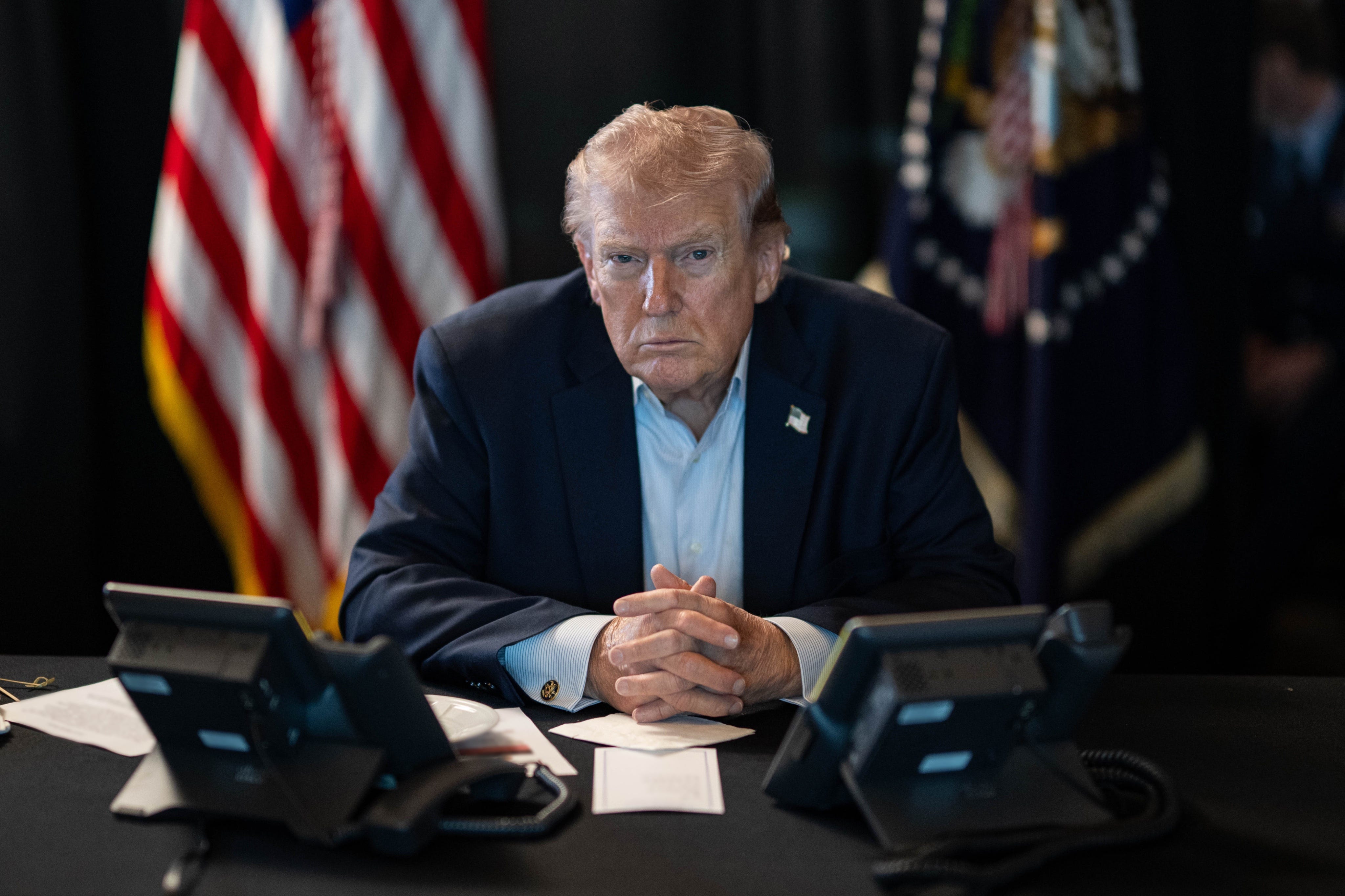 President Donald Trump sits at a table monitoring military operations against Iran, in Washington D.C. on March 02, 2026. Trump initially claimed that Iran had bombed the Minab school. Photo by The White House / Anadolu via Getty Images.
Trump has boasted that U.S. surveillance capabilities are so advanced its satellites can read name badges on Iranian employees entering nuclear facilities. “We can read the name of a person. If his name is Mohammad something—and most of ‘em are Mohammad, you can guess about 50% right—we can read his name right on his tag from space,” Trump boasted to Fox News in May.
“This president of the United States—look at his interviews. He says we have tools, we have cameras that can read car license plates in Tehran. He even mentioned the name of Mohammad,” said Rahimi, the justice minister. “How is it possible for a country that is so well equipped—and we accept that the United States has advanced capabilities and equipment—how could he not have known that there was a school here? For more than ten years, this has been a school.”
Rharrit, the former U.S. diplomat who served under Presidents George W. Bush, Barack Obama, Trump, and Joe Biden, said the narrative being shaped about the strike is that the school was collateral damage in a legitimate military operation aimed at eliminating a key IRGC missile facility. This explanation, she said, deserves intense scrutiny.
“It’s not complicated. The way strikes are approved—especially strikes of this caliber, of this significance, on Day One of a war—and the chain of command that it goes through, not just up and down, but side to side in terms of interagency, there are so many layers. It’s immense,” she said. “There is a clear structure to how targets are done and an investigation is not complicated as long as there’s the political will. But there’s clearly no political will to actually have an investigation. There’s political will for a cover-up.”
Bryant, who helped lead U.S. targeting operations against ISIS in Iraq and Syria, said he has not seen evidence that the U.S. knowingly bombed an active school. “I would be very, very surprised—but I guess even more horrified and angered—to ever find out that a targeting team, that Central Command actually knew this was a school full of children and teachers and made a decision to target,” he said, even if they thought bombing the school would achieve a military objective. “That’s an IDF, that’s an Israeli type of proportionality call.”
Based on Bryant’s knowledge of the targeting procedures and his understanding of changes made under Hegseth at the Pentagon, he believes that the military likely bypassed standard vetting of the target, relied on outdated maps, and ignored or eliminated basic reviews aimed at assessing potential civilian impact of bombing specific targets.
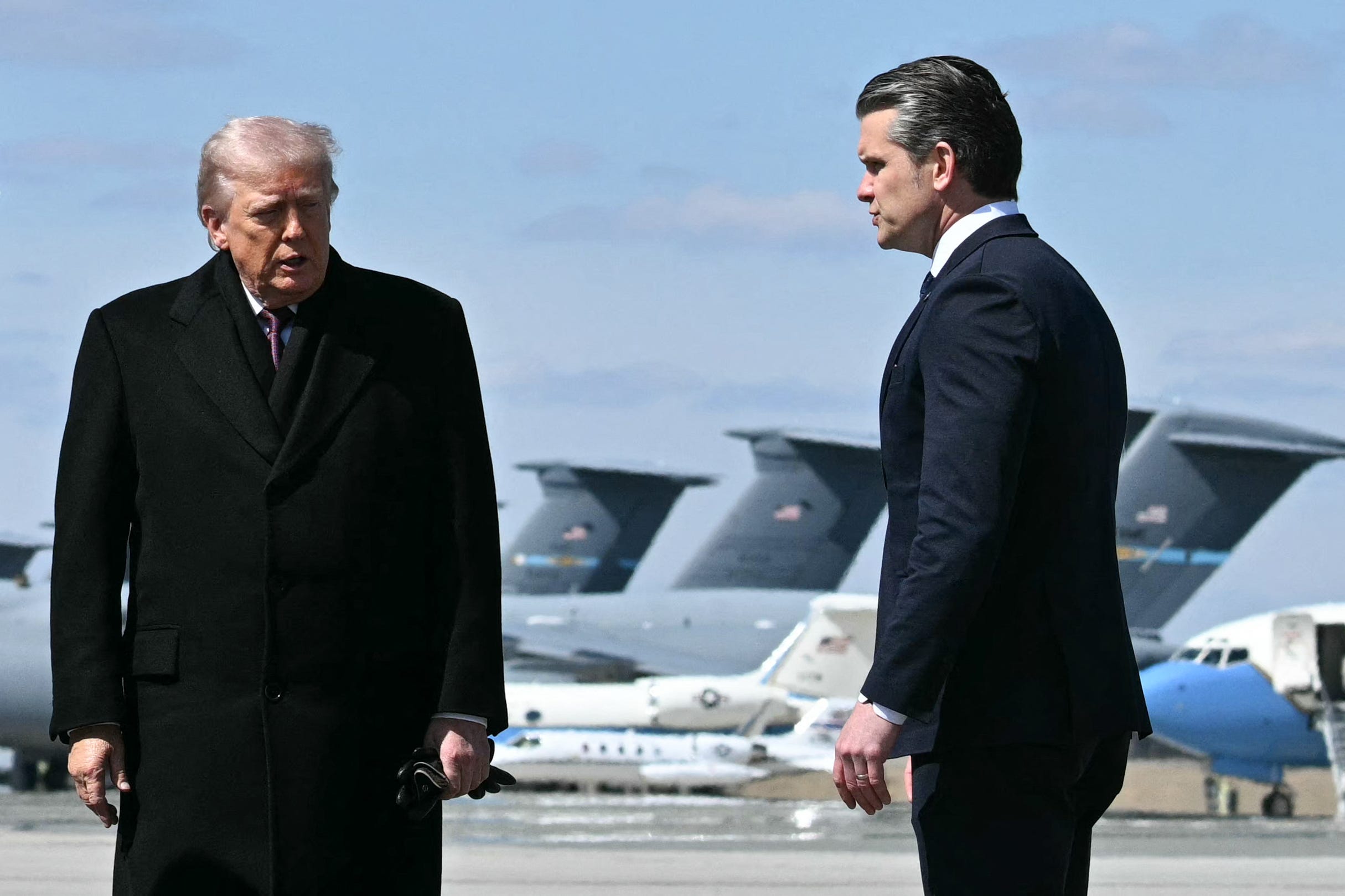 President Donald Trump and Secretary of War Pete Hegseth step off Air Force in Dover, Delaware, on March 18, 2026. Photo by Jim Watson / AFP via Getty Images.
Early in his tenure as War Secretary in 2025, Hegseth dissolved the Civilian Protection Center at the Pentagon—where Bryant worked—and announced a policy of “maximum lethality, not tepid legality.” The Trump administration has staked out a public and internal posture that has dramatically loosened restrictions on the killing of civilians, and Trump has repeatedly stated U.S. intent to bomb civilian sites. “I think these are all sinking together. And then, of course, the rhetoric from not just Hegseth, but especially Trump himself about destroying an entire civilization, all of that filters into the culture,” said Bryant. These factors, he charged, combined with the drive to strike an unprecedented number of sites in Iran in a short amount of time—the Pentagon boasted of hitting more than 1,000 targets in the first 24 hours of the Iran war—created the conditions for the Minab strike.
“The U.S. meant to target that facility, that school, but per their own negligence and recklessness, did not know at the time what it was. And there’s no excuse. This is not fog of war stuff. This is very 101. We had plenty of time to prepare these targets,” Bryant said. “It’s incredible to me that they took all this data that was over 10 years old, and none of it was re-vetted and re-validated. It wouldn’t have taken very long to do that,” he added. “Every time I look at it, it is just incredibly, incredibly mind boggling. I’ve never seen anything like that in all my 20-plus years of doing targeting myself. But I think it speaks to the culture change that Hegseth has instituted.”
“There’s no way to say that this was some type of error. You’re either saying that our U.S. Military is completely incompetent, that despite the multiple layers of review, everybody messed up—or there was something very, very sinister about this strike.”
A UN fact-finding mission concluded that “the building of the school was the intended point of impact and that the damage did not result from an errant strike or collateral damage from the attack on the adjacent IRGC compound,” adding, “No information indicates that the school was used for military purposes.”
Rharrit said the strike haunts her and she struggles to understand how such a catastrophic mistake could happen. Pointing to the extensive surveillance capabilities the U.S. employs before airstrikes and the fact that the schoolyard was packed with children, teachers, and parents at the time of the attack, she said she has gnawing questions about intent.
“There’s no way to say that this was some type of error,” Rharrit said. “You’re either saying that our U.S. Military is completely incompetent, that despite the multiple layers of review, everybody messed up—or there was something very, very sinister about this strike.”
Bryant, however, said it is possible that the military was not persistently monitoring the Minab site in real time ahead of the strike, because the U.S. had not yet established “air superiority” to fly drones or other surveillance craft above each target in the early stages of the war. The volume of strikes in the opening hours of the bombing meant that many attacks were effectively launched on auto-pilot.
Nonetheless, Bryant said, the military should have pulled the most recent satellite and intelligence on any targets it intended to hit prior to the launch of the war. Satellite imagery captured in late 2025—two months before the strike—showed children standing in the school yard and on a soccer field. CENTCOM also had an obligation to review each target and follow established oversight procedures before giving a green light, Bryant said. “You can conduct [strikes] without eyes overhead, but you still have the obligation to meet all those criteria that we have in our targeting doctrine and policy. One of those is actual characterization of, and vetting of, each and every target and then—as near real-time as possible—risk assessment. That means characterization of the civilian environment and pattern of life, collateral damage assessment,” he said. “None of those were accomplished. And there’s other ways to accomplish that. Another way is a five second Google search of that area.”
Dr. Helyeh Doutaghi, a scholar of international law and political economy at Tehran University, said the reported Pentagon explanation for the strike serves a mission aimed at “obscuring the nature of the attack by reducing it to outdated maps, AI failures, or bureaucratic and budgetary shortcomings.”
“Human error may explain an isolated mistake; it cannot adequately explain a repeated strike on the same area several hours after the initial attack,” Doutaghi said.
“What is particularly troubling about this framing is that it asks us to consider the incident in isolation, detached from the longer history of warfare in which schools, hospitals, religious sites, journalists, and other civilian spaces have repeatedly become targets. Historical memory matters here,” she added. “We remember statements from U.S. officials warning Iranians that those who wished to remain alive should leave. And we have witnessed, of course, in Gaza, the normalization of attacks on civilian infrastructure on a scale that has profoundly altered the level of public tolerance for violations of international humanitarian law.”
“The administration and Hegseth have made it quite clear that they don’t really care about civilian casualties. That may also have been true of previous bombing campaigns that predate the Trump administration, but it is even more the case than in the past and they have made it clear that troops do not need to be concerned about consequences.”
If the U.S. ultimately claims that the Minab strike was a “mistake” caused by outdated intelligence and human error, international law experts say, this would still not absolve the U.S. from liability for committing a war crime.
“The Geneva Conventions require those who plan an attack to do ‘everything feasible’ to verify that the objectives to be attacked are neither civilians nor civilian objects; to take all feasible precautions in the choice of means and methods of attack; and to refrain from attacks expected to cause excessive civilian casualties. This obligation requires, at minimum, that target data be reasonably current,” said human rights attorney and international war crimes prosecutor Reed Brody. “The United States plainly failed to do everything feasible to verify that the attacked building was a military objective rather than a protected school,” Brody added. “This was the result of a systematic failure by the U.S. government, which launched an unlawful war of choice without proper planning or adequate legal oversight. It reflects a broader pattern of degrading civilian-casualty review mechanisms that should have flagged this strike as unlawful before it was executed.”
“The administration and Hegseth have made it quite clear that they don’t really care about civilian casualties. That may also have been true of previous bombing campaigns that predate the Trump administration, but it is even more the case than in the past and they have made it clear that troops do not need to be concerned about consequences,” said Mann. “There is no mystery about what coordinates those missiles hit and that question would have been answerable on the day of the strikes. The only way that CENTCOM would not know is that they are choosing to be willfully ignorant.”
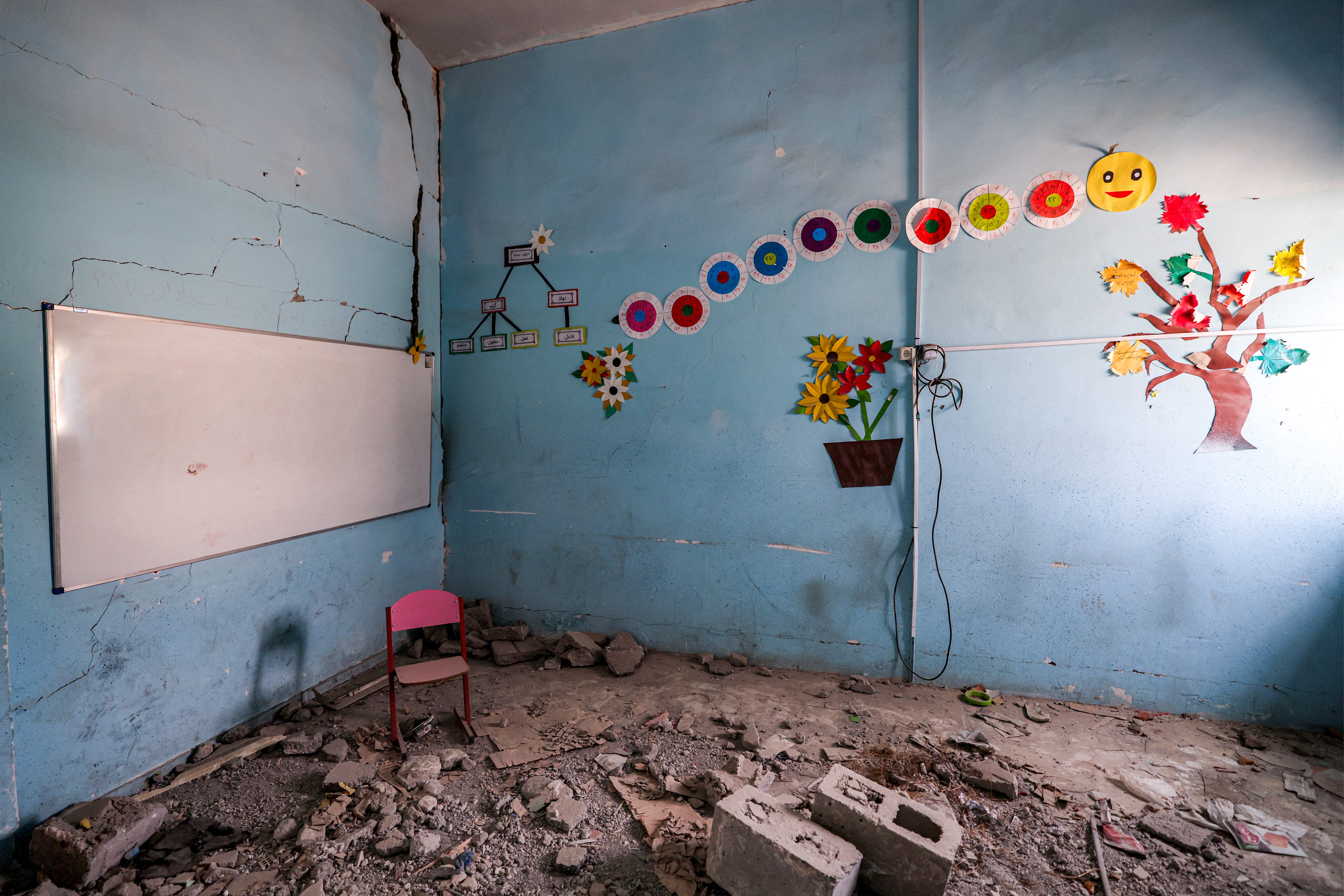 A view from inside a classroom at the destroyed Shajareh Tayebeh primary school in Minab. Photo by Atta Kenare / AFP via Getty Images.
Many people in Iran believe the Minab school bombing was intentional, a deliberate strike aimed at inspiring terror and sending a message that the “regime” cannot protect the people and that no target was off limits as long as it remained in power.
“From the very first hours, the attacks were characterized by an extraordinary level of shock—and not just Minab: the decapitation of the political leadership, including the assassination of Ayatollah Khamenei and members of his family and staff, followed by the mass killing of children in Minab, as well as targeting a medical clinic in the same city all in one day. The political significance of this sequence lies in its capacity to produce a profound crisis of collective morale,” said Doutaghi, who traveled to Minab after the bombing and conducted extensive interviews with survivors and families. “This is where the logic of shock and awe, I think, becomes at play. The objective of such a strategy is not confined to destroying military or governmental targets. It seeks to communicate to an entire society that no space is safe, that the state is incapable of protecting its population, and that resistance itself is futile,” she added. “The killing of children is particularly devastating within this logic because it attacks the emotional and symbolic foundations through which a society reproduces itself. The child is not just a victim of war, but a political symbol of the state’s supposed failure to protect its future.”
Salem, the preschool teacher, is not a law expert or a government official, but her questions echo those being asked by such people. “They said it was a missile base. If you wanted to attack it, you could’ve attacked at night. Why did you attack at a time when children were in school?” she asked. “What did you see at the school? What were you afraid of? You were afraid of the children? What does a school have other than school bags, books, and notebooks? Our children’s missiles were made out of paper.”
The city of Minab in the southern Iranian province of Hormozgan lies in a strategic location. Sitting just above the narrowest chokepoint of the Strait of Hormuz, directly across from Oman’s Musandam Peninsula, it has long served as both a significant trade hub as well as home to Iranian military forces tasked with monitoring and securing the vital waterway.
“Minab is one of the most historical and oldest cities of Hormozgan province. If you study Marco Polo’s travelogue, he mentions the port connected to Minab. He passed through the Persian Gulf using this route,” said Dr. Mohammad Movarekh, director of Hazrat Abolfazl Hospital, the primary medical facility in the area. “The people here are mostly farmers. It’s also a coastal region. If you meet the people, many do work related to fishing. They are very gentle, simple, and very good people.”
More than a decade ago, the campus that would eventually house the Shajareh Tayyebeh Girls’ School was part of a compound that included barracks for the elite Iranian Revolutionary Guard Corps (IRGC). But in 2014, the area was redeveloped and designated for civilian use, with the IRGC retaining one section for an administrative building. “It was decided that the compound of this military site should be allocated to civilian activities and vacated by the military,” said the office of the governor of Hormozgan in a statement to Drop Site News. The only remaining IRGC presence in the general vicinity was the administrative headquarters of its Naval Force, the statement said. “This process began in various sections of the large compound in 2014 with the establishment of a school and a clinic, and portions of the former military site were reassigned to these civilian uses. The school and clinic thereafter commenced operations as entirely separate entities.” The school, the statement added, “obtained its establishment license in 2015 and has operated officially and publicly since that year.” The Hormozgan authorities provided Drop Site with two internal administrative documents formalizing the registration of the boys and girls schools at the site.
Large walls were erected separating the school from any other buildings, and it featured its own gated entrances and exits in a broader area that included shops and small businesses. The IRGC administrative facility was the first target hit the morning of February 28, several hundred meters away from the school. The IRGC had vacated those offices in 2025, following the Israeli and U.S. attacks on Iran known as the 12-Day War, and no personnel were present when the Minab strikes occurred, the governor’s office said. The IRGC did have an active, publicly identified facility more than a mile away from the school, but that site was not targeted in the early hours of the war.
When the U.S. bombed the school and other buildings, there were no secondary explosions that would have occurred if the missiles had hit a weapons depot. “No missile-related or military activities of the kind falsely reported in the media took place at that location,” said the governor’s office.
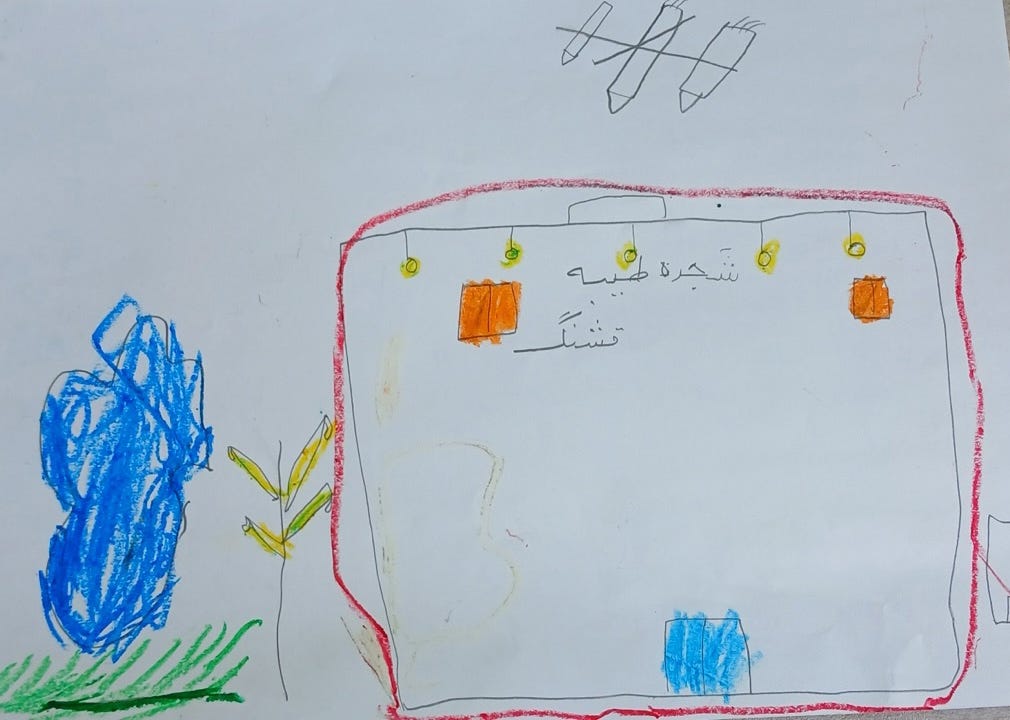 A drawing done by Mohammad Sharafi, a survivor of the Minab school bombing. His hands were burned in the attack and his sister and aunt were killed.
While the school offered priority enrollment to the children of military personnel, its student body was made up of Iranian families from diverse backgrounds, including low income families from Minab as well as ethnic minorities. Its motto was: “Today I learn; tomorrow we build.”
The school was a beloved institution in Minab and the region and maintained an active online presence with images regularly posted on its website depicting school plays and classroom activities. Videos showed students’ paintings and drawings on the walls, children signing tributes to their mothers, teachers distributing sweets and drinks. A wall-to-wall mural stretched across the school’s entrance showing a girl reading a book in a field of flowers, surrounded by fluttering butterflies. “When you see the school environment, the playground, the classrooms, all the evidence and signs that show that this is a school were clearly there beforehand. The location of the school, the neighborhood, and even in social media, all of this is clear,” said Pirhossein Kolivand, the director of the Iranian Red Crescent Society.
“It’s been close to 13 or 14 years that there is no military base there. Maybe it was there in the past but it’s been more than 13 or 14 years that this has been a school where elementary school students were studying,” said Zakeri, the chief of the Minab fire department. “There was a clinic, a business district, there was a school, there was a car wash.”
On the day of the bombing, rescue teams created a system to organize the bodies and other victims’ remains and transfer them to the Minab hospital. “Almost an hour after the incident, the city and the hospital were in complete chaos. Everyone from the city had gathered in the hospital. Everybody was worried about their children and what had happened. In this incident, three of our hospital personnel had their children martyred there,” recalled Dr. Movarekh. “Our own personnel were looking for their children, to see if they could find them among the martyrs and victims who were being brought to us. It was unimaginable.”
“In times of war, you expect the wounded to be military forces, but on the day of the incident, in the beginning, we only saw victims who were school children,” Movarekh added.
As the hospital staff scrambled to create makeshift triage facilities in its overwhelmed halls, word came sometime after 1 p.m. that another Tomahawk strike had hit the area by the school, including the Shahid Absalan Medical Clinic near the campus, where some of the victims were being treated.
“We were doing work, we were removing the martyrs, removing the children. It was packed with crowds there when the second [wave of] strikes hit,” recalled the Red Crescent Society’s Dadania, who estimated the later missile attacks struck 50-80 meters from the school building. “It hit the clinic and the co-op company there, and there was a car wash next door. It hit these three. It wasn’t far away. The blast wave came towards us. The shrapnel hit the nearby wall but it didn’t hit the crowds or the people,” he added. “The crowds were really big. If that strike were to hit the school or the school yard, it would’ve been a huge human catastrophe—more than one thousand people would’ve been martyred.”
“It was close to the school,” said Yaghoub, who was continuing to search for his daughter at the time. “You heard a sound and then immediately an explosion. They were no more than a few seconds apart. Within one-hundredth of a second, the missiles hit these three locations one after another. We were worried about our children there. It was a horrifying scene.”
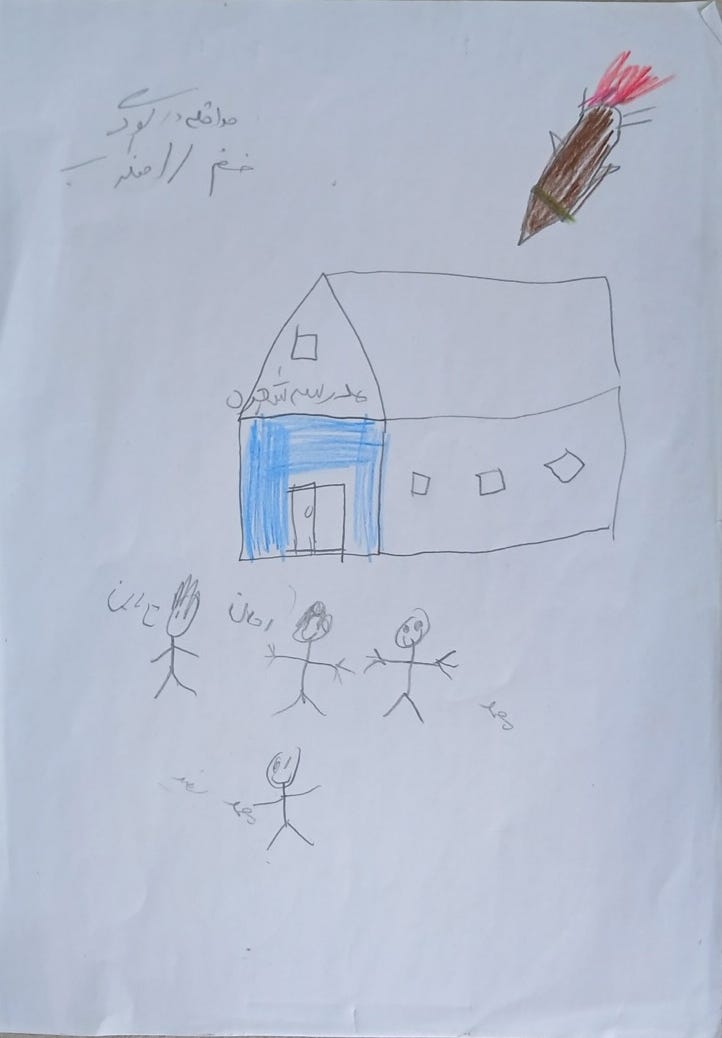 A drawing by a Fatemeh Zahra Bahrami, a survivor of the Minab bombing, depicting children in the school yard as a tomahawk missile hits their school.
By the time the clinic was hit, global media organizations had already reported the strike on the school and that large numbers of students had been killed. The clinic strike immediately spurred rumors that the main hospital could be hit next.
“When this happened, many of the ordinary people who were inside the hospital ran away. But I saw myself how both the doctors and nurses stayed, until the last moment,” Movarekh said. “We were ready to die. It would’ve been better in those circumstances. It didn’t make a difference.”
By that time, the hospital was overflowing with victims and body parts. “Minab Hospital is a general hospital with all the specialized fields, but this general hospital has a limited capacity,” Movarekh explained. “The number of our morgue drawers where we keep individuals who have passed away is six. Even during normal times, these drawers are rarely full. These drawers are empty. For incidents like this, no such capacity exists.”
The hospital staff had to place some bodies and fragments inside the cooling facilities in the hospital cafeteria and kitchen, which quickly filled up. “We called people who were fish and shrimp distributors, because this is a coastal area. We asked for their help and for their freezers. They came here so we could handle the martyrs being brought here,” Movarekh said. “We had to use freezer trucks for transporting fish.”
That night, with families crowding both the hospital and the site of the bombing, the hospital organized an ad hoc system to help families identify their loved ones. “Most of the martyrs were either burned, unfortunately, or were crushed under debris that had fallen on them and were in pieces. On the night of the incident, we took all the martyrs into a morgue and took their pictures,” he said. “We brought these pictures to the hospital mosque around 9:30 or 10 at night. We showed them to the families using a video projector.”
In the evening, Yaghoub and other family members had split up to wait for word of Fatemeh—some remained at the bombing site and Yaghoub went to the hospital. He said that in his heart he knew she was gone. Searching for her, he had entered the bombed school that day and saw the scale of the destruction in the area that once housed her classroom. “After two or three hours had passed, everyone knew. If you were there too, you would know no one could’ve made it out of there alive,” he said. “We knew our children had been martyred, we knew our children were no longer with us.”
Every time an ambulance or vehicle would arrive at the hospital entrance, desperate families would surround it, hoping for any sign of their loved ones. “Inside and outside the hospital, in front of the hospital where there is a major street, it was completely blocked because so many people had come looking for their children,” Movarekh recalled.
Shortly after 11 p.m., Yaghoub’s suspicions proved true when an ambulance sped to the entrance of the hospital. “I knew,” he said. “If I describe the scene, it would break anyone’s heart. When they brought Fatemeh, she was in one piece because she had been in her teacher’s arms [when she died]. When they brought Asra, her cousin—they were found together—she too was in their teacher’s arms. Their backpacks were there too,” he added. “They said when they opened her notebook and read, ‘Fatemeh Yazdanpanah,’ that’s when it was clear who she was.” Yaghoub said that rescue workers told him it appeared the teacher had been trying to shield the girls from the impact of the missiles when they died. “The teacher’s family say she had numerous injuries in various parts of her body,” he said.
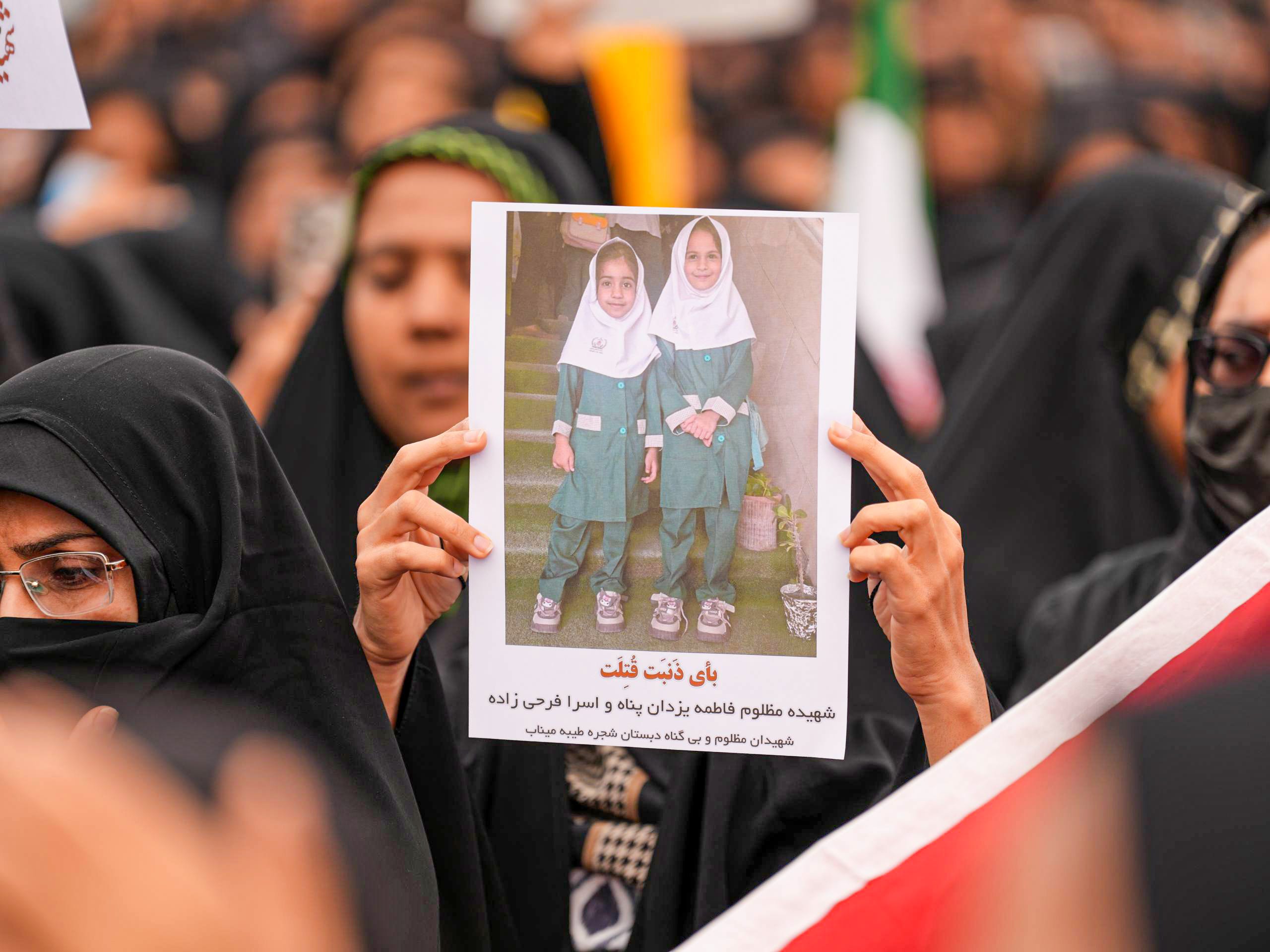 Mourners hold a portrait of Fatemeh Yazdanpanah and her cousin Asra during a funeral ceremony for children killed in the U.S. strike on Minab, on March 03, 2026. Thousands of people, including families and officials, attended the ceremony. Photo by Stringer / Anadolu via Getty Images.
The next day, families who had not yet found their children were permitted to enter the morgue facilities. “By going to the morgue in person and seeing their children or mostly their clothes, their school bags, for example, their socks or shoes, they were able to identify them. The incident was so bad that many of the bodies were dismembered. They found a hand, a leg, half of a body. This is how some of the remains were identified,” said Mokaveh.
“I don’t know how you can describe this. What happened that day is indescribable. You had to be there to experience what we did,” Movarekh said. “This is the first time I’ve been able to talk about what happened. People asked me, but I couldn’t. I avoided it. Even with all these months that have passed, I still can’t describe this incident the way I saw it.”
When Salem, the preschool teacher, and her son, Yassin, got into her husband’s car, she was hysterical. “I cried so much and I was hitting myself. My husband said, ‘What happened to your head? Your head is bleeding.’ I said, ‘Forget about my head,’” she remembered. “Now, I had time to look at my son’s leg which was cut by glass and his leg was bleeding. He said, ‘Just don’t take me to the hospital. Mama, they’re going to hit the hospital and blow it up. If we stay in Minab, they will blow up Minab too.’”
Dr. Darvishi became the lead psychologist treating the families of the victims as well as the 283 children who survived that day. “There were child survivors who were being helped to leave the school, bloody clothes, dirt and debris—they had come out of the school and were either looking for their friends or they were looking for a car that could take them away from there. Everyone there was looking for the remains of their own loved ones,” she said.
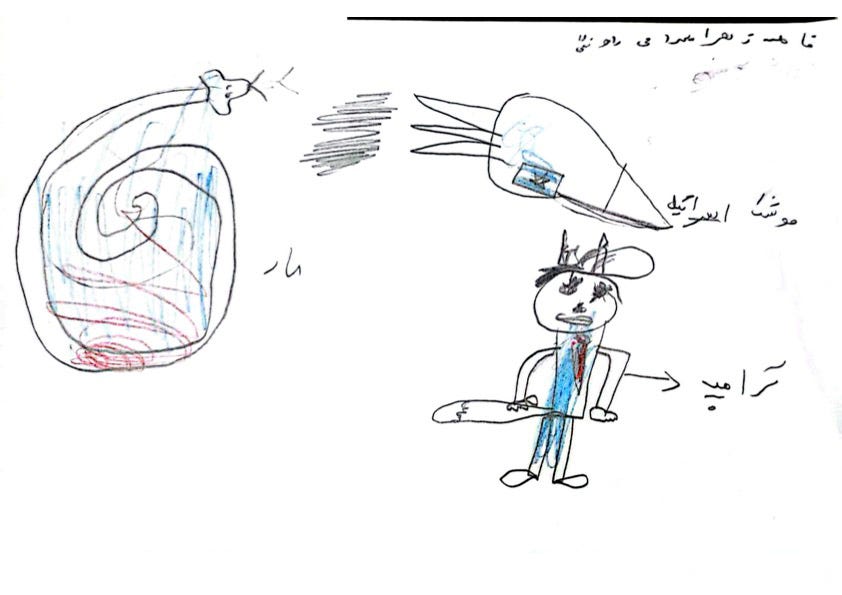 Drawing by student Fatemeh Zahra Bahrami, a survivor of the school bombing, depicting Trump, a missile emblazoned with the Israeli flag, and a serpent.
“A seven-year-old girl who was at the school described to me that when the school was hit, her teacher helped them and took them into the school’s prayer room and then the school was hit again. She saw the death, the martyrdom of her friends. She saw the death of her teacher,” Darvishi said. “We have several survivors who lost their sisters and brothers at the school. They are suffering both from PTSD—they have suffered blast waves to their brains—and they’re grieving for their sisters and brothers. And they have various painful thoughts such as, ‘Why am I alive? Why couldn’t I help my brother? Why couldn’t I help my sister? Why was my teacher hurt for trying to help me?’”
“What has happened to these children and their parents is that school is no longer a safe place for them—not just for those 280 children who were at that school, but for all the children of Minab,” Darvishi said.
Salem said Yassin is trapped in a mental prison of the events of the bombing, struggling with the guilt and shame of surviving while his classmates died. “I was a witness and saw this. For me, it’s hard, mentally. I am 30 years old but then you have a child who is just 10 years old,” Salem said. “Right now, my son says, ‘I won’t forgive you.’ To me, his mother. ‘I won’t forgive my mother.’ Why won’t you forgive your mother? ‘Because my mother came too early [and rescued me]. If she hadn’t come after me quickly, I would’ve been martyred, I would’ve had a gravestone at the Flowerbed of Martyrs Cemetery, I would be in heaven with my friends and teachers.’”
“Our children are broken,” Salem laments. “My son—I told his father that he’ll never be a child again. His spirit is broken.”
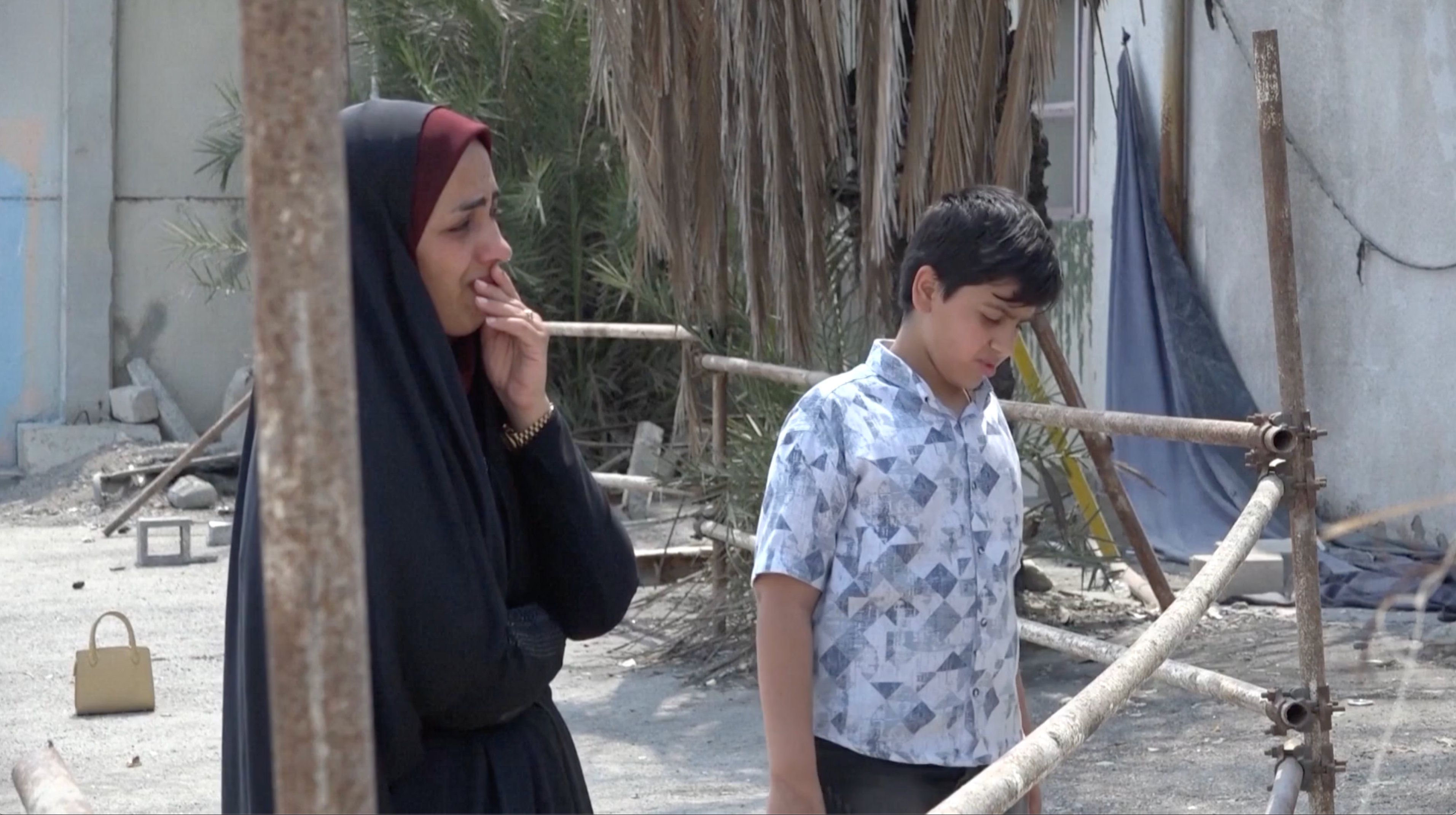 Hossniyeh Salem, a teacher at the Shajareh Tayyebeh Girls’ School, and her son Yassin at the site of the U.S. bombing in Minab, Iran. Screenshot via Reuters Connect / CGTV News.
Dr. Darvishi said the layers of trauma created by the school massacre have touched every household in Minab. “The 16 psychologists and experts who were from Minab, all of them said that we cannot provide mental health services because our own loved ones were at the school,” she said. “Minab is a city where many are related to one another or there was a neighbor who someone lost, or someone from our own family, and our own thoughts are filled with grief and stress from this issue.”
The children who survived that day are haunted by guilt and shame, as are many parents of the victims. “In grief, there are several stages. The first stage is denial, the next stage is self-criticism, anger, and depression until the acceptance stage happens. Many parents are at the self-criticism stage, and the feeling of guilt,” Darvishi said. “I had a talk with a mother who told me that she was to blame for her child’s martyrdom, because ‘My son told me that morning that he had a stomach ache and didn’t want to go to school. I killed my son. I was the one who caused my son’s death.’”
Salem said the night of the bombing she was calling as many of the parents of her students as she could, as well as those of her former students. She recalled how the parent of one of her students confronted her. “Didn’t you say my child was your child? You saved Yassin. You couldn’t save my child?” Salem remembered. “I said, ‘I swear he wasn’t with me.’” She paused to regain her composure. “It is very hard.”
The surviving children of Minab have recurring nightmares and many wake up screaming. “Some of them say, ‘We hear our friend’s voice calling me for help, and I couldn’t help him. No matter how much I searched, I couldn’t help my friend. I couldn’t find him,’” said Darvishi. “Their dreams are mostly explosions, terrible noises, the body parts they saw, the voices of their teachers. They dream that they’re at school and it’s quiet and then there’s an explosion. They dream about what they experienced.” Many surviving children lost their appetites, their ability to concentrate or comprehend the time or day. Some believe their friends or teachers may still be alive and ask if they can look for them in the rubble of the school.
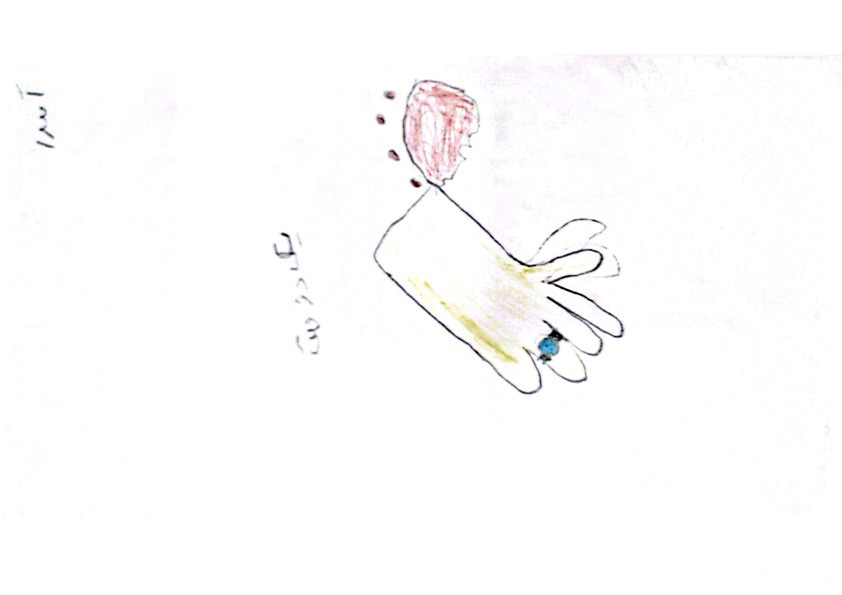 A drawing by Asra, a child who survived the Minab school bombing. The psychologist treating her said Asra saw the severed hand of a classmate.
“I’ve heard that at the Flowerbed of Martyrs Cemetery, a child came and took matches, took a lighter to burn their own hand and leg to see how the ones who burned felt, what their pain felt like,” said Salem.
“Imagine a six-year-old child speaking about this, saying, ‘I saw a hand. I think it was Ali’s hand. I saw a leg. I think it was him.’ And they have this feeling that maybe they’re not a good person. Children don’t have the ability to analyze. Oftentimes, they think maybe they weren’t good and that’s why they couldn’t save their friends,” Darvishi said. “They have severe guilt, a severe guilty conscience.”
Salem said that her 8-year-old niece, who was also a student at the school and survived the bombing, believes the U.S. and Israel are still hunting the surviving students. “She said, ‘I swear, they’re looking for the children of Shajareh Tayyebeh School. They want to martyr all of us and that’s when the war will end.’”
On the morning of April 8, 1970, Israeli warplanes crossed into Egyptian airspace and conducted a direct strike on Bahr el-Baqar primary school south of Port Said. It was 9:20 a.m., and there were more than 100 students in the school at the time. The U.S.-manufactured F-4 Phantom II jets dropped five bombs and fired two missiles at the school and unloaded machine gun rounds into the building. The structure was completely flattened, killing at least 34 children and wounding more than four dozen others. It became known in Bahr el-Baqar as “The Black Day.”
The Israeli attack occurred during a period known as the “war of attrition” that followed the end of the 1967 war. Tel Aviv subsequently claimed that its intelligence had mistakenly determined the school was a military target, but in the immediate aftermath of the strike, Defense Minister Moshe Dayan defended the attack. “We have checked and re-checked and there was no mistake this time,” he told Israeli radio, saying that he was “convinced beyond any doubt” that the Israeli planes hit a military base and if Israel had bombed a school, it was inside the base.
More than a half a century after the Bahr el-Baqar school bombing by Israel, the U.S. has followed a similar narrative trajectory. It is a familiar one: When the U.S. and its allies kill civilians, it is assumed to be unintended, “collateral damage,” or the fault of their adversaries who use children as human shields.
In April, a group of more than 100 prominent international law experts—including former U.S. military judges advocate general—published an open letter asserting that the Minab strike “likely violates international humanitarian law, and if evidence is found that those responsible were reckless, it could also be a war crime. The strike is among the deadliest single attacks by the U.S. military on civilians in recent decades.”
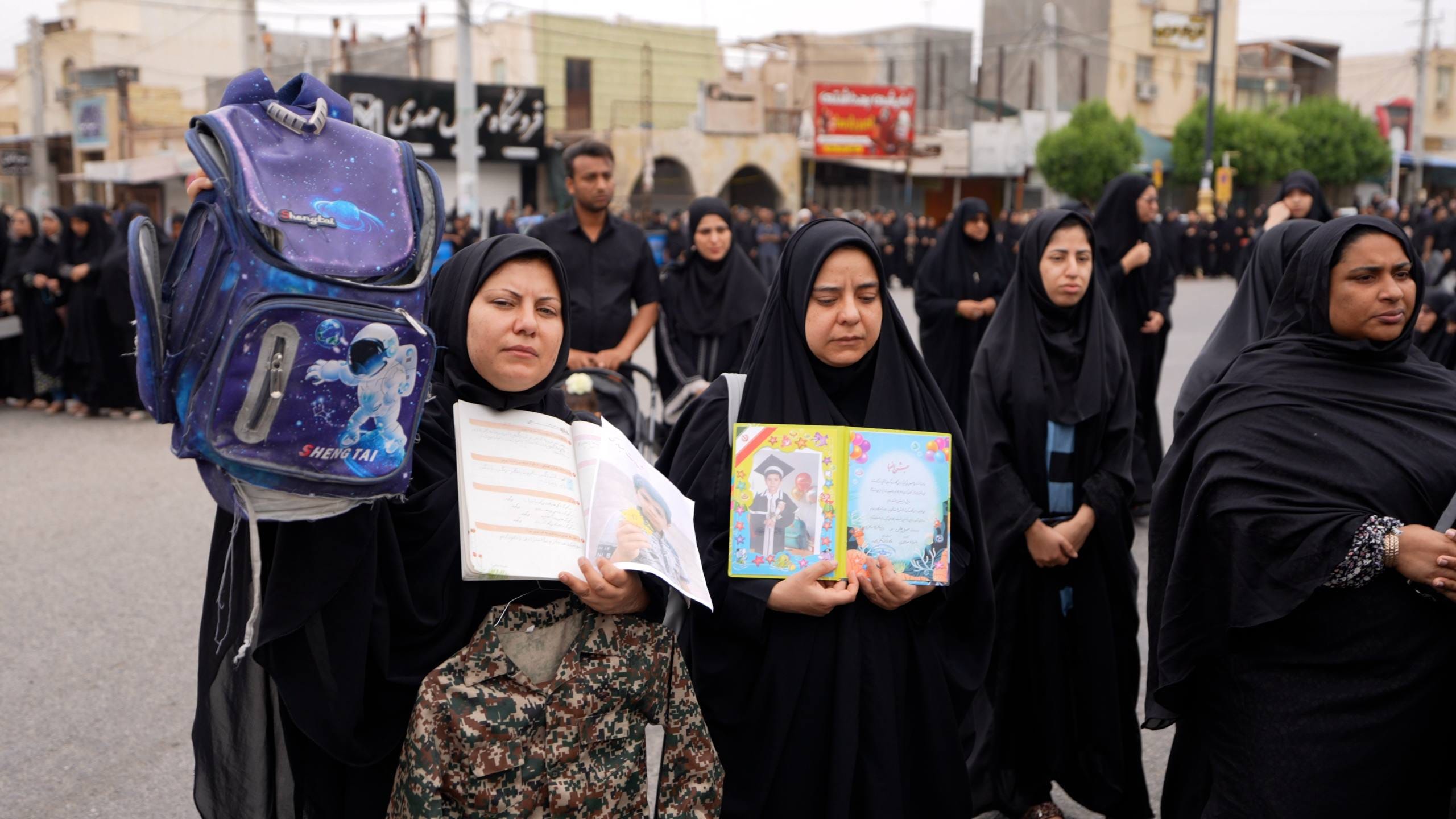 Women hold up schoolbooks and a backpack of children killed in the U.S. strike in Minab, on March 3, 2026. Photo by Morteza Akhondi.
In September, a UN fact-finding mission concluded that the U.S. had committed a war crime in its attack on the school, charging, “when targeting the school building, the U.S. acted willfully, that is with the requisite mental element of recklessness.” The mission’s report cited “deprioritization of civilian harm mitigation” measures by top U.S. officials and open disregard for international humanitarian law principles. It cited the use of outdated maps as well as publicly available data clearly showing the school was a civilian site prior to the onset of the war. “The U.S.’s failure to update information in relation to the school in its targeting databases and to verify that the building was a military objective before launching the attack went beyond mere negligence,” the mission determined. “Rather, the U.S. directed the strikes at the building of the school while being aware of a substantial risk of striking a civilian object and acting recklessly as regards the possibility that this would happen.” The mission concluded there are “reasonable grounds to believe the United States committed the war crime of launching indiscriminate attacks resulting in the loss of life or injury to civilians or damage to civilian objects.”
Iran is weighing its legal options. “We will pursue this. This principle still exists that aggressors shall not go unpunished,” said Rahimi, Iran’s Justice Minister. In Iran itself, prosecutors and criminal investigators have gathered an enormous volume of forensic materials and eyewitness testimony. They recovered the shrapnel and remnants of the U.S. Tomahawk missiles and guidance systems. Rahimi described the publicly available evidence that this was a direct hit on a clearly identified school as overwhelming and indisputable. The official figure reported by the Ministry of Justice remains 168 people killed in the attacks, but to date only 156 bodies have been identified.
“The fear and terror they created—they did this deliberately,” Rahimi said. “They wanted to create this fear and panic.” He said that Iran is gathering evidence indicating the strike was intentional, though he declined to offer details.
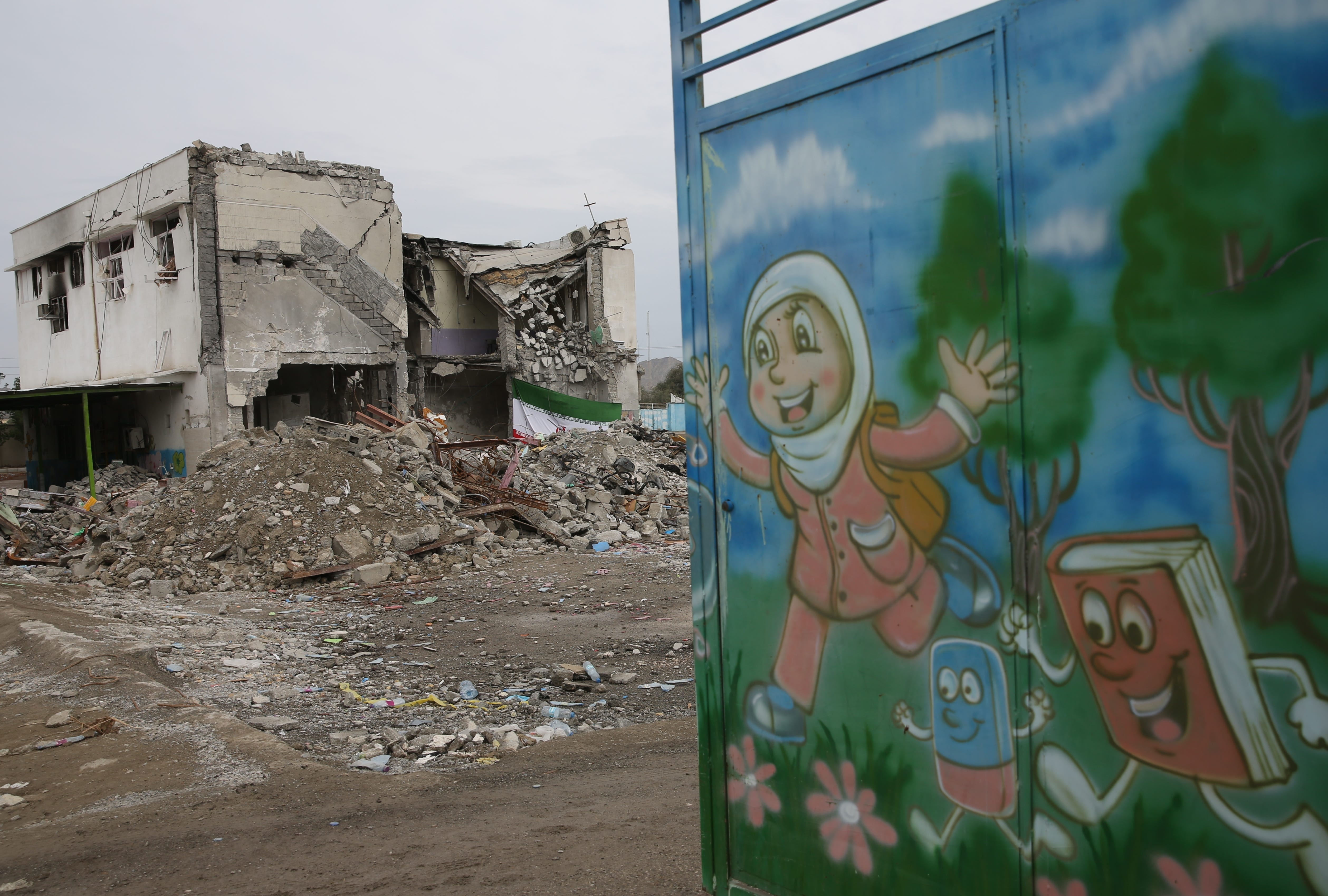 The Shajareh Tayyebeh School after the U.S. strike. Photo by Hassan Ghaedi /Anadolu via Getty Images.
“The wall paintings that are at the school here make it completely visible that it is a school. The U.S. has used missiles that are equipped with cameras, and some operator directs this missile,” he said, referring to the Tomahawks. “This missile, with its camera that’s seeing its target, if it becomes aware that this is not the target it wants, it can circle around that target for two hours if it wants to, and not hit it, and change its course.”
The domestic case has been transferred from Minab to the Tehran prosecutor and a criminal prosecution will be conducted. “At the school in Minab, because a civilian location was hit, in fact, we say that it is a war crime,” Rahimi said. After a domestic ruling is issued, Rahimi said, Iran will request that other nations enforce the decision. The Iranian parliament is also in the process of preparing legislation, he said, that would create a framework for Iran to assert international jurisdiction, allowing it to issue arrest warrants. “In the end, this is a phenomenon of sinister injustice that must be atoned for in this world,” Rahimi said. “It has become the law of the jungle. How many children were martyred in Gaza?”
Rahimi also said Iran will ask countries that have universal jurisdiction laws, which allow nations to prosecute grave crimes even if they did not occur within their boundaries or have any connection to their citizens, to issue indictments. Perhaps the most famous case of a nation using universal jurisdiction happened in 1998, when Spanish judge Baltasar Garzón issued an international arrest warrant for former U.S.-backed Chilean dictator Augusto Pinochet. The UK respected the indictment and arrested Pinochet who was receiving medical treatment in London at the time. When Pinochet tried to fight extradition, the House of Lords issued a landmark ruling that a former head of state does not have immunity for crimes such as torture.
While many nations do have universal jurisdiction laws on the books that would allow for the issuance of indictments, such an action would be seen as an extraordinary confrontation with the U.S. government. “This path depends mostly on political will,” said Brody, the veteran war crimes prosecutor. “A European or other government must be willing to expend diplomatic capital, face U.S. pressure, and commit resources to a prosecution that has no direct connection to its own territory.”
Askari, the Iranian international law expert, said that while Iran is rightly seeking all avenues for justice, the chances of success through universal jurisdiction are slim. “We have to again be realistic and know that we are talking about the high ranking officials of the U.S. administration,” he said. “I do not know a country in the world at the moment that has a good diplomatic relationship with the Americans who dares to go for universal jurisdiction implementation.”
During the 1991 Gulf War against Iraq, the U.S. attacked a bomb shelter in the Baghdad neighborhood of Al Amariyah. An F-117 stealth bomber hit the underground shelter with a laser-guided 2,000 bomb that ripped through the concrete. Moments later a second missile was launched directly into the opening, killing more than 400 people inside the shelter, including 261 women and 52 children. The U.S. claimed it was a “military communications center” and accused Saddam Hussein of deliberately placing civilians inside. A subsequent lawsuit, seeking to charge President George H.W. Bush and other U.S. officials, was filed in Belgium by family members of some of the victims. Under intense diplomatic pressure and threats, Brussels changed its universal jurisdiction law and threw out the war crimes case.
Rahimi said the proper venue for prosecuting the Minab school massacre would be the International Criminal Court (ICC). Neither Iran nor the U.S. have formally recognized the court’s jurisdiction. “Since we are not actually members of the ICC, we cannot file this complaint ourselves,” he said, adding that Iran was encouraging other states and non-governmental organizations to submit requests to the court. “Perhaps we can say that the most important authority that can confront these aggressors—which is necessary—is the ICC.”
Brody said the rules of the ICC would technically allow Iran to accept its jurisdiction by lodging a declaration with the ICC’s registrar, but it could not do so only in the interest of seeking an indictment against U.S. officials responsible for the Minab strikes. It would require that Iran accept the court’s jurisdiction over Iranian officials as well, a move Tehran is unlikely to pursue, particularly given the U.S. hostility toward the ICC.
Since his first term as president, Trump has waged war against the international court, sanctioning its personnel and openly defying the arrest warrants against Israeli Prime Minister Benjamin Netanyahu and former defense minister Yoav Gallant, who frequently visit the U.S. and, in Netanyahu’s case, the White House.
Trump is not the first U.S. president to attack the court. In 2002, President George W. Bush signed into law a bipartisan bill, subsequently known in the human rights community as the “Hague Invasion Act,” permitting the use of military force to free any U.S. or allied personnel charged with war crimes by the court.
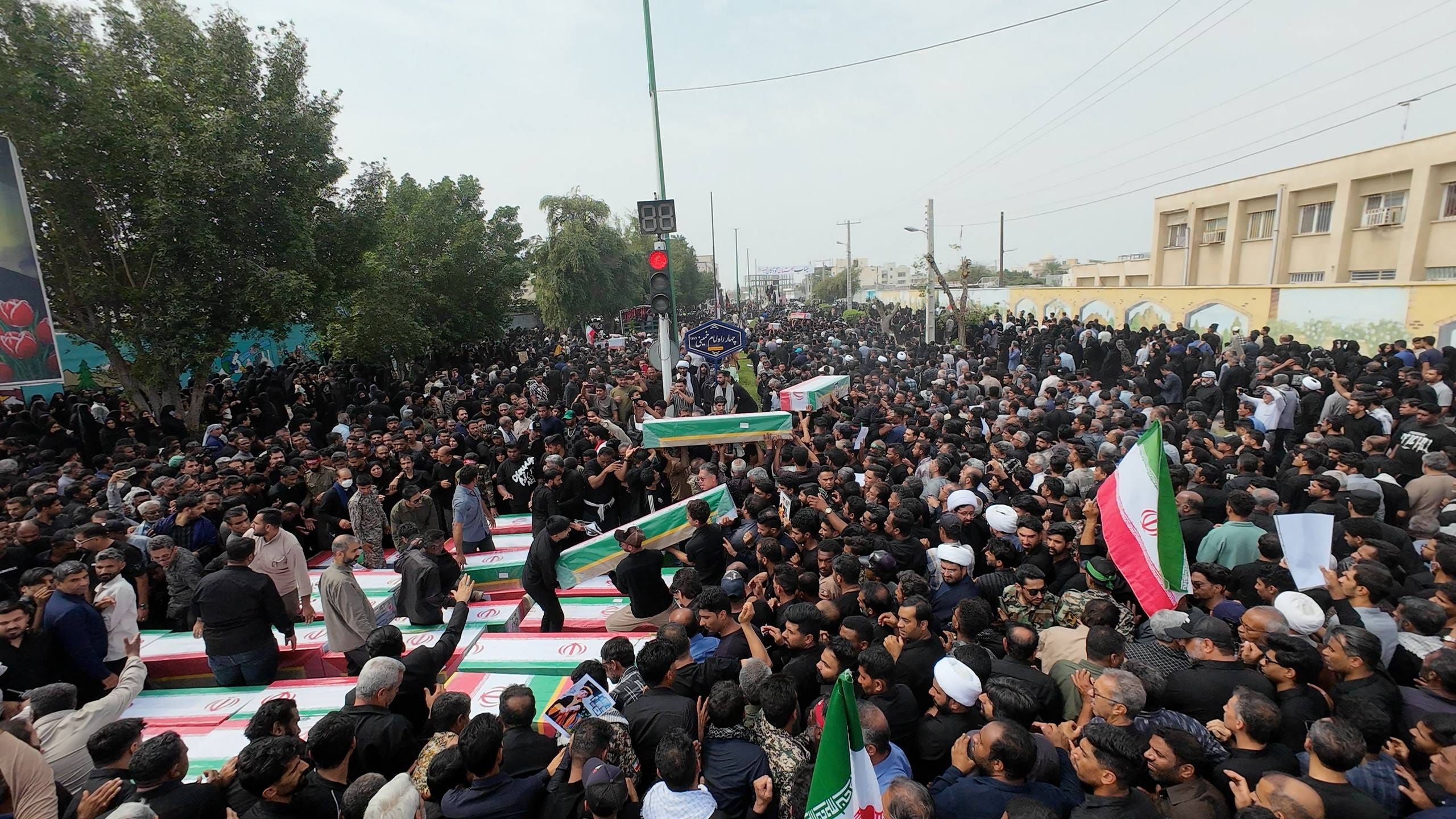 Mourners gather at a funeral for those who died in the U.S. strike on the Shajareh Tayyebeh school in Minab. March 3, 2026. Photo by Morteza Akhondi.
The cold reality of the post-World War II order is that international courts are intended to prosecute the “bad guys,” the adversaries of the West, African dictators, and the political and military leaders in the former Yugoslavia. The Nuremberg Principles were never intended to apply to the U.S. and its friends.
“We have to be a little bit realistic,” said Askari. “We have the superpower against international law and of course the superpower and those who are in hegemonic power at the moment, they will do whatever they can to make sure that the legal instruments and the legal bodies, they cannot work against them.”
In late September, the Wall Street Journal reported that the Trump administration was preparing to intensify its campaign to abolish the ICC, including through sweeping sanctions. The administration, according to the Journal, wants to “cripple the court by prohibiting it from conducting transactions in U.S. dollars, cutting it off from much of the global financial system.”
While there are other venues, such as the International Court of Justice (ICJ), to pursue war crimes claims, there are numerous jurisdictional reasons why this path is not feasible. The U.S. withdrew its acceptance of ICJ jurisdiction in 1985, after Nicaragua successfully obtained a ruling that the U.S. violated international law by arming the Contra death squads and mining the Nicaraguan harbors. The U.S. announced a boycott of the court and denounced it as illegitimate. Israel joined the U.S. in withdrawing its own acceptance of ICJ jurisdiction. While Iran itself has accepted ICJ jurisdiction, it has done so only under the condition of reciprocity, meaning it cannot simply sue the U.S. there.
In the case of the ICJ genocide case against Israel, South Africa relied on treaties to which Israel is a party to establish jurisdiction, namely the Genocide Convention. Brody said that to bring such a claim, Iran would need to identify a treaty that both it and the U.S. are parties to, which formed a clear legal basis for a proceeding.
For decades, Iran was able to file claims against the U.S. at the ICJ by utilizing the 1957 Amity Treaty, which dates back to the rule of the Shah. Since the 1990s, Iran has filed several cases and won some rulings, including a 2016 case against the U.S. for illicitly seizing Iranian assets in violation of the bilateral Amity agreement and ordered the U.S. to pay compensation. In 2018, after the ICJ ordered the U.S. to ease some of its economic sanctions against Iran, the Trump administration denounced the court and withdrew from the Amity Treaty, a decision then-Secretary of State Mike Pompeo said was “frankly, 39 years overdue.” Brody said he was not aware of an existing treaty between Iran and the U.S. that would clearly form the basis for a case against the U.S. at the ICJ related to the Minab strikes.
While the most direct routes to pursuing international justice for the Minab victims appear limited for Iran, these challenges do not eliminate Iran’s options. “The absence of a court with compulsory jurisdiction does not mean that the United States has no legal responsibility,” Brody said. “It means that there may be no judicial forum in which Iran can compel the United States to answer for that responsibility.”
Brody said that Iran and other nations could pursue the establishment of a special tribunal on the crime of aggression against the U.S. “The most significant aspect of this conflict was not any individual strike, but the decision to wage war itself. President Trump authorized an armed attack against Iran in manifest violation of the UN charter—without approval from the United Nations Security Council, and in the absence of an imminent attack from Iran,” he charged. “At Nuremberg [after World War II], aggression—the crime of waging an unlawful war of choice—was treated as ‘the supreme international crime’ because, as the Tribunal held, it contains within itself the evil of all the others. The crimes that flow from that unlawful war—including civilian casualties from airstrikes—are downstream consequences of the initial crime of aggression.”
But, Brody adds, “For the past 80 years, no one has been prosecuted for such acts of aggression because the major powers have made sure they weren’t.”
In 2025, however, three dozen states—mostly European—established a Special Tribunal for the Crime of Aggression against Ukraine. Operating in the Hague, the tribunal has a mandate to conduct trials in absentia against Russian officials.
“There is no conceptual legal reason why states could not seek to create a comparable tribunal to investigate the political leaders who attacked Iran. The legal principle is identical: to launch a large-scale armed attack on another state without Security Council authorization, and in the absence of an actual or imminent armed attack, is a violation of the U.N. Charter,” Brody said. “We can’t disregard this principle simply because the perpetrators are Israel and the United States.”
Should Iran and other nations succeed in establishing such a tribunal and win a favorable ruling, enforcing the judgement is almost an unfathomable mission given the multi-decade U.S. track record of hostility toward international justice and law. “The Minab school strike is not an isolated tragedy. It is a symptom of a broader failure to comply with the law of armed conflict and to provide meaningful accountability when violations occur,” said Brody. “Addressing that failure is not optional. It is a legal and moral imperative.”
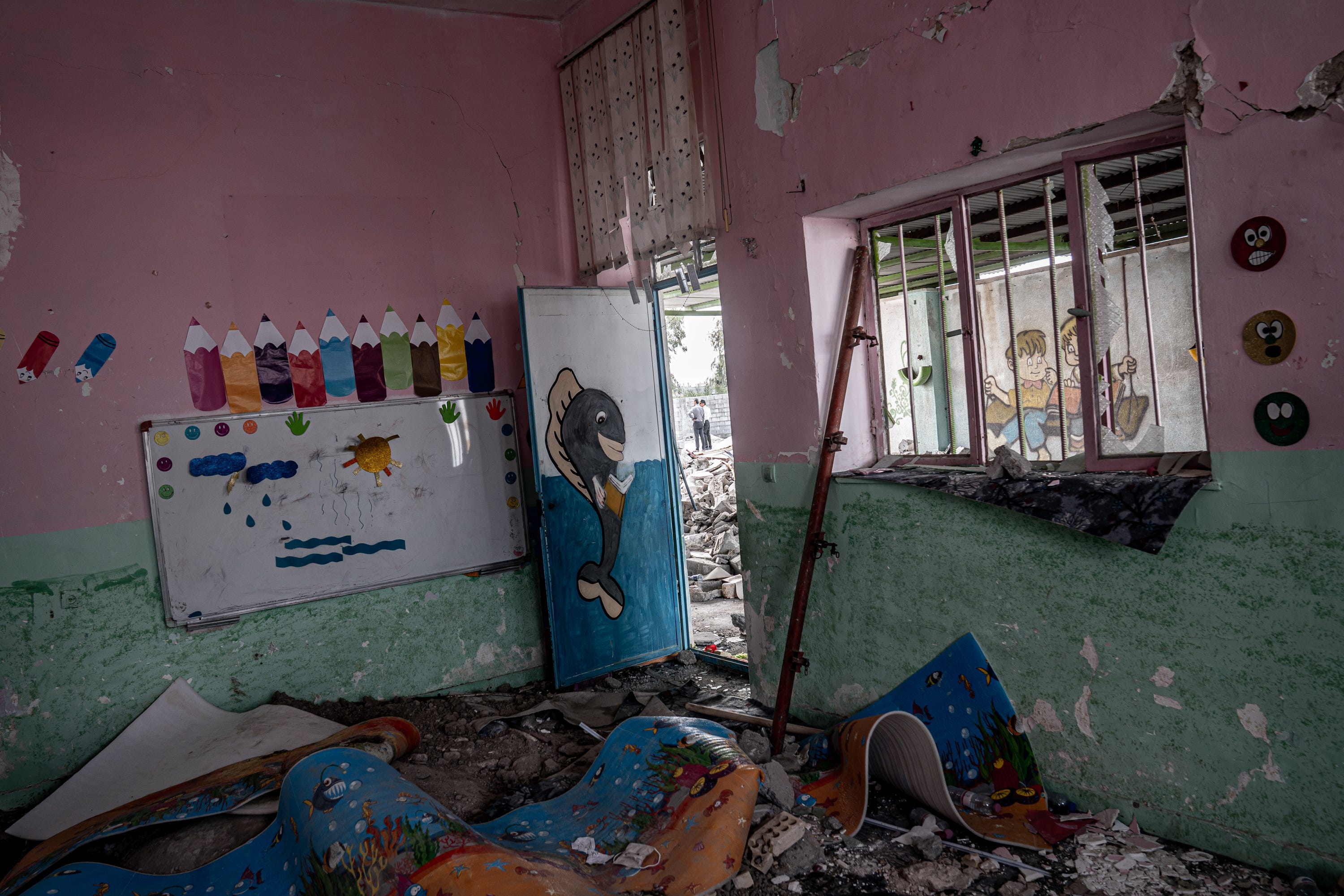 A bombed out classroom at the Shajareh Tayyebeh School. Photo by Hamid Vakili / Anadolu via Getty Images.
Doutaghi, the international law scholar, said that while these legal pursuits are worthy, she does not have any faith that justice for the victims will emerge from these systems. “Documentation can establish a historical record; legal proceedings can establish responsibility; but neither changes the balance of power that enables aggression in the first place,” she said. “For that reason, I believe Iran’s most realistic path toward meaningful justice involves re-establishing deterrence and changing the balance of power. That means imposing political and material costs on aggression and making clear that attacks on Iranian civilians cannot be carried out without material consequences.”
“If the killing of Iranian children is followed only by documentation, condemnation, and memorialization, while the structures that permitted their killing remain untouched, then we have preserved the memory of the crime without addressing its material cause,” Doutaghi added. “Justice must therefore mean both accountability for what happened and the transformation of the conditions that allowed it to happen.”
Salem, the Minab preschool teacher, said the families of the victims and the community will not find peace until there is retribution. “Everywhere you hear, ‘We want revenge. Take revenge for our children,’” she explained. “When you don’t take revenge, these crimes will be repeated.”
No single episode in recent Iranian history has impacted its broader society more deeply than the Minab school massacre. Every Iranian interviewed for this story broke down at some point during our interviews. After Dr. Movarekh, the director of the Minab hospital, finished sharing his memories from that day—which he had done for the first time since the attack—he turned to a colleague and confessed that he had hurt his hand because he was pushing his pen into his own skin in an effort to distract from the emotional pain he felt recounting that day.
“If you read famous Iranian novels or poems, you cannot easily find a tragedy like what happened in real time, real life in the Minab incident,” said Askari, the international law expert. “If you are a novelist, you are a poet, you imagine and you write—you try to make it as dark as possible to make sure that the reader is feeling profoundly sad,” he added. “But I can tell you it is not comparable.”
Dr. Darvishi, the psychologist, is from an old Minab family. For her, the surviving children, parents, firefighters, teachers, and others directly impacted by the bombing are not just patients, but her community. “The city of Minab has experienced a tragedy and an incident that makes it impossible to return to the way things were before this,” she said. “What happened in Minab is not something we can recover from with psychotherapy, humanitarian aid, and medication. The history of Minab has been transformed with this incident.”
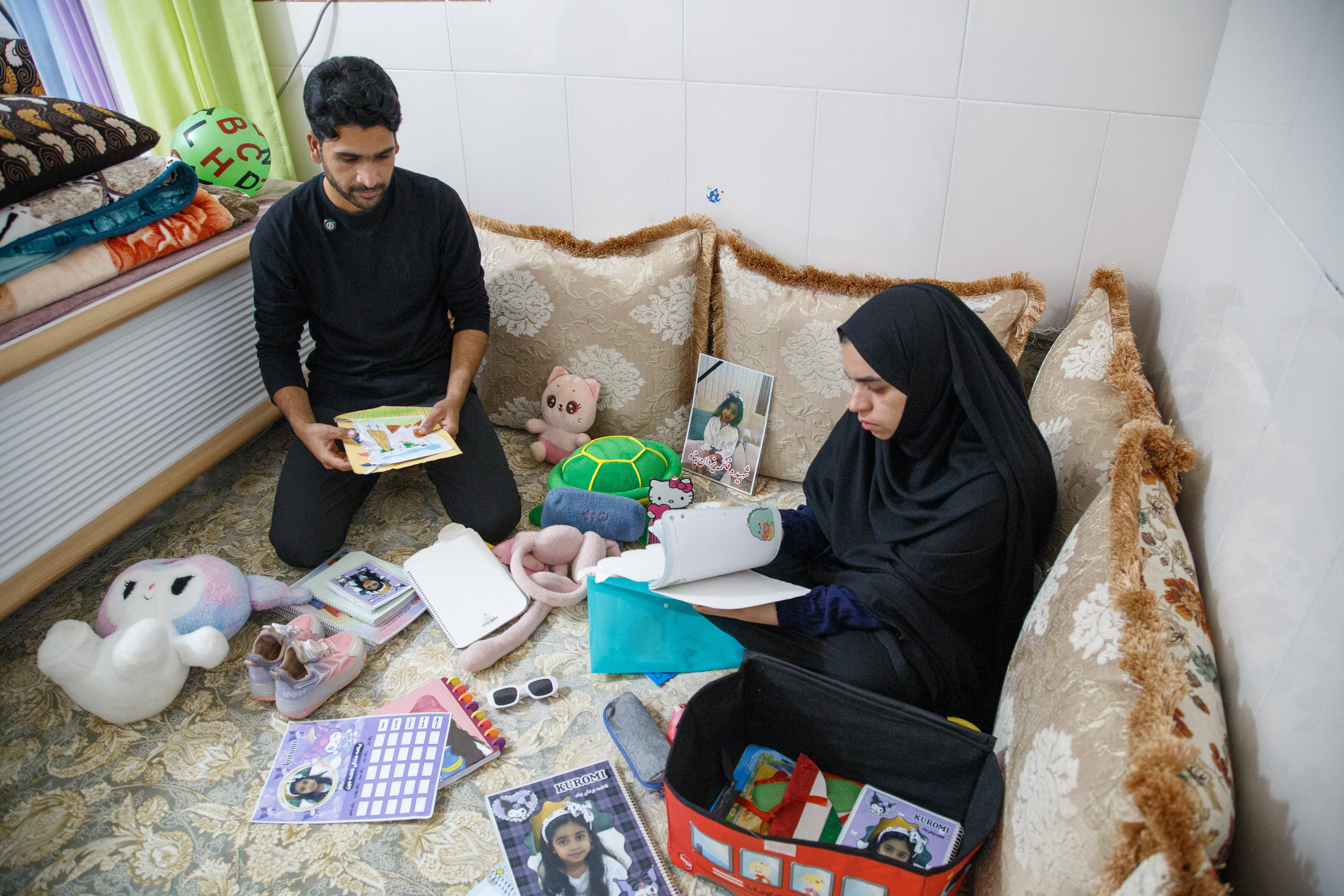 Yaghoub Yazdanpanah and Masoumeh Farahi Zadeh, parents of Fatemeh, who was killed by the U.S. missile strike on her school, at their home in Gurzang, Iran. Photo by Zohreh Saberi.
Yaghoub, the father of Fatemeh, said he has depended on his Islamic faith to confront the killing of his daughter and his desire for justice. “The entire world should be terrified of this incident. What danger did the innocent children of Minab pose to the world that they had to attack a girls’ school? They had to massacre six-year-old children? What kind of thinking is behind doing this to innocent children, children who don’t know what war is, children who don’t know what bleeding is, who don’t know what enmity is?” he asked. “God willing, one day, somewhere, those responsible for this incident will be afflicted by this scandal. God was a witness to this and I am sure God’s hand will enter this story and he will give them their just punishment.”
As Iranian students return to school this month, Darvishi and her colleagues are working to help families prepare in the aftermath of the horrors. “How can we ask these children to return to school? Because schools are no longer a safe place for those children. In our province, even throughout the entire country, families are worried about sending their children to school,” she said. “In order for them to feel safe, we explain that we are in the process of negotiating and that we have very strong soldiers in the area of diplomacy and politics, and soldiers who are in the battlefield and they are defending us,” Darvishi said. “We are explaining and telling them this will not happen again, although we are not sure.”
“As a mother, I don’t have the heart. I don’t have the heart to go school shopping because I am still mourning. I am mourning the children who are resting at the Flowerbed of Martyrs Cemetery,” Salem said. “All of them are my children. They were my students. My colleagues—in one day, one moment, one hour, I lost 26 of my colleagues. Is there a crime worse than this?”
Salem mentioned that students in the U.S. have been going back to school after their summer holidays. “Maybe people in America—many people around the world—have sympathized with the people of Minab, empathized with us. We are very grateful for them,” she said. ”Those who want to go shopping for their children for the start of the school year, maybe they will be reminded, maybe their hearts will ache again.”
Jawa Ahmad contributed to this report.